Article
Search results:
-

3 Jackson Yee's Historical Series Worth Rewatching
Jackson Yee (易烊千玺) isn't just a pop idol turned actor—he's a master at breathing life into historical roles. From strategists to poets, his costume dramas blend sharp storytelling with meticulous period details, making history feel urgent and relatable. Take The Longest Day in Chang'an, where he plays Li Bi, a Tang Dynasty genius racing against a 12-hour terrorist plot. The series doesn't just showcase palace politics; it thrusts viewers into dusty market alleys and smoke-filled war rooms, with Yi's calm intensity anchoring every scene. Or consider Hot Blooded Youth, where his character A Yi evolves from a revenge-driven orphan to a revolutionary hero, mirroring China's turbulent shift from dynasty to republic. These roles aren't pageantry—they're about flawed, thinking characters navigating crises that still echo today: corruption, identity, and sacrifice. Here are 3 Historical Series with Jackson Yee that you'll love watching over and over again. The Longest Day in Chang'an 长安十二时辰 Aired: 2019 Period Background: Tang Dynasty, during the Tianbao era under Emperor Xuanzong's reign, a golden age marked by cultural prosperity and political intrigue. Genres: Costume suspense, political thriller, action Main Roles: Lei Jiayin as Zhang Xiaojing, a disgraced detective-turned-prisoner; Jackson Yee as Li Bi, a prodigious young strategist.… -
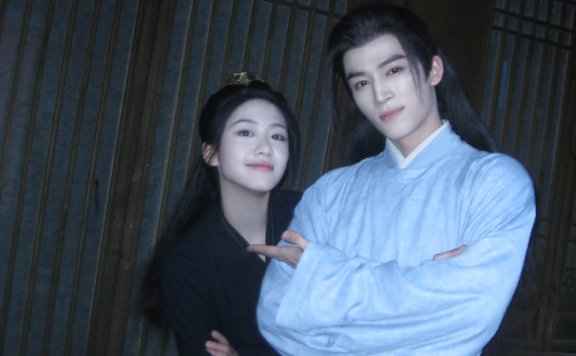
A New Historical Suspense Drama Where Life is the Bait
The highly anticipated historical mystery drama Calming Waves (定风波), starring rising talents Wang Xingyue and Xiang Hanzhi, is set to premiere soon. Promising a gripping blend of political intrigue, martial arts heroism, and mind-bending mysteries, this series has already generated buzz for its bold premise, lavish production, and star-studded cast. Adapted from a popular novel of the same name, the 36-episode drama takes viewers into the chaotic world of the Great Qi Dynasty, where survival demands not just strength, but brilliance. A Tale of Betrayal, Survival, and Redemption At the heart of Calming Waves lies the story of Xiao Beiming (played by Wang Xingyue), once revered as the dynasty's greatest detective. His life shatters on what should be his happiest day: framed for a crime during his wedding ceremony, he is forced into exile. This opening twist—rare for a historical drama—sets the stage for a relentless quest for justice. Three years later, Xiao returns to the capital, determined to clear his name. Alongside his sharp-witted martial sister Zhong Xueman (Xiang Hanzhi) and a band of loyal allies, he uncovers a web of conspiracies that threatens both the imperial court and the jianghu (martial arts world). The series masterfully interweaves multiple… -
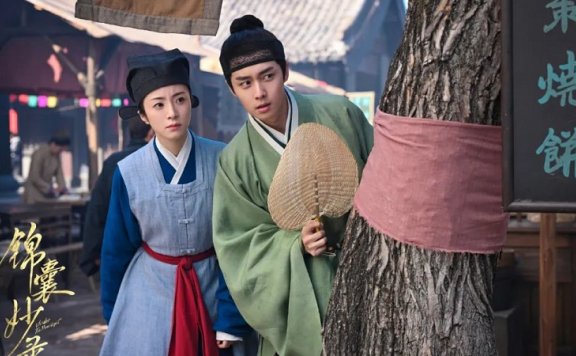
Under the Moonlight: A New Mystery Drama
Under the Moonlight (锦囊妙录) offers a refreshing take for viewers tired of over-the-top fantasy romances in historical dramas. This Ming Dynasty-set mystery series combines crime-solving with a grounded, emotionally complex love triangle—a rare feat in a genre often dominated by clichés. With no flashy special effects or exaggerated power dynamics, the show focuses on relatable characters navigating personal growth, moral dilemmas, and realistic relationships. Breaking Stereotypes The story follows Luo Shu (Hu Bingqing), a former music courtesan turned detective, as she works to clear her name and gain freedom from her "low-status" identity. Her partners in crime-solving are Qi Menglin (Zhai Zilu), the impulsive yet well-meaning son of a high-ranking official, and Han Muzhi (played by an understated but compelling actor), a pragmatic county magistrate. What sets the love triangle apart is its avoidance of typical tropes: No "Chosen One" Nonsense: Luo Shu isn't a flawless genius. Her strength lies in sharp observation and emotional intelligence, particularly when interacting with female victims. Realistic Conflicts: Han Muzhi, engaged to a governor's daughter, initially prioritizes career over love. When he falls for Luo Shu, their relationship faces tangible barriers—class differences and existing obligations—not mythical curses. Growth Over Grand Gestures: Qi Menglin evolves… -

A New Revenge Saga with Heart and High Stakes
Legend of The Female General (锦月如歌), Tencent Video's upcoming 40-episode historical drama, is poised to become the next big hit in the crowded genre of ancient revenge stories. Adapted from author Qian Shan Cha Ke's popular novel Rebirth of the Female General Star, the series combines a gripping plot of betrayal and redemption with a cast of rising stars and veteran actors, all wrapped in lavish production design. A Fallen Heroine's Second Chance The story centers on He Yan (played by Zhou Ye), the eldest daughter of a declining noble family forced to impersonate her brother, He Ru Fei, to preserve their status. Disguised as a man, she attends a prestigious academy, excels in military strategy, and eventually becomes a celebrated general on the battlefield. However, her triumph is short-lived: after years of service, her family betrays her, stripping her of her achievements and attempting to kill her to protect their secrets. Miraculously surviving, He Yan reinvents herself as "He Yue," the daughter of a low-ranking official, and re-enters the military to reclaim her honor. Her path crosses again with Xiao Jue (Cheng Lei), a brilliant general and her former academy classmate, who initially suspects her identity. Their relationship evolves… -

To Live by Borrowing: Prison Bars Meet Factory Gates
The premiere of To Live by Borrowing (借命而生) on iQiyi's "Misty Theater" on April 18 has sparked intense discussion, not only for its gripping crime-thriller plot but for its unflinching dissection of systemic power imbalances. Directed by Lu Chuan and starring Qin Hao, the series adapts Shi Yifeng's novel into a narrative that transcends its genre, embedding societal critique into every frame. While its surface story revolves around a prison guard's pursuit of truth, the show's true strength lies in how it weaponizes the concept of an "imagined enemy"—a metaphor for entrenched power structures—to mirror contemporary struggles. Power as a Faceless Antagonist In Victor Hugo's Les Misérables, the clash between human dignity and oppressive systems unfolds against the backdrop of 19th-century France. Fast-forward to modern-day China, and a similar battle rages not in the shadow of cathedrals, but within the rusted gates of a state-owned factory and the cold bars of a rural prison. To Live by Borrowing—dubbed by critics as "China's Les Misérables"—replaces Hugo's Jean Valjean with two factory workers accused of murder and a jaded prison guard, Du Xiangdong. Here, the "misérables" aren't starving revolutionaries but laborers crushed under the wheel of generational power—a system where factory directors… -
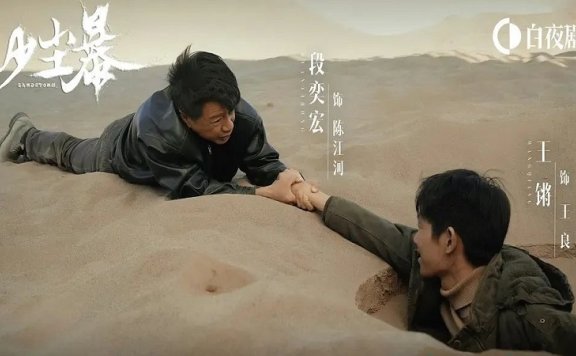
Interview With Zhao, The Screenwriter of Suspense Drama Sandstorm
Sandstorm, The 12-episode show kicks off with a corpse found hidden inside an industrial boiler, unraveling a chilling tale set in a decaying Northwestern town. Within two weeks of its release, Sandstorm climbed to an impressive 8.1 rating on Douban—becoming the highest-rated Chinese suspense drama of the year. In March 2025, acclaimed screenwriter Zhao Dongling made a striking entry into the world of suspense drama with her first mystery mini-series Sandstrom. But perhaps even more surprising than the show's success is its creator's unexpected pivot. Zhao Dongling is best known for realist dramas, stories grounded in rural hardship and urban morality. So why did she trade that grounded lens for the dark corridors of mystery? "I've loved suspense for a long time," Zhao says. "I grew up devouring Arthur Conan Doyle and Agatha Christie, and later Japanese detective fiction. I just never had the right opportunity to write it—until now." Streaming platforms, she explains, have opened new doors beyond the constraints of traditional primetime TV, giving her the creative freedom to explore suspense in depth. After three years of development, Sandstorm became her way of peering into the abyss—not just of crime, but of people left behind by progress. A… -
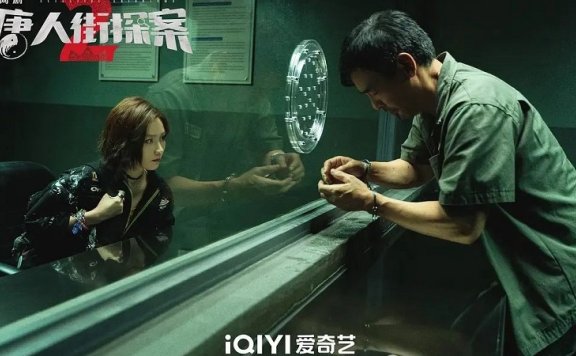
What's Next for Chinese Mystery Dramas in 2025
Mystery dramas often serve as the biggest breeding ground for innovation among all TV genres. After all, a plot twist can only surprise the audience once—there's no selling the same mystery twice. But in recent years, even Chinese mystery dramas have started falling into a pattern. Traditional puzzle-solving has taken a backseat, while social realism has taken the wheel. In this style of storytelling, the "how" of the crime matters less than the "why." And in most Chinese series, those motives boil down to just three familiar categories: money, revenge, or the moral decay brought on by changing times. It's starting to feel like we've hit a ceiling. So what's the workaround? Instead of digging deeper into motives, newer Chinese mystery shows have started experimenting with world-building—new settings, new character dynamics, and more diverse perspectives. More and more series are moving beyond cookie-cutter cityscapes and male-centric narratives, embracing fresh geography and underrepresented voices. In 2025, we're likely to see this trend continue. Expect more mysteries set outside the usual suspects of big cities, more women-led storylines, and more genre-defying, format-bending experiments. With this expansion in scope might just come the kind of depth that the genre has been missing. Rethinking… -
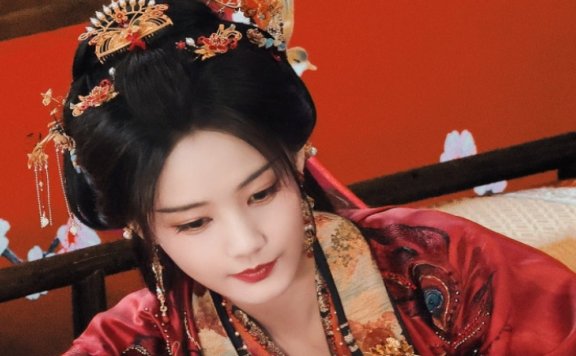
When the Clouds Rise: A Refreshing Take on Historical Intrigue
iQiyi's latest historical drama When the Clouds Rise has quickly become a standout in the crowded landscape of period epics. Adapted from the beloved Japanese anime The Story of Saiunkoku, the series reimagines its source material with a focus on political scheming, nuanced character arcs, and a female protagonist whose grit overshadows romantic tropes. While the star-studded cast initially drew attention, it's the unexpected depth of its storytelling and performances that have audiences hooked. Li Yitong Steals the Spotlight At the heart of the drama is Li Yitong's portrayal of Fan Yun, a role that defies expectations. The 33-year-old actress, often praised for her ethereal beauty, delivers her most compelling performance yet. Fan Yun begins as a humble village teacher, her wardrobe of faded blues and greys reflecting her modest life. But when recruited to mentor the seemingly apathetic Emperor Zi Liu Hui (played by Zeng Xuxi), her journey transforms into one of quiet revolution. Li masterfully navigates her character's evolution—from a woman cautiously navigating palace politics to a reformist challenging gender norms. A standout moment occurs in Episode 12, where Fan Yun debates court officials on allowing women to sit for imperial exams. Her delivery—firm yet devoid of theatricality—turns… -
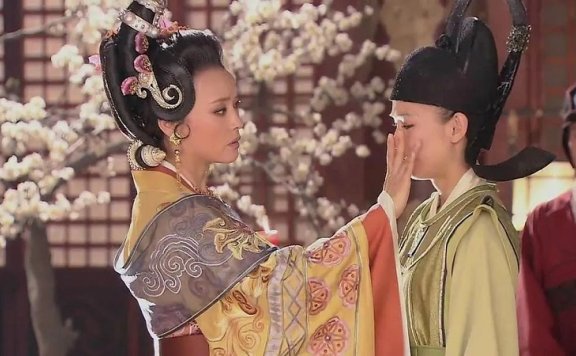
Why Youth Respect Granny Liu Xiaoqing's Playing a Girl
Recently, veteran Chinese actress Liu Xiaoqing announced on social media that she'll star in a new short drama called Lucky Star From Heaven, a sequel of sorts to Adorable Baby Matchmaker: Marriage at 50. The storyline? Well, let's just say it's less important than the casting—because the internet immediately lit up at the fact that 74-year-old Liu is once again taking the lead, possibly even playing a youthful role. Reactions were split. Some mocked, others defended, and many simply shrugged and commented: "Let Granny act if she wants to!" "If Liu Xiaoqing wants to play a teenage girl, who are we to stop her?" It turns out, more and more young people are rallying behind her, not just for her boldness, but for the life philosophy she embodies. From Teenage Cult Leader to Real-Life Wonder Woman Liu Xiaoqing has long been a lightning rod for controversy. Years ago, when she played a teenager despite being over 60, netizens jokingly crowned her the leader of the so-called "Teenage Girl Cult." But jokes aside, admiration for her physical stamina and unshakable energy began to grow. She keeps up a routine of cold showers and long-distance running, easily outperforming people half her age.… -
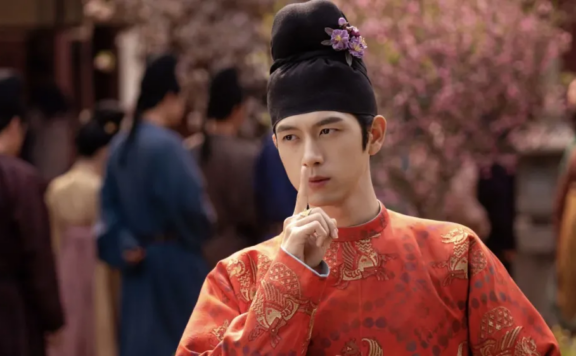
Li Xian's Lavish Tang Dynasty Wardrobe in Guose Fenghua
In the drama 'Guose Fenghua', Li Xian's portrayal of Jiang Changyang features an ever-changing wardrobe, earning the title 'Tang Dynasty version of a man's closet'. Even Li Xian himself admitted that the costumes in this series are the most 'flamboyant' he has ever worn. One of the standout elements of Jiang Changyang's attire is the prominent use of Tuan Ke (团窠) and Lianzhu (联珠纹) patterns. These artistic treasures were uniquely developed during the Tang Dynasty by assimilating the essence of foreign cultures. The Persian-style Lianzhu Tuan Ke motifs, introduced to Central China via the Silk Road during the Northern Dynasties, were later infused with distinct Chinese characteristics by the Tang era. A key term to understand here is 'Lingyang Gong Yang' (陵阳公样), a category of Tang brocade patterns that dominated the textile art of the period. The 'designer' behind these patterns was Dou Shilun, a renowned Tang Dynasty silk weaving expert who created over a dozen motifs in his lifetime. According to Zhang Yanyuan's 'Records of Famous Paintings Through the Ages', Dou Shilun served as the Grand Administrator of Yizhou and was responsible for designing auspicious brocades and palace silks. His intricate and colorful designs earned him the noble title… -

The Tang Dynasty Hairstyles: Hair Buns Wrapping Face
Have you ever wondered why women in Tang Dynasty-themed films and TV shows often appear 'top-heavy'? It's not an illusion! In classical makeup and styling, the hairstyles of the mid to late Tang Dynasty are famously referred to as 'big heads.' But why? Just take a look at the number of hair buns atop their heads. The trend of 'big heads' actually began to emerge as early as the late Eastern Han Dynasty, when noblewomen started favoring high buns, considering them a mark of beauty. The Tang Dynasty took this trend to its peak, leading to the creation of various types of artificial hairpieces (Yiji) specifically for high buns. What did women do if they wanted to achieve this look but lacked enough hair? They simply wore artificial hairpieces. Common materials for Yiji included real hair or wooden substitutes. For example, this spiral-shaped Yiji was made from 'fake hair,' lined with hemp cloth, wrapped with palm fibers, and dyed to create a spiral shape. It could be easily pressed onto the head, showcasing both antiquity and craftsmanship. The materials for Yiji were diverse, not limited to real hair. Thin wooden pieces were also used. One such example is the lacquered… -

The Ancient Hairstyles of Young Maidens in Historical Dramas
In the historical drama 'Guo Se Fang Hua,' the portrayal of Yulu's maid has left a deep impression on viewers. Many netizens have humorously remarked, 'Did this hairstyle escape from a museum?' Indeed, the double - bun hairstyle, a signature look for young maidens in ancient times, holds a special place in traditional aesthetics. This hairstyle, known as Shuang Ji (双髻), was commonly worn by unmarried women, palace maids, and young servants, symbolizing youth and innocence. The Shuang Ji can be further categorized based on its shape and drooping style, such as Shuang Huan Ji (双鬟髻), Shuang Luo Ji (双螺髻), and Shuang Ya Ji (双丫髻). The foundational feature of this hairstyle is the division of hair into two equal parts, creating a symmetrical look. Each side is meticulously coiled into a small bun, typically positioned on either side of the head. The drooping version is poetically referred to as 'Shuang Chui Ji' (双垂髻). Additionally, variations like the Mao Ji (卯髻), characterized by its crescent shape, and the Huan Ji (鬟髻), featuring ring - like buns, add diversity to this traditional style. The Huan Ji often appears in pairs but can also be seen in multiples, with three or more buns… -

The Ancient Chinese Drunk Blush Makeup Trend
Have you ever wondered why some classical Chinese portraits depict women with strikingly red cheeks that almost look like bruises? This distinctive look is actually an intentional and celebrated makeup style from ancient China called Jiuyun Zhuang (酒晕妆), or "Drunk Blush Makeup." This bold cosmetic trend originated during the prosperous Tang Dynasty (618 - 907 AD), particularly popular during Empress Wu Zetian's reign. The style involved applying vibrant red pigment across large portions of the face - not just the cheeks, but often extending to the eyelids, jawline, and even ears. Historical records from the Zhuangtai Ji (妆台记), an ancient Chinese cosmetic manual, describe three intensity levels of this look: the most dramatic Jiuyun Zhuang (Drunk Blush), the softer Taohua Zhuang (Peach Blossom Makeup), and the subtle Feixia Zhuang (Flying Sunset Makeup). Beauty Standard of the Time What modern eyes might perceive as excessive was actually a sophisticated beauty standard of its time. The warm Wozhe (渥赭) hue - a traditional pigment made from cinnabar and ink - served multiple purposes: enhancing healthy complexion, creating facial dimension, and projecting an image of vitality. During mid - Tang period, women often paired this look with bold eyebrows for an even more… -
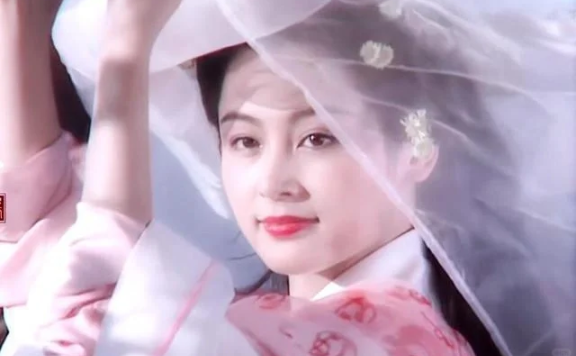
The Veiled Hat in Ancient China
In many historical dramas, the veiled hat, known as Weimao (帷帽), is an indispensable element. A classic scene often features the heroine making her first appearance, with the wind lifting the delicate veil to reveal her breathtaking beauty. This accessory has earned the playful nickname "beautiful yet useless" among netizens, highlighting its aesthetic appeal over practicality. Origin and Features The Weimao originated as a decorative item in Hu (胡) attire. Before its emergence, another style called Mili (羃篱), made of bamboo, was prevalent. Typically crafted from cloth or gauze, the Weimao features a wide brim with hanging silk nets or thin silk panels that extend to the neck, serving as a face cover. During the Sui and Tang dynasties, the hanging nets were shortened, earning it the name "Qianlu" (浅露). Unlike the Mili, which covered the entire body, the Weimao's veil only concealed the upper body. Early Usage Historical records, such as those in the "Book of Jin," note that both men and women initially wore the Mili to shield themselves from wind and sand. Over time, it became predominantly a women's accessory, used to obscure their faces from public view during outings. Some humorously suggest that introverts might have… -

Why Do Tian Xiwei and Jiang Zhenyu Wear the Same Necklace?
In recent costume dramas like "Da Feng Da Geng Ren," it's noticeable that many female characters wear the same style of necklace. Is this a trend from a specific historical period? And don't they mind wearing identical pieces? The answer lies in the term "Yingluo." Derived from the words "Ying" and "Luo," which originally referred to beautiful jade, Yingluo now signifies a multi - gemstone ornament. It's not just limited to necklaces but can also adorn armbands and shawls. In Buddhism, Yingluo symbolizes worldly treasures and is known as "infinite light," often appearing in U or V - shaped necklaces with multiple layers. Historical texts like "The Dream of the Red Chamber" and "Jin Men Yang Shi" mention Yingluo made from gold, silver, pearls, and other precious materials. During the Sui Dynasty, Yingluo was long and simple, but by the Tang Dynasty, it became shorter, more intricate, and highly popular among noblewomen. The trend influenced fashion, with materials ranging from jade to amber. Poets like Liu Yuxi and Yuan Zhen documented its popularity, and by the Ming Dynasty, Yingluo evolved into necklaces with pendants like longevity locks. Even today, Yingluo - inspired designs add a touch of classical elegance to… -
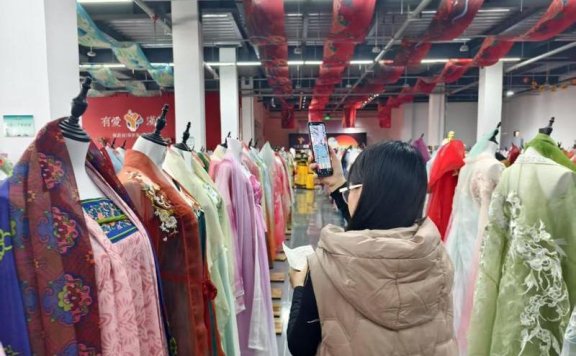
How Caoxian County Built a Hanfu Empire
In a whirl of silk and sweeping sleeves, the third Caoxian County Hanfu Cultural Festival (曹县汉服文化节) recently unveiled its 2025 spring-summer collection, dazzling audiences with runway shows that spotlighted 320 brands from 160 local companies. This spectacle wasn’t just eye candy—it cemented Caoxian’s reputation as China’s undisputed Hanfu capital. The county’s rise began in 2024 when its Horse-Face Skirts (马面裙) became a Lunar New Year sensation, propelling Caoxian to dominate 50% of China’s Hanfu market with ¥12 billion ($1.7 billion) in annual sales. By 2025, projections suggest a 15.8% quarterly growth spike. But how did this rural county transform fleeting hype into lasting influence? Government as Growth Catalyst “I finished all licensing paperwork in one day—unthinkable elsewhere!” exclaimed Mr. Li, a Hanfu manufacturer expanding his workshop. At Caoxian’s government service center, nine approval processes for Hanfu businesses were streamlined into a single “one-stop” portal, slashing processing time by 93% and paperwork by 44%. "Businesses drive this industry, but our role is to remove roadblocks," said Zhao Fulong, Caoxian’s Party Secretary. This efficiency-first ethos has fueled a manufacturing boom: today, one in two Hanfu garments nationwide originates from Caoxian factories. While viral TikTok moments grab headlines, Caoxian’s real edge lies underground—18,000… -
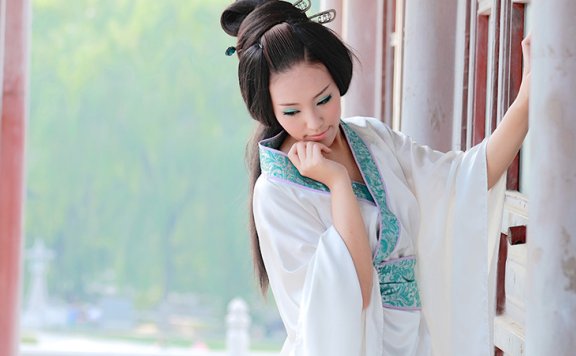
Why People Get So Worked Up About “Zuo Ren”
If you’ve ever wandered into the comments section of a Chinese historical drama, there’s a good chance you’ve seen someone ranting about whether the actors are wearing their robes “correctly.” And by “correctly,” they often mean one of two things: first, is the hair tied up or left loose? And second, is the robe crossing left-over-right (zuo ren, 左衽) or right-over-left (you ren, 右衽)? This second one—zuo ren—is where things get weirdly intense. What Does “Zuo Ren” Actually Mean? So what’s the big deal with zuo ren? Technically, it refers to the way a garment crosses over the body. If the left side overlaps the right, that’s zuo ren. Right over left? That’s "you ren", which is traditionally considered “correct” in Han Chinese dress. Confucius (孔子) even name-dropped zuo ren in the Analects (论语) , saying that if not for the statesman Guan Zhong (管仲) , “we’d all be wearing our hair down and robes crossed the wrong way”—basically, we’d be living like barbarians. Which sounds dramatic. But here’s the thing: even in Confucius’s time, not everyone outside the Central Plains actually wore zuo ren. For example, the people of Chu (楚国) —a powerful southern state considered “semi-barbaric” at the… -
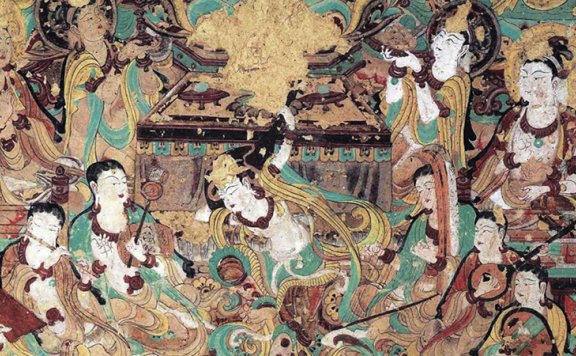
When Gods Painted the Walls: Seeing Dunhuang Through Modern Lens
It’s funny how we throw around the word “Dunhuang” like it’s a single, well-defined thing. For most people, it’s synonymous with the Mogao Caves—those dusty, majestic Buddhist grottos in the far-flung desert of northwestern China. But Dunhuang (敦煌) is less of a place and more of a time capsule layered with over a thousand years of belief, brushstrokes, and guesswork. It isn’t just one cave, one dynasty, or one style. It's an ecosystem of art, faith, and faded colors—held together by sand and memory. Let’s clear one thing up first: Dunhuang isn’t just the Mogao Caves. It includes the Yulin Caves (榆林窟), the Western Thousand Buddha Caves (西千佛洞), and even more obscure clusters like the Five Temple Caves (五个庙石窟). It's more accurate to call it the Dunhuang Grotto Complex—a network of spiritual and artistic experimentation that unfolded across centuries. Not Just Tang Dynasty Grandeur We love to associate Dunhuang with the Tang Dynasty (唐朝)—maybe because the Tang's cultural glamor fits so neatly with the image of heavenly bodhisattvas strumming pipa mid-air. But that's a postcard version of Dunhuang. In truth, the site saw activity from the 4th to the 14th century, spanning dynasties like the Northern Wei (北魏), Sui (隋),… -

The Fascinating World of Ancient Chinese Collars
When we think of ancient Chinese clothing, one of the first things that come to mind might be the iconic "y"-shaped collars seen in many historical dramas. These images, often simplified for visual appeal, don’t quite capture the complexity and diversity of collar styles throughout China’s long history. From the loose, expansive collars of the Northern Dynasties to the structured, high collars of the Ming and Qing periods, the evolution of the collar is a testament to both fashion and function. A Closer Look at the "Big Collar" Trend The concept of the "big collar" in Chinese historical attire is intriguing because it defies many modern expectations about what a collar should look like. Rather than being a rigid feature of the garment, the collar often served as a playful and dynamic part of the outfit’s overall structure. Take, for instance, the mural from the tomb of Xu Xianxiu (徐显秀) of the Northern Qi (北齐) Dynasty. The image depicts his wife wearing an outfit with an unusually large collar that seems far from the typical “cross-collar” or “y”-shaped design that we expect from Chinese traditional garments. At first glance, the garment worn by Xu Xianxiu’s wife might look like a… -

The Hanfu Boom: A Guide to Leading Brands
Hanfu (汉服, traditional Chinese clothing) isn’t just a nostalgic trend—it’s a global movement. What began as a niche subculture in China has evolved into a thriving industry, with brands blending historical accuracy with modern wearability. Forget stiff costumes; today’s Hanfu ranges from silk-adorned ceremonial robes to minimalist office-friendly pieces. Here’s a breakdown of the brands driving this revival, their signature styles, and why they resonate with Gen Z shoppers from Los Angeles to Jakarta. 1. Minghuatang (明华堂) Founded in 2007, this Guangzhou-based label has become synonymous with meticulous craftsmanship and eye-watering price tags—think ¥10,000 ($1,400) for a single set, with wait times stretching up to a year. https://www.youtube.com/watch?v=guu1ad17AH8 The Founder’s Obsession Hong Kong-born Zhong Yi (钟毅), a fashion design graduate from Guangzhou Academy of Fine Arts, noticed something odd in the early 2000s: At formal events, Koreans wore hanbok, Japanese wore kimono, but Chinese attendees rarely wore Hanfu. He started designing his own pieces, wearing them daily to normalize the tradition. In 2007, he co-founded Minghuatang with a clear mission: to recreate historically accurate Ming Dynasty (1368–1644) attire with museum-level precision. What Justifies the Price? Minghuatang’s garments aren’t just costumes—they’re wearable history. Every stitch follows 15th-century texts and artifacts, from…