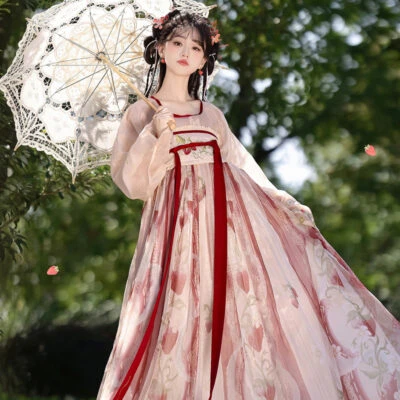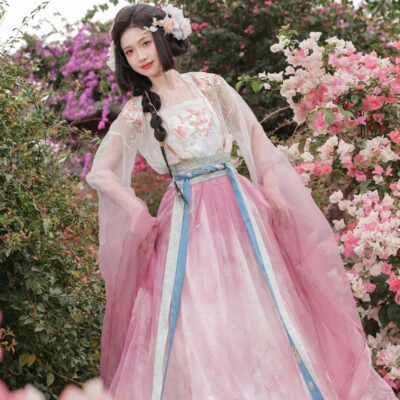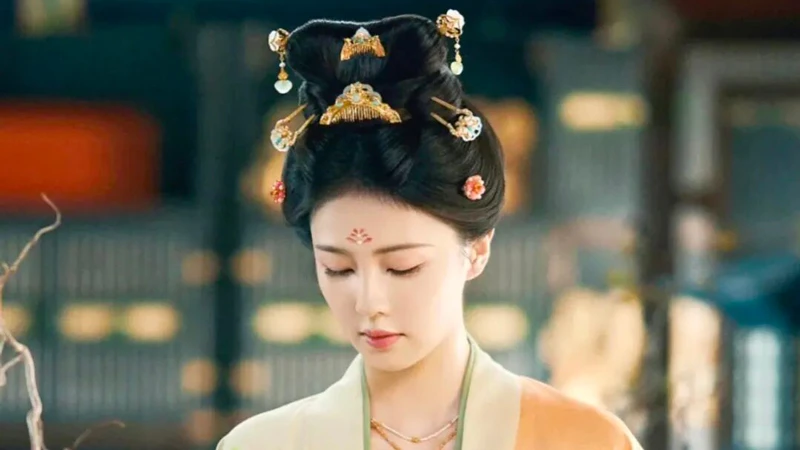
Have we been using combs all wrong? In historical dramas like The First Jasmine (莫离) and Flourished Peony (国色芳华), a curious trend catches the eye: women are obsessed with sticking combs into their hair. Not just one or two, but sometimes up to ten. The screen is filled with shiny crescents woven into elaborate buns, and it raises a common question.
If we are using combs to brush our hair, why are these women wearing them like jewelry? This might seem like a wild stylistic choice from a modern perspective, but it was actually a peak of fashion during the Tang Dynasty. It turns out that a comb was not just a tool for detangling; it was a status symbol, a practical hairpin, and an essential ornament for the breathtaking hairstyles of the era. We are used to hiding our combs in drawers, but these ancient trendsetters wore them where everyone could see, turning a functional object into a dazzling work of art.
Heads Full of Combs
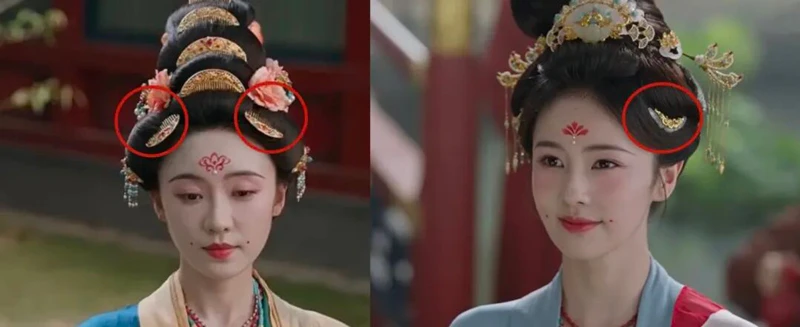
The Tang Dynasty and the following Five Dynasties period were undoubtedly the golden age of the hair comb. Historical records show that women of that time pushed the boundaries of accessorizing to an extreme, often wearing a dozen combs at once in their towering hairdos. In the drama The First Jasmine, you can see this progression clearly. The character Guo Taifei (郭太妃), played by Dong Jie (董洁), might sport a single comb in one scene, while Bai Lu (白鹿), as Ye Li (叶璃), prefers two. However, it is Qin Taifei (秦太妃), portrayed by Zhang Yue (张月), who really goes all out, with six combs visible on her head at once. And that is just the front. When the characters turn around, the back of their heads are also dotted with these ornaments, bringing the total count to nearly ten for a single ensemble.
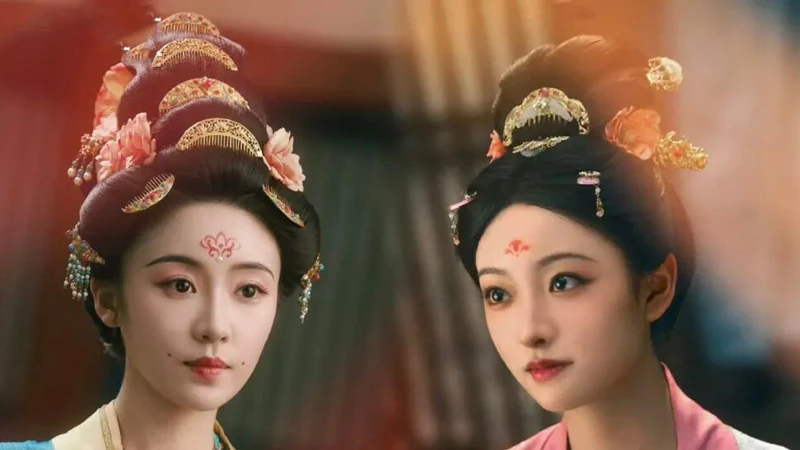
This was not a random quirk; it was the height of fashion. After the High Tang period, women favored voluminous, high buns that were as grand as they were impressive. They also loved “face-hugging” styles that framed the cheeks. To achieve these looks, they often relied on hairpieces to add volume. However, a layer of natural hair was always brushed over the top to create a seamless blend. This is where the comb stepped in as a hero. Unlike a traditional hairpin or Zan (簪), the comb could firmly secure the natural hair to the false hairpiece underneath. Its fine teeth gripped the strands, keeping the entire structure stable and smoothing down any flyaways.
Form and Function
While practicality was a starting point, the decorative potential of these combs was what made them truly essential. The backs of the combs, visible above the hair, were crafted from luxurious materials like gold, silver, jade, or rhinoceros horn, creating a beautiful “crescent moon” effect. These combs were not just functional; they were a status symbol. Their placement on the head was equally strategic. You would find them at the temples, at the junction of the high bun and the natural hairline, and at the connection points where complex updos met with hairpieces. They were also used to cover up any messy or frayed bits of hair at the back, turning a practical necessity into a deliberate design element.
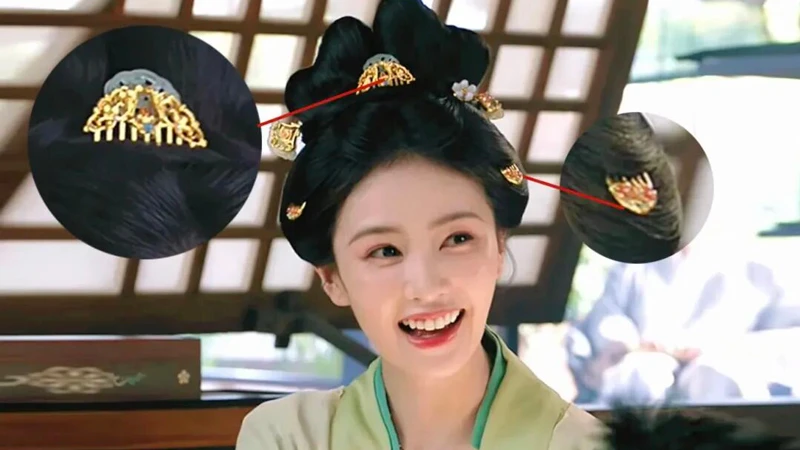
It is interesting to compare this ancient styling secret to the modern viewer’s experience. We see these ornate combs and might think they are purely decorative, but they were doing the heavy lifting of a modern-day hairnet, bobby pins, and styling gel. The shape of the comb allowed it to grip the hair from multiple angles, distributing the weight of the heavy bun and preventing it from collapsing. With up to ten combs in a single hairstyle, these women were building a structure, piece by piece, and using each comb as a structural anchor as well as a glittering accessory. It was an engineering marvel achieved through the simplest of tools.
Ancient Secrets and Modern Tools
Some modern viewers have wondered how these combs could possibly hold the hair when their teeth seem so far apart. This common confusion arises from a misunderstanding of the type of comb used. The decorative combs seen in these historical dramas are based on fine-toothed combs. Evidence of these practical tools has been found in tombs like that of Xin Zhui (辛追) from the Han Dynasty. These ancient combs were incredibly dense, designed not just for styling but also for practical hygiene tasks like removing dandruff and lice. With such fine teeth, holding a heavy bun was effortless.
Today, we mostly use wide-toothed combs, which are primarily designed for detangling and smoothing. This is why the concept of using a comb as a hair accessory seems so alien to us. We separate the tools of dressing from the act of adorning. The Tang dynasty woman, however, saw no such distinction. Her comb could brush, clean, hold, and decorate all at once. This reflects a different philosophy of beauty, where functionality was not hidden but celebrated. The love for hair combs among Tang women was so profound that it was documented by poets and scholars alike. Shen Congwen (沈从文) noted in his work on ancient Chinese clothing that women loved to use small combs of gold, silver, jade, and ivory for decoration, and some wore as many as ten at a time.
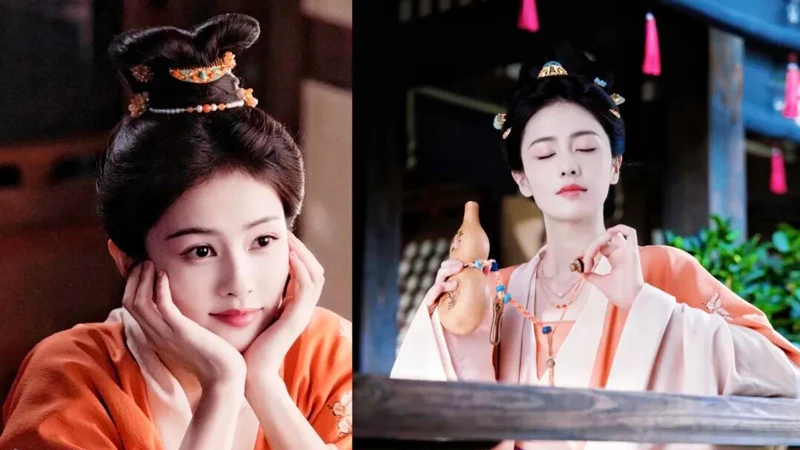
The obsession with wearing combs in the Tang Dynasty is a testament to a unique aesthetic. It was a tradition born of necessity that blossomed into an art form. While we might no longer wear towering buns with a dozen combs, the principle remains: true style often lies in the creative and bold reimagining of everyday objects. It seems the Tang women knew a secret that we may have forgotten: a tool can be a treasure, and practicality can be beautiful. So, were we using our combs wrong? Maybe we were just not using them with enough imagination.