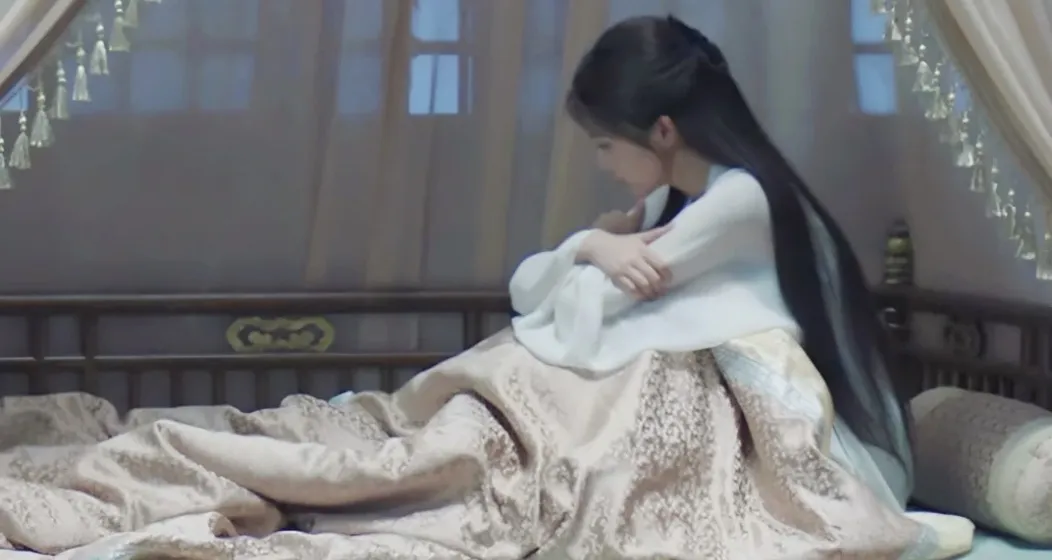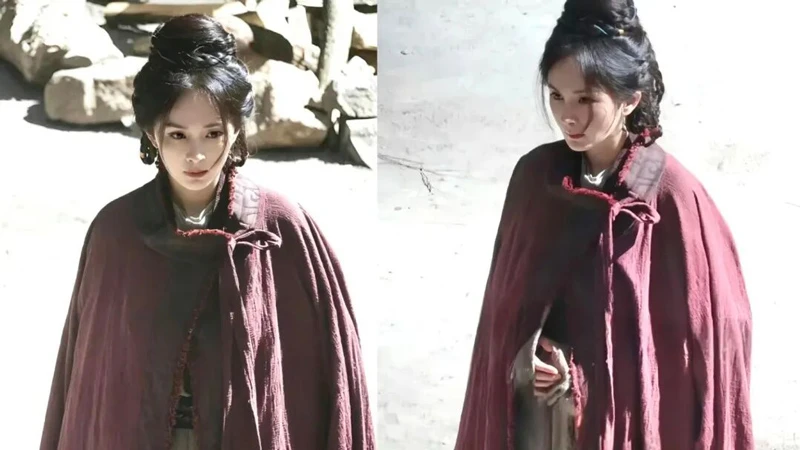
Jiangshan Datong (江山大同), a new historical drama starring Yang Mi (杨幂) as a lowly slave girl in 5th-century Northern Wei Dynasty China, has sparked online debate over one puzzling detail: her dark red outer robe appears to have no sleeves. Viewers quickly labeled it a cape, but a closer look reveals something far more interesting. It’s actually a Pi Ao (披袄)—a round-collared, open-front garment designed with sleeves. She simply chose not to put her arms through them. This “sloppy” look isn’t a costume mistake. It’s a forgotten slice of Northern Wei daily life, pulled straight from pottery figurines buried over 1,500 years ago. What looks like a fashion fail turns out to be a quiet act of historical accuracy—and a smart hack for a working woman on the ancient frontier.
Cape Confusion
Why did so many mistake it for a cape? Because from the front, the robe hangs loose over her shoulders, armholes empty, fabric draping like a medieval cloak. In our modern eyes, any sleeveless, shoulder-draped outerwear reads as “cape.” But the Northern Wei had no such garment. The classic “one-bell” cape, a collarless, front-open style, appeared much later in Chinese history. What Yang Mi wears has clear sleeves—you can spot the empty sleeve tunnels in behind-the-scenes photos, dangling beside her hips.
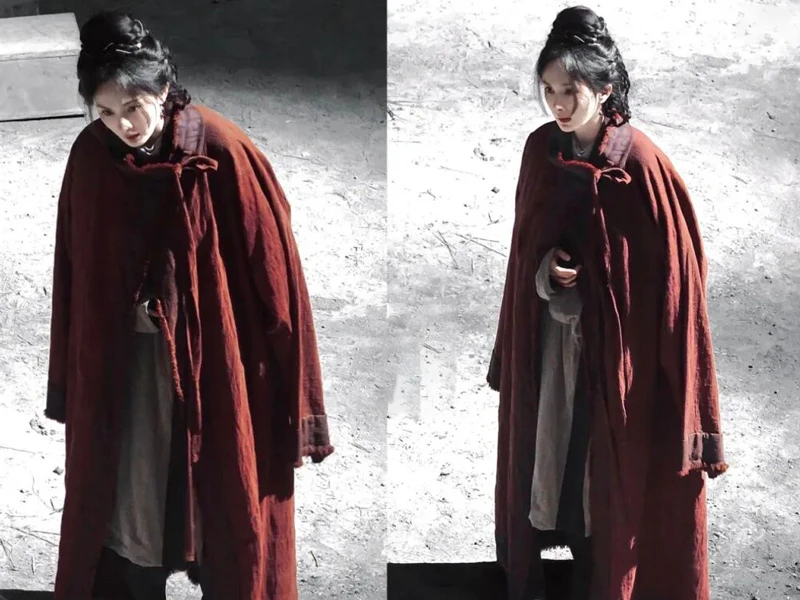
The robe’s structure tells the real story. It features a distinct round collar (圆领), a split front opening, and side slits where sleeves would attach. The hem falls to mid-calf. That’s a textbook Xian Bei-style round-collar Pi Ao. The Xian Bei were nomadic people who ruled Northern Wei. Their clothing prioritized function: round collars kept out cold wind, narrow or loose sleeves allowed archery, and the open front made layering easy. She simply pulled her arms out and let the robe rest on her shoulders—a “sleeveless disguise” that fooled millions.
This wasn’t random. Pottery figurines from Northern Wei tombs in Ping Cheng (平城, today’s Datong) show both men and women wearing identical Pi Ao. Some have arms inserted through sleeves, others let the robe hang empty, sleeves dangling at their sides. The “cape look” is actually a documented wearing method—not a mistake but a choice.
Historical Fit
The robe’s material reinforces its authenticity. In behind-the-scenes clips, the fabric looks rough and textured, like hemp or ramie. Northern Wei commoners and slaves wore coarse plant fibers—they were breathable, durable, and cheap. Silk and brocade belonged to nobles. Yang Mi’s character, a slave girl, would never own fine textiles. The rough hemp also suits the cold, dry climate of northern China, where wind-resistant layers meant survival.
During the early Northern Wei period, Xian Bei dress dominated: round collars, narrow sleeves, and open fronts. Even after the court adopted flowing Han Chinese robes, common people and slaves retained nomadic habits. The Pi Ao was a unisex, cross-class garment. Nobles wore it with sleeves properly inserted for formal occasions. Slaves and laborers wore it loose, often without using the sleeves at all. Why? Because a draped robe could be shrugged off in seconds—essential for someone who might need to run, carry loads, or tend animals.
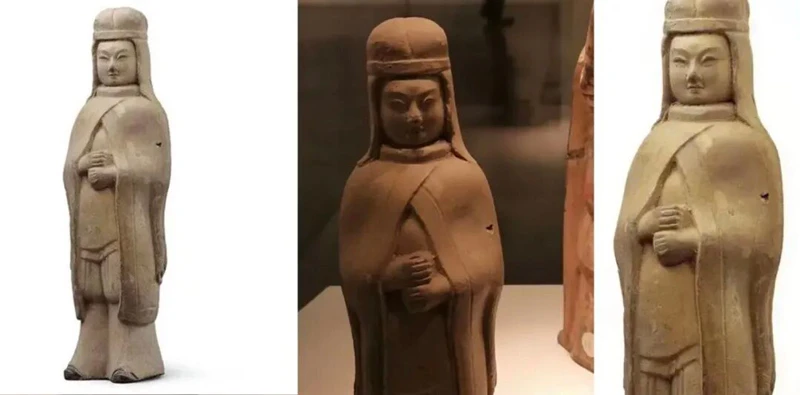
Archaeological evidence backs this up. Dozens of Northern Wei pottery figurines unearthed in Shanxi and Inner Mongolia show figures in round-collar Pi Ao. Some have arms inside sleeves, arms naturally hanging down. Others display the exact “shoulder-draped, sleeves empty” posture. A notable example: a male servant figurine from a Ping Cheng tomb wears his Pi Ao like a cape, sleeves swinging freely. This wasn’t a high-fashion statement—it was workwear.
Practical Style
So why would anyone wear a sleeved garment without the sleeves? Think like a nomadic herder or a slave. You need warmth but also freedom. A Pi Ao draped over the shoulders traps heat against your torso while leaving your arms unbound. You can lift, carry, chop wood, or ride a horse without fabric tightening around your elbows. If the sun warms up, you let it fall off entirely. If wind picks up, you pull it tight. It’s a wearable blanket—not a tailored coat.
For Yang Mi’s slave girl, this “sleeveless” method makes perfect sense. She works outdoors, likely doing physical labor. She answers to masters who might demand sudden movement. She has no maid to help her dress. A Pi Ao worn loose becomes a versatile tool: cloak, apron, shawl, or even a makeshift sack. The show’s costume designer didn’t invent this. They copied it from figurines of female servants and laborers, many shown with arms free and robes dangling.
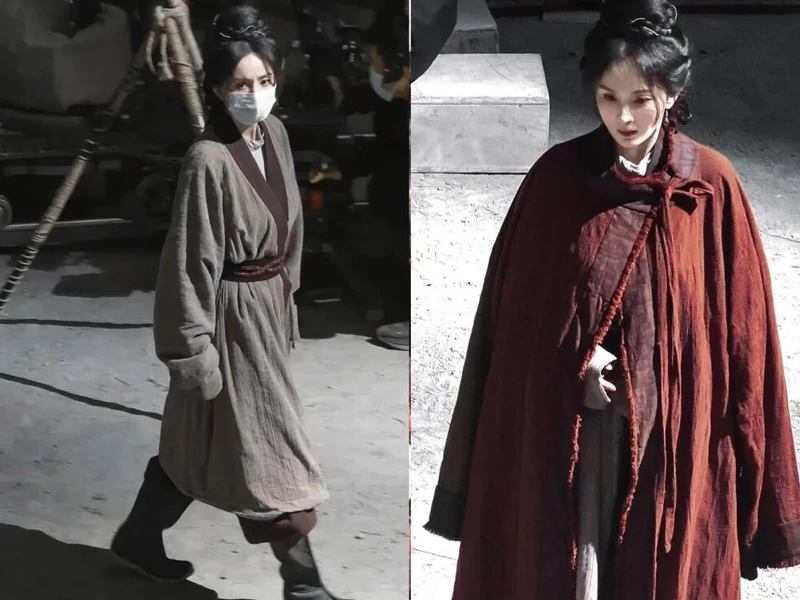
Compare this to typical period dramas, where every robe is immaculately tailored and properly worn. That’s the Hollywood version of history—clean, static, and false. Real historical clothing breathed, shifted, and got messy. People folded sleeves up, tied belts crookedly, and yes, left their arms out of perfectly good sleeves. The Northern Wei slave girl’s “wrong” outfit is actually more authentic than any perfectly dressed noble. It tells you she works with her hands. It tells you she moves fast. It tells you she’s low-status—and proud of surviving.
Would you wear a robe like that? Probably not to a dinner party. But for a cold morning on the steppe, with chores waiting and no time for fussing? Yang Mi’s sleeveless Pi Ao might just be the smartest outfit in 5th-century fashion. And that’s the real lesson of historical costume: it’s not about looking perfect. It’s about looking real.