Have you ever seen a historical drama costume that made you do a double take? When actor Liu Xueyi (刘学义) appeared as Emperor Tuoba Jun (拓跋濬) of the Northern Wei dynasty in the new series Jiangshan Datong (江山大同), online forums exploded. Viewers didn’t gush over flowing silk robes or delicate hair ornaments. Instead, they threw around a loaded historical slur: Suo Lu (索虏), meaning “rope captive.” Surprisingly, it was a compliment.
Why? Because his look—braided hair, heavy beard, and a strange hood called a Feng Mao (风帽)—matched sixth-century tomb figures and cave carvings. This wasn’t the usual polished, pretty-boy emperor. It was gritty, foreign, and real. So, was it strange? Or was it the most honest costume on TV?
Braids and Bias
Let’s talk about that word “Suo Lu.” Originally, it was a derogatory label Han Chinese used for the Xian Bei (鲜卑) people, who ruled Northern Wei. “Suo” means rope, referring to their distinctive braided hair. Unlike the pinned-up topknots of central China, Xian Bei men wore multiple tight braids tied with cords—a practical style for horseback life on windy steppes. Dust and galloping didn’t mix with loose hair. In one scene without a hat, Liu Xueyi’s character shows this clearly. His hair isn’t romanticized. There are no soft bangs or layered extensions. Just stark, rope-like braids framing a sun-darkened face with a thick, unkempt beard. He looks like he just rode in from the Gobi, not a jade palace.
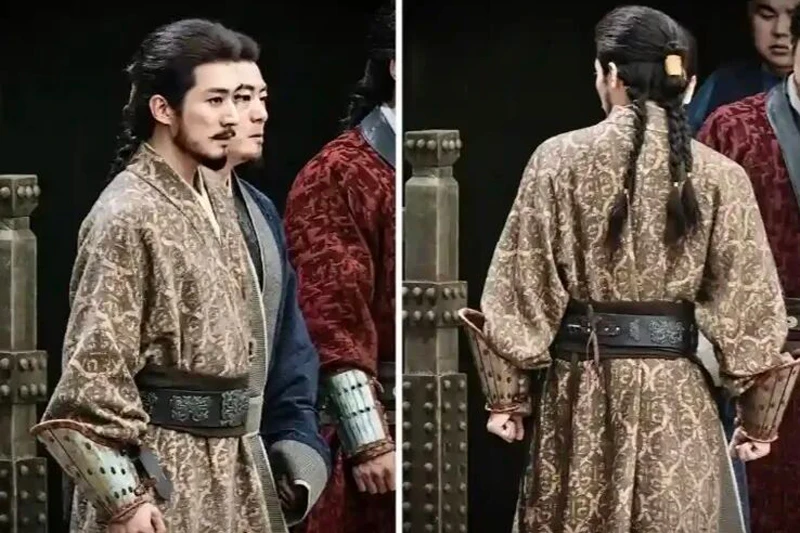
What’s remarkable is the show’s refusal to soften the image. Most Wuxia or period dramas make emperors dreamy—flawless skin, flowing manes. Here, the production chose roughness. The braids are not an accessory; they are a political and cultural statement. They scream “outsider ruler.” For modern viewers, the term “Suo Lu” has lost its sting, but the visual translation is sharp. You see exactly why settled farmers feared these mounted warriors. Liu Xueyi’s face, fully exposed without hair curtains, feels almost confrontational. It dares you to call him a barbarian. Then it reminds you: he is the emperor. That tension—between nomad roots and imperial power—is the whole point of Northern Wei history.
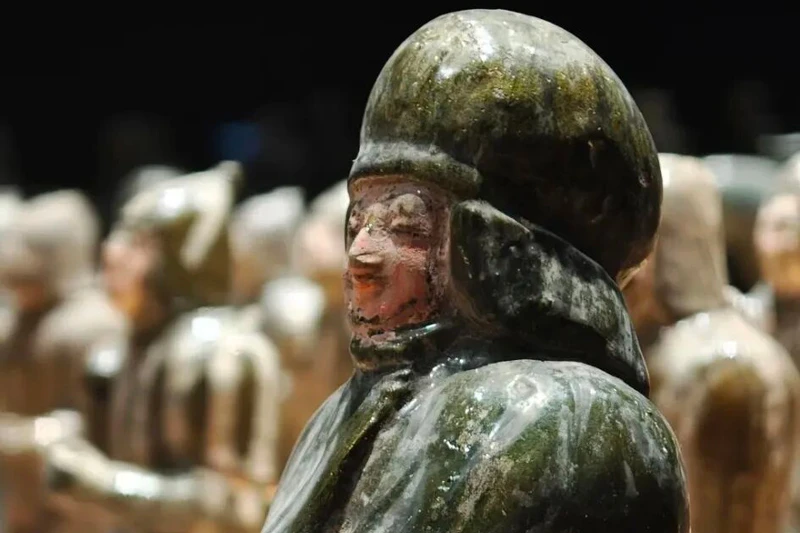
The costume team didn’t invent this. They copied actual Yun Gang (云冈) Grottoes donor figures and pottery soldiers from Sima Jinlong’s (司马金龙) tomb. The braid shape, the beard density, the sunburn makeup—all pulled from stone and clay. One netizen joked, “Now ‘Suo Lu’ feels like a real person, not a textbook insult.” That’s the magic. A hairstyle you might call ugly becomes a bridge to a lost world. It’s not about being beautiful. It’s about being believable.
The Hood’s Tale
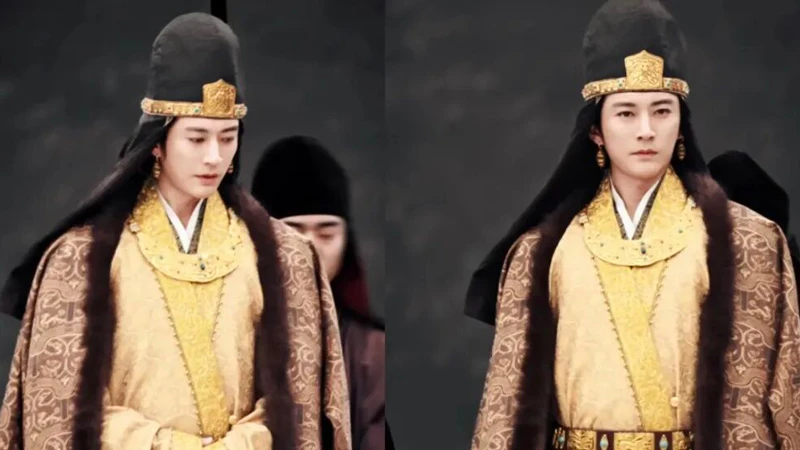
Now for that odd hood—the Feng Mao. Imagine a leather or thick fabric cap with a rounded top and flaps that hang down the back and sides, reaching the shoulders. In winter on the Mongolian steppe, that’s not fashion; it’s survival. The show’s version follows early Northern Wei styles precisely. No exaggerated fur pom-poms or fantasy spikes. Just a sturdy, earth-colored hat with a leather texture and simple ties under the chin. What makes it special, though, are two small additions: a forehead badge called “Ti” (题) and a headband called “Gu” (箍), which signal nobility. These details match artifacts from the period, not later dramas that turned Xian Bei hats into cartoonish accessories.
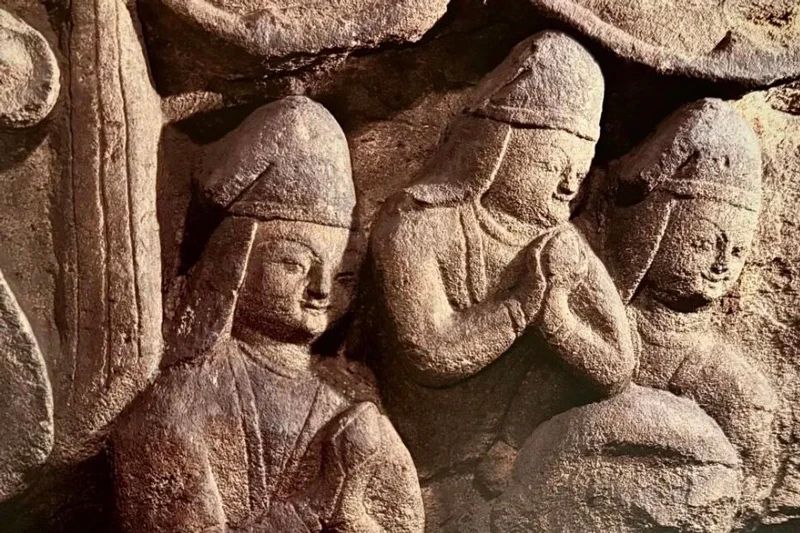
Compare it to a recent big-budget serie.s where an actress wore a similar hood. Hers was soft, pastel, and draped like a silk scarf—pretty but useless. Jiangshan Datong does the opposite. Its Feng Mao is heavy. It sits low on the brow. The back flap covers the braids completely, which is historically accurate: the hood hid the “rope” hair from Han subjects, reducing cultural friction. When Tuoba Jun removes it indoors, the reveal of braids becomes a quiet power move. You see two identities: one for the court, one for his own people. That layering—utility plus symbolism—is rare in costume design.
The rest of his outfit follows the same logic. A narrow-sleeved, cross-collared robe instead of the flowing Han Pao Fu (袍服). Fur trims on the edges. A golden-brown palette that echoes both steppe leather and imperial wealth. Around his waist hangs a Xie Dai (蹀躞) belt with metal rings and small hooks for carrying a knife, a pouch, or a flint—pure nomad practicality. Yet the collar embroidery uses simple cloud motifs borrowed from Han rituals. He even wears a Long Guan (笼冠), a cage-like hat, in some scenes, showing the slow blend of two cultures. Not a single stitch is wasted on pure decoration. Everything tells a story: we came from horses and tents, but we now rule temples and cities.
So, was the look strange? Yes, if you expect glossy idol dramas. No, if you want history with its sweat and dust intact. By keeping the braids, the coarse hood, and the weathered skin, Jiangshan Datong does what few shows dare: it trusts the audience to find beauty in authenticity. The next time you see a “weird” ancient costume, ask yourself—is it weird, or is it just not pretty? Sometimes the most shocking outfit is the most truthful one.