
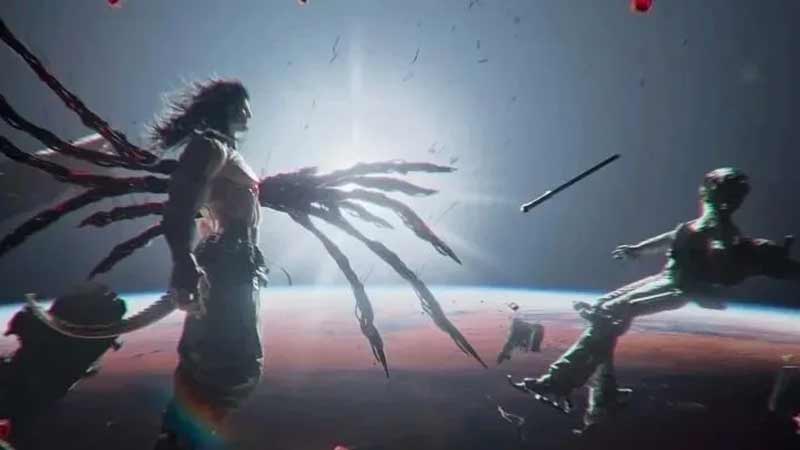
What defines humanity when flesh becomes a vessel for engineered purpose? Ling Cage 2 (灵笼2), the stunning culmination of its dystopian saga, transcends its animated origins to deliver a philosophical gut-punch. Far from a mere continuation, it shatters expectations, weaving a complex narrative where survival collides with identity, sacrifice, and the chilling gaze of higher powers. Set against the ruins of a world ravaged by the Manna Ecosystem, the series elevates Chinese animation by prioritizing profound themes and character depth alongside its visual spectacle. Mark's journey, once rooted in familiar heroism, unravels into a haunting exploration of self, forcing viewers to confront uncomfortable truths about agency and the price of existence.
Mark: The Shattered Vessel
The revelation in Bai Yuekui's (白月魁) hidden archives detonates Mark's reality. Learning he is not merely a survivor or soldier, but a clone – an experimental iteration born from the very entity humanity fights – fractures his core. Witnessing rows of his failed predecessors preserved in tanks isn't just horror; it obliterates the meaning behind his past struggles, his love for Ran Bing (冉冰), and his loyalty to comrades. Was it all a scripted performance?
This existential crisis becomes his vulnerability. The insidious Ocular Tumor, exploiting his anguish and fixation on Ran Bing, twists his grief into a weapon against Bai Yuekui. Feeling utterly betrayed, consumed by rage at being manipulated into a role where Ran Bing became collateral damage, Mark rejects his creators and their grand design. His flight is a desperate attempt to reclaim some shred of autonomy, even if it means embracing the monstrous potential within him.
The final blow lands with the discovery of the humanoid bio-robot. Its agonized cries cease the moment it reveals a face identical to Mark's pre-mutation self. This cruel mirror shatters any lingering hope. Is he human, a successful experiment, or merely a replaceable component? The question hangs, unanswered and devastating.
The Unforgiving Calculus of Survival
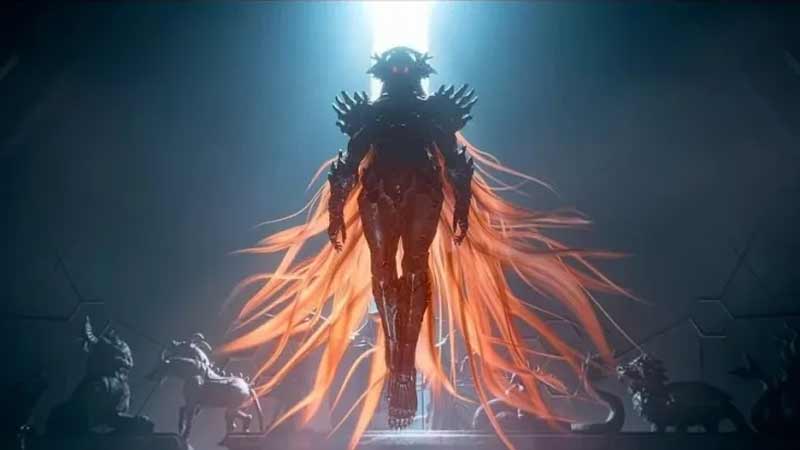
Bai Yuekui's cold pragmatism forms the series' chilling moral spine. Her actions – orchestrating Mark's transformation, manipulating events knowing the cost – are monstrous from his perspective. Yet, viewed through the lens of species extinction, her logic is terrifyingly coherent. Facing annihilation by the Manna Primordial and its unseen masters, who view burgeoning human intelligence as a threat to their dominion, conventional morality crumbles.
The "Trolley Problem" is writ large across the wasteland. Bai Yuekui embodies the ruthless principle: "Kill one to save the many, not kill one to benefit the many." Her "Project Crimson Tide" isn't ambition; it's the final, desperate gamble for human continuity. Sacrificing Mark, manipulating his unique biology to force an evolution capable of challenging the Manna Primordial, is a horrific necessity in her eyes. There are no good choices, only choices that might preserve the flicker of human consciousness.
The series masterfully avoids easy judgment. Bai Yuekui's resolve, even as she carries the weight of her decisions, underscores the unbearable burden of leadership at the end of days. When survival is the only currency, notions of individual rights or fairness become unsustainable luxuries. Her path is paved with betrayal and suffering, but she walks it believing humanity has no alternative route.

Redefining the Art of Story
Ling Cage 2 boldly shifts the focus from technical prowess to narrative substance. While the animation quality remains high, particularly in the nearly hour-long climactic battle ("The Final Confrontation"), the true brilliance lies in its writing. From Episode 10 onwards, the series demonstrates that the most potent "special effects" are compelling dialogue, intricate character development, and resonant themes.
It tackles the ambitious concept of a "Community of Shared Future for Mankind" not as a slogan, but as a desperate reality uniting the sky-bound Lighthouse and the earthbound Marrow Village. Both societies, despite vastly different structures born from the Lighthouse's "Three Laws" or the Grounders' struggles, share the singular, overriding goal: preserving the spark of human civilization against an indifferent universe.
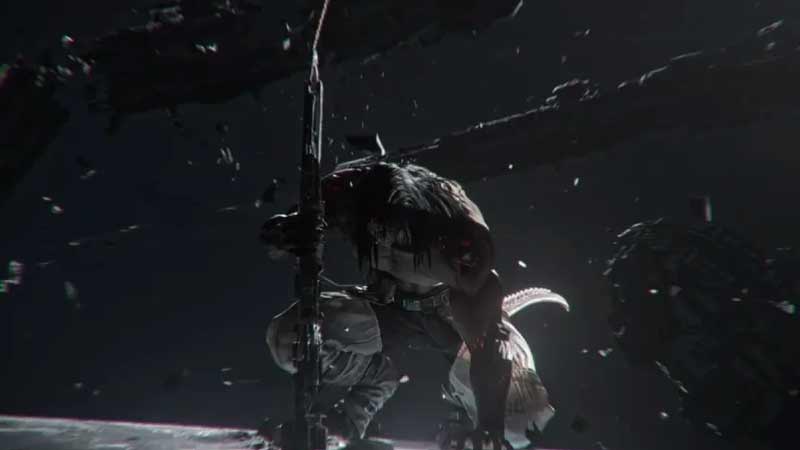
The finale achieves a profound resonance akin to seminal sci-fi like The Three-Body Problem (三体). Bai Yuekui's closing line, "Perhaps we are about to learn whether the flesh is truly the soul's cage," resonates far beyond the screen. It crystallizes the series' core inquiry into consciousness, transcendence, and the essence of being. By daring to explore these vast, unsettling ideas with such conviction, Ling Cage 2 elevates not just itself, but the potential of its entire medium.