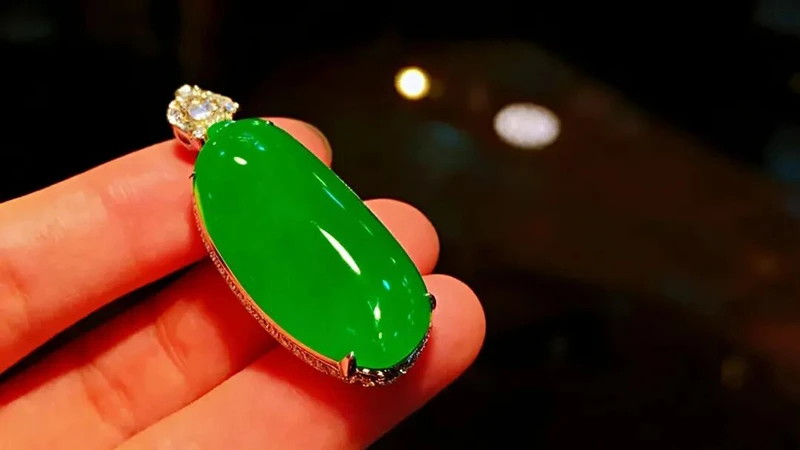
You walk into a jewelry shop. The seller points to a green bracelet and calls it “jade.” Then they show you a white pendant and also call it “jade.” But the prices are wildly different. One shines like glass. Another feels smooth like butter. Which one is real? Actually, both are real—but they are not the same thing. In Chinese, the word “Yu (玉)” is a big family name, just like “fruit” includes apples and bananas. Two main members of this family are jadeite, also known as hard jade, and nephrite, also called soft jade. Many buyers mix them up. After reading this guide, you will never confuse them again.
jadeite: The Glass Queen
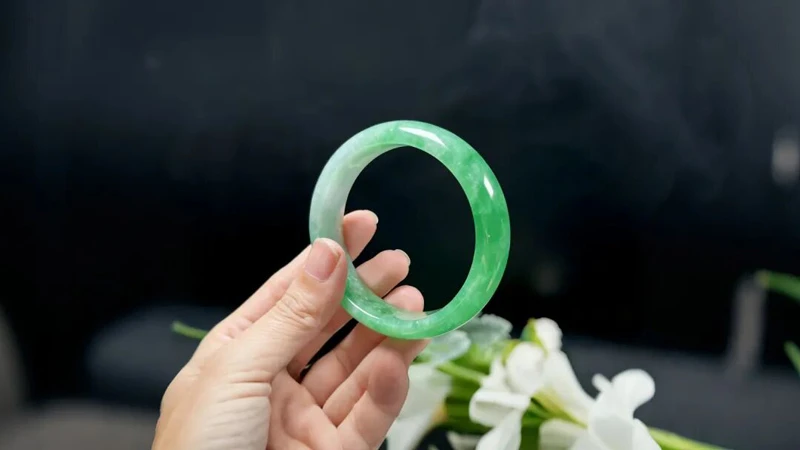
jadeite mainly comes from Myanmar. People also call it jadeite. It has high hardness—you can scratch glass with it. If you tap two pieces together, they make a clear, sharp sound like a bell. Its surface looks like glass. After polishing, it reflects light almost like a mirror. That is why you often see a bright, flashing shine on a jadeite pendant.
Color is where jadeite shows off. It can be green, red, purple, yellow, or even colorless. The most expensive color is called “imperial green”—a deep, rich green that looks like fresh bamboo leaves. You may have heard of terms like “ice type” and “glass type.” These describe how transparent the stone is. Ice type looks like frozen water. Glass type is even clearer, like a window pane. The clearer the jadeite, the higher the price.
So how do you remember jadeite? Three words: hard, shiny, and colorful. It is tough, it glows, and it comes from Myanmar. If you like jewelry that catches the light and stands out, jadeite is your choice.
nephrite: The Butter Gentleman
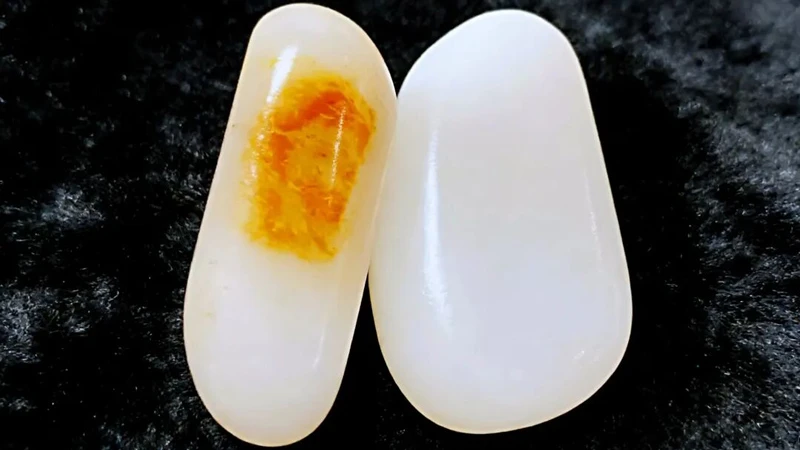
nephrite is a different character. It comes from the Xinjiang (新疆) region, especially the He Tian (和田) area. Its hardness is lower than jadeite, but its toughness is amazing. Ancient Chinese craftsmen carved nephrite into tiny, detailed shapes because it does not break easily. Tap it, and you hear a low, soft sound—not sharp at all.
The most special thing about nephrite is its feel. It has a greasy or oily luster. Touch it with your finger. It feels smooth, warm, and slightly waxy—like rubbing a piece of solid sheep fat. That is why the top grade is called “mutton fat white jade.” The color is usually white, gray-green, or black. No bright greens or purples here. nephrite is quiet. It does not flash or shine. Instead, it gives a gentle, inner glow that seems to come from deep inside the stone.
To remember nephrite, think: soft, oily, and from Xinjiang. It is not flashy. It is the stone you want to hold in your hand for a long time. If you prefer a subtle, warm beauty over a bright sparkle, nephrite is for you.
Three Quick Tests
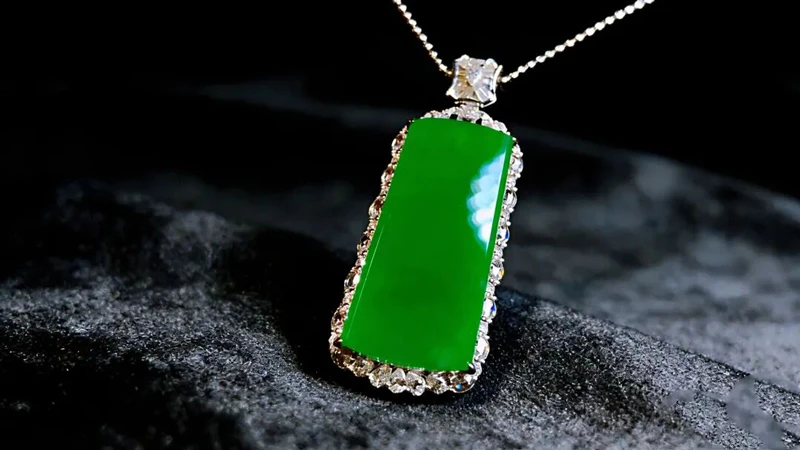
Still confused? Here are three simple questions and answers. First: Is jadeite the same as jade? No. jadeite is one type of jade. All jadeite are jade, but not all jade are jadeite. Second: Is nephrite the same as jadeite? No. They are two different kinds of jade, just like apples and oranges are both fruits but taste nothing alike. Third: Which one is better, jadeite or nephrite? There is no better or worse. It is all about what you like. Do you love a bright, transparent, hard stone that sparkles? Pick jadeite. Do you love a warm, soft, oily stone that feels peaceful? Pick nephrite.
You can also do a visual test. Hold a jadeite piece up to light. You will see light pass through it like glass. Some jadeite pieces even show a glowing effect called “halo.” Now hold a nephrite piece. Light does not pass through much. Instead, the surface looks thick and creamy. Another test: touch. jadeite feels cool and hard, like touching a window. nephrite feels slightly warmer and smoother, almost like touching your own skin after lotion.
One more trick: listen. Gently tap a jadeite bracelet with a metal ring. The sound is high-pitched and rings for a second. Tap a nephrite pendant. The sound is lower and stops quickly. These differences come from their different crystal structures. jadeite has tightly packed, tiny crystals. nephrite has interwoven fibers—like felt. That is why nephrite is tougher even though it is softer.
Glass vs. Butter
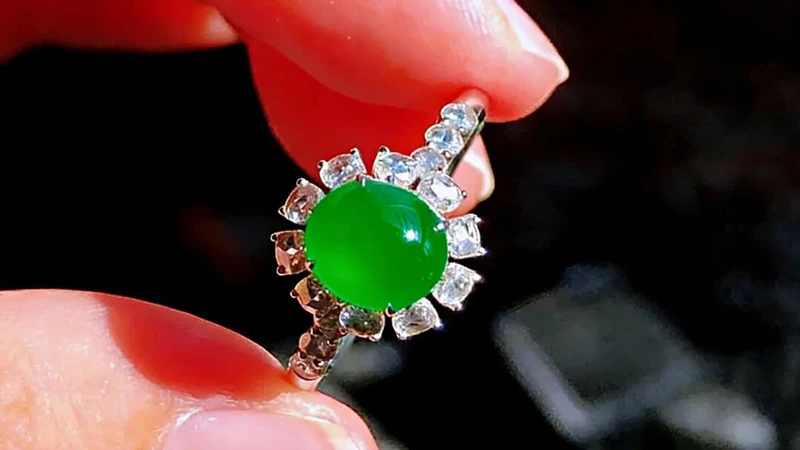
Think of jadeite as a glass window on a sunny day. It is transparent, bright, and hard. It reflects light. It makes sharp sounds. Think of nephrite as a block of sheep butter at room temperature. It is opaque, smooth, and soft to touch. It absorbs light. It makes dull sounds. Both are beautiful. Both are valuable. But they speak to different hearts.
Next time a seller says “jade,” ask them: jadeite or nephrite? Look at the stone. Is it glass-like or butter-like? Is it from Myanmar or Xinjiang? Does it shine or glow? Now you know the answers. No more confusion. No more overpaying for something you do not understand. You can walk into any jade shop and ask the right questions. And if someone tries to sell you a green piece of quartz and calls it jade? You will smile and walk away.






Just remove ambiguity and in English use the mineralogical names: Fei Cui (Burmese jade) is jadeite and He Tian (buttery jade) is nephrite.
Thank you for the clear clarification! I’ll update the article to use the mineralogical terms jadeite and nephrite to avoid ambiguity.