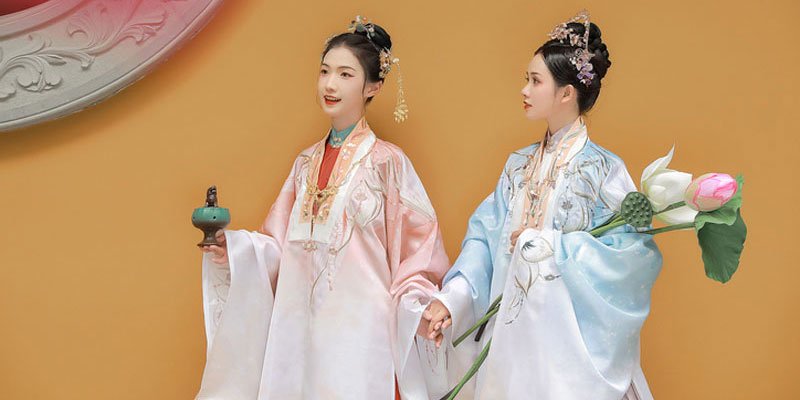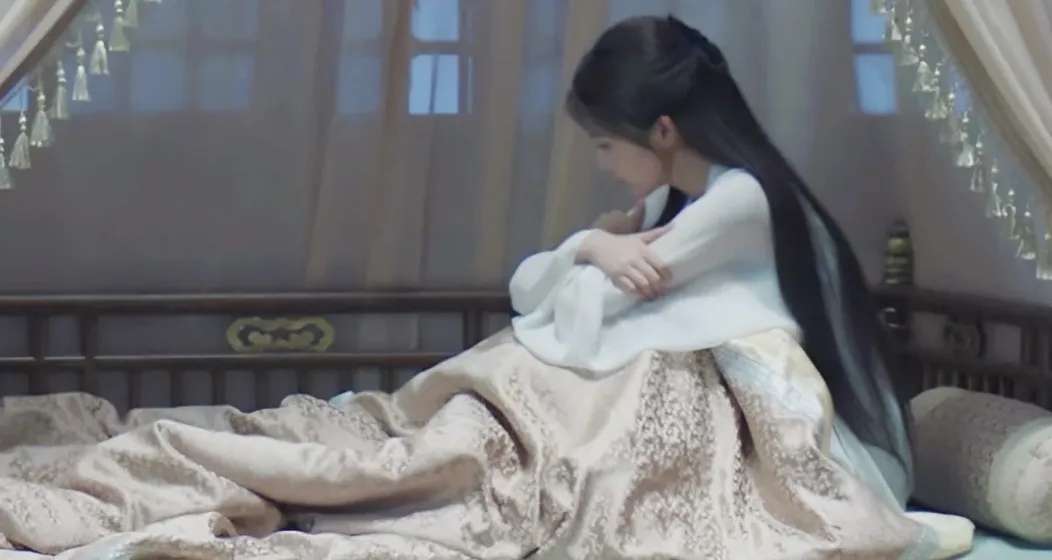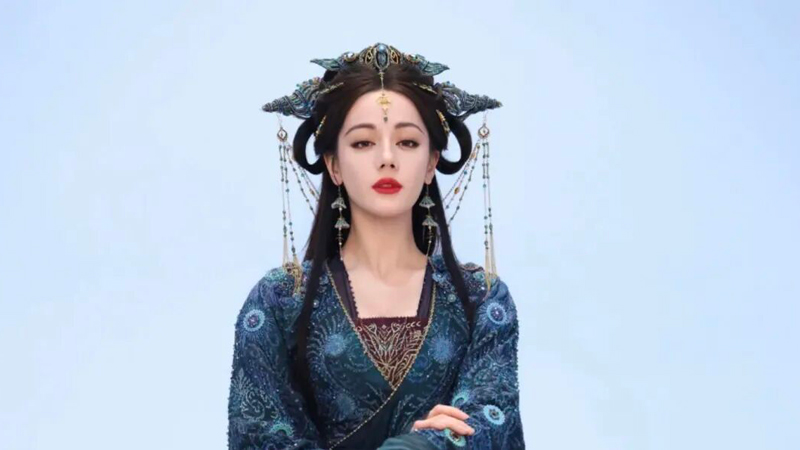
Why does Dilraba look stunning in some ancient dramas but oddly mismatched in others? Her role in the upcoming series Love Beyond the Grace (白日提灯) has sparked fresh debate among costume drama fans. The answer lies not in her acting but in the clash between her bone structure and traditional Chinese costume design. Most ancient Chinese faces, whether in paintings or on screen, follow a flat, soft contour—rounded cheeks, low cheekbones, and a broad yet gentle jawline.
That look reads as noble and graceful. Dilraba, however, carries a sharp, three-dimensional face shaped by a different ancestry. Her deep-set eyes, high nose bridge, and prominent cheekbones belong to what historians call Hu Feng (胡风), or “barbarian wind.” This term doesn’t carry a modern insult; it refers to the cultural and physical influences from Central Asian nomadic groups that poured into Tang dynasty China. Understanding this history explains why her beauty shines only when costume designers stop forcing her into traditional Han Chinese molds and instead embrace her unique heritage.
The Huihu Connection
Hu Feng wasn’t a vague trend. It came from real people. One of its strongest carriers was the Huihu (回鹘), also known as the Uyghur ancestors. Originally called Huige (回纥) before the Tang dynasty, this group lived as nomads under Turkic rule. When internal conflict weakened the Turks, Tang armies joined forces with the Huige, crushed the Turkic power, and helped establish the Huihu Khanate. That shift transformed them from wanderers into city-builders. They adopted settled life, accelerated their own textile and clothing culture, and blended it with Central Plains traditions. Their faces told the story: thick eyebrows, large bright eyes, sharply defined noses, and athletic builds. Even today, these traits appear prominently among the Uyghir people in Xinjiang.
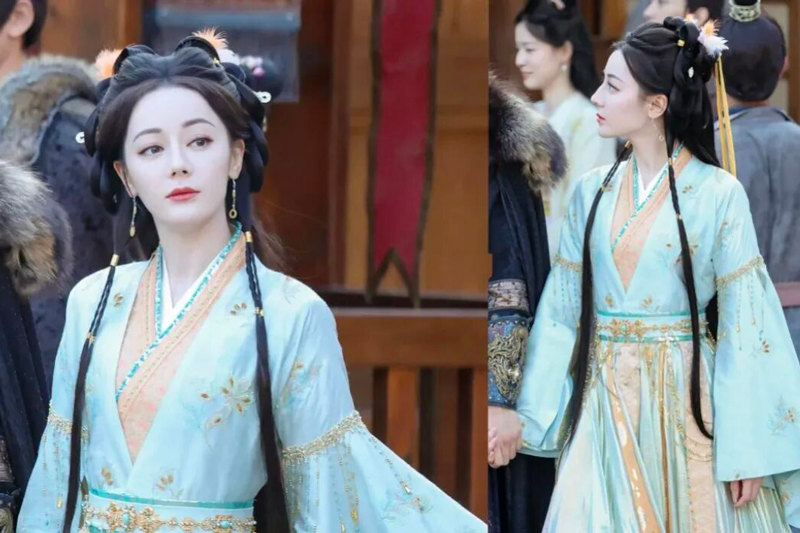
When the Huihu traded and intermarried with Tang society, their clothing changed but kept key features. Men and women wore narrow sleeves and turned-down collars. Their robes reached from calf to floor, making taller frames look even leaner. Women topped their heads with pointed, peach-pit-shaped crowns. Men wore three-pronged hats. Unlike the flat, flowing lines of traditional Hanfu, Huihu garments favored bold colors, dense embroidery, and three-dimensional decorations. The cut hugged the body rather than hiding it. That structured fit matched their high bone structure perfectly. So when Dilraba appears on screen, she isn’t just “too Western” for ancient China. She is a living echo of the Tang dynasty’s most exciting cultural fusion.
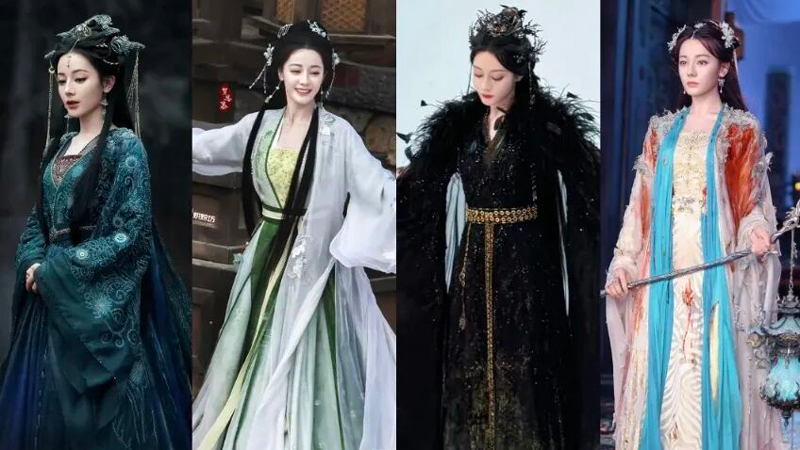
What Actually Works
Look back at Dilraba’s past ancient dramas. The costumes that made her unforgettable always carried strong exotic notes. Deep reds, turquoise blues, gold trims. Open collars that revealed her collarbone, a style common in Tang dynasty murals. The chest-wrap dresses from Dunhuang (敦煌) murals also suit her well. Those designs show flying celestial beings called Feitian (飞天), or Apsaras, which first appeared in China near what is now Kizil, Xinjiang. Early Feitian figures had round faces, strong bodies, and vivid features—much closer to Dilraba’s look than to a Central Plains ideal. Traditional Hanfu, with its high collars, tight hair buns, and delicate hairpins, doesn’t look bad on her. It just looks ordinary. The problem isn’t her face. It’s that designers often copy Ming and Qing dynasty styles without considering Tang or earlier periods when Hu Feng ruled the fashion world.
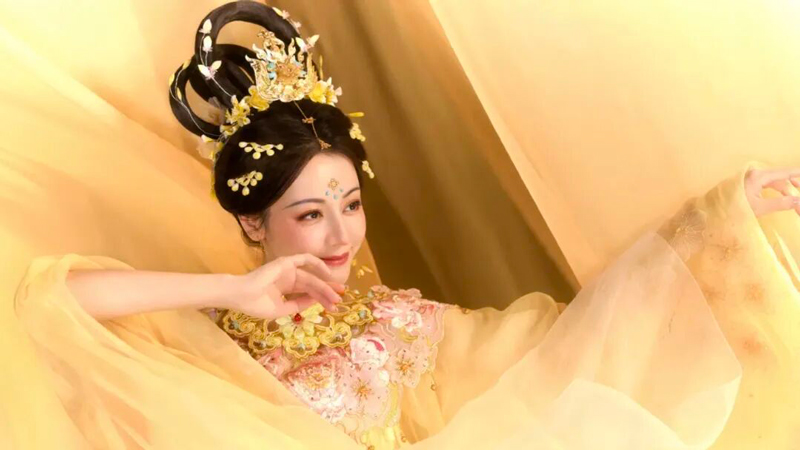
Dunhuang’s grotto murals offer a better blueprint. Over centuries, as Buddhist art moved east, the Feitian images underwent partial “Hanization” in clothing and facial features. But the earliest caves near Xinjiang kept the original flavor: round cheeks, muscular arms, bold eyebrows. Many modern Xianxia dramas borrow from these later, more Hanized versions. That’s a mistake for actors like Dilraba. She needs the earlier, wilder Feitian aesthetic. Open shoulders, layered sheer fabrics, metallic headpieces that stand up rather than lie flat. Even the makeup matters. Thick, elongated eyeliner and sharp brow arches enhance her natural depth, while soft, blurred lines make her look disconnected from the role. The best costume teams understand this. They don’t hide her features. They build the entire visual world around them.
Learning from Others
Dilraba isn’t alone. Other Uyghur actors like Gulnazar and Hani Kyzy face the same challenge. When producers force them into standard Hanfu with no adjustments, the result feels awkward. But when designers research the Tang dynasty’s actual diversity—its embrace of Sogdian merchants, Turkic guards, and Huihu nobles—the magic happens. Love Beyond the Grace has a chance to get this right. The drama’s setting, if it follows the novel, involves supernatural elements and ancient borderlands. That’s the perfect playground for Hu Feng-inspired costumes. Not caricatures, but historically informed designs that respect both the actor’s face and the era’s reality.
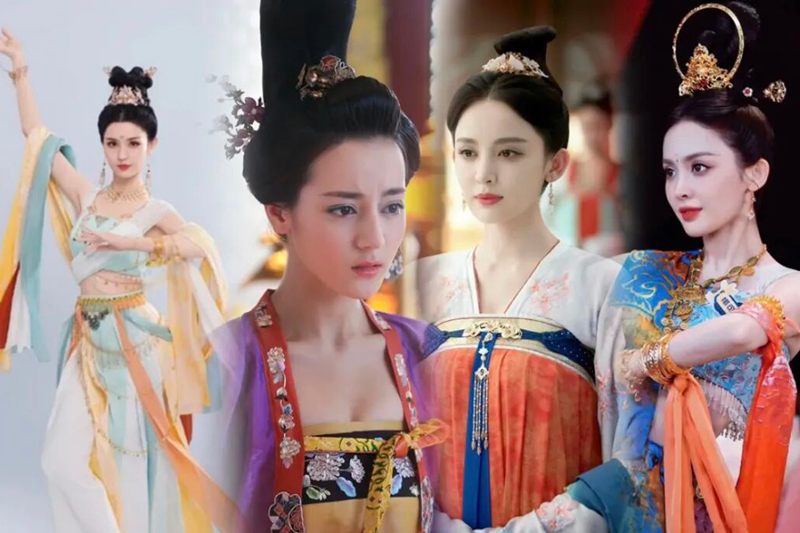
The lesson is simple. China’s ancient past wasn’t ethnically uniform. The Tang capital Chang’an (长安) buzzed with Persian, Indian, and Central Asian faces. Their fashion influenced everything from court robes to warrior armor. So instead of squeezing every actor into the same flat-cheeked, round-faced template, costume departments should match the face to the history. Dilraba’s bone structure isn’t a flaw to correct. It’s a resource to use. Give her the sharp collars, the vivid embroideries, the towering crowns. Let her stand in a robe that follows her lines rather than fighting them. That’s how she becomes not just a pretty face in Love Beyond the Grace, but a believable soul from a time when the Silk Road poured color and shape into every corner of Chinese art.