
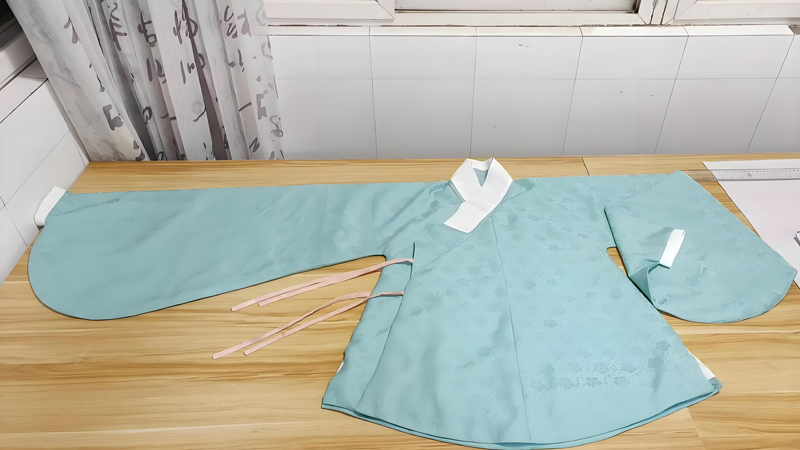
Traditional garment construction relies on precise measurements, but what happens when a fundamental value disappears? A recent tailoring experiment challenged the necessity of the horizontal neckline measurement ("Heng Kai Ling"), proving garments can function beautifully without this standard dimension. This radical approach not only defies convention but reveals surprising historical parallels and new aesthetic possibilities.
Defying Measurement Conventions
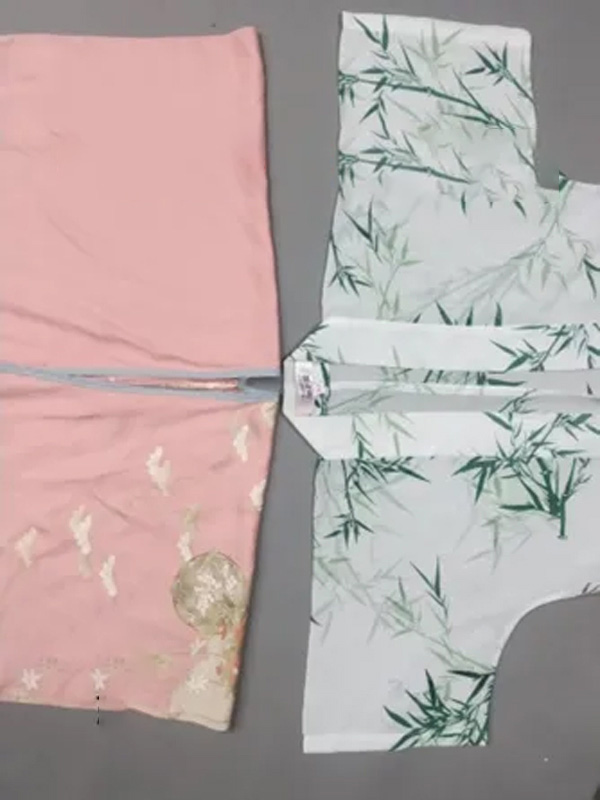
In standard tailoring, the horizontal neckline measurement creates space for the neck, typically ranging from 3-8cm. Eliminating it entirely requires reimagining the shoulder seam’s position. The experimental garment shifted this seam backward, aligning it vertically with the spine instead of curving around the neck. This adjustment maintained structural integrity while allowing the collar strips to meet precisely at the shoulder point.
Without the traditional neck curve, fabric efficiency reaches 100% – no trimming occurs at the back neckline. The collar strips remain perfectly parallel from shoulder to hem, creating a striking geometric silhouette. During fitting, the garment naturally parts at the neck while maintaining slight overlap at the hemline, proving wearability isn’t compromised by this omission.
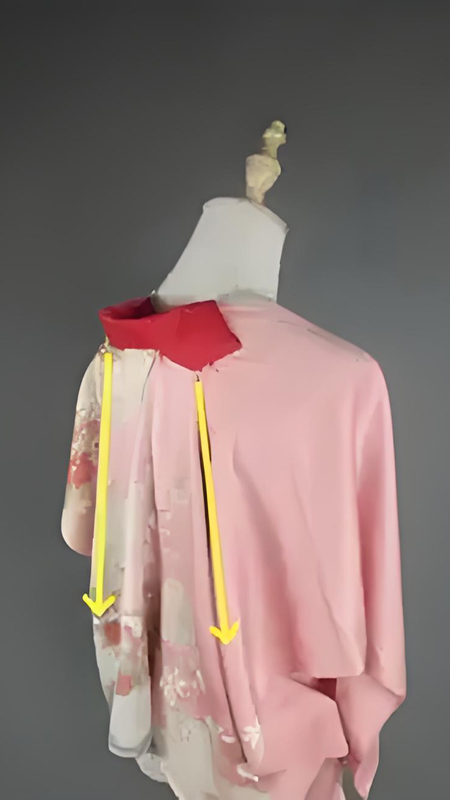
The most dramatic change appears in the back drape. Unlike garments with standard necklines that lie flat across the shoulders, the zero-neckline version generates cascading vertical folds from the cervical point. These organic pleats create dynamic movement and volume, offering an alternative to the streamlined back profiles of conventional designs.
Historical Echoes in Stitchwork
Unexpected validation came from Miao minority tailoring techniques documented in Liu Ruipu's (刘瑞璞) research. A traditional Xijiang left-lapel garment features a separate back neck panel sewn at an angular seam – precisely the solution adopted to test structural variations in the zero-neckline experiment. This parallel development across cultures suggests universal tailoring logic transcending regional traditions.
Adding this diamond-shaped back panel transformed the drape behavior. While the original zero-neckline version produced deep central folds, the paneled variant distributed volume diagonally toward the shoulder blades. The angular seam created a subtle pivot point, allowing fabric to fall in softer, directional waves rather than sharp vertical lines.

Historical Song dynasty tailoring provides another fascinating comparison. "Yuanshen Chuling" (original-body neckline) techniques from 12th-century China share similarities with both the zero-neckline approach and Miao methods. Contemporary illustrations reveal how tailors minimized fabric cutting around the neck while achieving sophisticated draping – a principle central to this modern experiment.
Draping as Design Language
The zero-neckline garment fundamentally reinterprets fabric behavior. Without neckline easing, tension distribution shifts dramatically. Fabric strain concentrates at the single shoulder seam junction, while the unrestrained back becomes a canvas for gravity-driven pleating. This creates a living sculpture that reshapes itself with movement, contrasting sharply with controlled contemporary silhouettes.
Comparisons with standard garments highlight these differences. Traditional horizontal necklines create predictable shoulder contours and uniform back tension. The experimental version sacrifices this predictability for organic volume – where a conventional garment lies flat, the zero-neckline alternative blooms with kinetic folds. This isn’t a flaw but a deliberate aesthetic choice offering new expressive potential.
Practical considerations emerge regarding fabric selection. Fluid, lightweight materials enhance the cascading drape effect, while stiffer fabrics create architectural volume. Interestingly, the structure accommodates diverse body types exceptionally well – the absence of fixed neck constraints allows adaptive fitting through the drape’s natural movement rather than precise measurement.
The experiment ultimately liberates tailoring from formulaic approaches. By proving a "mandatory" measurement isn’t essential, it invites reexamination of other construction rules. The resulting garments don’t merely function despite missing elements – they derive distinctive beauty from their unconventional structure, merging historical wisdom with contemporary innovation.
