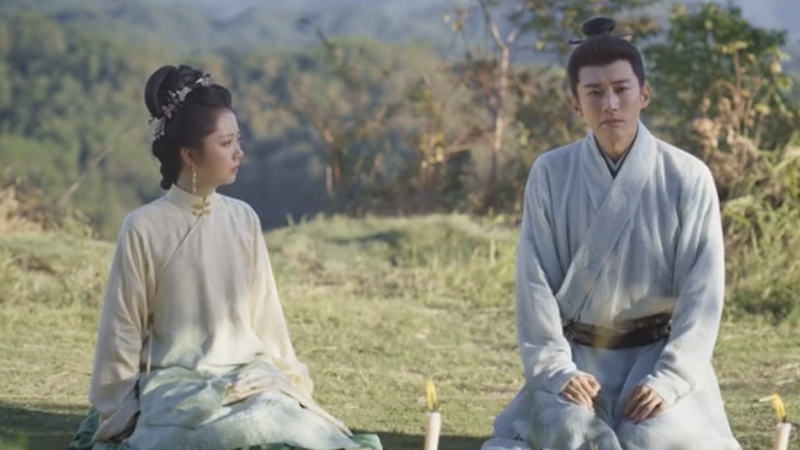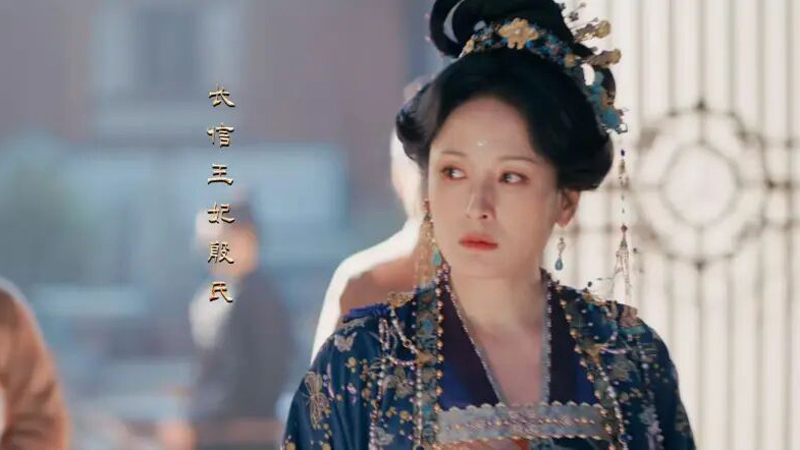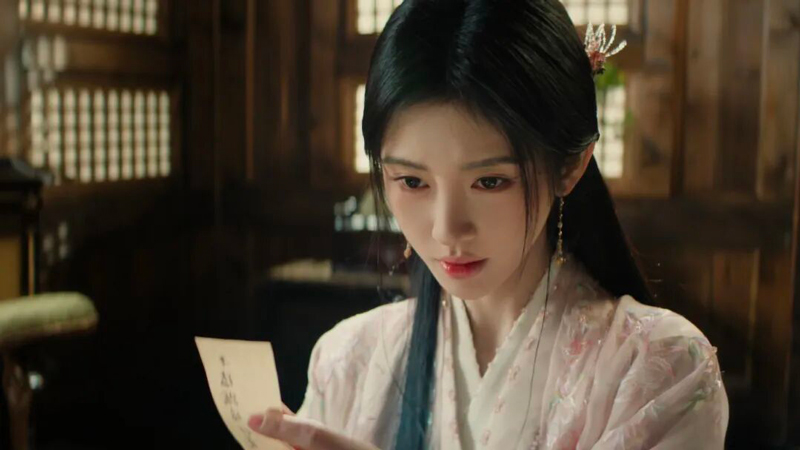
In episode 3 of the hit drama Veil of Shadows (月鳞绮纪), Lu Wuyi (露芜衣) follows a mysterious note to a weaving workshop. The moment she steps inside, a deadly formation traps her. Forced to reveal her true fox spirit form, her identity—along with her companion Wu Wangyan’s (雾妄言)—is blown. All their previous efforts to blend in become worthless. The one who lured her there? Xiaowei. But here’s the puzzle: Xiaowei and Lu Wuyi both belong to the same shadowy group, Wu Xiang Yue (无相月). According to Wu Wangyan, members of Wu Xiang Yue share deep emotional bonds. So why would Xiaowei set up her own ally? The answer isn’t betrayal. It’s something far bigger—a secret buried in the script that changes everything.
1. A Stranger Among Fox Spirits
Let’s start with what the drama makes clear: Xiaowei is actually the disguised form of Liu Weixue (柳为雪). When Wu Wangyan first uses her word magic on the jade curtain, she instantly recognizes Xiaowei. But here’s the catch—Xiaowei shows no recognition of Lu Wuyi. If they were old friends from Wu Xiang Yue, why would she harm her? The most logical explanation is simple: Xiaowei has never met Lu Wuyi before.
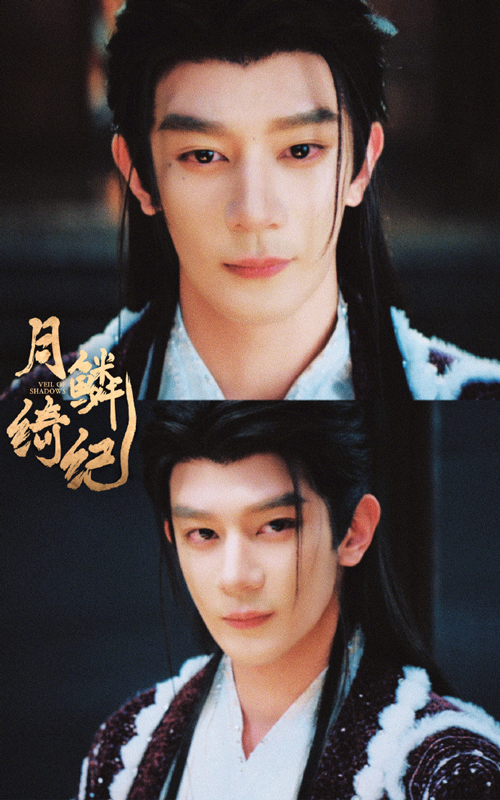
Wu Wangyan often recalls her time with Xiaowei back in Wu Xiang Yue. Those memories are warm, filled with affection. Yet Lu Wuyi is absent from every single one. That means Lu Wuyi joined the organization after Xiaowei defected. They have no shared history. Lu Wuyi knows about Xiaowei only through shared memory records—a cold data transfer, not a lived connection. When Wu Wangyan sighs “long time no see” to Xiaowei, Lu Wuyi stands like a bystander. She narrates Xiaowei’s escape from past hunters without a flicker of emotion. No history, no mercy.
Then comes the real twist. Wu Xiang Yue originally had seven fox spirits, each representing a moon phase: waning, full, crescent, and so on. Wu Wangyan is the full moon. Xiaowei is the waning moon. But Lu Wuyi? Her assigned phase is Hui (晦)—the invisible moon on the last day of the lunar cycle. It’s a phase that doesn’t exist in the original seven. Invisible, almost unreal. That’s no accident. The name itself hints that Lu Wuyi’s entire identity might be a fabrication.
2. The Fox Who Doesn’t Understand Love
Watch Lu Wuyi closely in episode 3. After she and Wu Wangyan take a cursed ice blast meant for Xiaowei, they sit on stone steps. Tears roll down Lu Wuyi’s face. But what does she say? “I don’t understand. I don’t know love or affection.” Her words contradict her tears. This isn’t bad acting—it’s character design. Lu Wuyi lacks genuine emotion. She cries because she has learned to mimic human behavior, not because she feels sad. She’s especially careful around the deeply emotional Wu Wangyan, pretending to fit in.
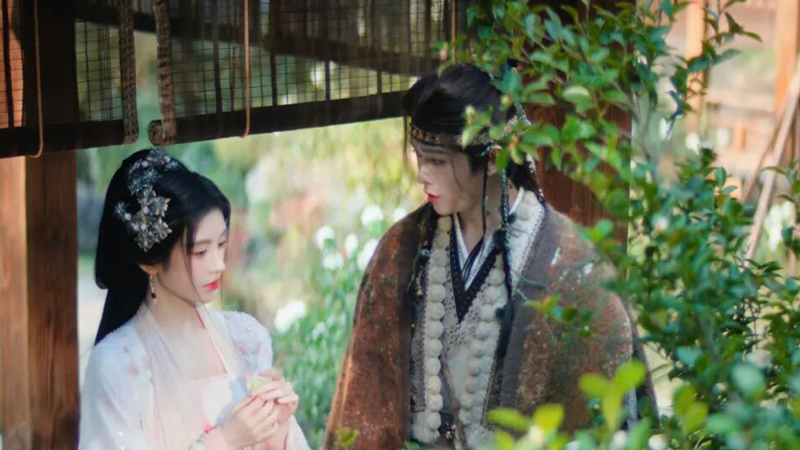
The drama drops another clue. The Fox King tells Lu Wuyi that Ji Ling is her “fated person.” In Chinese fantasy, a fated person exists to teach you about love and connection. Lu Wuyi doesn’t even know what that means at first. She treats it like a mission objective. But later, when she watches Ji Ling vanish completely, something cracks. She attacks the Dragon God in rage, gets gravely wounded, and ends up imprisoned by the Shilin (侍鳞) Sect. That violent reaction—born from loss—is her first real taste of emotion. The curse of being a fake identity is that you don’t know what you’re missing until it’s torn away.
So back to Xiaowei’s trap. Xiaowei didn’t betray a friend. She targeted a stranger who wears the mask of an ally. And Lu Wuyi? She didn’t feel betrayed because she barely feels anything at all. The tragedy is that both of them are products of Wu Xiang Yue’s secrets—one a defector, the other possibly a created being. The formation in the weaving workshop wasn’t personal. It was tactical. Xiaowei needed to expose something, and Lu Wuyi was simply the most convenient key.
3. Two Roles, One Hidden Truth
Here’s a detail many viewers miss. The actor list for Veil of Shadows shows Ju Jingyi playing not one but two characters: Lu Wuyi and someone named Dizhu (地珠). Dizhu is another name for the trillium plant—a white, beautiful flower often grown for decoration. Sound familiar? Lu Wuyi loves flowers. She dresses in white. She even carries a visual purity that matches the plant. But Dizhu isn’t just a parallel. It’s a hint at duality.
In traditional Chinese medicine and folklore, trillium has another property: it’s used to stop bleeding and heal wounds. That ties back to Lu Wuyi’s role in the story. She is a tool—someone created or shaped to serve a purpose. The preview for upcoming episodes confirms this. Lu Wuyi says, “My whole life was created and controlled.” That’s not a line about fate. It’s a confession about origin. She wasn’t born a fox spirit. She was made into one. Her missing emotions, her added moon phase, her lack of history with Xiaowei—all of it points to one conclusion: Lu Wuyi is an artificial member of Wu Xiang Yue.
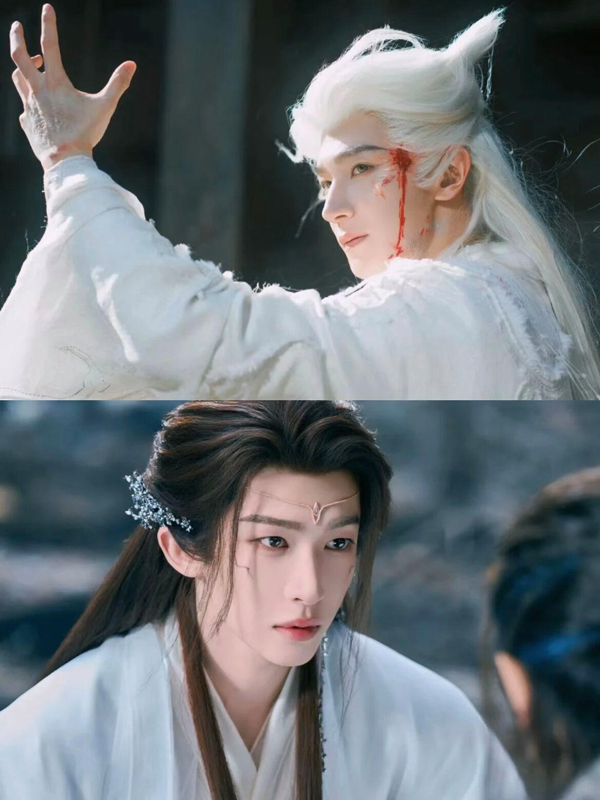
So why did Xiaowei trap her? Because Xiaowei, as a defector, likely discovered the truth. The formation in the weaving workshop wasn’t just a trap. It was a test. If Lu Wuyi reacted with real fear or betrayal, she’d be genuine. But she didn’t. She responded like a machine following programming. That’s the big foreshadowing the director hid in plain sight. And now the question turns to you: Did you suspect Lu Wuyi has a double identity? What do you think her real origin is? Drop your theories in the comments—because in Veil of Shadows, no mask stays on forever.