

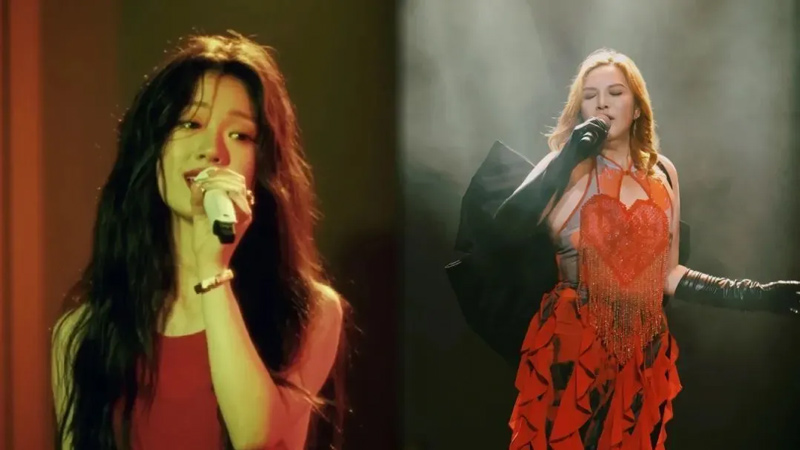
The summer of 2025 witnessed Chinese pop music morphing into a spectacle of glorious absurdity. At Nana’s concert, chants of "Refund!" dissolved into raucous singalongs for her viral hit Love Like Fire (爱如火), turning dissent into collective catharsis. On stage at Singer 2025, newcomer Zhelai Nu transformed a martial arts anthem into a drunken dice chant, shouting regional slang like "Five Chiefs Head, Six Six Six!" leaving judges stunned. Meanwhile, Shan Yichun’s (单依纯) Li Bai remix, dripping with sarcastic sighs of "So what? Whatcha gonna do?", became a TikTok tsunami, hijacking even Olympian Quan Hongchan’s social media.
These bizarre, rule-breaking performances, dubbed "mad" or "abstract," became the season’s defining cultural moments. But why does this chaotic energy resonate so deeply with a generation?
Stage Gone Wild
The "abstract" takeover manifests in wildly unpredictable live interactions. Artists like Nana (formerly "Russian Nana," a persona crafted by Wuhan farmer-turned-internet-sensation Na Yina) thrive on shattering concert conventions. Her shows feature open acknowledgement of lip-syncing - once playing a child’s vocal track instead of singing - met not with outrage but uproarious audience delight.
Fans gleefully call her "Mom," joking she’s "the Soviet Union’s last gift," blurring lines between artist and absurdist icon. Her commercial success, with tickets selling out instantly and reselling at triple value, proves the demand for this participatory madness extends far beyond niche audiences. Attendees aren't paying for vocal perfection; they crave a shared space for unfiltered, belly-laugh-inducing release.
The trend embraces raw, unfiltered expression over polished performance. Pang Mailang’s (庞麦郎) 2025 tour became performance art: twelve songs, ten costume changes, and hypnotic repetitions of "My father is a bricklayer." Once mocked online for his awkwardness, he found understanding crowds in livehouses.
Similarly, Shan Yichun’s Li Bai remix brazenly injected Honor of Kings gaming lingo - "I’m just a support, jungling tonight!" - drawing scathing critique as "cringeworthy low-brow nonsense." Yet, it sparked over 2 billion views, fueled by countless user covers and parodies.
Digital Carnival Roots
This "madness" isn’t sudden; it’s the evolution of internet-born "abstract culture" (Chouxiang Wenhua). Originating in gaming forums and early livestreamers like Sun Xiaochuan (孙笑川), whose rage-fueled outbursts spawned viral memes, it matured through "earthy" (Tuwei) pioneers. Figures like Giao Ge, Yaoshui Ge (Medicine Water Brother), and Guo Lao Shi used exaggerated, nonsensical personas to challenge norms, building tight-knit online communities united by shared inside jokes and bizarre catchphrases. Their content, spread via short videos and memes, created unique linguistic codes and identity markers within specific subcultures.
Bakhtin’s Carnival Theory illuminates this appeal. He saw medieval carnivals as "second lives" temporarily overturning rigid social hierarchies. Laughter, grotesque imagery, and chaotic participation dissolved authority, fostering a fleeting sense of communal equality and liberation. Attending Nana’s concert becomes an act of joyful rebellion against the passive "artist-worshipping" concert script. Singing along en masse at Wu Bai’s shows offers the same release. Nomie’s journey from obscurity to viral fame through an absurd diss track (Thanks Sky Emperor) embodies the carnivalesque dream - success found through unconventional, rule-breaking paths.
The core is cathartic escape. As lyricists Fayao and Zao An declared, "Ridiculousness carries more weight than righteousness." Shan Yichun’s sigh, "So what? Whatcha gonna do?", resonates as a nihilistic shrug against overwhelming pressures. Abstract music offers a pressure valve. It’s not about rejecting "good" music; it’s about prioritizing spaces free from judgment, aesthetic rules, or deep meaning - where unfiltered expression and shared laughter momentarily dissolve life’s weight.
Rebels With New Causes
Youth culture has always weaponized music against societal constraints. The 1960s saw rock become an anthem for anti-war and civil rights movements. Bob Dylan’s Blowin’ in the Wind posed piercing questions demanding justice, while The Beatles’ All You Need Is Love offered a simple, potent plea for unity. Rockers used poetic lyrics and driving rhythms to challenge authority and envision utopias.
By the 1980s, marginalized Black communities in the US channeled fury through raw, socially conscious rap. Grandmaster Flash’s The Message painted a brutal picture of ghetto life - failing schools, unemployment, drugs - directly confronting systemic racism. KRS-One’s The Bridge Is Over attacked inequalities, turning hip-hop into a sonic weapon against oppression.
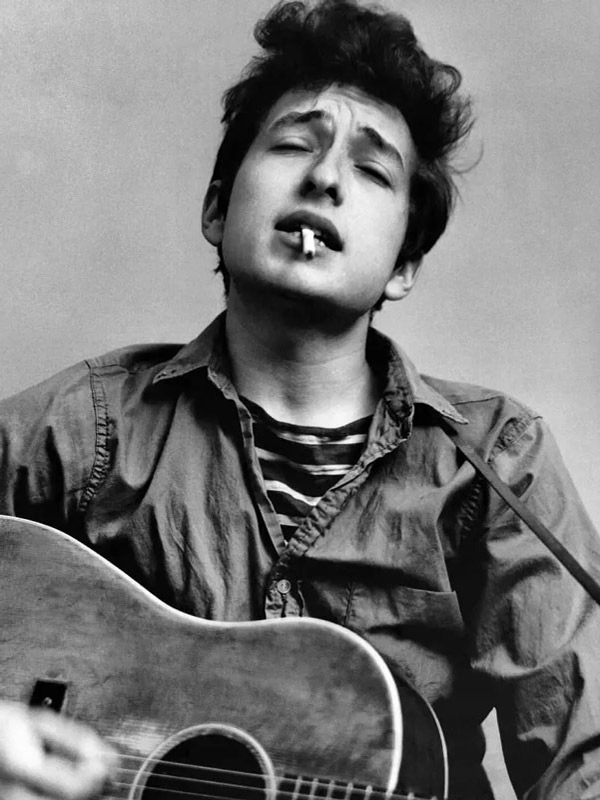
Jack Kerouac’s cry for the Beat Generation - "What’s your road, man? Holyboy road, madman road…" - echoes across eras. Each generation finds its sound of dissent. Yesterday’s rebels wore leather jackets and sang poetic laments; today’s youth weave gaming slang and internet memes into chaotic bangers. The polished protest anthems of rock gave way to rap’s gritty street narratives, evolving now into abstract music’s absurdist, often nonsensical, defiance. It reflects a generation navigating information overload, economic precarity, and performative online lives, choosing deconstruction over direct confrontation.
As cultural critic Xu Zhiyuan (许知远) noted, this generation needed a "new language." Abstract music, messy and uncouth as it may seem, might be precisely that. It’s less about coherent political statements and more about carving out pockets of digital and physical space for unrestrained emotional expression and communal absurdity.

The future remains gloriously unpredictable. Will this "absurdist wave" evolve into structured genre? Or will it self-destruct, replaced by newer, stranger rebellions? Either way, its legacy is clear: in a world demanding flawless optimization, sometimes the most radical act is to proudly, loudly, sing off-key. As Bakhtin understood, laughter isn’t escapism—it’s insurrection.
