
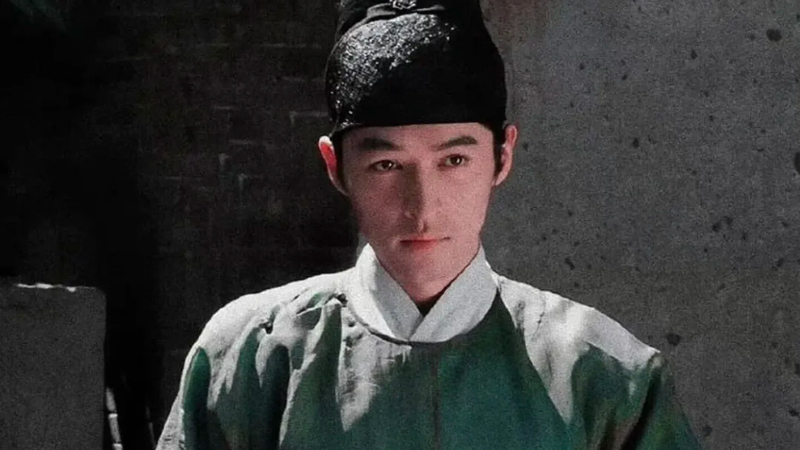
For years, a common sight at festive gatherings has been a style of clothing known as the Tang suit, its distinct collar and knotted buttons evoking a sense of tradition. But is it truly a garment from the Tang Dynasty? A resurfaced video from a 2014 company event shows actor Hu Ge (胡歌) calmly clarifying this very point, referencing the information available at the time. He pointed out that the modern garment often called a Tang suit is not a relic of the Tang era, but a modern creation.
This moment of public education, delivered by a prominent figure, peeled back a layer of collective assumption, revealing that what many considered an ancient heritage piece was, in fact, a far more recent invention with a surprising origin story.
A Modern Garment, A Borrowed Name
The outfit Hu Ge spoke about is the very one seen at weddings and celebrations: the modern Tang suit. Its history does not stretch back a thousand years but merely a little over a century, to the late Qing Dynasty. It was born from a fusion, taking the Magua (马褂), a traditional jacket of the Manchu people, and reshaping it with Western-style tailoring techniques. This gave it a structured, form-fitting silhouette distinct from the flowing lines of ancient Chinese garments. Its name, ironically, has no root in the Tang Dynasty at all.
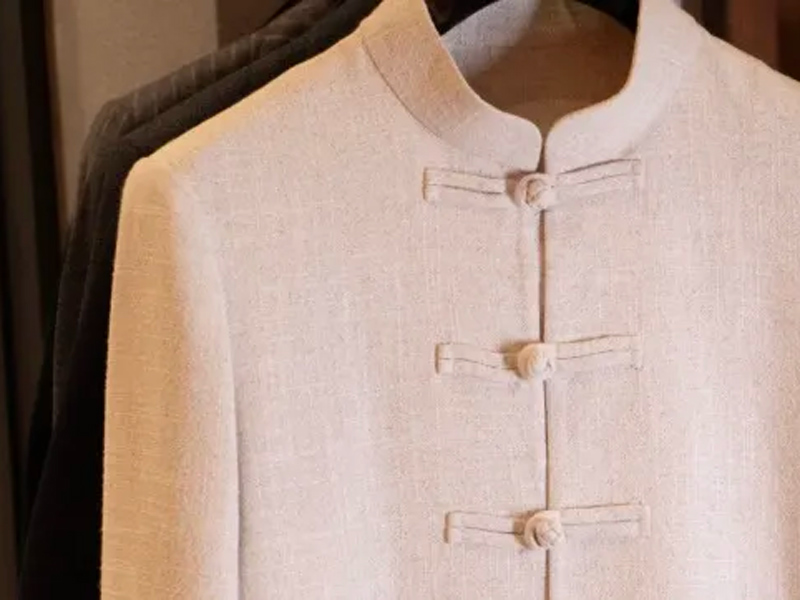
The moniker "Tang suit" came from abroad. It originated in the "Chinatowns" of overseas Chinese communities. To foreigners, the distinctive style of jacket worn by the residents became a visual marker of Chinese identity, and they began calling it a "Tang suit," linking it to the most famous dynasty they associated with China. The name stuck, traveled back, and became the common term for this style, creating a widespread assumption about its origins that Hu Ge’s comments helped to correct.
Its features are unmistakable: a standing collar, a front buttoned down the center, and intricate knotted buttons known as frogs. These elements are combined with a tailored, fitted cut that prioritizes sharp lines and a modern fit. It is a garment of the modern era—a stylish, culturally coded outfit for special occasions—but it shares no direct lineage with the clothing of the Tang court or its people.
The Tang Dynasty’s True Silhouette
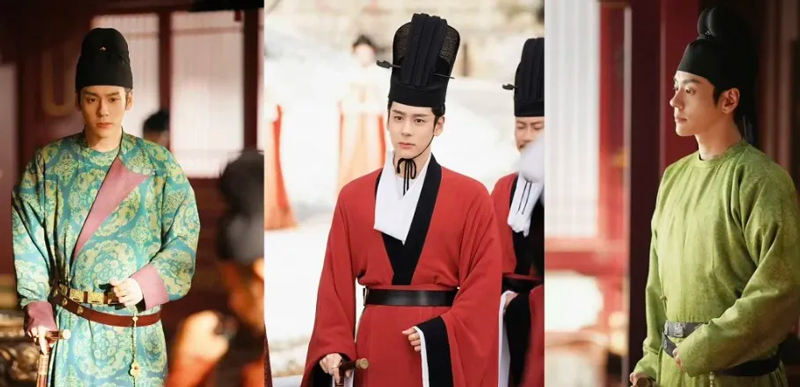
So, what did people wear during the Tang Dynasty? The answer lies within the broader system of Hanfu, the historical attire of the Han Chinese. Tang-era clothing represents a glorious chapter in this tradition, characterized by a philosophy of design entirely different from the modern Tang suit. Instead of Western-style tailoring, it utilized a flat pattern cut, creating garments that were voluminous, flowing, and designed to drape gracefully around the body.
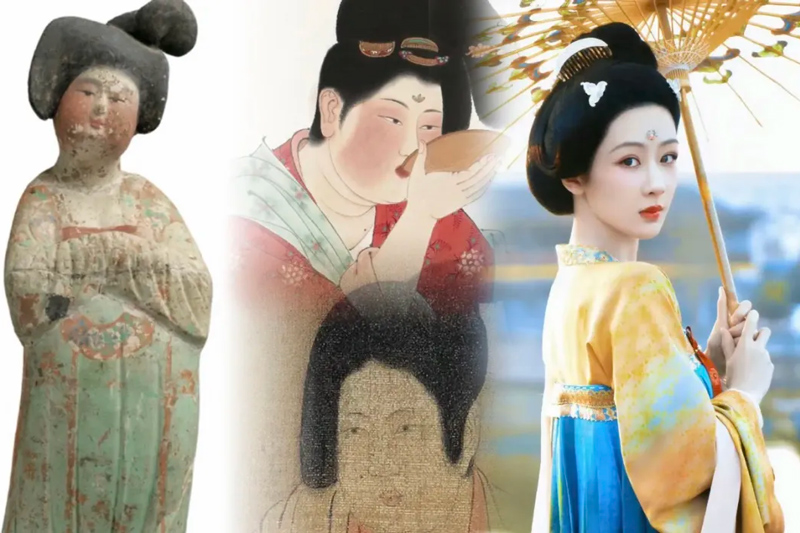
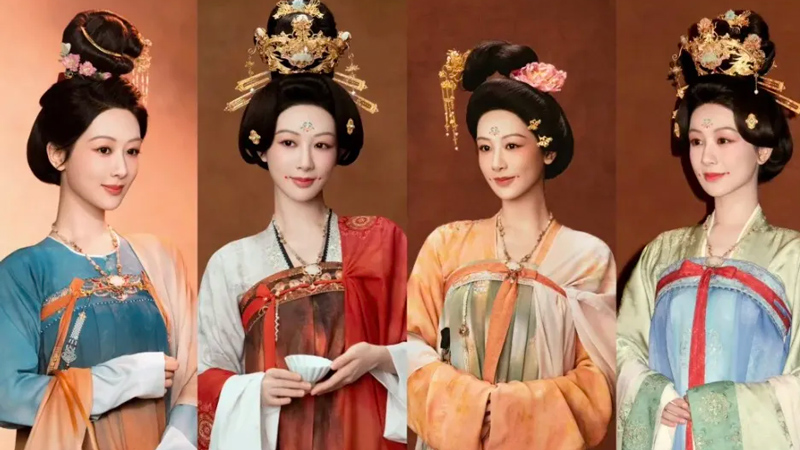
The aesthetic was one of opulence and grandeur. For women, iconic styles included the chest-high blouse and skirt, often with a wide, low collar that revealed the shoulders, paired with an oversized outer robe and a long, airy scarf that added movement and elegance. The skirts were full, the colors rich, and the overall impression was one of confident, unapologetic luxury. Men’s attire, while more understated, was equally defined by its silhouette, most commonly a round-collared robe that spoke to both practicality and formal dignity.
The fundamental difference lies in the construction and philosophy. The Tang suit is a hybrid garment—its form is dictated by a structured cut that molds to the body. Tang Dynasty Hanfu is a product of an ancient system of flat pattern cutting and follows the core Hanfu principle of a crossed collar that wraps to the right. One is a modern fashion adaptation; the other is a historical garment system from a specific era. They are two separate streams of clothing history, coexisting but not interchangeable.
Understanding to Honor
The discussion sparked by Hu Ge’s video goes beyond a simple lesson in fashion history. It highlights how easily names can become disconnected from their origins, creating a collective misunderstanding. When a garment like the modern Tang suit is universally believed to be a thousand-year-old tradition, the actual traditions of the Tang Dynasty can become obscured. This isn't about declaring one style as "correct" or "better," but about untangling the threads to see each for what it truly is.
Correctly identifying these garments allows for a deeper appreciation. Recognizing the modern Tang suit as a product of late Qing innovation and cross-cultural exchange honors its own unique history—a story of adaptation and identity within a global context. Similarly, understanding Tang-era Hanfu as a distinct part of a millennia-old tradition allows us to appreciate the craftsmanship and aesthetic values of that specific golden age on its own terms.
Ultimately, the goal of cultural preservation is not to create divisions but to foster clarity. It begins with accurate knowledge. By knowing the difference between the modern Tang suit and the clothing of the Tang Dynasty, we can better appreciate the specific historical narratives and cultural significance each one carries. This clarity allows us to engage with these garments not as a monolithic, vaguely defined "tradition," but as distinct pieces of a rich and complex heritage, ensuring they are respected and understood for what they truly represent.
