
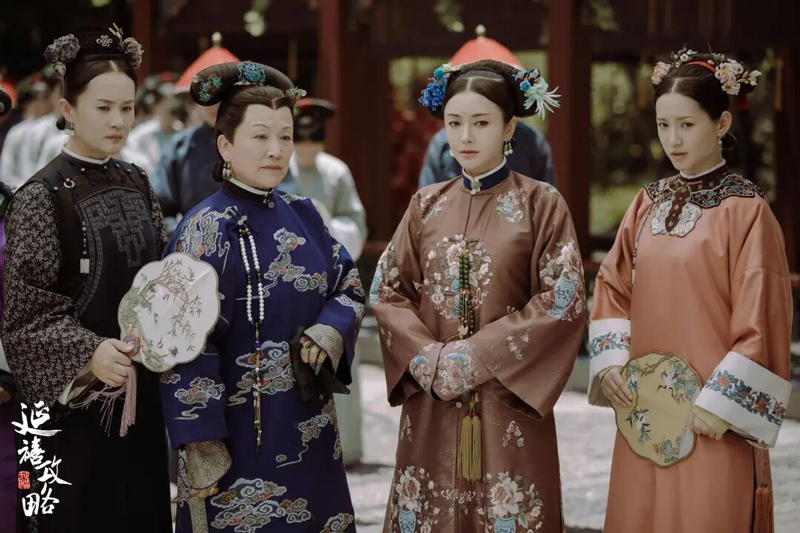
In popular Qing dynasty court dramas like Story of Yanxi Palace (延禧攻略) and Ruyi’s Royal Love in the Palace (如懿传), a familiar scene often captures the viewer’s eye: a woman walks with measured steps, her robe gently lifted by the wind, revealing a delicate ornament swaying gracefully at her chest. The subtle chime of jade and the rhythmic movement of silk threads—this was not merely decoration, but the essence of classical elegance.
This ornament, known as Ya Jin (压襟), was much more than a simple accessory. It was a statement of poise, a functional tool, and a vessel for cultural ideals, typically fastened to the second button on the right side of a woman’s robe. As her garment moved forward, the ornament shifted back; as the robe settled, it returned to its place—an eternal dance between movement and stillness that embodied a quiet, enduring beauty.
The Origin of an “Event”
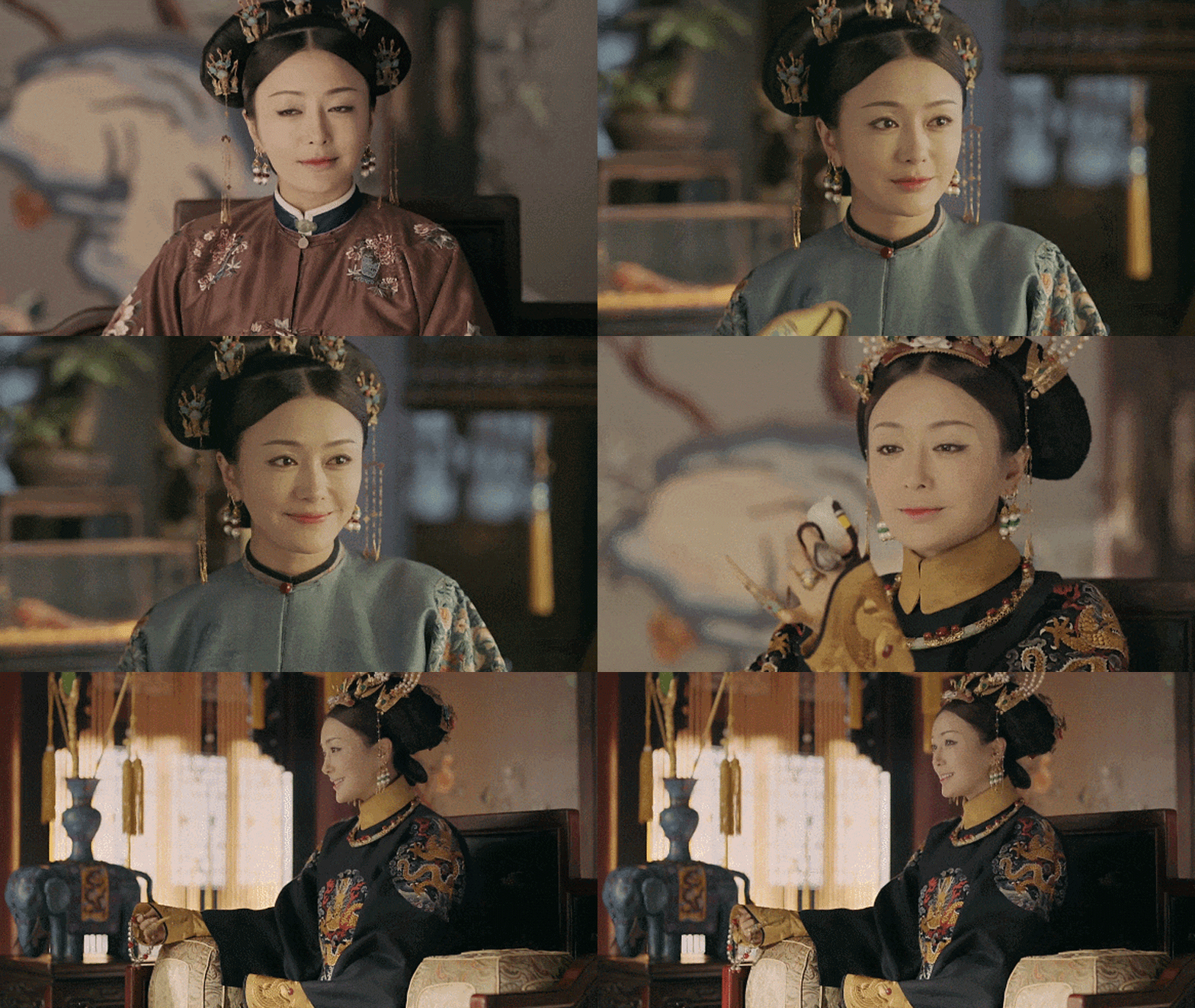
Despite its modern name, Ya Jin was historically referred to by a far more intriguing term: Shi Jian (事件), which translates to “event” or “affair.” This name hints at the accessory’s multifaceted role in daily life. It first appeared during the Tang dynasty, a period celebrated for its opulent fashion and bold aesthetics, but it truly flourished during the Ming and Qing dynasties. During these later eras, women’s garments became increasingly voluminous and wide-cut, often billowing unflatteringly with the slightest breeze.
The Ya Jin emerged as a clever solution to this practical problem. By adding weight to the garment’s front, it kept the fabric smooth and in place, allowing the wearer to maintain a dignified and composed silhouette. Typically short in length, around ten centimeters, it was designed to be unobtrusive yet essential.
Its structure was often tripartite. The top section featured a chain or cord designed to loop around a button. The middle, known as the Ya Kou (压口), or “the press,” was the centerpiece, crafted from precious materials like jade, coral, or silver, and often carved into intricate shapes. The bottom section was a cascade of smaller ornaments: tiny charms, delicate bells, or long, flowing tassels. This design was not arbitrary. Each component played a role in the overall aesthetic, creating a piece that could be as understated or as magnificent as the wearer desired, with color combinations that ranged from subtle and elegant to vibrant and striking.
More Than Meets the Eye
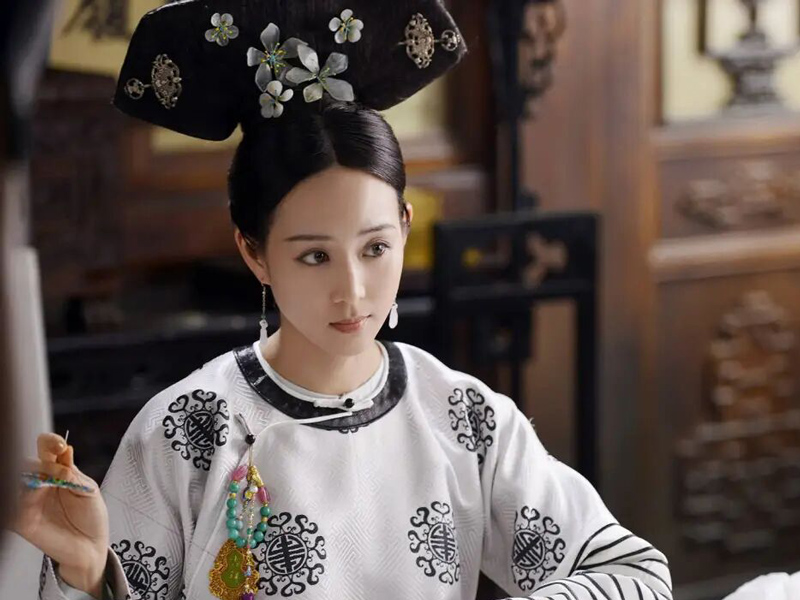
The Ya Jin was an instrument of sensory delight. The small bells or jade pieces suspended from its base would produce a gentle, melodic chime with each step, a sound designed to calm the mind and bring a sense of serenity. An ancient poem captures this perfectly: “Only the fragrance is known, but not its source / Looking up at the young woman, the Ya Jin moves upon her chest.” Some Ya Jin were even fitted with small, openable sachets, allowing a subtle fragrance to accompany the wearer’s movements, adding another layer to its sensory appeal. This was not just ornamentation; it was an early form of personal ambiance, a way to create an aura of grace that engaged both sight and sound.
This pursuit of refinement was deeply connected to traditional concepts of self-cultivation. The ancient text Hong Fan (洪范) from the Book of Documents outlines five essential practices for personal development: demeanor, speech, vision, hearing, and thought. Similarly, the Buddhist practice of meditation emphasizes five disciplines: regulating food, sleep, body, breath, and mind. The Ya Jin served as a physical manifestation of these ideals. Its presence encouraged a woman to move with intention, to speak with a measured tone, and to maintain a state of inner composure. The gentle sounds it produced and the subtle weight it provided acted as constant, gentle reminders of these principles, integrating philosophical concepts into the very fabric of daily life.
Symbolism Woven in Jade
The artistry of a Ya Jin extended to its intricate motifs, each laden with auspicious meaning. The central Ya Kou was commonly carved from materials like silver, ivory, jadeite, or agate into shapes such as cicadas (symbolizing rebirth), bats (representing blessings), fish (signifying abundance), or peonies (embodying wealth and honor). Below, the dangling ornaments were even more varied. Some featured miniature weapons like knives, spears, swords, or halberds, while others included practical tools like tweezers, toothpicks, ear scoops, or small powder cases. A piece might have as few as three or as many as nine of these small pendants, though five was the most common number. This specific combination was so prevalent it earned its own name: Ya Jin Wushi (压襟五事), or “the five affairs of the Ya Jin.”
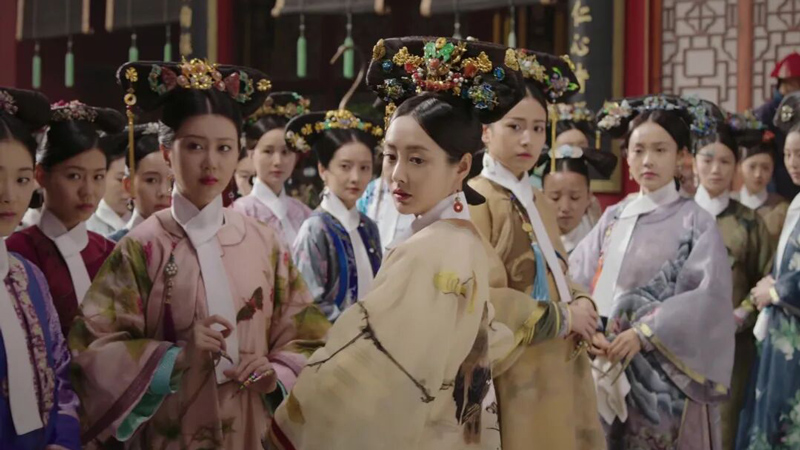
This concept of “five” was not coincidental but deeply rooted in Chinese cultural thought, where it often represents a complete or balanced set. In modern times, the Ya Jin has seen a revival, often worn as a brooch on the Qi Pao. Styling principles have emerged from this revival: a lighter-colored dress might call for a more vibrant Ya Jin to create visual contrast, while a dress with a busy pattern would be paired with a simpler, more muted piece.
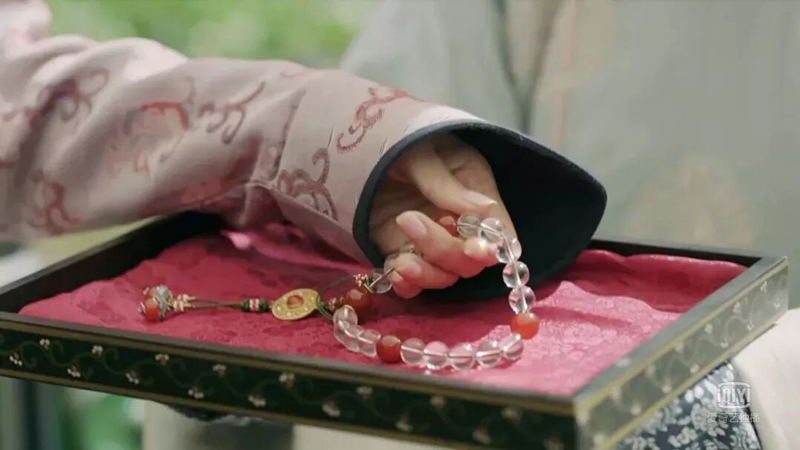
Furthermore, the Buddhist Eighteen Beads, a bracelet of 18 bodhi seeds traditionally considered a symbol of perfection and harmony, was ingeniously adapted. By adding a loop to its clasp, it could be transformed into a pendant, seamlessly blending spiritual practice with fashion. This “Eighteen Beads” Ya Jin, especially those made from precious materials like jadeite, became a highly sought-after accessory in the Qing court, prized for its spiritual connotations and its dual function as both a necklace and a hand-held bracelet—a perfect example of Chinese aesthetics, where beauty, function, and symbolism are never separate, but always unified.
