Shenkong Bi'an (深空彼岸) just dropped an episode that has completely rewritten the rulebook on how to redeem a villain. How does a character, introduced as the antagonist hell-bent on the protagonist’s destruction, transform into a martyr whose death becomes the most heartbreaking scene in the entire series? It wasn’t through lengthy exposition or forced sentimentality. It was through a single, brilliantly executed life-or-death confrontation that left audiences not just understanding his motives, but genuinely feeling the weight of his sacrifice.
The episode delves deep into the core conflict of the series: the collision between the old ways and the new, using one man’s journey from obsessed foe to devoted protector to illuminate a much larger, more poignant struggle.
A Master’s Desperate Crusade
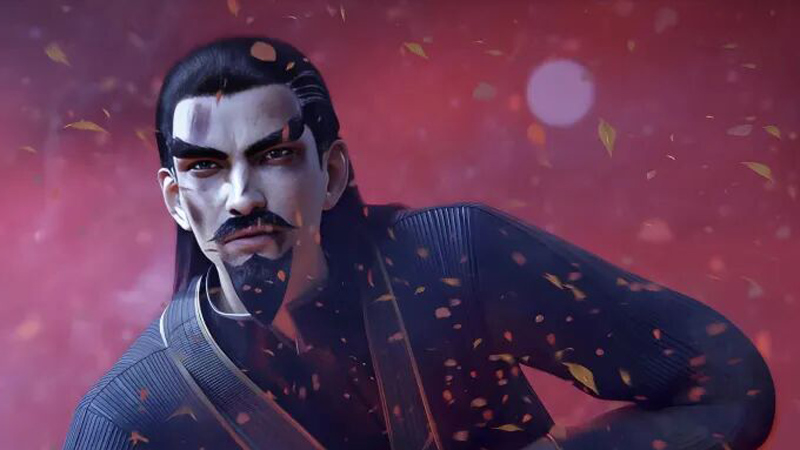
The genius of Sun Chengkun’s (孙承坤) arc lies in understanding his original sin: it was never malice, but desperate love. As a grandmaster of the Old Art, he has dedicated his life to a path of cultivation that society has deemed obsolete. In a world drunk on the immediate, flashy power of New Art, the Old Art is a relic—a grueling journey with no promised destination, its practitioners seen as quaint anomalies. Sun Chengkun watched the tradition he devoted his entire existence to crumble into dust, and his soul was consumed by a singular, burning obsession: to secure a future for it.
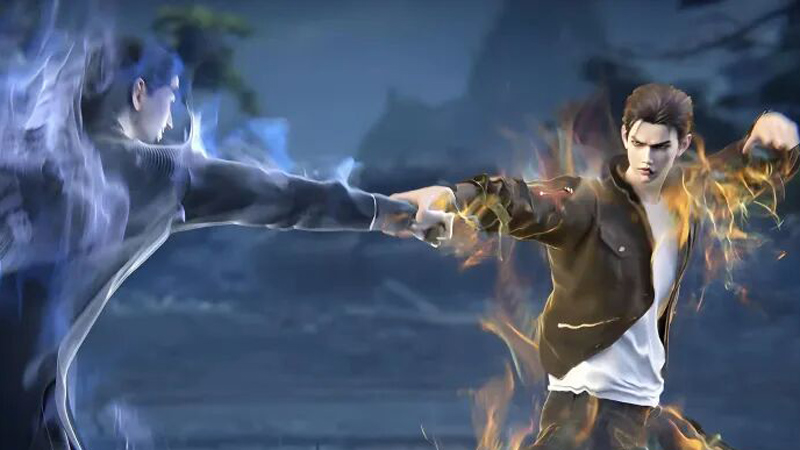
This is the lens through which his actions must be viewed. When a treacherous enemy of Wang Xuan (王煊) offers a forged ancient scripture as bait, promising it holds the key to reviving the Old Art, Sun Chengkun sees it as the last life raft for his life’s work. His fight with Wang Xuan, a young practitioner of the same path, isn’t born from personal hatred. To him, it’s a grim necessity. He believes the older, more established master must eliminate a promising but “unworthy” junior to claim the salvation for their shared art. He is blinded by his mission, unable to see that the true future of the Old Art isn’t hidden in a dusty text, but standing right in front of him.
The Crucible of Combat
The confrontation with Wang Xuan doesn’t just defeat Sun Chengkun physically; it shatters his worldview. Wang Xuan, despite his relative inexperience, possesses a prodigious talent. He has cultivated the Golden Body Art to an astonishing fourth level, his physique as resilient as vajra. The fight becomes a brutal lesson, proving that the Old Art’s potential is not dead—it simply resides in a vessel far more exceptional than Sun Chengkun had imagined. But the true turning point, the moment of absolute revelation, comes after the battle. A hidden orchestrator, unwilling to let his plan fail, unleashes a devastating New Art weapon: the Thunder Falcon Sniper Rifle.
What follows is a masterclass in depicting a protagonist’s wit and a spectator’s epiphany. Facing certain death from the high-tech sniper, Wang Xuan doesn’t panic. He uses the corpse of Sun Chengkun’s beast as cover and seizes a fraction of a second to enter the Inner Landscape, a meditative realm where a year passes for a single minute in the outside world. He emerges healed, uses the weapon’s recharge time to re-enter the Inner Landscape for intense training, and breaks through to the fifth level of the Golden Body Art. Sun Chengkun, now recovering, watches it all. In that moment, his obsession evaporates. He finally sees what he was too blind to grasp before: the future of the Old Art isn’t in a scripture; it is Wang Xuan—his raw talent, his unbreakable will, his perfect synergy with the ancient path. The man he was sent to kill becomes the sole reason for his existence.
A Martyr’s Final Lesson
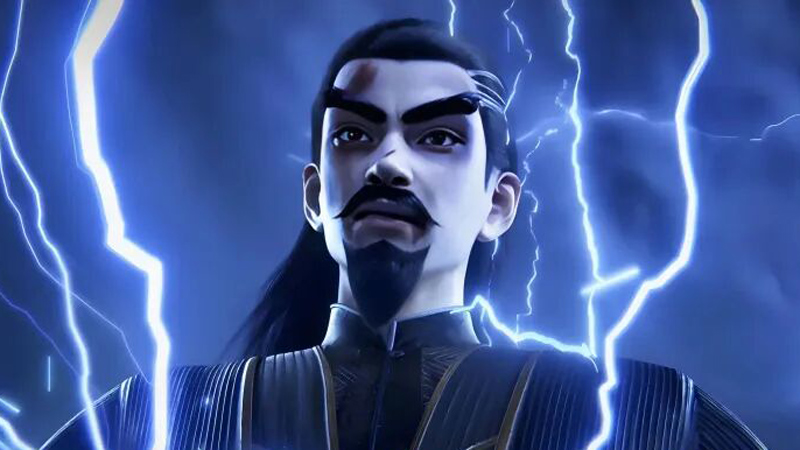
The antagonist, enraged by the failed assassination, deploys the ultimate New Art killing formation: the Heavenly Thunder Five-Absolute Array. This technological marvel summons artificial lightning and generates a black hole’s gravitational pull, trapping both Sun Chengkun and Wang Xuan in an inescapable death trap. For Sun Chengkun, this is the final, clarifying moment. Having found his purpose, he acts without a second’s hesitation. He performs a forbidden art, burning his own life force to shatter the array from within, carving a path for Wang Xuan to escape at the cost of his own existence.
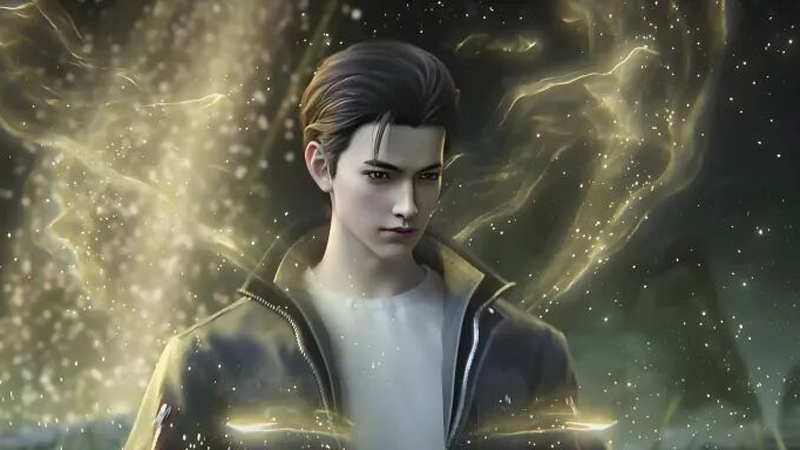
This is not a forced redemption; it is the ultimate expression of a man who found his faith. His death isn’t a punishment for past sins but the purest act of devotion to the legacy he cherishes. As he falls, he leaves behind not an enemy, but a successor burdened with a sacred mission. Wang Xuan, overwhelmed by this sacrifice, watches the man who was once his nemesis become the very definition of a guardian. The episode’s genius lies in how it uses Sun Chengkun’s story to frame the larger conflict. New Art is portrayed as a powerful but soulless force—a tool of efficiency and destruction.
Old Art is difficult, fading, but it forges something deeper: resilience, purpose, and a connection to a lineage that demands sacrifice. Sun Chengkun’s final act was a testament to that, a silent, devastating rebuke to the cold supremacy of the new. The war between these two philosophies has only just begun, and Wang Xuan now walks forward, carrying the weight of an entire tradition on his shoulders, determined to discover what secrets lie at the true end of the ancient path.
