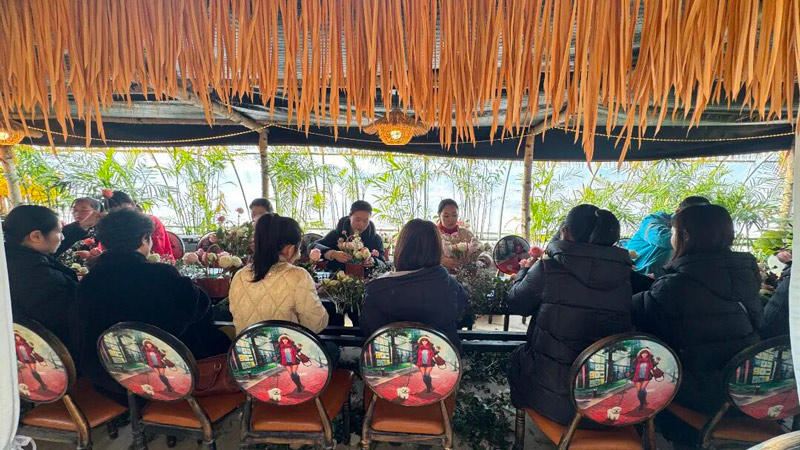
On the morning of March 6th, the labor union of Chaoyang Branch (朝阳分公司) turned an ordinary Thursday into a scene from a classical Chinese painting. In celebration of International Women's Day (国际劳动妇女节), the company invited its employees—both women and men—to step away from their desks and into a world of floral fragrance, tea leaves, and flowing silk robes. It was an event designed not just to mark a date on the calendar, but to breathe life into the idea that the workplace can be a space for beauty, connection, and quiet celebration. The air buzzed not with talk of sales targets, but with laughter and the gentle rustle of Hanfu sleeves.
Blossoming Her Power
The conference room was transformed. In one corner, tables were littered with clippings of fresh flowers—roses, lilies, and delicate sprigs of greenery. Guided by a florist, employees became artists for an hour. They clipped stems, considered color palettes, and built small worlds in ceramic vases. It wasn't about perfection; it was about the process. Watching a colleague who usually crunches numbers carefully place a single orchid into an arrangement, you could see a different side of them—a quieter, more patient focus. The room filled with the earthy scent of cut plants and the shared joy of creating something beautiful from simple parts.
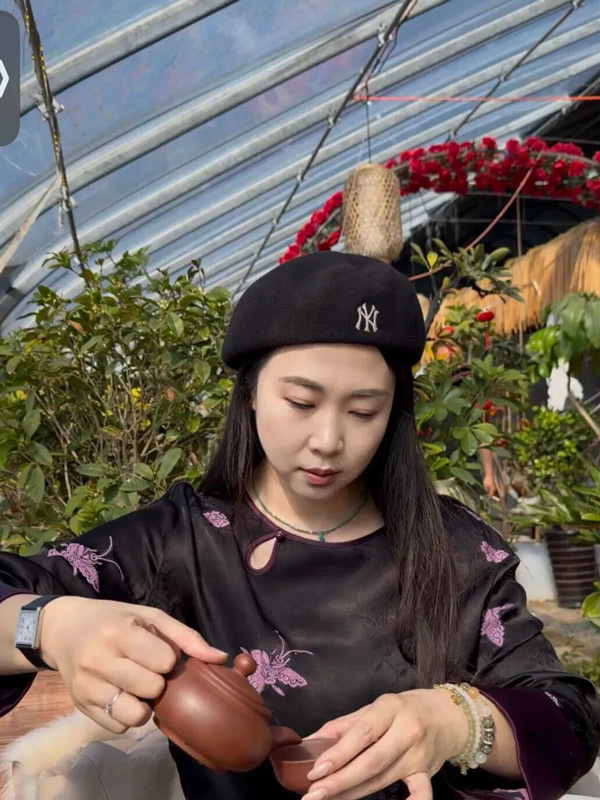
Nearby, the tea ceremony offered a different kind of immersion. Here, the pace slowed to a crawl. Participants watched as hot water was poured over curled leaves, watching them unfurl in a slow, silent dance. They held small cups in both hands, feeling the warmth seep into their palms, and took the time to actually taste—to notice the subtle notes that are usually lost in the rush of a workday. This section was a haven of mindfulness. It reminded everyone that strength isn't always loud; sometimes, it’s found in the quiet focus required to pour the perfect cup of tea, a practice that felt both ancient and urgently needed in modern life.
Fragrance Forward
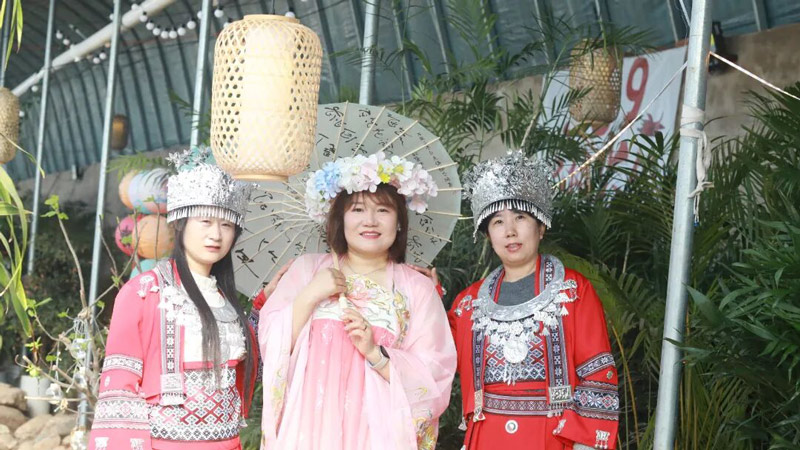
But the undeniable heart of the event was the Hanfu experience. A rack of garments in jewel tones—deep reds, serene blues, and imperial purples—awaited. Employees helped each other into the complex wrappers and sashes, a process that required teamwork and generated endless giggles. Once dressed, they stepped in front of a simple backdrop for photographs. Yet, it was more than just a photo op. As men in modern suits gently adjusted a sleeve for a female colleague, or as a team of women posed with the quiet confidence of ancient scholars, something shifted. They weren't just wearing costumes; they were embodying a piece of cultural heritage, and in doing so, they saw each other—and themselves—in a new, more graceful light.
This celebration was more than a pleasant morning off. It was a tangible demonstration of the company's commitment to its people, a core part of its "Practical Things for Employees" initiative. In the shared act of arranging flowers or sipping tea, professional hierarchies faded. Bonds were formed not through meetings, but through shared experience and laughter. The stress of daily operations seemed to lift, replaced by a collective sense of well-being and belonging. It was a reminder that a healthy company culture is built on moments like these—moments that acknowledge the whole person, not just the employee.
Seeds of Tomorrow
As employees changed out of the Hanfu and carefully gathered their floral creations to take home, the energy in the room was palpably different from when they arrived. There was a lightness, a renewed sense of connection to one another. The event had successfully woven threads of traditional culture into the fabric of modern corporate life, creating a tapestry that felt both meaningful and deeply personal. It was an investment in morale that paid dividends in smiles and heartfelt conversation.
Walking back to their desks, carrying their flower arrangements like trophies, many remarked on how refreshed they felt. The experience hadn't just filled a morning; it had refilled a reserve of energy and spirit. They spoke of bringing this calm focus back to their roles in oil supply and customer service. The company had given them a gift of time and beauty, and in return, it gained a workforce more connected, more appreciated, and more ready to contribute to the shared journey ahead. The fragrance of the tea and the flowers lingered, a quiet promise of the strength and grace yet to come.