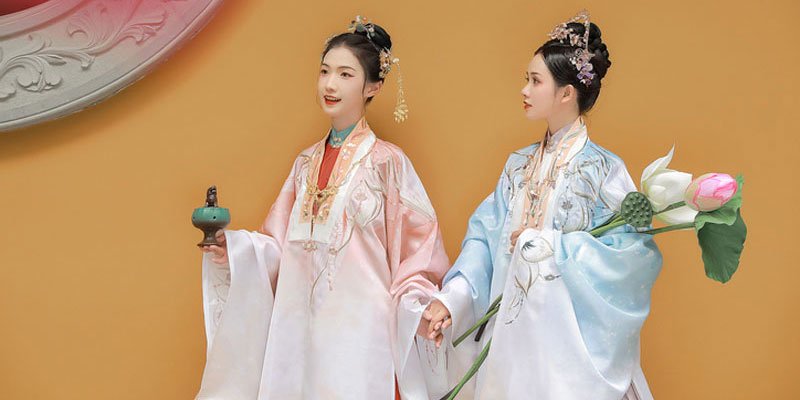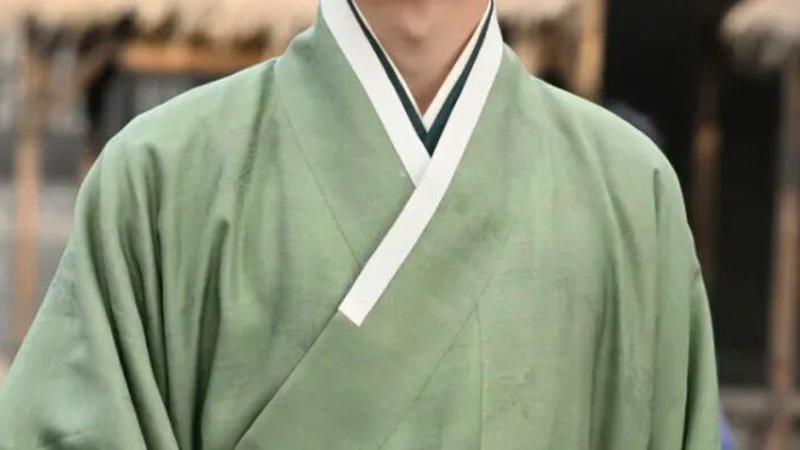
Have you ever stopped to think that one of the most powerful words for a leader originally referred to the parts of a garment most likely to get dirty? In Chinese, the term for leader, Lingxiu (领袖), is a compound of two everyday words: collar and sleeve. It’s a Linguistic oddity that begs the question: how did the highest part of a shirt and the end of an armhole become synonymous with guiding nations and shaping history? This journey from practical clothing to profound metaphor reveals a fascinating story about how a culture views authority, integrity, and the very fabric of social standing.
Where the Word Takes the Lead
The story begins with the collar, known in ancient texts as the Ling. It wasn’t just a functional piece of fabric. In the Han Dynasty, a scholar named Liu Xi (刘熙) wrote in his etymological dictionary, Shi Ming (释名), that the collar was the “head” of the garment. Positioned at the very top, near a person’s head, it was the most visible and commanding part of an outfit. It framed the face and, when made stiff and upright, projected an image of discipline and rectitude. Think of it as the original power accessory—long before ties and cufflinks, the collar silently declared a person’s prominence.

This connection wasn’t just about visibility. The collar’s position at the “head” of the body linked it Linguistically and symbolically to concepts of leadership and being first. An ancient poem from the Classic of Poetry (诗经) uses the word “Ling” to describe the elegant neck of a bird, an image of grace and distinction. Over time, this association with the head and neck naturally extended to the idea of being at the forefront. A person with a strong, upright collar was, in a very literal sense, putting their best foot—or rather, their best neck—forward.
Where Character Takes Action
If the collar represented a leader’s vision and position at the top, the sleeve, or Xiu, came to embody their actions and character. The sleeve was the instrument of the hand. It was what reached out, what gestured, and what performed tasks. In ancient China, sleeves were famously wide and elegant, but they were also practical, cinched at the wrist to protect the hands from the elements. They were, as Liu Xi described it, the “pathway” for the hand, a protective channel for all the work a person does.
This function gave the sleeve a powerful symbolic weight. A clean, unsoiled sleeve suggested a person who acted with honor and integrity, whose “hands” were not dirty from improper deaLings. The earliest recorded pairing of the two words, “Ling” and “Xiu”, in the Book of Han (汉书) makes this literal: it describes a person working with plaster who kept their collar and sleeves spotless. From this practical observation of cleanliness, it was a short leap to a moral one. A leader wasn’t just someone who stood tall (the collar) but someone who acted cleanly (the sleeves).
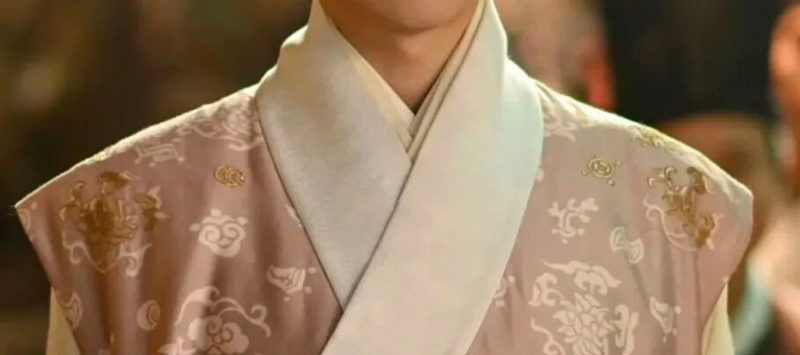
This idea of the sleeves as a measure of a person’s conduct was so strong that later scholars explicitly linked it to being a role model. The Tang Dynasty commentator Lü Xiang (吕向) wrote that the collar and sleeves were what made a person a “model for others.” Your public actions, the “handiwork” you did in the world, were as crucial as your public image. A leader’s legacy was woven from both their visible position and the invisible integrity of their daily actions.
How Common Cloth Became a Crown
For centuries, Lingxiu was used in literature to mean “outstanding example,” much like we might call someone the “cream of the crop.” In the Book of Jin (晋书), a powerful minister is praised as the “collar and sleeve” of all his colleagues, meaning he was the best among them. This metaphorical use was clear: just as the collar and sleeve were the most important, visible, and hardworking parts of a garment, so were great leaders the most important parts of society.
But why did this particular term for “collar and sleeve” triumph over more regal words like “crown” or “mitre” to become the standard for “leader”? The answer likely lies in the fall of imperial China. With the end of the dynastic system in the early 20th century, the explicit symbols of feudal power—the dragon robes, the elaborate crowns, the physical thrones—lost their daily relevance. They became relics of a bygone era. Language, however, is democratic. It evolves to fill new needs. The word Lingxiu, already rich with centuries of metaphorical meaning about preeminence and integrity, was perfectly positioned to step in and describe a new kind of public figure: a modern leader, one whose authority came not from divine birthright but from being a representative and guide for the people.
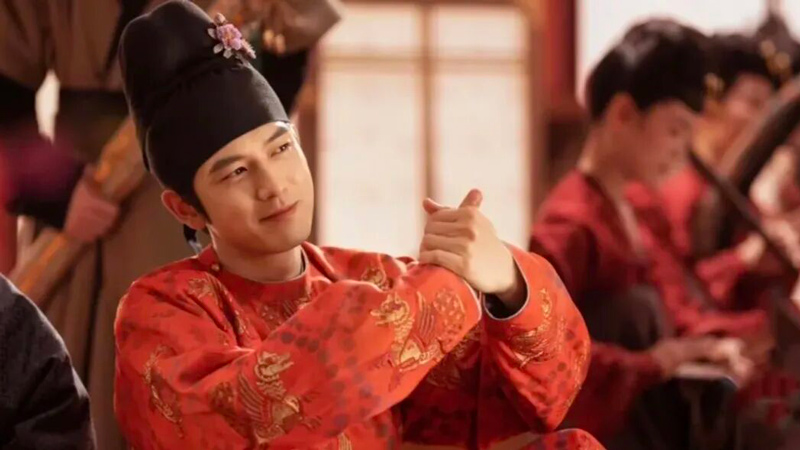
So, the next time you fasten a cuff or straighten a collar, remember you are touching the very roots of a powerful idea. The journey of Lingxiu from a piece of clothing to a title of immense respect is a quiet lesson in how a culture defines its heroes. It tells us that true leadership isn’t just about being at the top (the collar), but about the clean, purposeful work you do with your own two hands (the sleeves). The word itself is a small, elegant reminder that a leader’s authority is ultimately woven from the twin threads of visible stature and invisible integrity.