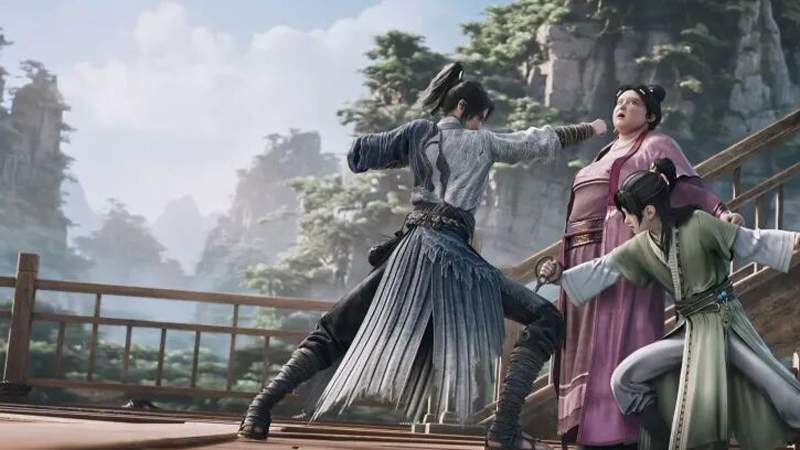
The confrontation aboard the riverboat was never going to be settled with words. In the second season of the animated series Sword of Coming 2 (剑来2), the moment fans had anticipated arrived, not with a philosophical debate, but with the sharp, unmistakable language of a well-thrown punch. Chen Ping'an (陈平安), our steadfast protagonist, faced a group of arrogant Dali (大骊) officials whose version of "reason" was simply the authority of their status.
After a series of escalating provocations—scarring a young boy’s donkey, attempting to seize the girl Xiaoping (小瓶) as a servant, and finally driving a pair of scissors into Chen Ping'an's own thigh—the time for talking was over. This scene, more than a simple fight, became a defining lecture on the price of principle in an unjust world.
The Unreasonable "Reason"
The conflict's brilliance lies in its setup. The animation deliberately clarifies the instigation. Young Li Huai (李槐) was simply playing, his small white donkey an innocent victim of a noble son's malicious swipe. The deliberate cruelty of scarring the animal, magnified on screen, underscores the bullies' nature. Their most egregious act, however, was targeting Xiaoping, revealing a mindset that sees the weak as property. This raw display of power versus powerlessness ignited a collective fury in the audience.
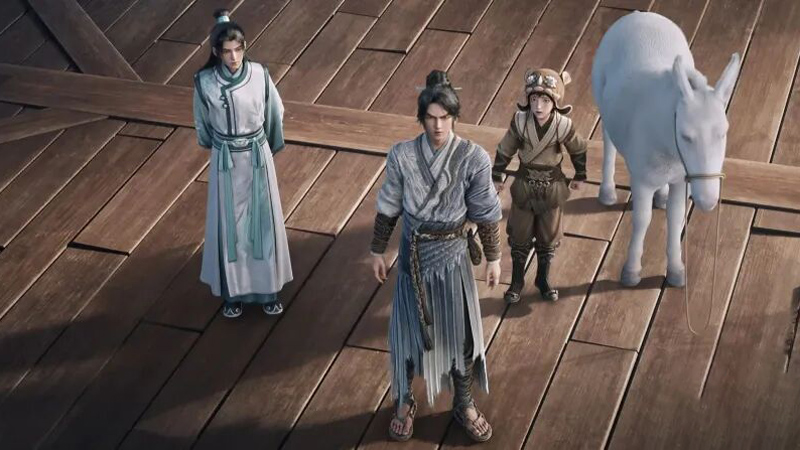
Li Huai's reaction is pivotal. Known for his petty stubbornness, here he was willing to apologize for a crime he didn't commit, just to avoid trouble for Chen Ping'an. This small act of unexpected sacrifice highlights a hidden maturity. Chen Ping'an's immediate response, "You were not wrong. They are," became more than protection; it was a declaration. It affirmed that true strength lies in defending the right, not in appeasing the wrong. This foundational truth gave the coming storm its emotional weight.
The source material handles this with a more layered approach. Chen Ping'an initially asks Li Huai to apologize, a tactical move to gauge the opponents' character. Would they show grace or reveal their greed? The result, however, mirrors the animation. The offenders, steeped in their "logic of the strong," saw the apology as weakness, demanding ever greater concessions. It laid bare a brutal social code: the powerful can err, but the less powerful must always save their face. When this corrupt reasoning closed all doors for dialogue, only one path remained.
The Philosophy in the Fist
Chen Ping'an's teacher, A Liang (阿良), had imparted a simple doctrine: when the logic of scholars fails, one must employ the logic of warriors. Facing a third-level martial artist from the opposing group, Chen Ping'an's practical combat experience proved superior. Yet, defeat did not bring humility. The officials doubled down, invoking their official titles, believing their status was an impenetrable shield. The turning point was violent and symbolic. The child's scissors, piercing Chen Ping'an's leg, crossed a final line. This injury transformed Chen Ping'an's retaliation from aggression into justified defense.
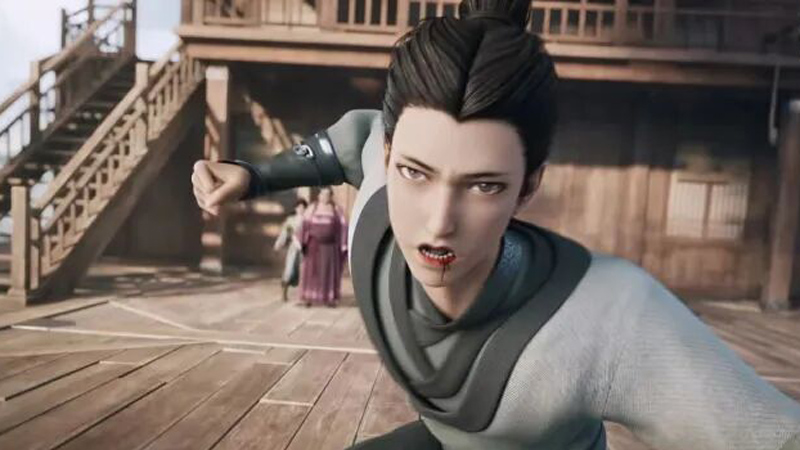
A poignant side-note emerges with a rogue cultivator on the boat. Knowing Chen Ping'an was in the right, he still sided with the Dali officials, a pitiful display of real-world opportunism. Chen Ping'an, prepared for such betrayals, had allies ready. The cultivator's swift dispatch into the river was a clean punctuation to his moral failure. Meanwhile, young Li Huai watched, his awe transforming into recognition. In Chen Ping'an's principled stand, he saw the shadow of his own often-absent father, Li Er (李二). This emotional connection deepens their bond, suggesting mentorship extends beyond skill to embodying a way of being.
In the quiet aftermath, a different kind of lesson began. Chen Ping'an, the man who just used his fists to lecture, expressed a desire to learn to read. Xiaoping, with a precocious solemnity, became his teacher. Her method—encourage thought before explanation—hinted at the wise scholar she would become. Her innate noble righteousness even caused a Yinshen (阴神, a spectral spirit) to temporarily lose power, yet also granted it profound insight. The transmission of culture, it seems, happens in whispers after the shouts have faded.
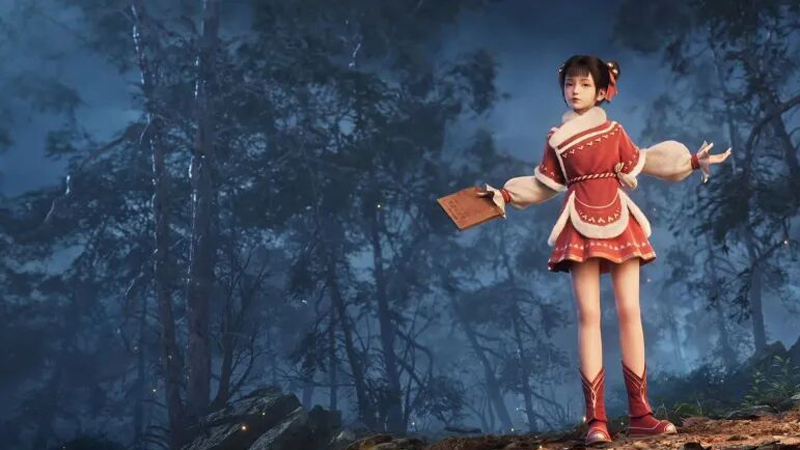
Shadows and Silk: Threads Unspooled
Beyond the immediate clash, the episode sows seeds for darker tales. The disturbance attracts the attention of a Mountain-Dwelling Bride Ghost, a being with a macabre habit of "planting" scholars in her garden. Her impending battle with an old daoist possessed by the Dragon-Slayer Chen Qingliu (陈清流) promises a different flavor of conflict. The source novel depicts this with intense, atmospheric Chinese-style horror—less about gore, more about the dread woven from imagery: red wedding dresses, ancient manors, and silent, scholarly victims.
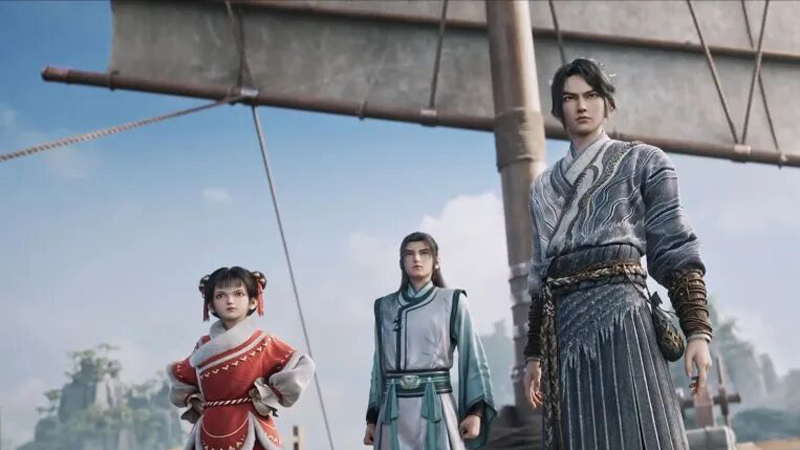
This looming horror contrasts with the resolved human conflict, reminding viewers that the world of Sword of Coming 2 is layered with both mundane injustice and supernatural peril. The challenge for the animation will be to capture this essence, the unsettling poetry of such terror, rather than merely its visual shock. It is another form of "reason," a logic governed by older, more vengeful rules.
As the boat journey continues, Chen Ping'an's statement to Li Huai hangs in the air: "Some principles can only be explained with fists." It is a grim but honest reflection. The world is full of reason, but often lacks listening ears. When language is weaponized by the powerful to obscure truth, action becomes the only vocabulary left. Chen Ping'an's journey illustrates that kindness must have an edge, and tolerance must know its limits. Without them, virtue crumbles into helplessness. His fists, that day, wrote a sermon everyone on the boat was finally forced to read.