
In the world of Chinese animation, a particular kind of hero has captured the hearts of millions. They don't start with incredible power or a glorious destiny. Instead, they begin at the very bottom, labeled as failures, weaklings, or embarrassments. Their journey from utter weakness to unimaginable strength forms a narrative spine known as the 'Underdog Arc.' This storytelling method, rooted in web literature, thrives on extreme contrast.
By making protagonists suffer humiliation and hardship early on, it makes their eventual victories feel intensely personal and deeply satisfying for the audience. Even as the trope becomes familiar, these stories continue to deliver an unmatched thrill. Let's look at four iconic characters who define this path, exploring how their profound weakness makes their ultimate power so compelling.
1. Xiao Yan's (萧炎) Fall and Rise
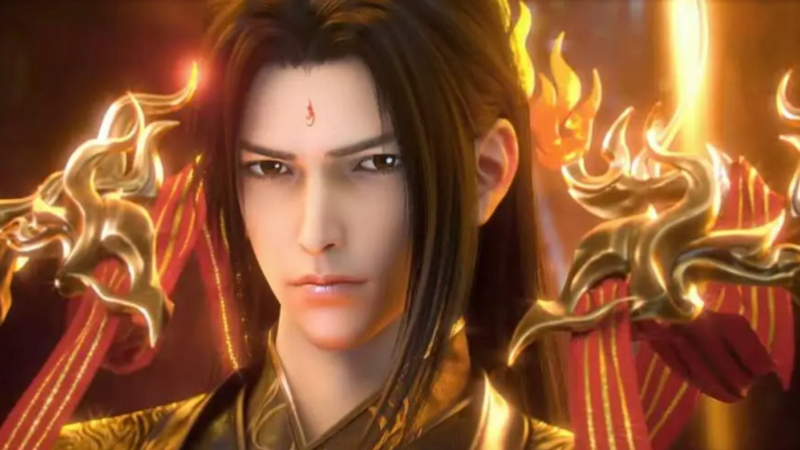
Battle Through the Heavens (斗破苍穹) is often credited with popularizing the underdog template. Its protagonist, Xiao Yan, is introduced as a fallen genius. Once a prodigy, his Dantian (丹田) – his core for energy cultivation – becomes crippled. He faces public disgrace, even a humiliating annulment of his engagement. At his lowest, he defiantly declares, "Thirty years to the east of the river, thirty years to the west. Do not bully the young for being poor!" This line has become legendary.
His turnaround begins with an encounter with an old soul named Yao Chen, who resides in a simple ring. This mentor becomes his 'golden finger,' a cheat code that guides him. Under Yao Chen's tutelage, Xiao Yan slowly rebuilds his strength, unlocking secrets of alchemy and combat. Each step forward is hard-won, each victory a rebuttal to those who scorned him.
The narrative power lies in the stark transformation. The boy who was everyone's punchline ascends to the title of Flame Emperor. While adaptations have faced criticism, the core story of relentless ascent against all odds remains a potent source of that classic 'underdog thrill' for viewers.
2. Chen Ping'an's (陈平安) Quiet Resolve
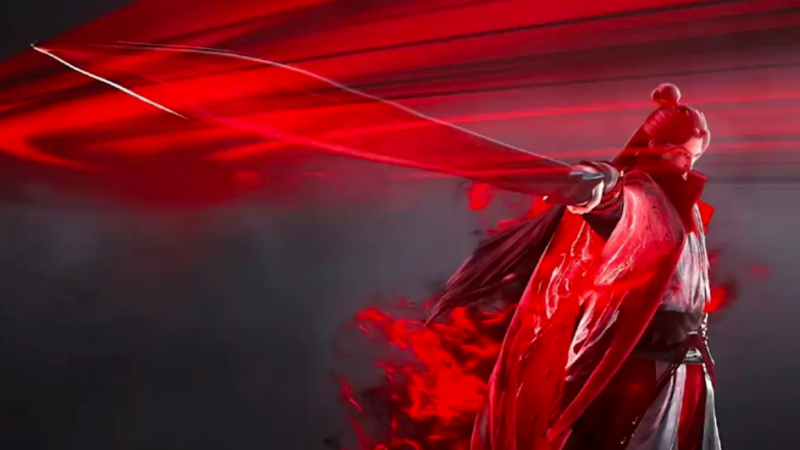
The world of Sword of Coming (剑来) is complex and unforgiving. Its hero, Chen Ping'an, might have the most tragic starting point of all. As a child in a remote alley, his fate is sealed when his vital Ben Ming Ci (本命瓷) shatters and his Chang Sheng Qiao (长生桥) – his bridge to longevity and cultivation – is severed. He is destined for a short, ordinary life, physically barred from the path of power.
What saves him is not a sudden gift, but his unbreakable character. His stubborn perseverance and innate goodness impress a wise teacher, Qi Jingchun (齐静春), who lays down a new, perilous path for him. Chen Ping'an's greatest fortune comes in the form of an ancient, sentient sword fragment. This powerful entity recognizes his worth and chooses him, becoming his protector and greatest asset.
His journey is less about explosive power-ups and more about gradual, earned growth. The satisfaction comes from watching his unwavering spirit slowly mend his broken destiny. The recent second season of the animation highlights this beautifully, with stunning visuals that depict his challenging climb, making every small triumph profoundly rewarding.
3. Wu Geng's (武庚) Forged Destiny
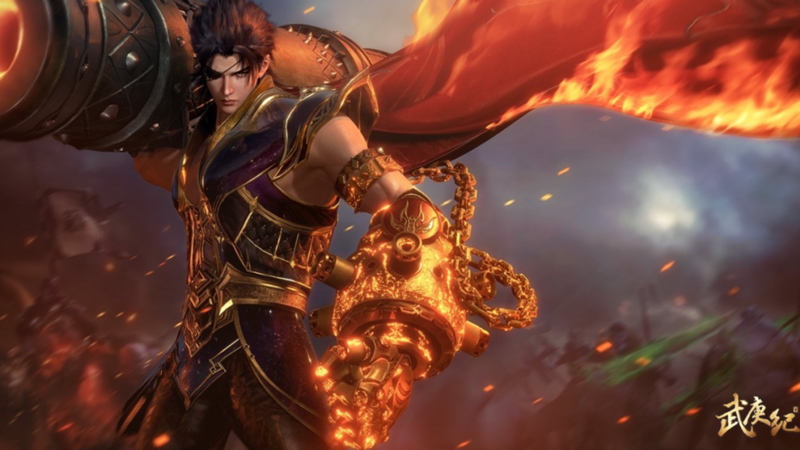
In Wu Geng Ji (武庚纪), Wu Geng is born into privilege as a prince, yet is cursed with a frail body. He cannot practice martial arts or even ride a horse. His world shatters when his father, King Zhou (纣王), dies fighting the oppressive gods, and his mother is forced into a tragic sacrifice to save him. He begins as a literal and figurative weakling, often overshadowed by more dynamic supporting characters.
His transformation is radical. Forced into hardship, he discovers within himself the rare and supreme Colorless Divine Power. He then masters other arts like Qi Refining (练气术). His growth is not a gentle curve but a series of steep climbs fueled by survival necessity and seized opportunities.
His arc completes the ultimate underdog fantasy: challenging heaven itself. From a sickly prince who could not hold a sword, he rises to challenge the supreme ruler of the gods. He becomes the key figure in uniting humans and an exiled race to overthrow a celestial tyranny that lasted millennia, redefining what it means to be strong.
4. Li Xingyun's (李星云) Reluctant Path

For much of The Degenerate-Drawing Jianghu (画江湖之不良人), Li Xingyun is a source of frustration. He possesses a royal lineage that makes him the ideal figurehead for a rebellion, and he has the legendary Yuan Tiangang (袁天罡) meticulously plotting his rise. Yet, he consistently rejects this destiny, preferring a carefree life. His refusal to embrace his power or responsibility makes him seem like a genuine waste of potential in the eyes of both his allies and the audience.
His turning point is shocking and brutal. Yuan Tiangang, to force his hand and cement his legend, orchestrates his own death by Li Xingyun's sword. This horrific act removes all paths of retreat. The weight of this sacrifice and the mantle of leadership is thrust upon him, leaving him no choice but to grow.
His power eventually comes, partly inherited from his mentor, but his true strength emerges from accepting his role. He transitions from a reluctant, seemingly useless youth into a leader who commands respect. His journey is unique because his 'weakness' was largely a choice, and his 'strength' is a burden he finally learns to bear, making his maturation a compelling, if painful, spectacle.