Why does a demon slayer who lost his sister to human betrayal only hunt monsters? The hit drama The Unclouded Soul (逍遥) follows the relentless demon exterminator Bing Zhu (秉烛), whose bloodthirsty blade is bound to the soul of his dead sister. When villagers sacrificed her to a tree demon, his world shattered. Yet he directs all his fury toward demons, not the humans who enabled the tragedy. This paradox lies at the heart of his character, a burning fuse leading back to a past he cannot escape.
The Shattered Dream
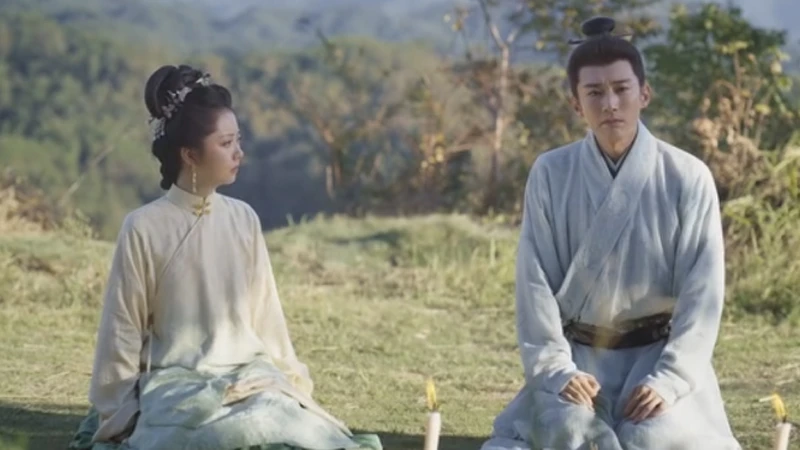
Once, Bing Zhu and his sister Tan’er (昙儿) shared a simple dream. He trained diligently to clear their family name and rejoin the military. She scrimped and saved to buy him a proper weapon, their hopes pinned on a future where he would become a general and give her a good life. Their poverty made them vulnerable. After finally saving enough for his sword, cruel village elders seized their coins for a tribute to the local Huai Shu Yao (槐树妖, tree demon). Without a weapon, he could not enlist.
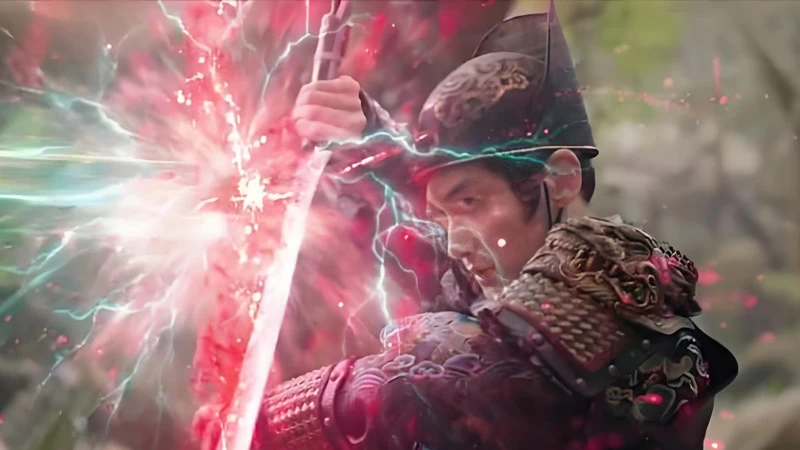
Desperate to help him, Tan’er made the ultimate sacrifice. She offered herself as a bride to the tree demon in exchange for the sword her brother needed. Bing Zhu fought to save her but failed. All that remained was a wisp of her spirit, fused forever with the steel of his blade. The demon did not just take his sister; it obliterated their future. Every achievement since is hollow, witnessed only by a cold weapon where her warmth should be.
Her death extinguished his last hope for a shared happiness. In his grief, the tree demon became the singular symbol of that loss. It was a tangible evil he could fight, a target for all-consuming rage. The complex web of human greed and coercion that delivered her to that fate was a harder, more painful truth to confront.
A Profession Built on Hate
Bing Zhu’s vocation as a demon slayer structures his worldview. The order’s teachings portray demons as inherently bloodthirsty and evil. His daily reality reinforces this. He encounters only the malicious demons who prey on humans, not the peaceful ones who stay hidden. This constant exposure magnifies the monstrous, making human treachery seem a lesser threat by comparison.
Official history deepens this bias. The state of Tian Sheng (天晟) records that the demon king Hong Ye (红烨) seduced Princess Ning’an, causing countless deaths. The truth is different. They shared a genuine love, and Hong Ye was betrayed and destroyed during their wedding by a human plot. Similarly, the Forest of Mist is said to be born from a failed assassination’s resentment. In reality, it formed after the emperor massacred the He Feng (赫风) tribe to steal their sacred spring.
These state-sanctioned lies shape Bing Zhu’s reality. His duty is to eradicate the “evil” his world defines. This institutionalized hatred offers a clear purpose, a straightforward path for his pain. Questioning it would unravel the very foundation of his identity and mission.
The Weight of Guilt
Beyond hatred lies a deeper, more personal driver: profound guilt. In the final moments with the tree demon, Bing Zhu was overpowered. To save him, Tan’er performed a spirit sacrifice, binding her last remnant of soul to the blade to grant him power. She saved his life but trapped herself, unable to reincarnate until the blade’s purpose—slaying all wicked demons—is fulfilled.
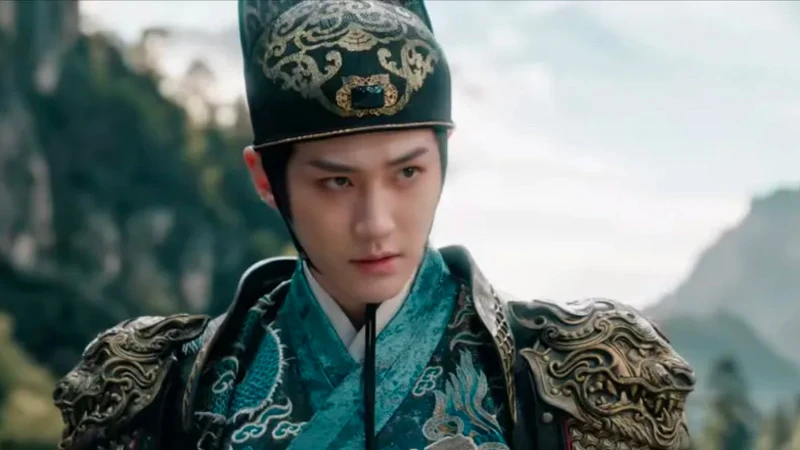
He could not protect her. He lives because she died, and now her afterlife depends on his violent quest. Every demon he kills is an act of devotion, a step toward freeing her. The blade itself has agency; when it refuses to unsheathe, he interprets it as Tan’er’s mercy and stands down. His crusade is less about his anger and more about completing her will.
This is his penance. He failed to give her happiness in life, so now he obeys the desires of her lingering spirit. It is a tragic bond, a love expressed through endless slaughter, anchoring him to a path of vengeance while shielding him from the more complicated pain of human betrayal.
A Crack in His World
Despite his hardened beliefs, encounters begin to challenge his black-and-white perspective. He sees the corrupted Qionghua Sect (琼华派) leaders pay for their sins together. He meets Chi (魑), a being neither human nor demon, who shows great compassion healing others despite being scorned. He witnesses so-called righteous disciples attack this reformed creature out of sheer greed for glory.
Most tellingly, his sister’s spirit within the blade now refuses to activate against the demon king Hong Ye, sensing his true nature. The line between good and evil blurs. People can be vicious and petty; demons can be wronged and capable of love. Bing Zhu’s certainty finally wavers. The man who built his life on hating monsters must now confront a terrifying question: what if the real monster is the hatred itself?