
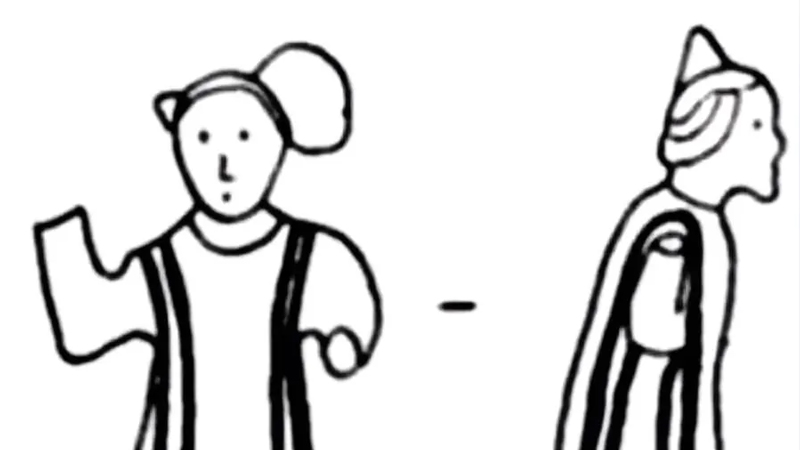
A swirling whisper of silk, a fleeting wisp of color. In the hit series Strange Tales of Tang Dynasty Ⅲ: Chang'an (唐朝诡事录之长安), amidst the fog of unsolved cases, a different kind of magic unfolds through costume. Beyond the intricate plots, the show's wardrobe silently narrates a tale of elegance, with one item stealing countless scenes: the Pibo (披帛). This long, flowing silk scarf, artfully draped by characters like the sharp-witted Pei Xijun (裴喜君) or the formidable Princess Taiping, is far from a designer's fantasy.
It is a authentic historical accessory, a piece of "flowing cloud and mist" that captures the very soul of Hanfu aesthetics. Its reappearance on screen invites us to trace its journey through dynasties and discover how this ancient art of drapery can find new life in our closets today.
A Silk Thread Through Time
The story of the Pibo begins long before the Tang's golden age. Archeological clues, like pottery figurines from the Warring States period found in Shandong, show dancers with colored ribbons on their shoulders. Historical texts from the Han dynasty mention similar cloths. These early precursors evolved through the Wei, Jin, and Northern and Southern Dynasties, where they were known as "pei," shorter items resembling scarves worn by the elite.
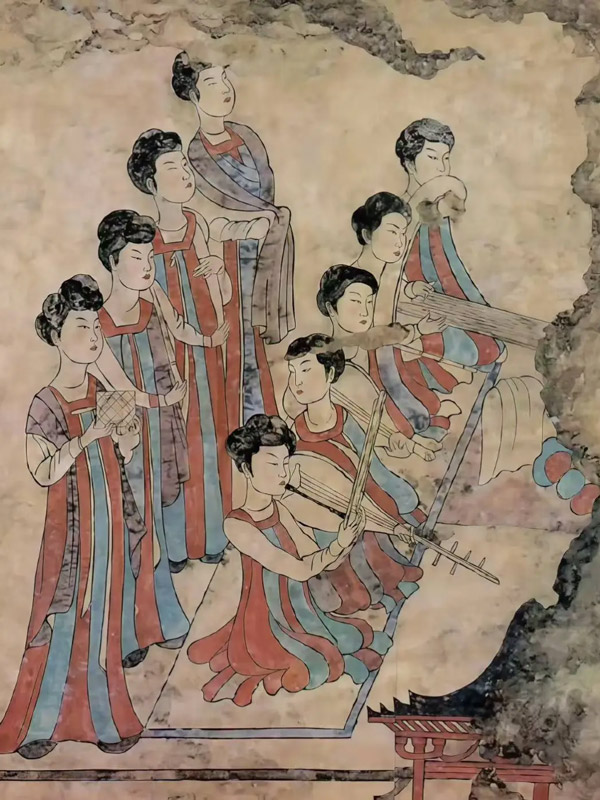
It was during the glorious, open Tang Dynasty that the Pibo truly flourished. It transformed from a practical garment for warmth into a paramount symbol of beauty and status. Under Emperor Xuanzong's (玄宗) reign, palace ladies wore painted Pibo, and during the Dragon Boat Festival, they were even called "longevity scarves." The style itself changed, becoming longer, lighter, and more ethereal, made from gossamer-thin silks that floated with every movement. It became an essential, daily adornment for women.
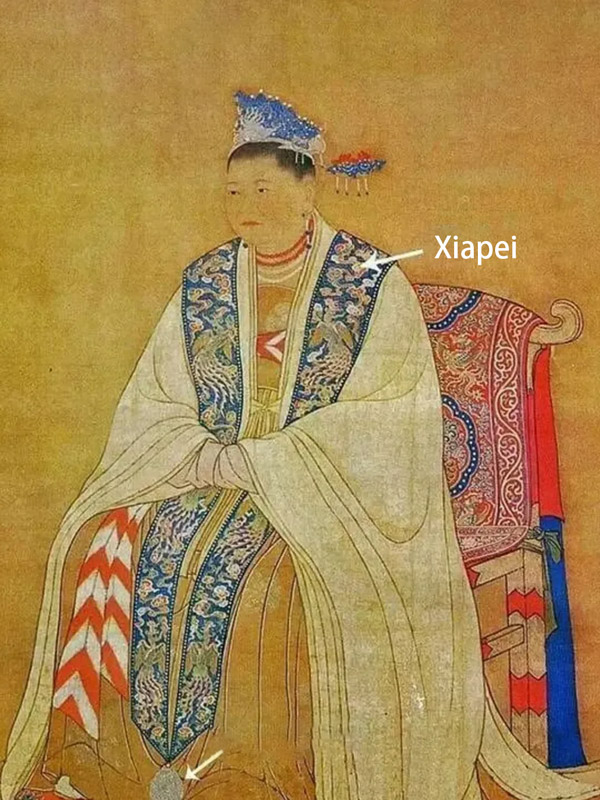
This trend shifted in the Song Dynasty. The Pibo evolved into the formal Xiapei (霞帔), a regulated part of ceremonial dress for noblewomen. Worn from the back over the shoulders and fastened at the chest with jade or gold pendants, its patterns denoted strict ranks. As the Xiapei rose, the everyday Pibo gradually faded from public life, surviving mainly in the idealized world of classical paintings.
Designing the Ethereal
What defines a Pibo is its deliberate simplicity: a long, rectangular strip of silk, often over two meters, sometimes up to five. Its magic lies in the details of its creation. Tang craftsmen favored almost impossibly light fabrics like Qingrongsha (轻容纱) and Wuhu (雾縠), silks so sheer they were described as "mist." These canvases were dyed in vibrant, confident hues—bright reds, lucent greens, sun yellows—and some were even double-sided.
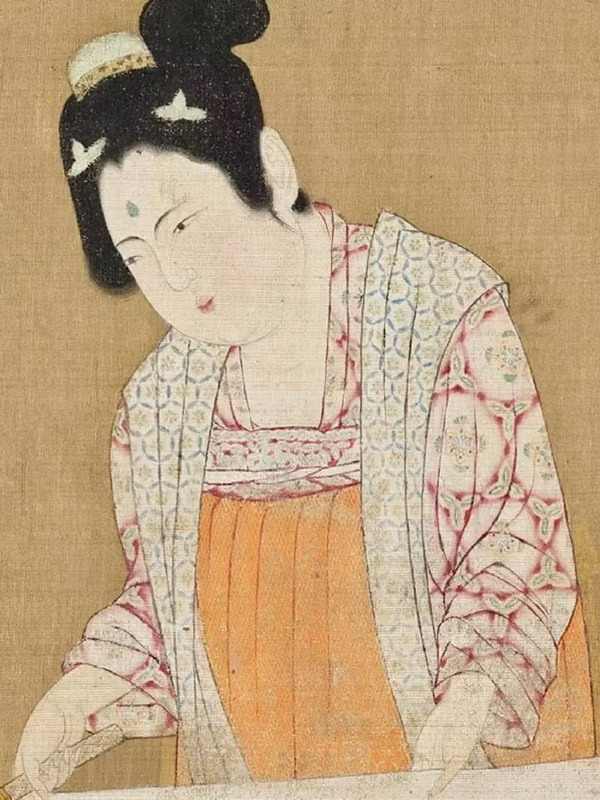
The decorations told their own stories. Tang designs featured lavish patterns: florals, clouds, scrolling vines, often outlined in gold or silver dust. In the Song and Ming dynasties, the formal Xiapei's embroidery became a language of power. A phoenix, a peacock, or a pair of mandarin ducks—each motif precisely indicated the wearer's social position. This square of silk was never just fabric; it was a portable gallery of art and a walking testament to rank.
Ancient Silk, Modern Style
The genius of the Pibo is in its versatility. Historical art provides a catalog of styling inspiration that feels surprisingly contemporary. One can mimic the "leisure-bound" style seen in the painting Lady Guo Guo on a Spring Outing (虢国夫人游春图), where the scarf is wrapped around the waist and over the shoulders, perfect for a walk in the park. The "draped-arm" method, with the silk looped symmetrically over both forearms, creates an instantly regal and balanced silhouette.
For a more dynamic look, the "diagonal wrap" is ideal. Draped from the nape of the neck, with one end long and the other tucked over an arm, it adds movement and flatters the figure. A simple knot at the collarbone, as seen on many Strange Tales of Tang Dynasty Ⅲ: Chang'an characters, offers an easy yet elegant touch that adds immediate depth to an outfit.
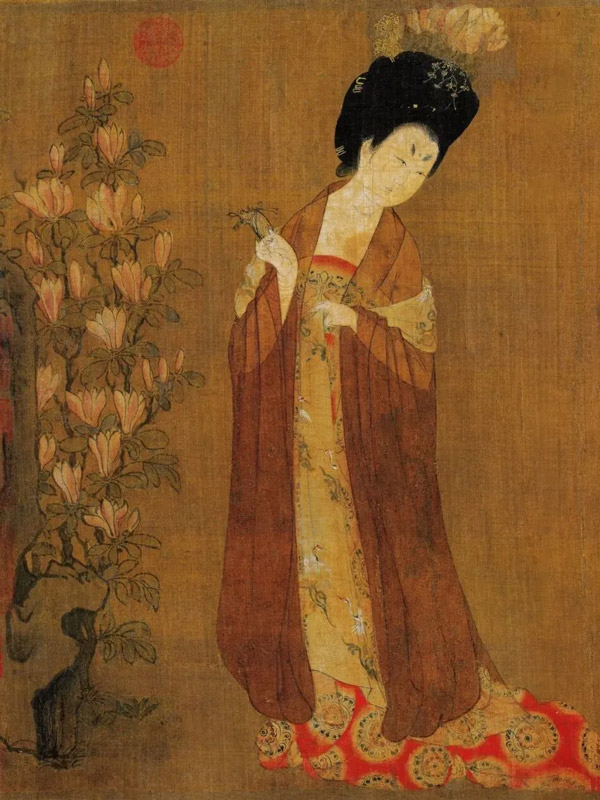
This adaptability is its bridge to the present. Today, we can weave the Pibo into modern wear with a fresh eye. Drape it over a shoulders and tie a loose knot at the chest to soften a simple dress. Wrap it several times around the neck as an artistic, layered scarf with a plain sweater. On a breezy beach day, it can transform into a graceful headwrap. The goal is not historical reenactment but creative resonance—allowing that whisper of silk to bring a touch of poetic flow and a connection to a beautiful heritage into everyday life.
From the sets of a captivating drama to the streets of today, the Pibo endures. It reminds us that tradition is not static. It is a flowing stream, ever-changing, inviting us to take a strand and weave it into our own story. In that act of wearing, we don't just adorn ourselves with silk; we keep a delicate thread of history alive, letting it float gracefully into the future.
