Imagine a time when the sky was your only map, and the sun and stars your guiding lights. Long before the magnetic compass pointed the way, ancient people relied on nature’s cues to navigate their world. The sun rose in the east and set in the west; at night, the North Star marked true north, while lush tree growth often indicated south. But what happened on cloudy days when these signs vanished?
Direction became a guessing game until a groundbreaking invention changed everything. The compass, born from human ingenuity, transformed exploration and trade, enabling journeys across vast oceans and uncharted lands. This is the story of how ancient Chinese innovators turned magnetic rocks into precise tools that shaped history, evolving from simple instruments to sophisticated devices that never lost their way.
1. Si Nan (司南)
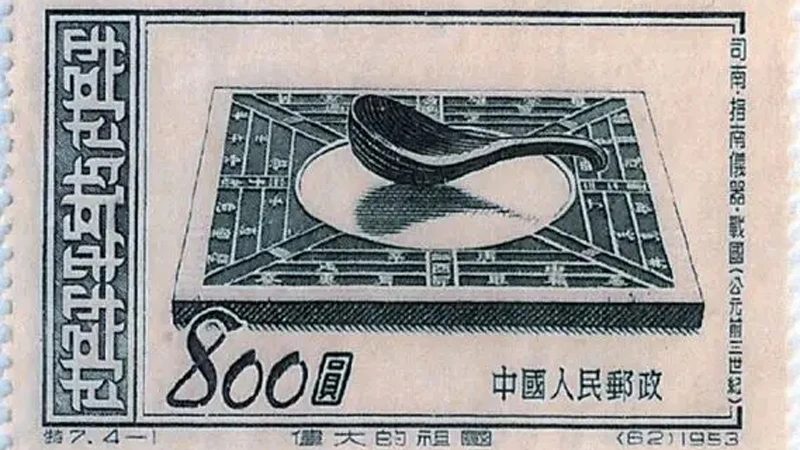
The Si Nan, often called the ancestor of the modern compass, emerged during the Warring States period. It consisted of a magnetic spoon carved from lodestone and a bronze plate engraved with directional symbols. When placed on the smooth surface, the spoon would spin freely and settle with its handle pointing south. This device leveraged the Earth’s magnetic field, though its bulk and sensitivity limited widespread use. Despite this, the Si Nan laid the foundation for magnetic navigation, demonstrating how natural forces could be harnessed for direction-finding.
In his work Lun Heng (论衡), the Eastern Han thinker Wang Chong (王充) documented how the Si Nan’s spoon, when placed on the ground, would guide south. The bronze plate featured intricate markings, including the Bagua trigrams and celestial stems, creating a comprehensive direction system. This blend of science and symbolism reflected a deep cultural integration, where practical tools coexisted with philosophical concepts. Although not ideal for sea voyages, the Si Nan’s principles inspired later advancements, showing that even imperfect beginnings can lead to revolutionary changes.
The Si Nan’s design highlighted early understanding of magnetism, as artisans shaped lodestone into a balanced spoon that minimized friction. Its role extended beyond navigation, often used in rituals and divination, embodying the intersection of technology and tradition. As one of the first magnetic tools, it symbolized a leap from relying on unpredictable nature to creating reliable human-made guides, setting the stage for more refined instruments to come.
2. Zhi Nan Yu (指南鱼)
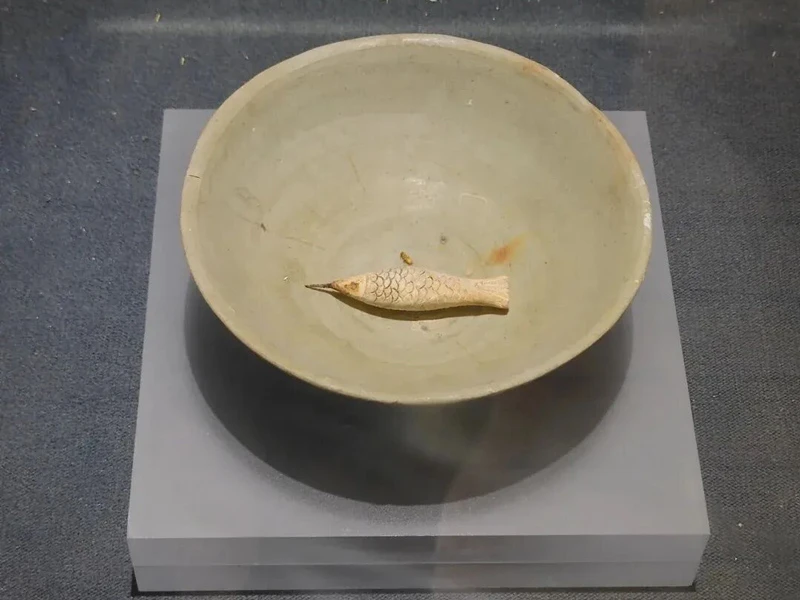
During the Northern Song Dynasty, the Zhi Nan Yu (指南鱼), or “south-pointing fish,” offered a novel approach using artificial magnetization. This wasn’t an actual fish but a thin iron sheet cut into a fish shape, magnetized through heating and cooling in Earth’s magnetic field. By floating it on water, the fish’s head would align south, providing a portable direction finder. This method, detailed in the military text Wujing Zongyao (武经总要), involved precise steps to imbue the iron with lasting magnetic properties, showcasing early experiments with induced magnetism.
To create a Zhi Nan Yu, craftsmen heated the iron fish until red-hot, then quenched it with the tail facing north, locking in magnetic alignment during rapid cooling. Storing it with natural magnet enhanced its durability, preventing demagnetization. This process demonstrated a grasp of microscopic magnetic domains long before modern science, allowing even small-scale tools to achieve remarkable accuracy. Unlike the Si Nan, the fish was lighter and easier to produce, making it accessible for various uses, from land travel to initial maritime experiments.
The Zhi Nan Yu represented a shift from natural to engineered magnetism, enabling broader adoption among merchants and explorers. Its simplicity—just a floating piece of metal—belied the sophisticated knowledge behind it, illustrating how ancient innovators turned basic materials into functional navigation aids. This tool bridged the gap between earlier models and the more complex compasses that would follow, emphasizing practicality and efficiency in everyday direction-finding.
3. Shui Luo Pan (水罗盘)
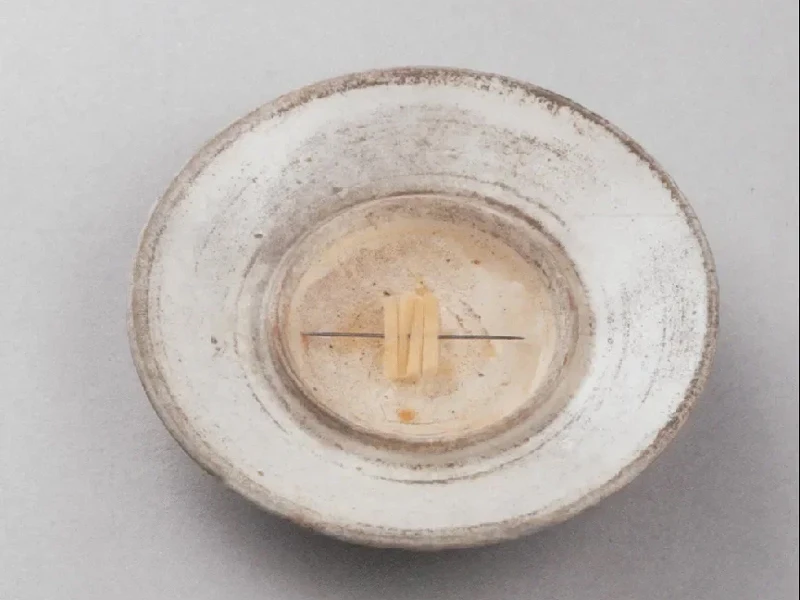
Building on earlier designs, the water compass, or Shui Luo Pan, became a maritime staple by the Song Dynasty. It featured a magnetized needle—often shaped like a fish or arrow—floating in a water-filled disk, reducing friction for smooth rotation. The surrounding plate was marked with 24 directions, integrating traditional systems like the Bagua for precise bearings. This setup allowed sailors to maintain course on long voyages, fueling trade routes across seas to places like Southeast Asia and beyond.
In the Southern Song era, water compasses saw widespread use, with improvements in magnetization techniques making needles stronger and more responsive. The disk’s circular design, coupled with water’s buoyancy, ensured stable readings even on moving ships, though rough waves could cause errors. Despite this, it enabled feats like naval expeditions and cultural exchanges, as merchants relied on its accuracy to navigate unfamiliar waters. The water compass symbolized a era of expansion, where technology empowered humans to conquer distances with confidence.
Over time, the water compass evolved with finer gradations and better materials, becoming a symbol of Chinese maritime prowess. However, its vulnerability to motion led to the next innovation. As seafaring demands grew, the need for a steadier tool prompted inventors to develop dry alternatives, setting the stage for another leap in navigation technology that would endure for centuries.
4. Han Luo Pan (旱罗盘)
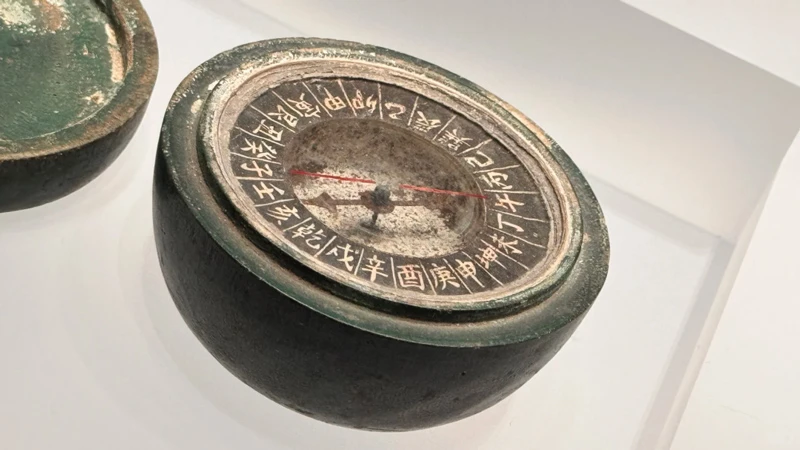
The dry compass, or Han Luo Pan, addressed the water compass’s weaknesses with a pivot-based design. A magnetic needle, balanced on a sharp pin at its center, rotated freely over a dry dial engraved with directional markers. This setup eliminated water sloshing, offering stability on turbulent seas and making it ideal for ocean voyages. Adopted widely by the Ming Dynasty, it featured enhancements like sighting tools for alignment, reflecting a push toward greater precision in exploration.
Key to the dry compass was its axial needle, which minimized friction and allowed quick adjustments. The inner dial included elements like celestial stems and the 24 directions, while the outer casing protected the mechanism from elements. This durability made it a favorite among navigators, including those on Zheng He’s (郑和) expeditions, who may have used early versions to chart routes to Africa and the Middle East. By providing reliable readings regardless of weather, the dry compass reduced the risks of getting lost, fostering safer and more efficient travel.
The dry compass’s impact extended beyond navigation, influencing cartography and global trade networks. Its design principles were later adapted worldwide, underscoring China’s role in pioneering direction-finding tools. From the Si Nan to this advanced instrument, the journey of the compass illustrates a relentless pursuit of accuracy—a testament to how ancient curiosity and innovation continue to guide us forward, reminding us that true direction comes from never settling for “good enough.”