Why does a white-haired swordsman’s journey in Sword and Beloved (天地剑心) captivate millions, despite its flaws? The new Xianxia drama starring Cheng Yi as Wang Quan Fugui (王权富贵) has become a phenomenon, breaking platform records with over 85 million hot searches within three days of its release. Based on the popular manhua Sword and Beloved, the series presents a compelling contradiction: massive anticipation clashing with vocal criticism over its special effects and adaptation choices. Yet beneath this turbulence lies its true brilliance—not in spectacular magic battles, but in a weapon’s lonely quest to regain his humanity.
The Unfeeling Sword
From its opening scenes, Sword and Beloved establishes a brutal world where humans and demons are locked in eternal conflict. The eastern city lies in ruins, its streets littered with victims of a demon attack. Through this carnage walks Wang Quan Fugui, his silver hair stark against the blood-stained snow. Trained by the Wangquan Manor as their ultimate weapon, he moves with mechanical precision, his eyes empty as he executes demons without hesitation. His father, Wangquan Hongye (王权弘业), has molded him into a soldier devoid of emotion, repeating the mantra that his sole purpose is to eliminate demons.
In a pivotal snow-night battle, Wang Quan Fugui confronts the fire demon Huodou (祸斗), walking through raging flames that seem to part before him. Cheng Yi’s performance masterfully conveys this “non-human” quality—his movements fluid yet detached, his gaze unnervingly vacant. Only the slightest tremble in his throat as he defeats the demon suggests something human stirring beneath the surface. This subtle humanity emerges more clearly when he encounters a young spider demon, Qing Tong (清瞳), who uses her silk to heal human wounds. For the first time, his sword hesitates mid-air, creating the first crack in his emotional armor.
The series deepens his tragic background by revealing that his birthday coincides with his mother’s death anniversary. In a powerful scene, Wang Quan Fugui carefully handles a mask his father preserved, tentatively asking about his mother’s story. Wangquan Hongye’s furious response—”A weapon needs no feelings!”—shatters this fragile moment. Cheng Yi portrays the resulting emotional devastation with exquisite subtlety: his body stiffening under the rebuke, his eyes fracturing as the mask falls. Here, he understands only that he must wield his sword, not why—a sharp blade gripped by another’s hand, perfect yet pitiable.
Unexpected Connection
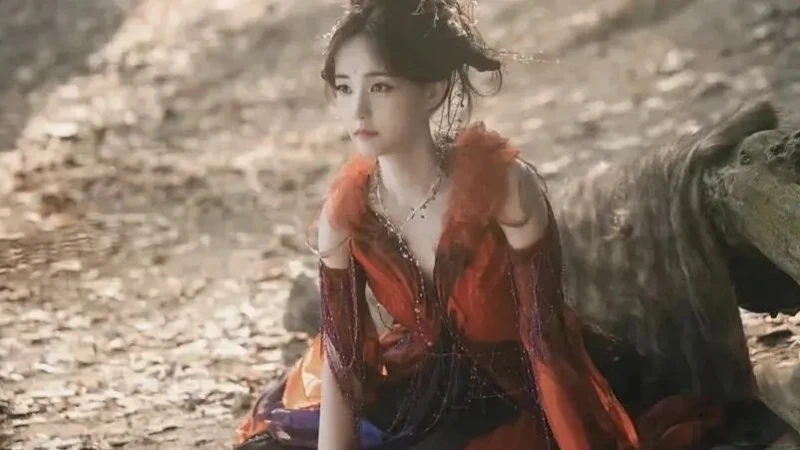
If Wang Quan Fugui’s awakening begins with internal struggle, Qing Tong becomes the light guiding him forward. Though her initial “naive sweet” characterization sparked debate among viewers, her evolving relationship with the stoic swordsman forms the series’ emotional core. Originally sent to Wangquan Manor as a spy, she instead finds herself drawn to the man beneath the weapon.
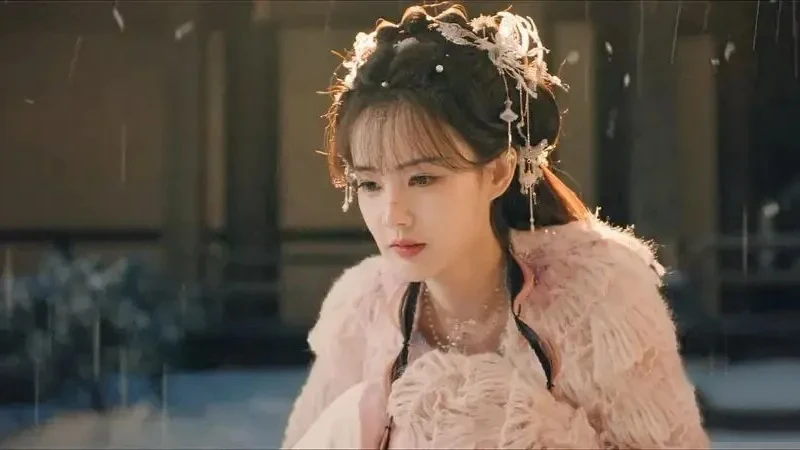
Qing Tong remembers his mercy in sparing her life and begins quietly caring for him—mending his torn robes, investigating his mother’s history despite the danger, offering warm soup when his father criticizes his swordsmanship. “Even swords need rest,” she tells him, seeing the exhaustion others ignore. Actress Li Yitong conveys profound empathy through her eyes, making their cross-species connection feel genuine rather than forced.
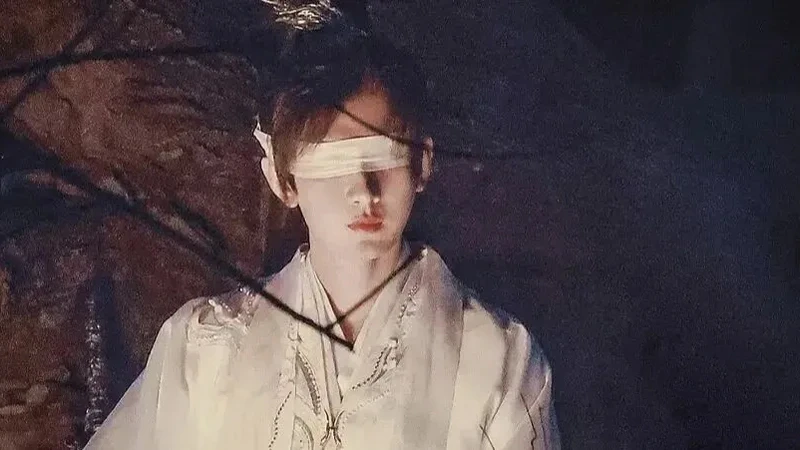
Wang Quan Fugui’s transformation unfolds through delicate details. His attention drifts during practice toward where Qing Tong weaves her silk; he saves treats given by his father, though he’s never tasted sweetness himself; when villa disciples discover her true identity, he defies orders for the first time, using his sword energy to protect her. The most poignant moment comes during a blindfolded training session where he learns to sense rather than see. As Qing Tong’s spider silk brushes against his sword tassel, his blade stills completely—he realizes then that a sword’s purpose isn’t to kill, but to protect.
This mutual salvation avoids clichéd romance tropes, instead showing two souls finding warmth in a cold world. When Wang Quan Fugui finally carries Qing Tong through their enemies, declaring “My sword swings only for protection,” he completes his transformation from weapon to true xia—a warrior with purpose beyond obedience.
Visual Language
Sword and Beloved walks a fine line between visual poetry and production missteps, creating a world that both enchants and frustrates. Its aesthetic foundation draws from Song Dynasty landscapes, with muted color palettes and mist-shrouded mountains that reflect Daoist philosophy. The production design uses costumes as narrative devices—Wang Quan Fugui’s silver armor embroidered with precise golden patterns symbolizes familial duty, while his later white robes and blindfold visually represent his shift toward heart-guided swordsmanship.
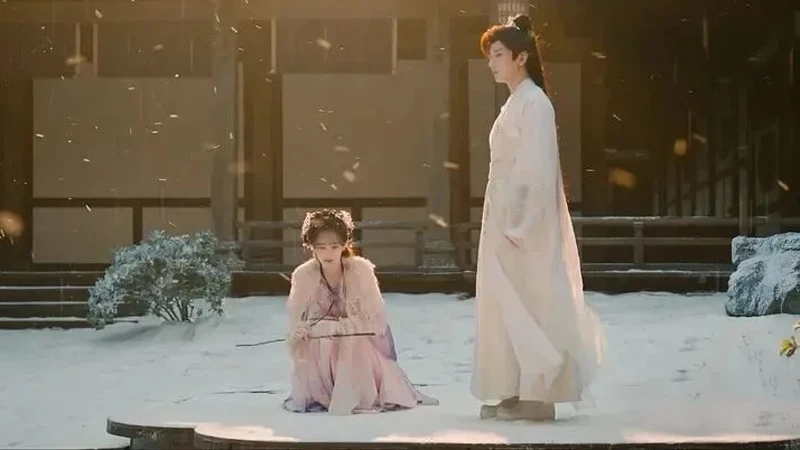
Certain special effects demonstrate thoughtful execution. Qing Tong’s spider form features remarkably detailed animation, each hair individually rendered, creating a clever visual parallel to her human appearance. The sword energy effects during crucial scenes employ realistic lighting that makes supernatural elements feel tangible, sparks appearing to radiate genuine heat.
Yet the series stumbles in other technical aspects. The snow battle’s fire dragon effect drew comparisons to children’s crafts, while some green screen backgrounds appear distractingly artificial. Cheng Yi’s consistent hairstyle across roles and familiar “coughing blood” acting moments have sparked debates about performance repetition. Pacing suffers from apparent edits, with political subplots feeling rushed and emotional developments occasionally abrupt. These issues highlight the challenge facing Xianxia productions: massive budgets should prioritize substance over spectacle, ensuring visual choices serve the story rather than overshadow it.
Ultimately, Sword and Beloved succeeds where it matters most—in its heartfelt exploration of what makes someone truly human. The series doesn’t preach about righteousness, but lets us discover its meaning alongside Wang Quan Fugui. He learns that xia isn’t blind obedience to family duty, but the compassion to spare innocent lives, the courage to protect despite personal cost. When his sword cleaves a city wall to save common people, the wind from his blade stirring weeds between stones, we feel the weight of true heroism.
This focus on humanity’s reclamation gives the series its soul. While many Xianxia dramas get lost in reincarnation cycles and power escalation, Sword and Beloved asks what happens when a weapon rediscovers his heart. True strength, it suggests, lies not in invincible magic, but in retaining compassion against all odds. The sword’s heart was never in the blade—but in the person wielding it.