
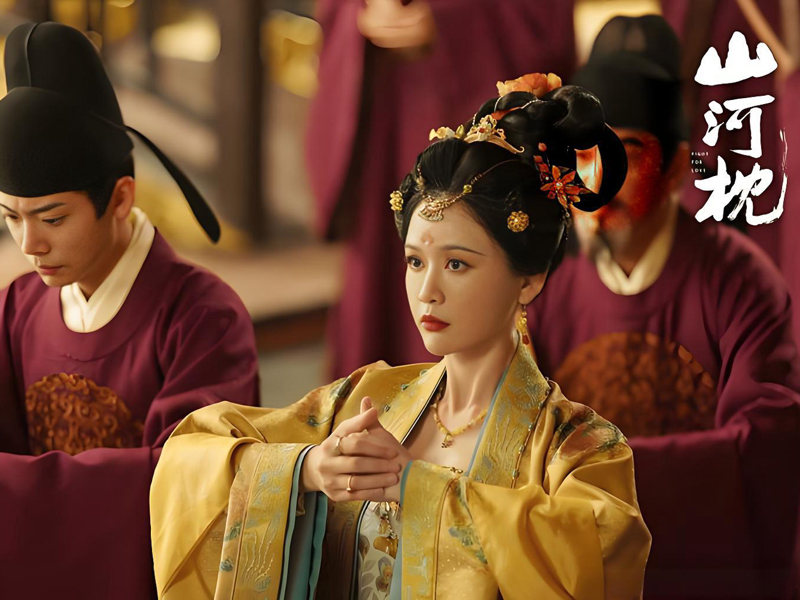
In the sweeping drama Fight for Love (山河枕), one relationship consistently captivates the audience, that between the formidable Princess Chang (长公主) and the resilient Chu Yu (楚瑜). On the surface, her unwavering support for him seems inexplicable. He appears to offer little in return, yet she grants his every request, from intervening in court politics to saving his family from ruin. This dynamic has led many to view her as a mere tool for his advancement, a character whose purpose is to smooth his path. However, a closer look reveals a far more complex and calculated ruler, a woman whose actions are not driven by altruism but by a profound understanding of power, survival, and the future of the Da Su (大遂) Dynasty itself.
Political Savvy
The true nature of her support becomes clear during a pivotal crisis. When the powerful Wei family, military stalwarts of the empire, face disgrace and annihilation after a defeated campaign, the entire court abandons them. The Emperor, Chunde (淳德), blinded by his desire to protect the Crown Prince, is willing to let a key military family be destroyed. It is Chu Yu who pleads with Princess Chang to save the youngest Wei son, Wei Yun (卫韫). While it seems she is merely appeasing the Emperor by offering him a graceful exit, her motivations run much deeper.

Princess Chang possesses a political vision her brother sorely lacks. She recognizes that the stability of Da Su rests on the strength of its military, particularly families like the Weis who guard the northern borders against the Bei Qi (北岐). To her, Emperor Chunde's short-sightedness is not just foolish, it is catastrophic. If the Wei family falls, who will defend the empire from its enemies? Her intervention to save Wei Yun is not an act of kindness for Chu Yu, but a strategic move to prevent the nation from crumbling from within. She is safeguarding the country's first line of defense, an action the Emperor is too blind to take.
This foresight establishes her as the true strategist in the royal family. While the Emperor focuses on petty court intrigues and protecting his heir, her gaze is fixed on the horizon, on the external threats that could overwhelm a weakened Da Su. Her help is an investment in national security, a calculated decision to preserve the military power that ensures the dynasty's survival, and by extension, her own.
A Woman's Fears
Beyond cold political calculation, her actions are also shaped by her personal history as a woman in a patriarchal system. A single, offhand remark she makes unveils this private trauma: "Born into the royal family, once you're involved in the struggle for the throne, it is destined to be a tragedy." This statement hints at a past scarred by political machinations, likely a forced marriage she was subjected to for political alliance.
This experience gives her a unique empathy and a stark understanding of the precarious position of women, even privileged ones, during times of turmoil. She sees the potential for chaos should the state collapse and knows that women are often the first to suffer. By ensuring stability through supporting military families like the Weis, she is also ensuring her own safety and autonomy. She is unwilling to be a pawn again in a game that could lead to her downfall or another unbearable political marriage.
Her reluctance to even dine with her brother, the Emperor, speaks volumes about the resentment she carries from her past. Helping Chu Yu and, by extension, stabilizing the realm, is a way for her to reclaim control. It is an act of self-preservation, ensuring she never has to relive the powerlessness she experienced before.
Masterful Manipulation
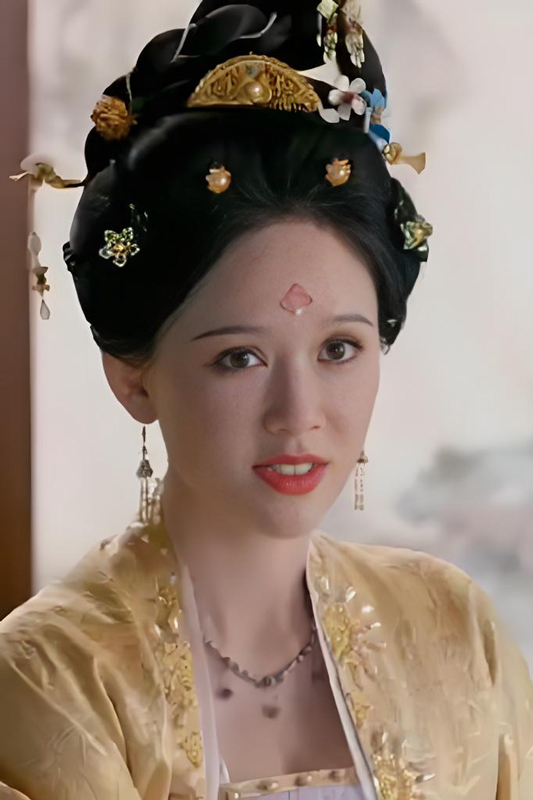
The method of her assistance is as brilliant as the decision itself. She never offers help outright. Instead, she masterfully orchestrates situations so that others are compelled to come to her. She waits for Chu Yu to humble himself and beg for her intervention. This is not a sign of arrogance, but a profound understanding of human psychology and the dynamics of debt and favor, or Renqing (人情).
Had she intervened without being asked, her aid would have been taken for granted, its value diminished. By making Chu Yu plead, she transforms a potential act of state into a deeply personal favor. He and the entire Chu family now owe her a significant debt of gratitude. Similarly, the rescued Wei Yun will feel a lifelong obligation to the princess who saved his life. In the volatile world of Da Su, having two of the most capable military families in your debt is a formidable asset.
This approach yields maximum benefit with minimal effort. She appeases the Emperor by giving him a face-saving solution, while simultaneously binding powerful families to her cause. It is a masterclass in political manipulation, proving that her intelligence surpasses that of every other player at court. She is not a tool to be used by Chu Yu, but a grandmaster carefully moving her pieces on the board, securing her power, her safety, and the future of her nation with every calculated move.