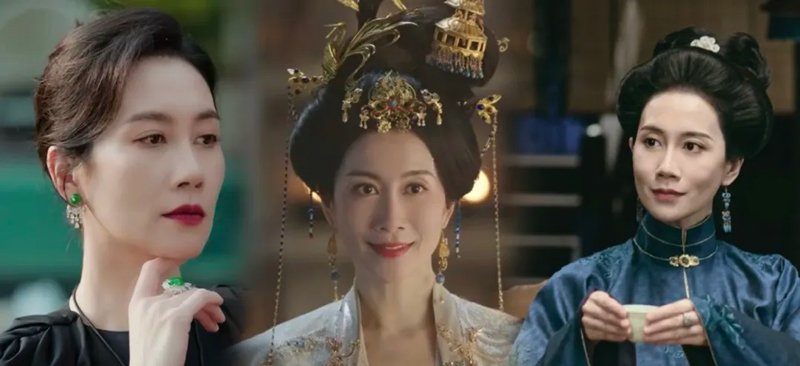
Why does this actress radiate such noble elegance? In the television drama Love's Freedom (许我耀眼), the character of Sister Lan (岚姐), portrayed by actress Wen Zhengrong (温峥嵘), has captivated audiences with her poised and aristocratic demeanor. Her roles often depict matriarchs from influential families, leading many to wonder about the origins of this refined aura. The answer lies not just in stellar acting, but in the meticulous recreation of historical attire and adornments, where every accessory tells a story of status, culture, and artistry.
Jade's Timeless Allure
In Love's Freedom, Sister Lan's wardrobe is defined by minimalist, solid-color outfits that allow her jewelry to command attention. A prominent feature is her magnificent Feicui (翡翠) jade pendant. In ancient China, jade was far more than decoration; it was a definitive marker of a woman's family background and social standing. The quality of a piece was judged rigorously on its color saturation, translucency, and the absence of flaws. Wearing high-quality jade was a silent, powerful statement of nobility and refined taste.
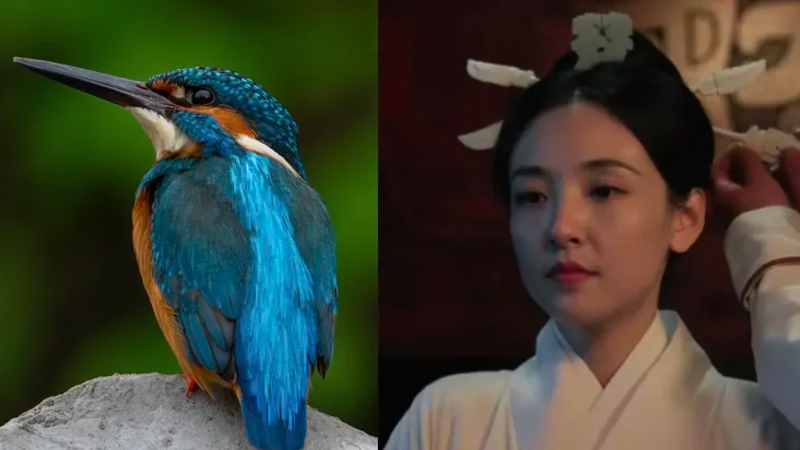
The history of the term "Feicui" is fascinating. Its earliest mentions, such as in the Han Dynasty text Huainanzi (淮南子), refer not to the green stone we know today, but to the vibrant feathers of kingfishers. Noblewomen of that era adorned their hair with these brilliant plumes. It was not until the Song Dynasty that the name began to be associated with a type of green jade, as recorded in the mineralogy text Yunlin Stone Manual (子虚赋), which prized specimens with deep, pure color and few imperfections.
The specific jadeite jade now synonymous with "Feicui" entered China more clearly during the Ming Dynasty. The travelogues of Xu Xiake (徐霞客) document merchants from Yongchang (永昌) dealing in "Cuisheng Stones," which were Burmese jadeite. This precious material, historically called "Yongchang Jasper," eventually became the definitive meaning of "Feicui," cementing its status as the ultimate symbol of luxury for centuries.
Subtle Opulence in Metal
Another role, Ruan Xiwen (阮惜文) in the drama The Glory (雁回时), showcases a different facet of historical elegance. Here, the hair ornaments are simpler, but the sophistication is conveyed through rich, jewel-toned fabrics like sapphire blue. A particular sapphire blue standing-collar robe with a Mamian Qun (马面裙), or horse-face pleated skirt, garnered significant praise from viewers. The true markers of luxury, however, were in the exquisite details.
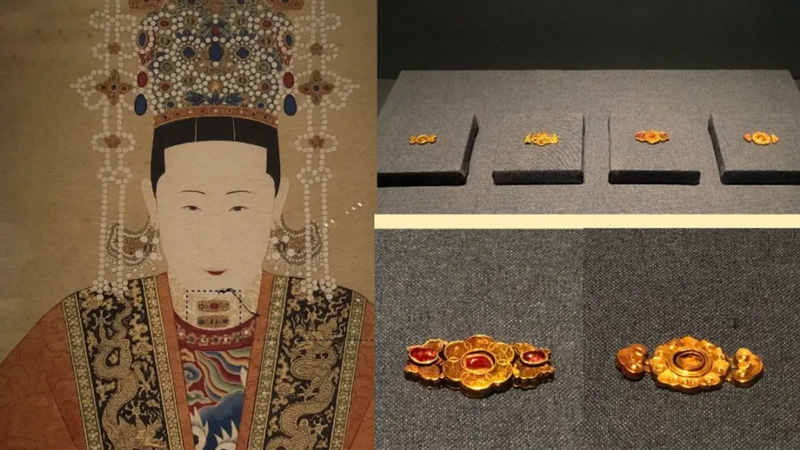
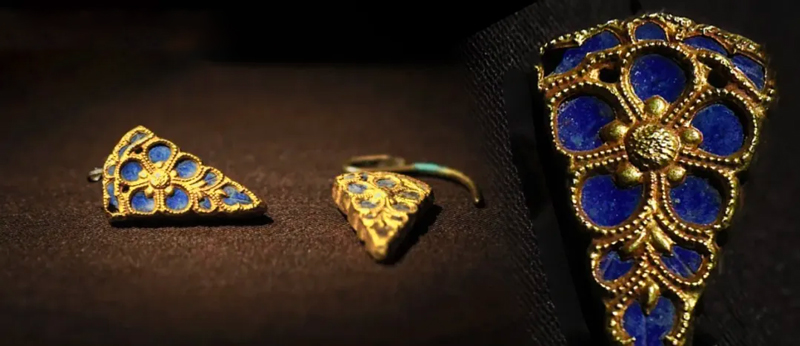
The most admired elements were the delicate golden Zimu Kou (子母扣), or mother-and-child clasps, and the fine gold-thread trimmings edging the garment. This represented a quiet, understated magnificence. During the mid to late Ming Dynasty, an unprecedented trend for luxury emerged, and these metal clasps, often crafted from gold, silver, or carved jade, became highly fashionable.
These intricate fasteners were particularly favored for adorning the collars of outer robes. Their designs were complex and varied, often featuring auspicious symbols and motifs. They were not merely functional items but crucial elements of aesthetic expression, demonstrating that true wealth was often revealed in the smallest, most carefully considered details of one's attire.
In her portrayal of the Grand Imperial Concubine Zhao in Love Game in Eastern Fantasy (永夜星河), the character's headdress is a dramatic structure resembling pavilions and towers. While this may seem exaggerated for modern tastes, it is rooted in historical fashion. Such Hai Shang Xian Shan Lou Ge Zan (海上仙山楼阁簪), or "sea immortal mountain pavilion hairpins," were popular among Ming Dynasty noblewomen.
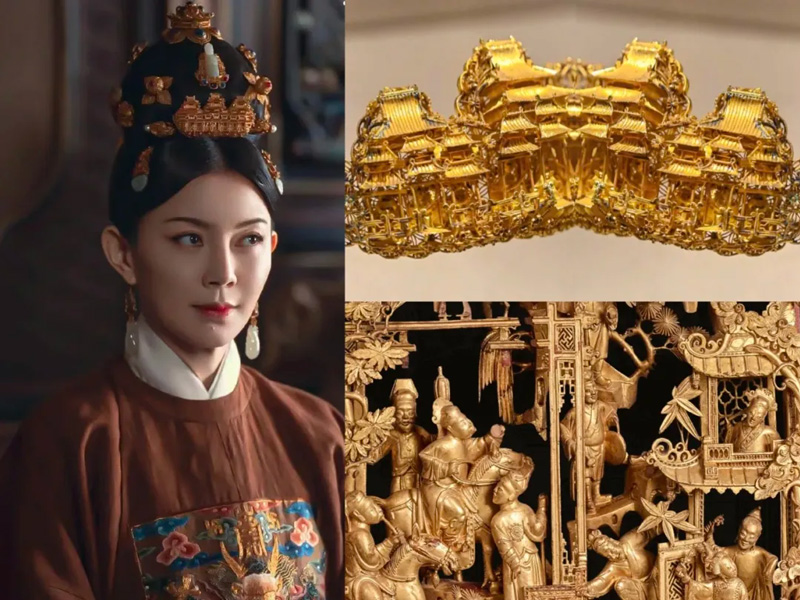
This type of hairpin symbolized the family's exalted status and embodied the ancient Taoist longing for ascension to immortality. A real-world prototype exists: a gold hairpin from the tomb of Wan Fei (万妃), a consort of Ming Prince Zhu Houye (朱厚烨). On this tiny hairpin, artisans created a miniature world with pavilions, figurines, attendants, cranes, deer, clouds, and pine trees, vividly bringing the fantasy of a celestial paradise to life.
Through the characters brought to life by Wen Zhengrong, we are offered a glimpse into a world where elegance was a complex language spoken through silk, jade, and gold. These are not just costumes but portals, allowing the sophisticated aesthetics and profound cultural aspirations of ancient China to travel across a thousand years and resonate with audiences today.
