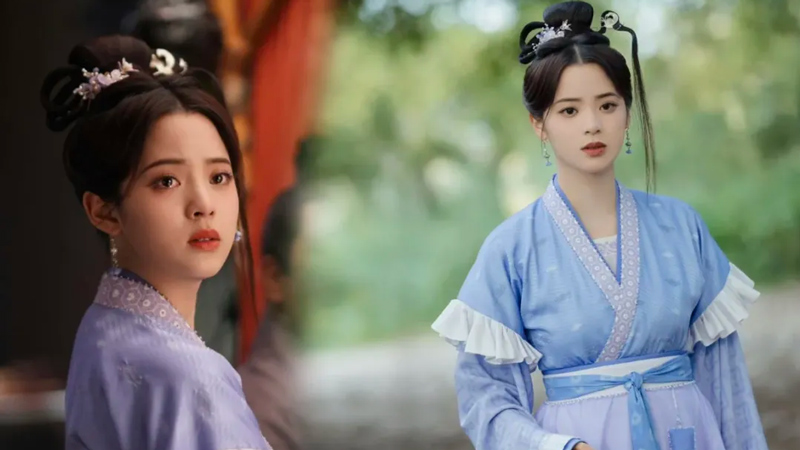
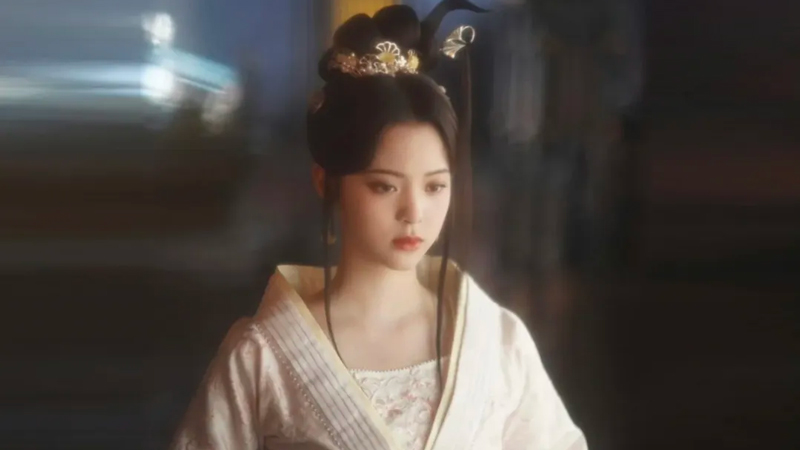
A recent scene from the historical drama Yong'an Dream (永安梦) featuring actress Ouyang Nana has sparked lively online debate. Viewers questioned the stylist's choices, pointing to a few seemingly loose strands of hair framing her face. The hairstyle, with its characteristic trailing locks, struck many as too informal for a period production. However, this particular look is far from a wardrobe malfunction; it is a deliberate and historically accurate recreation of a classic Chinese hairstyle from the Northern and Southern Dynasties era.
The Historical Hair
The specific style is known as the Chuishao Ji (垂髾髻). Evidence of this elegant updo can be found in classical Chinese art, such as the Admonitions of the Instructress to Court Ladies Painting (女史箴图). It involved piling hair into a high bun, often augmented with supplementary pieces to achieve greater volume, a common practice among noblewomen. The defining feature was the deliberate placement of two neat strands of hair along the temples, a detail referred to as Fenshao (分髾).
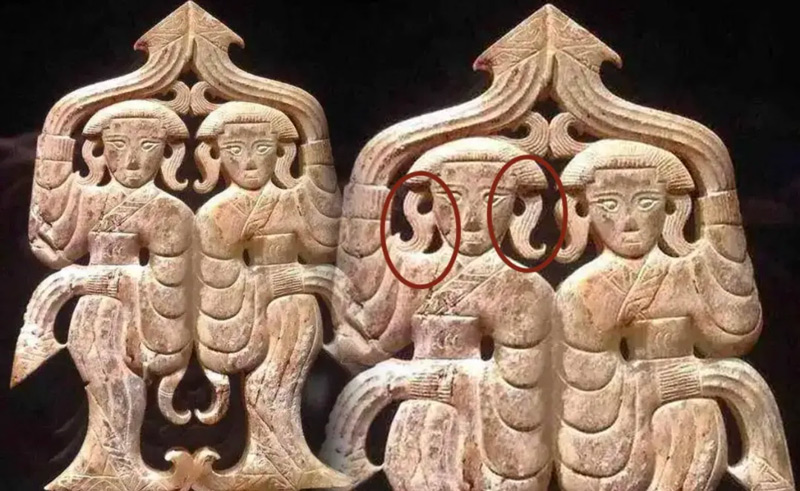
This fashion is believed to have originated earlier, potentially during the Warring States period, and gained prominence from the Eastern Han through the Wei and Jin dynasties. An excavated jade sculpture of a dancer from a Han tomb in Luoyang (洛阳) provides an early example, showing the distinct, straight-cut bangs and trailing locks. The style was designed to be both structured and dynamic, with the "Shao" elements adding a sense of movement.
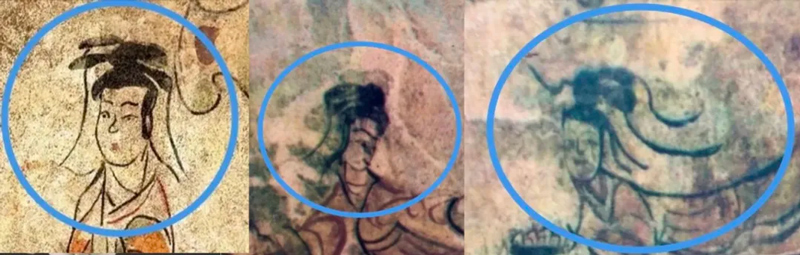
Historical texts offer descriptions that align with these visual artifacts. The term "Shao" is explained in commentaries as pertaining to the arrangement of the hair knot. The locks could either cascade from the back of the main bun or, more commonly, drape gracefully from the temples. These were not stray hairs but an intentional and celebrated element of sophisticated feminine attire.
The Significance of Style
Beyond aesthetics, the Chuishao Ji served specific cultural and practical purposes. The carefully arranged strands helped to frame and soften the facial structure, creating a harmonious balance. More profoundly, the style reflected a philosophical shift in Chinese society, where Daoist ideals of ethereal beauty and unbound freedom began to influence fashion.
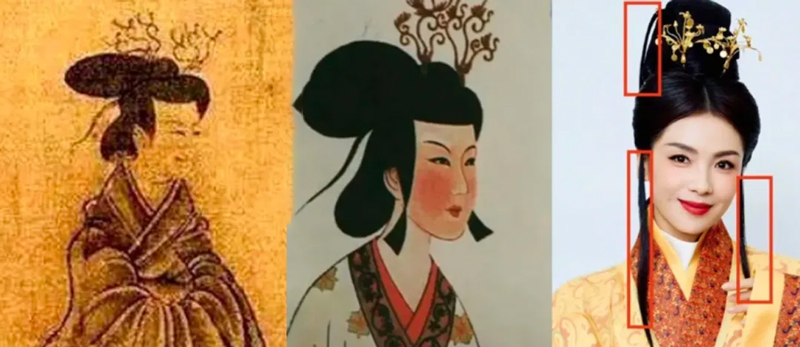
The lightweight, flowing quality of the hair complemented the popular wide-sleeved robes of the time, known as Daxiu Ru (大袖襦). This combination produced an overall silhouette that was graceful and unrestrained. The look embodied a "wind bone" spirit—an aspiration towards a transcendent and elegant demeanor that was highly prized among the aristocracy.
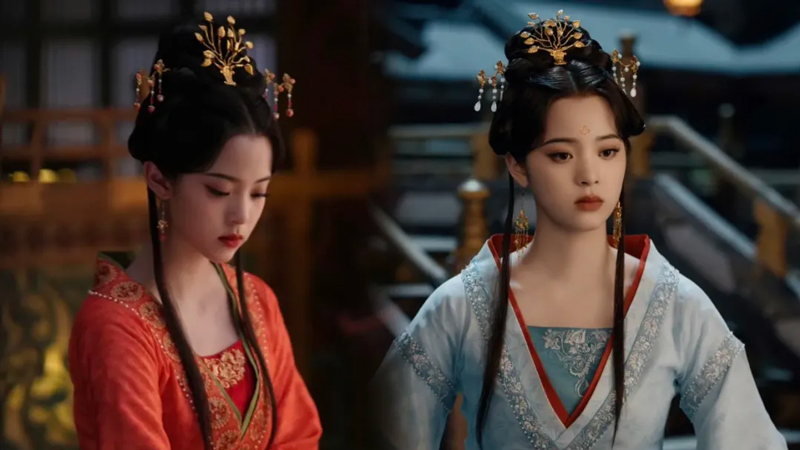
In the drama, Ouyang Nana's character wears this hairstyle with several outfits, including Ru-style jackets and skirts that are authentic to the period. One particular costume includes a Liandang (裲档), a square-paneled undergarment worn with shoulder straps. The pairing of the soft, trailing hair with the structured, flowing clothing creates a cohesive and historically resonant image of classical beauty.
The Golden Accessory
Completing the intricate hairstyle was a magnificent hairpin, a type of Buyao (步摇). These were not simple ornaments; they were masterpieces of goldsmithing. A notable example, excavated in Inner Mongolia, features a base shaped like a mountain, topped with a delicate tree-like structure with finely crafted leaves and berries.
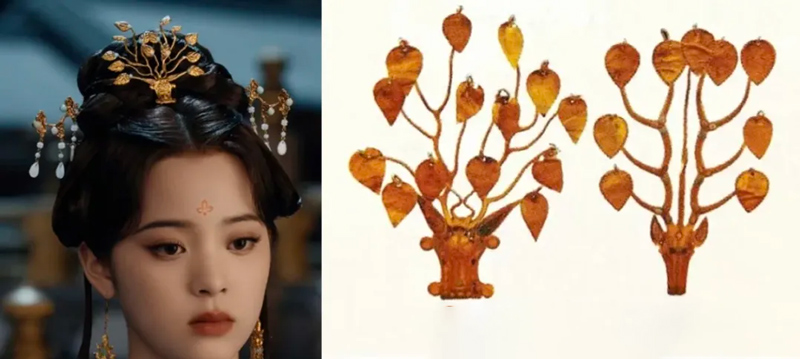
The name Buyao translates literally to "step shake," which describes its function perfectly. As the wearer walked, the tiny leaves and dangling elements of the hairpin would tremble and sway with her movement. This created a captivating visual and auditory effect, a soft shimmer and rustle that announced her presence with every step.
This accessory was more than just decoration; it was a tool for cultivating poise. The gentle, rhythmic shaking demanded a measured and graceful gait, reminding the wearer to move with dignity and restraint. From the Han dynasty through the Wei and Jin periods, the Buyao was a definitive marker of high status and refined elegance, making it the perfect accompaniment to the sophisticated Chuishao Ji.