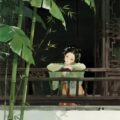
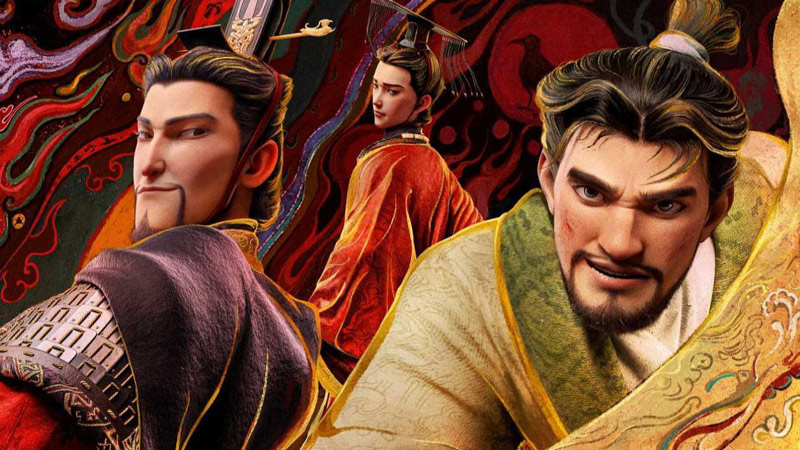
What if everything you knew about Cao Cao (曹操) was wrong? This October, a groundbreaking animated film promises to shatter long-held stereotypes and present a fresh perspective on one of China's most enigmatic historical figures. Three Kingdoms: Starlit Heroes (三国的星空第一部), set for release on October 1, 2025, is not just another retelling of a familiar tale. Guided by the visionary mind of Yi Zhongtian (易中天), who serves as both screenwriter and supervisor, the film delves into the heart of the late Eastern Han Dynasty (东汉末年) to explore the man behind the legend. It aims to strip away centuries of literary embellishment and political bias, revealing a leader who was as much a poet and philosopher as he was a strategist.
This project marks a significant moment for Chinese animation, blending historical depth with cinematic spectacle to question the very nature of heroism in a time of chaos. The narrative seeks to connect with modern audiences by focusing on universal themes of ambition, loyalty, and the personal cost of great deeds.
A Complex Hero
Traditional accounts often paint Cao Cao as a cunning and ruthless villain, but this film challenges that simplistic view. It introduces him as a multifaceted individual grappling with the immense responsibilities of leadership during a fractured era. Through introspective moments and key dialogues, we see a leader deeply concerned for his people and the stability of the realm. His recitation of poetic lines like "How long does life last?" reflects not merely a warrior's bravado but a profound awareness of life's fragility and the urgency of his mission. This portrayal suggests that his actions were driven by a complex mix of personal ambition and a genuine desire to restore order, forcing viewers to reconsider what it means to be a hero.
The dynamic between Cao Cao and his former friend, Yuan Shao (袁绍), serves as a central conflict that highlights these complexities. A powerful scene depicts them seated across a table, a divided imperial seal between them, symbolizing their shattered alliance and the impending civil war. This moment is charged with personal betrayal and ideological clash, showing how relationships were casualties in the broader struggle for power. The film uses such interactions to explore how personal histories and shared pasts influence monumental decisions, adding a rich, emotional layer to the historical narrative.
Beyond the battlefield, the film dedicates time to Cao Cao's intellectual and emotional dimensions. He is shown not only commanding armies but also engaging with literature and governance, embodying the ideal of a scholar-general. This balance between the pen and the sword is crucial to understanding his character. His solitary vow to press forward "even if against thousands" is framed not as mere ambition, but as a solemn commitment to a greater cause, making his journey relatable and morally ambiguous.
Historical Setting
The backdrop of the film is the tumultuous late Eastern Han Dynasty, a period marked by political decay and widespread conflict. The city of Luoyang (洛阳), once a symbol of imperial splendor and prosperity, is depicted in ruins, its streets now scarred by war and its people displaced. This visual contrast between past glory and present devastation powerfully communicates the era's tragedy. The decay of Luoyang is not just a setting but a character in itself, representing the collapse of a great civilization and the birth pangs of a new order.
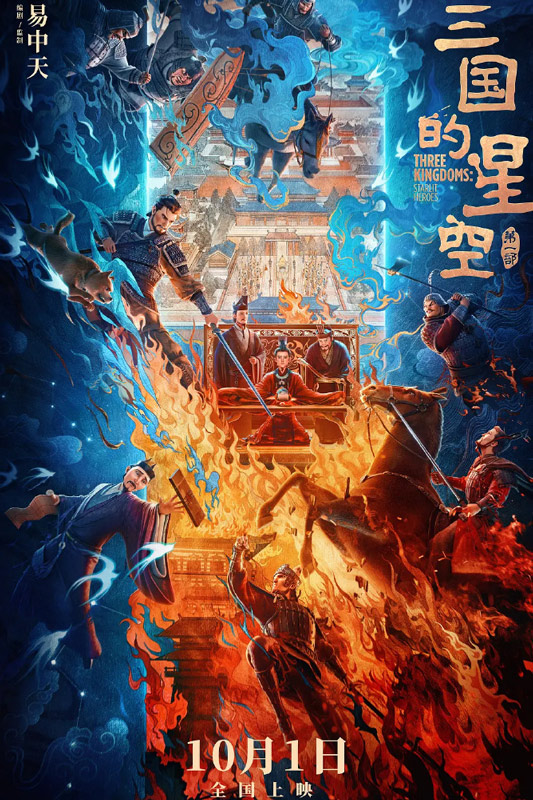
Amidst this chaos, the film portrays the various factions vying for control, each led by figures like Yuan Shao and Liu Xie (刘协), who represent different paths for the future. The political landscape is a tapestry of shifting alliances and bold gambits, where every decision carries immense weight. The narrative carefully situates Cao Cao within this context, showing how the environment shaped his choices and how he, in turn, sought to shape his destiny. The era's instability serves as a catalyst for his rise, highlighting the interplay between individual agency and historical forces.
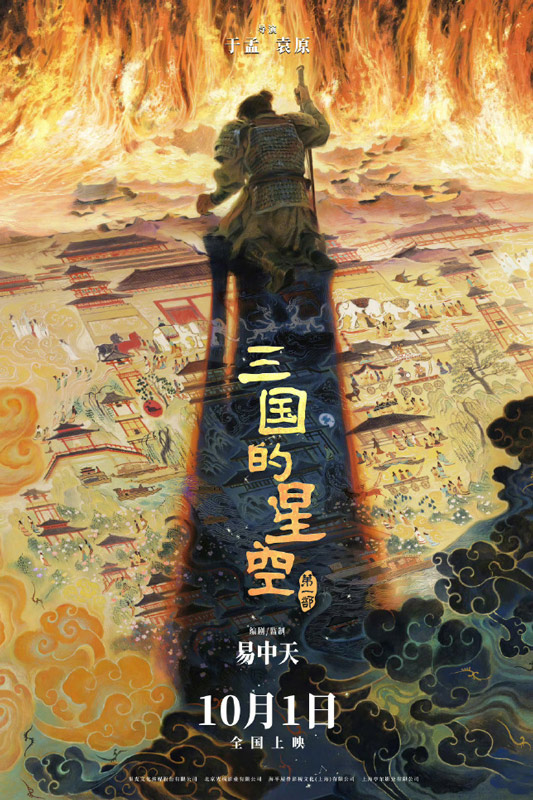
Visual storytelling plays a key role in immersing the audience in this historical world. The promotional materials show Cao Cao kneeling in the ashes of his surroundings, his shadow looming over half of Luoyang—a metaphor for his overwhelming influence and the burdens he carries. This imagery suggests a man tethered to the land and its people, whose personal struggles are inextricably linked to the fate of the nation. The attention to period details, from architecture to costumes, helps ground the fantastical elements in a believable reality.
Creative Vision
The film's distinctive voice comes from the involvement of Yi Zhongtian, a scholar renowned for his engaging and unconventional takes on history. His transition from popular lecture platforms to the silver screen brings an academic rigor and narrative flair that sets this project apart. By focusing on historical authenticity rather than mythical archetypes, he aims to resurrect a more nuanced Cao Cao, one that historical records hint at but popular culture has often ignored. This approach bridges the gap between education and entertainment, offering a piece that is both informative and emotionally resonant.
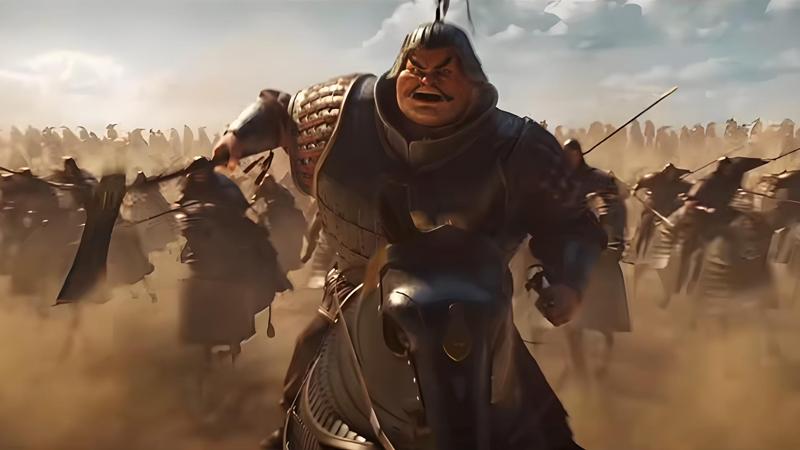
Adding to the creative force is multi-talented artist Tan Jianci (檀健次), who contributes both the theme song and the voice for Cao Cao. His involvement adds a layer of artistic cohesion, as his vocal performance and musical composition are likely to reflect the character's inner conflicts and the film's epic scale. The collaboration between such diverse talents ensures that the project is not just a visual treat but an aural and intellectual experience as well, appealing to a broad audience.
The production team has invested significantly in animation technology to bring this vision to life, aiming to match the storytelling's depth with equally compelling visuals. The goal is to create a work that stands out in the growing field of Chinese animated features, known for their artistic ambition. By presenting a historically grounded yet creatively fresh narrative, the film invites viewers to engage with the past in a new way, prompting reflection on how history is remembered and who gets to tell the story.