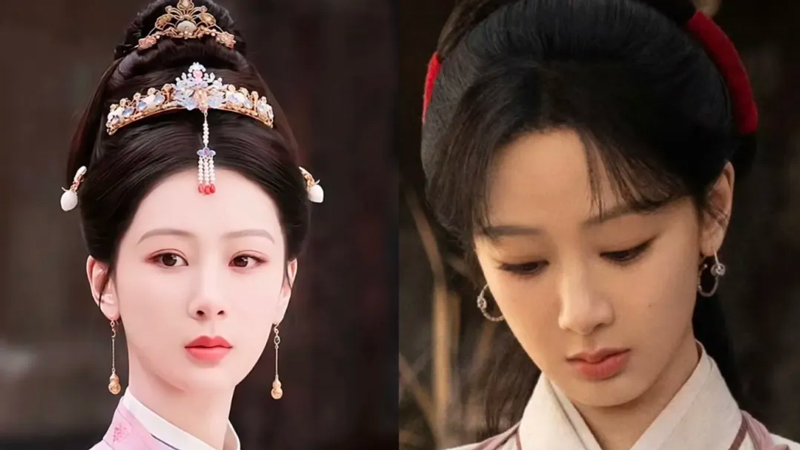
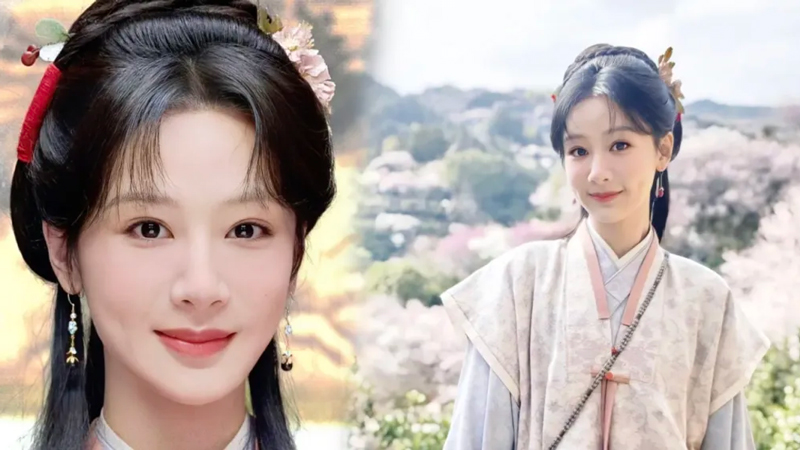
Did a modern pair of earrings just appear in a historical Chinese drama? This was the burning question on social media after viewers spotted the accessories worn by Yang Zi (杨紫) in the new series Family Business (家业). Her character, Li Zhen (李祯), is depicted in a narrative inspired by the Ming Dynasty, yet the intricate hoop earrings she wore seemed strikingly contemporary to the modern eye. This sparked a fascinating debate, leading to a surprising discovery about ancient Chinese fashion. The conversation revealed that our assumptions about historical adornment are often limited, and that the craftsmanship of the past was far more advanced and varied than we typically imagine.
Ear Studs
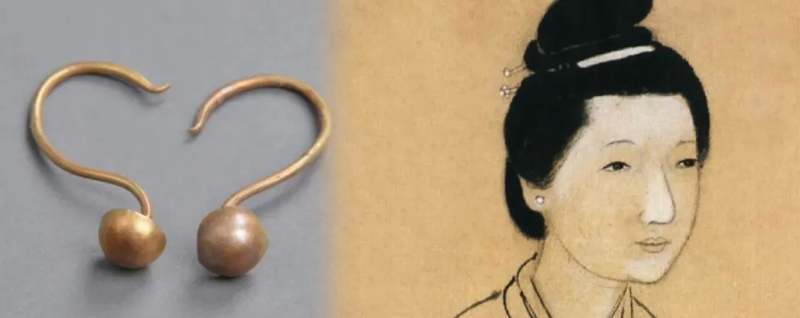
The smallest and most common type of ear jewelry in the Ming Dynasty was theDingxiang (丁香). This style closely resembles what we now call an ear stud. Typically crafted from gold or silver, a Dingxiang consisted of a small decorative front piece, often a gem or metalwork, attached to a thin wire that passed through the earlobe. Its design philosophy championed minimalism and subtlety, making it an everyday accessory for women of the time. Its popular nickname, "bean sprout nail," vividly captures its delicate and understated form.
Historical records from the era, such as Li Yu's (李渔) Casual Expressions of Idle Feeling (闲情偶寄·卷三·声容部), note the aesthetic preference for smaller ear ornaments. The ideal ear piece was a single small pearl or a tiny dot of gold, confirming that the Dingxiang was the standard for daily wear. This demonstrates a timeless appreciation for simple, elegant jewelry that transcends centuries. The modern resurgence of delicate studs shows a direct parallel with this ancient preference.
Hoops and Dangles
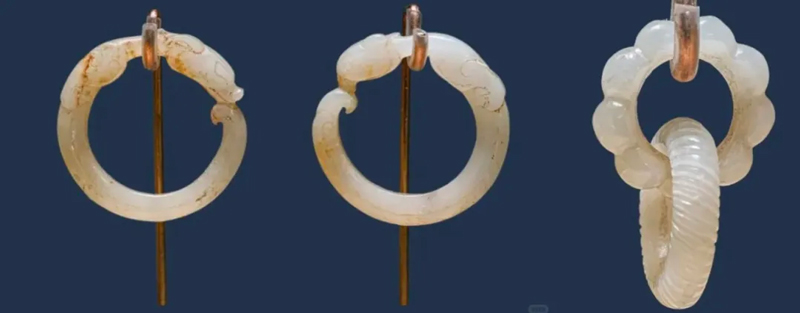
Beyond the simple stud, Ming dynasty fashion included more statement pieces. The earrings that caused the debate in Family Business are a perfect example of a hoop style. These were circular bands, sometimes quite substantial in size, made from jade, gold, or silver. The front-facing section was often elaborately decorated with carvings or openwork patterns, turning the hoop itself into a canvas for artistry.
A practical question arises: how were these sometimes thick hoops worn? They did not always pass directly through the earlobe. A common method involved using a thin, almost invisible metal thread to suspend the hoop, which was then either hooked over the ear or attached via a finer wire that did pass through the lobe. This clever technique allowed for the display of larger, heavier designs without discomfort, showcasing the ingenuity of period jewelers.
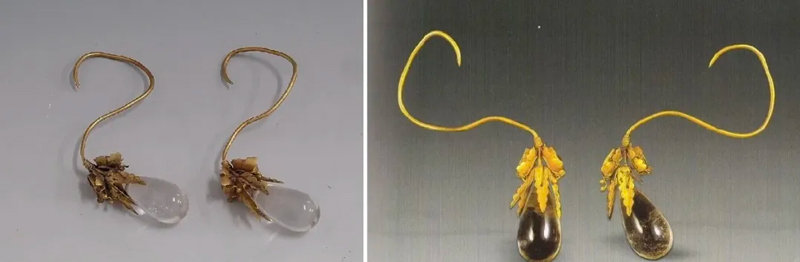
The category of dangling earrings, or ear pendants, was exceptionally diverse. Short pendants featured shapes like precious gourds, fruits, or clusters of pearls. Longer, more dramatic styles were created by linking gemstones or metal beads with fine chains, creating a cascading effect. Some designs even incorporated good-luck characters, with the symbol for "longevity" being a particularly popular motif hanging from the ear wire. These pieces prove that Ming dynasty accessory trends were anything but simple.
Classical Trends
The real surprise for many is the sheer modernity of these ancient designs. A pair of earrings from the Northern Wei Dynasty, housed in the Datong Museum (大同博物馆), looks like it could be on display in a contemporary jewelry boutique. It features a central pendant, intricate chain detailing, and meticulously carved motifs, displaying a level of sophistication that feels ahead of its time. This artifact alone challenges our entire perspective on historical fashion.
This exploration into historical earrings does more than just vindicate a costume designer's choices. It invites us to reconsider the depth and complexity of ancient aesthetics. The refinement and attention to detail in these pieces reveal a culture that deeply valued personal adornment and artistic expression. The "modern" feel of these items is not an inaccuracy, but a testament to their timeless design and the advanced skill of the artisans who created them.
Ultimately, the discussion sparked by a single pair of earrings opens a window to a richer understanding of our cultural past. It shows that the drive for beauty and elegant design is a constant across human history. Instead of seeing these ancient pieces as relics, we can view them as a boundless source of inspiration, connecting our present-day style to the enduring wisdom and creativity of our ancestors.