In Dongyang (东阳), a wedding is an intricate tapestry of rituals where every gesture carries profound meaning. More than just uniting two individuals, it is a deeply symbolic celebration involving entire families and communities, blending ancient customs with modern adaptations to honor continuity and belonging.
The People Behind the Ceremony
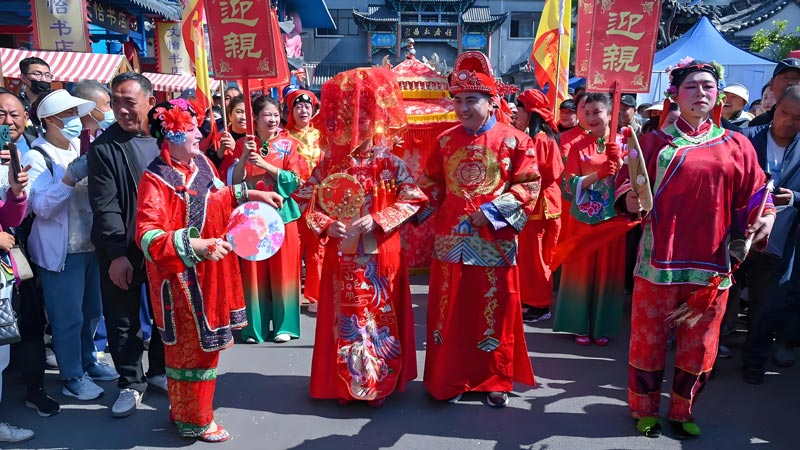
In Dongyang, a wedding is more than just a union of two people—it’s a carefully orchestrated event involving a cast of characters, each with symbolic roles. Key among them are the "Fortune-Bringers," chosen for their luck and family status.
On the groom’s side, these people include married men. They are often uncles or older relatives, and their roles involve carrying quilts, curtains, and traditionally, lifting the bride out of the sedan chair. Since the 1980s, though, grooms often take on this role, carrying their brides all the way to the new home. There’s also a "Fruit Matron," a witty married woman in charge of distributing nuts and sweets, symbolizing fertility and sweetness in the new marriage.
The bride’s family selects those who will carry her into the sedan chair and accompany her as bridesmaids. These roles are reserved for the closest relatives, such as uncles, aunts and cousins. This emphasizes that marriage in Dongyang focuses on the family just as much as it does on the couple themselves.
Long before the bride steps into her wedding sedan chair, symbolic foods and items are prepared with deep intentionality.
A live goose is included in the groom’s gifts to the bride’s family, a nod to ancient betrothal rituals where wild geese symbolized loyalty. The bride receives a five-colored bag from her family, representing the wish for "five generations under one roof."
Food plays a repeated role: the bride eats a "Sedan Meal," fed by her mother to express gratitude, or sugar-water eggs so she’ll speak sweetly to her new in-laws. She carries red eggs in her lap, which are "for sons and grandsons". She sits with "evergreen" plants and a bronze mirror, both used for protection.
Even as she leaves, her family gives her roasted soybeans to later share with neighbors—a gesture meant to "make the unfamiliar familiar."
The Journey: Between Two Homes
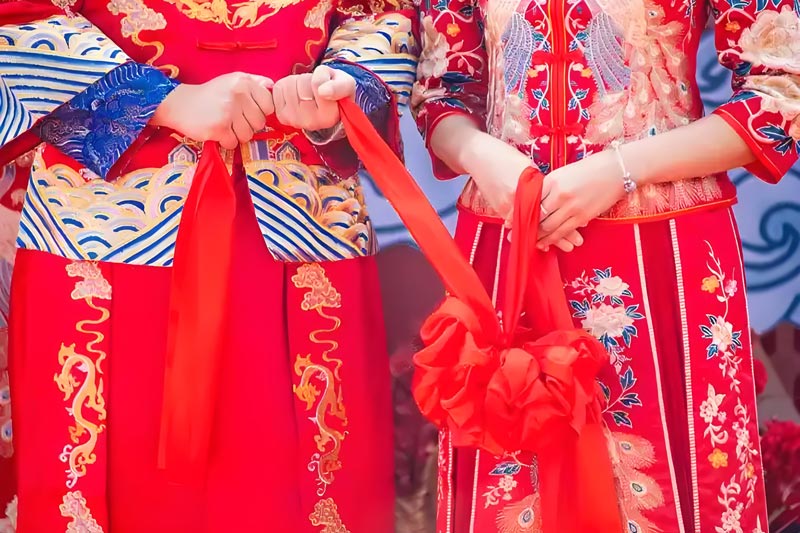
The physical movement from the bride's home to the groom's home is filled with ritual actions that transform the bride's identity. She is carried both ways—first by a male relative from her home into the sedan chair, then by the groom or a Fortune-Bringer from the vehicle into her new household. Her feet must not touch the ground directly during this transition; instead, she steps on moving hemp sacks in a practice called "Passing on Seeds and Generations." This act metaphorically connects her movement with agricultural continuity and familial legacy.
Along the route, the wedding party might encounter symbolic barriers. In southern Dongyang, villages sometimes stretch red ropes across the road, demanding cigarettes or gifts before allowing passage. This custom, once practical in ensuring community participation, has become a playful negotiation between wedding organizers and local residents.
While many Dongyang wedding rituals are centuries old, they haven’t remained frozen. In the mid-20th century, weddings were simplified—brides and bridesmaids often walked to the groom’s home. By the 1990s, cars replaced sedan chairs; a fleet of 8-10 vehicles became typical. Today, some opt for luxury cars or even retro-themed processions with horse carts and palanquins.
The "Bamboo of Descendants" has also evolved. Once made from black bamboo used to hang bed curtains, it’s now often larger mao bamboo (毛竹) carried or even transported by truck. It remains a potent symbol of growth and continuity.
Some customs, like avoiding funeral processions or bargaining with villages along the route for passage, persist—blending communal interaction with lighthearted negotiation.
Rituals of Incorporation
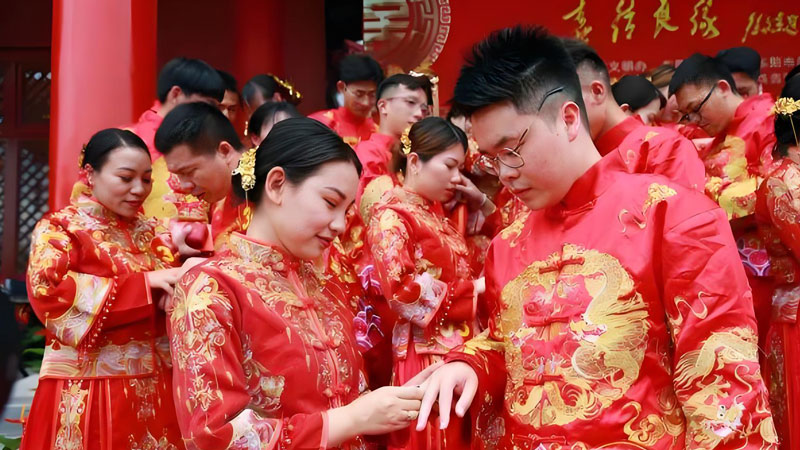
Upon arrival at the groom's home, the bride undergoes rituals that incorporate her into the new family. She is offered sugar-water eggs ("to see sons and grandsons"), washes her hands in scented water presented by the Fruit Matron, and is led to worship the Kitchen God—signifying her new role in feeding and nurturing the family.
The formal bows to heaven and earth, to parents, and between the bride and groom cement her new status. Then comes the joyful chaos of "Begging for Fruits," when children swarm into the bridal chamber demanding treats. The Fruit Matron scatters nuts and sweets across the marital bed while chanting blessings: "Fruit scattered to the bed’s top, husband and wife harmony never stops; fruit scattered to the bed’s base, children and grandchildren will thrive with grace."
At its heart, the Dongyang wedding is a ritual of belonging—not just for two individuals, but for two families and a broader community. The foods, objects, and roles are all designed to reinforce values: loyalty, fertility, gratitude, and continuity.
Even the "Bridal Weeping," the ceremonial crying as the bride departs, is a public expression of transition—a daughter leaving, a woman entering a new life. These customs remind us that in Dongyang, a wedding isn’t merely an event. It’s a language of symbols, a choreography of care, and a bridge between the past and the present.
What makes these traditions remarkable is their adaptability. While some elements have simplified or modernized, the core symbolism remains meaningful. The goose may travel in a truck rather than being carried on foot, but it still represents fidelity. The bamboo may be larger and less practical, but it still signifies growth. In preserving these symbols while allowing the forms to evolve, Dongyang’s weddings demonstrate how culture lives not through perfect preservation, but through thoughtful reinvention.