
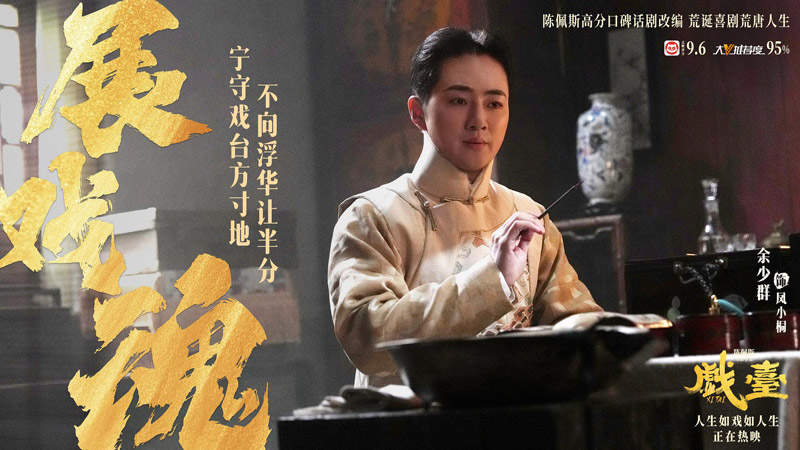
Honestly, Xi Tai (戏台) doesn't feel like a movie at first. The painted faces strutting across the stage, the exaggerated rhythm of the dialogue... it screams theater.
Which makes sense, since it's adapted from a play of the same name. But as the story unfolds, it pulls you in. The jokes land thick and fast, the script is tight, and the lines have real bite. It's been a while since we've seen a comedy this sharp on the big screen.
The story's set in the chaotic Republic of China era. Manager Wu (played by Yang Haoyu) of the Dexiang Theater books the famous Wuqing Opera Troupe. The whole city's buzzing to see the star, Jin Xiaotian (Yin Zheng). But then, the newly arrived warlord, Commander Hong (Jiang Wu), crashes the party. He doesn't just want to watch; he wants to change the play.
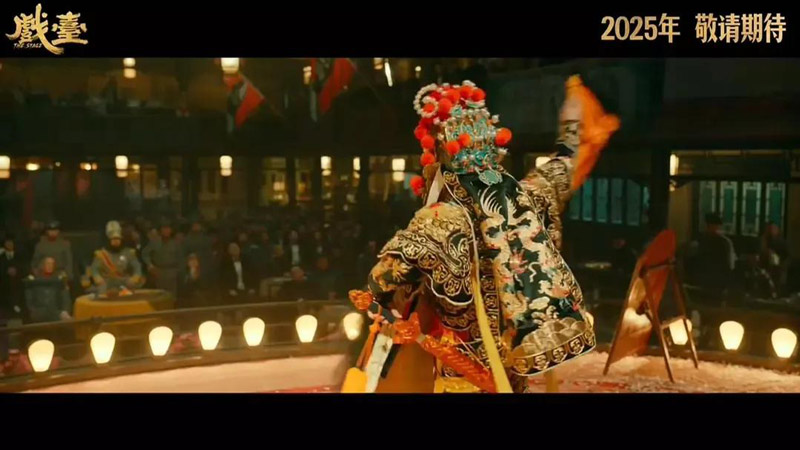
So, inside the Dexiang Theater, everyone gets tangled up around the classic opera Farewell My Concubine – the warlord, the actors, the audience. Onstage and off, it's pure chaos.
 Warlord Rewrites the Opera Play: Obey or Die
 Warlord Rewrites the Opera Play: Obey or Die
Commander Hong takes Beijing. In this unstable time, people react differently.
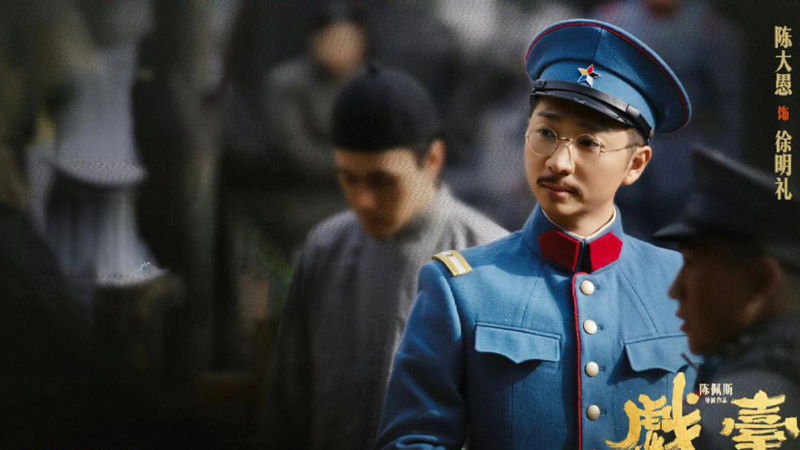
Xu Mingli (Chen Dayu), head of the Education Department, sees an opportunity. He studied Hong's tastes before the city fell, figuring how to gain favor.
Manager Wu just wants his box office. Despite the turmoil, the theater's open, tickets are sold. His main worry is whether the Wuqing Troupe will show up on time.
The troupe leader, Hou Xiting (Chen Peisi), is focused on the show's success and protecting their reputation. Problem is, their lead actor Jin Xiaotian, heartbroken after his lover left him, is now an opium addict, completely out of it and unable to perform.
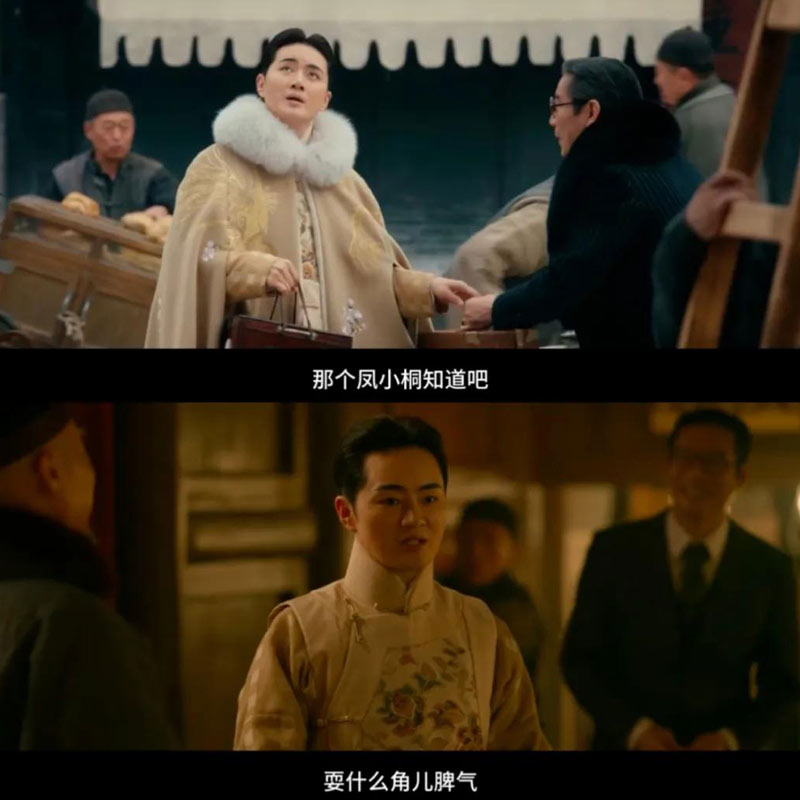
Feng Xiaotong (Yu Shaoqun), playing Yu Ji (the concubine), is desperate to perform Farewell My Concubine perfectly alongside her idol, Jin Xiaotian.
Commander Hong's sixth concubine, Siyue (Xu Zhuor), is a huge opera fanatic, obsessed with Jin Xiaotian's portrayal of Xiang Yu (the Hegemon-King). She dreams of meeting him, even running away together.
This whole crew, with their clashing agendas, plus the newly arrived Commander Hong, sets the stage for the real drama.
You can see the clever setup here. All these storylines converge at the theater, twisting together quickly, pulling you right in.
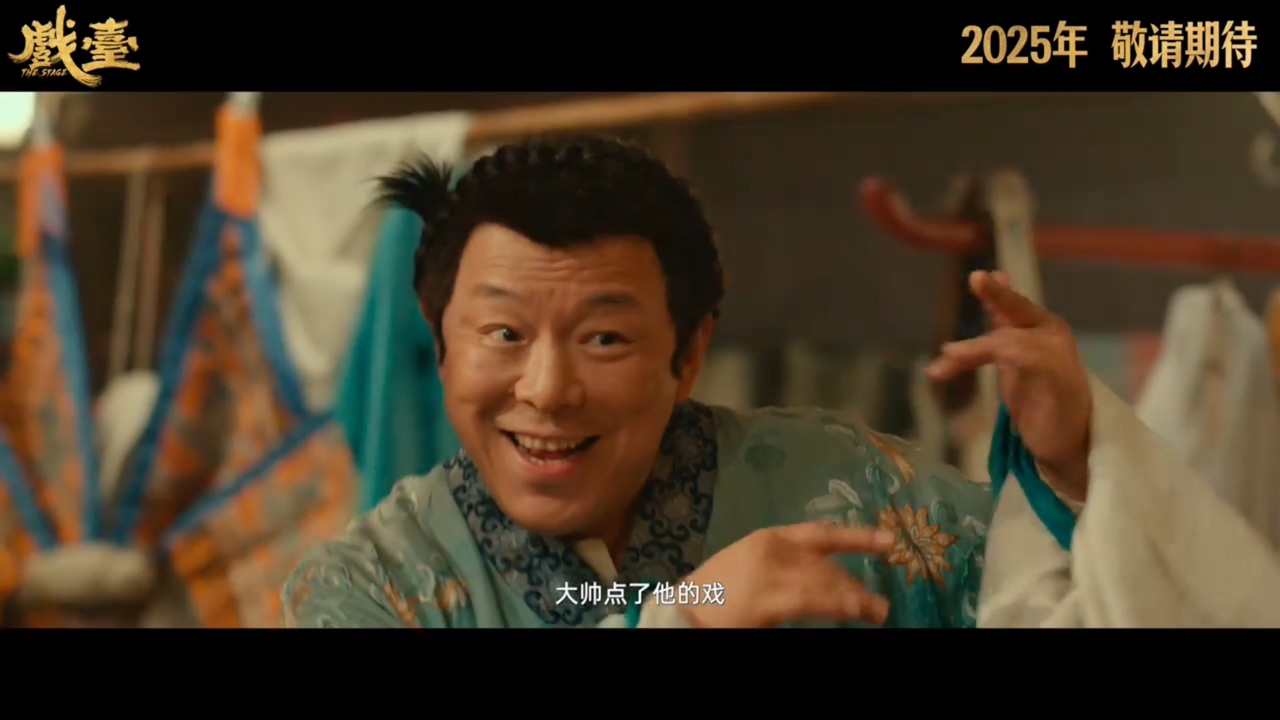
Hong sends Xu Mingli to commandeer the theater, then sneaks in himself dressed casually. Backstage, he bumps into Loudmouth (Huang Bo), a bun delivery guy. Turns out they're from the same hometown.
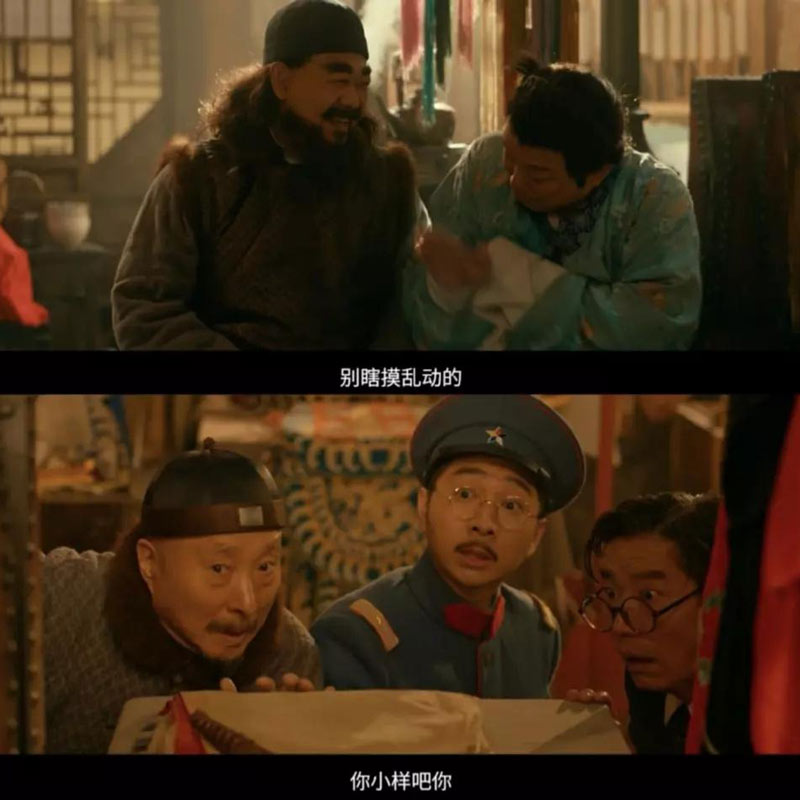
Loudmouth, a passionate amateur opera fan, sees a chance to show off to someone who seems clueless. Hong, coming from poverty, never saw proper opera; he knows the local Bangzi (clapper opera) style. Loudmouth's rendition of Farewell My Concubine, though hardly authentic, carried a Bangzi flair. By pure luck, it clicked with Hong.
Enthralled, the Commander decreed on the spot: Loudmouth would play Xiang Yu that night.
His word was law. The impossible task fell to Hou Xiting. Swallowing his pride was his only option.
He sweet-talked and tricked Loudmouth. He begged and pleaded with the troupe members to somehow support Loudmouth through the performance. As for the real Xiang Yu, Jin Xiaotian? They knocked him out and stashed him upstairs backstage to avoid the farce of two Xiang Yus.
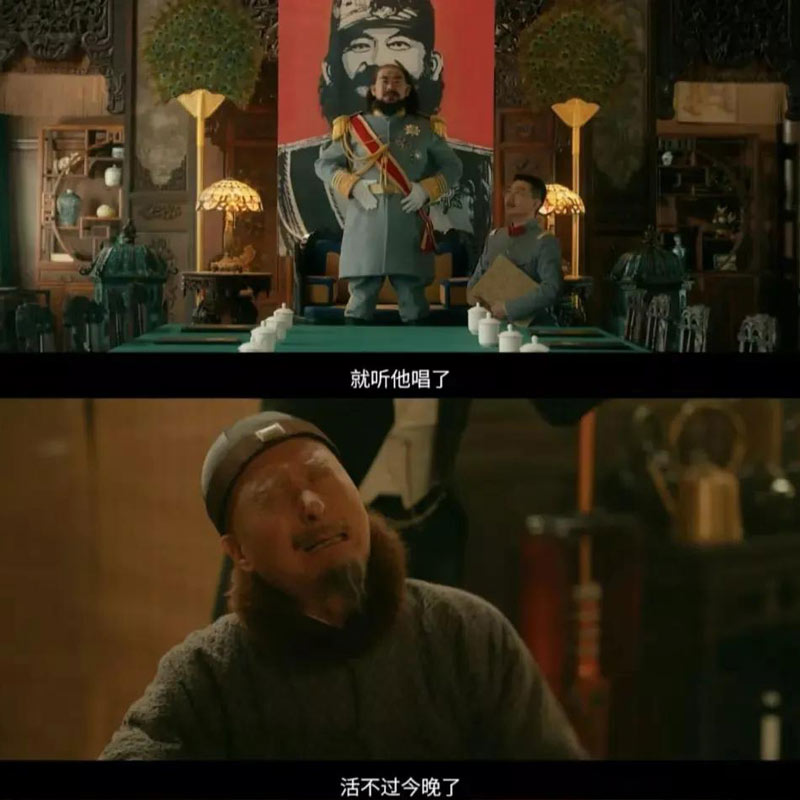
Loudmouth lived his dream on stage, thoroughly tormenting Feng Xiaotong and the others. They somehow got through the opera. But then, Commander Hong decided he hated Xiang Yu's tragic ending. He insisted on changing it.
In Farewell My Concubine, Commander Hong throws his weight around twice. The first time, swapping the actor, is pure slapstick comedy. The second time, demanding script changes? That's where the tragedy starts to bleed through.
Whether the Wuqing Troupe survives this hinges entirely on Hong's whim. Right here, the movie flips. The laughs fade, replaced by something much heavier.
Forced to Kneel, Laughter Ends in Emptiness
 Forced to Kneel, Laughter Ends in Emptiness
Lu Xun once said, "Tragedy is about destroying what's valuable in life." Farewell My Concubine itself becomes that precious thing facing destruction.
From the start, Hong and the troupe were never playing the same game. Raw power crushing art – it was a one-way street.
They could stomach Loudmouth, the bun seller, mangling Farewell My Concubine with his Bangzi twang. But rewriting the script itself? That felt like a total disgrace.
"Xiang Yu doesn't die? Liu Bang hangs himself instead?" That's the troupe's horrified reaction to the changes. Feng Xiaotong fights hardest to protect the play. He's the last one to kneel. His silent curse, mouthing the words without sound, speaks for everyone in the troupe – and probably every viewer watching.
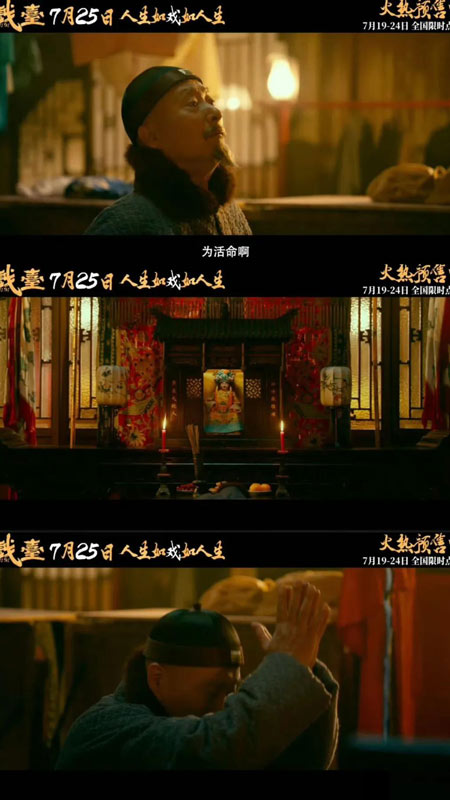
Changing the script is the price of survival. But when Hou Xiting kowtows before the founder's plaque, his anguish breaks through. He sobs, utterly broken. Seeing generations of artistry forced to mutilate itself under threat – that hurts.
Meanwhile, Jin Xiaotian wakes up, hears about the script change, and pushes past Loudmouth to take the stage. Loudmouth gets mistaken for Jin Xiaotian this time and knocked out cold backstage. At least the audience gets the real star's voice, not the amateur Bangzi version.
Jin Xiaotian's performance is a revelation. Before, we saw a heartbroken addict. But under that immense pressure, standing on stage, delivering every line as written? He truly embodies Xiang Yu . This is a star's artistic defiance. It shows what "opera above all else" really means.
Jin refuses to change the lines. Feng Xiaotong matches him perfectly – maybe their best performance together. The chaos outside, the guns pointed at their heads – it mirrors Xiang Yu's despair at Wu River. Their fear feels like his fury and helplessness.
In that moment, the actors become their roles. Art finds terrifying new power.
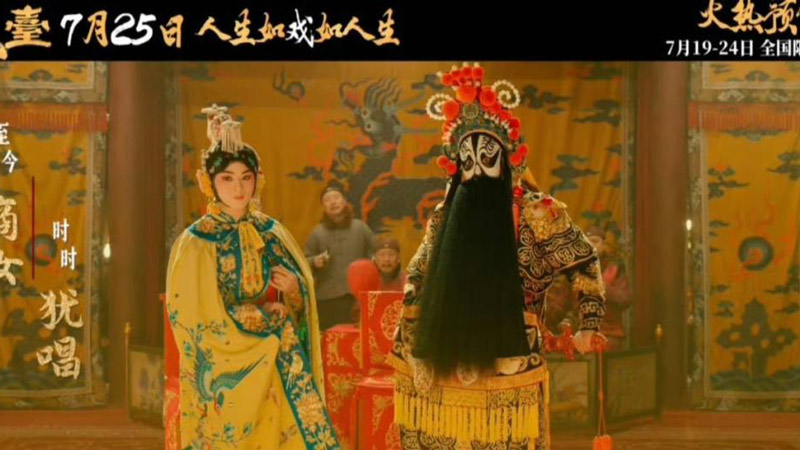
Gunfire erupts outside the city. Commander Hong bolts. But on stage, Xiang Yu and Yu Ji are locked in their final scene. The audience members who didn't flee find themselves frozen, drawn in, witnessing something rare. Even Siyue, who dreamed of running away with Jin Xiaotian, stares at Xiang Yu on stage, utterly transfixed.
Performers and audience alike are all-in. The play mirrors their reality. This Farewell My Concubine becomes something truly legendary.
Without more, the film would just be clever comedy. It's the two codas that deepen it, exposing the bitter fate of art in that era.
The first coda: A new warlord, Commander Lan, takes Beijing. Xu Mingli starts his bootlicking routine all over again. Loudmouth goes back to delivering buns. The Wuqing Troupe just keeps performing.
The new general doesn't like the typical "villain" roles like the Overlord but prefers characters like Yu Ji—the tragic female lead (known as "dan" roles in traditional Chinese opera). The movie never spells out what really happened, but in the second post-credits scene, Feng Xiaotong stands by the river and jumps in. It's a deliberate choice—a death to show her resolve and to defend the purity of art.
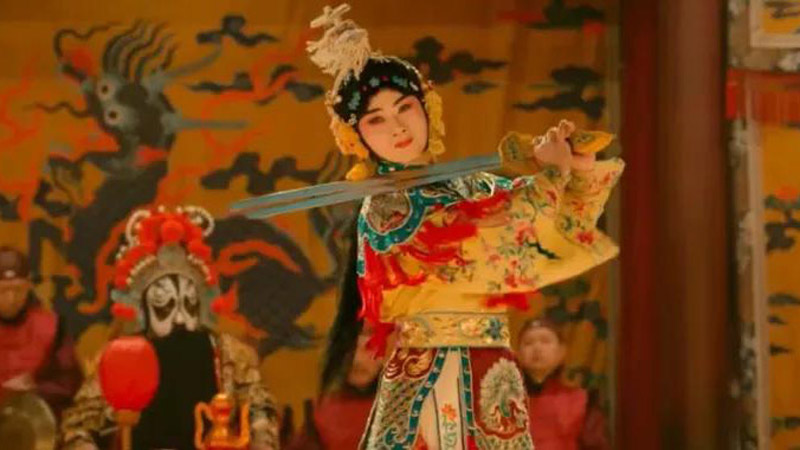
Big figures' tastes shape popular aesthetics, but without respect for the soil that art grows from, art becomes just decoration for power.
Backstage and front stage, people come and go. Only the sign above the theater reading "Illusory Splendid Mirror" stays put, witnessing all the changes. When the curtain falls and the crowd disperses, all that's left is a deep sadness.
Never Out of Date: Standing for Artistic Freedom and Against Authoritarianism
 Never Out of Date: Standing for Artistic Freedom and Against Authoritarianism
In the film, Jiang Wu plays General Hong, a warlord holding all the guns, the embodiment of authoritarian power. But he's not a one-dimensional villain. He's a butcher who can shoot people on a whim but also cries uncontrollably at some moments in the play.
This mix of brutality and sensitivity makes his power feel even more terrifying.
His authority isn't based on any ideology or intellect—it comes from pure, unpredictable, culture-free primal impulses.
He orders the classic Peking opera Farewell My Concubine to be rewritten—making Xiang Yu rise again instead of committing suicide at Wujiang River. This act is tyranny in several ways—
Not only does he violate the integrity of the artwork, but he tries to replace the tragedy's spiritual cleansing with a false, blind optimism. He also wants to control how history is told to serve his own propaganda.
Behind this is a layered logic: first, power wants to control art's expression, twisting its role into a tool to justify political legitimacy.
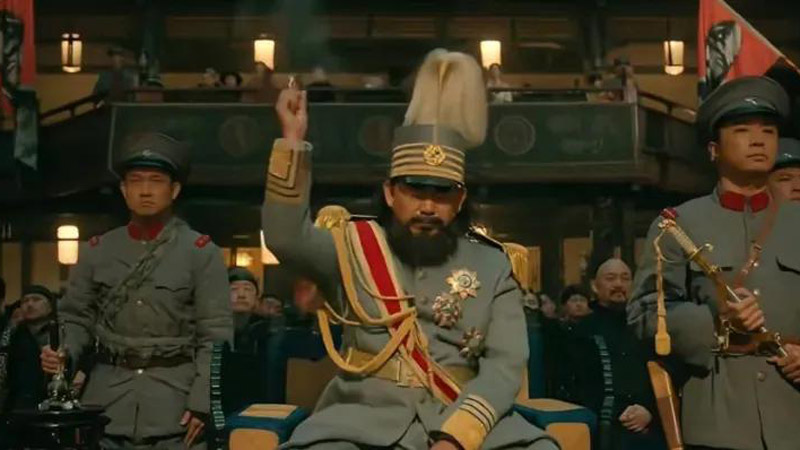
More fundamentally, this demand to rewrite the play is about "de-tragicizing" it.
Authoritarianism, at its core, rejects tragedy. It can't stand any "noble failure," only absolute victory and self-justifying stories. But tragedy's strength comes from showing the fall of great people, which leads the audience to moral reflection and cleansing.
Xiang Yu's timeless grandeur lies in choosing death to keep his honor, not to live on by deceit. His decision to "face his people without shame" by taking his own life is a core theme in Chinese culture's heroic ideal—a rejection of the "winner takes all" mentality.
Hong's personal rise is the exact opposite: pure pragmatism ("I didn't die! I crossed the river and succeeded!"). He can neither understand nor tolerate a failure story that holds a higher moral ground than his own success.
So forcing the play to lose its tragedy means forcing a richer spiritual world to bow to his crude and forceful view of power.
This reveals a deeper truth: regimes built on violence naturally resent the complexity and moral ambiguity in great art. They prefer propaganda with clear, simple messages. So the resistance to rewriting the play is really a defense of the tragic spirit itself—and the complex truths about humanity that only tragedy can hold.
Playwright Yu Yue's original script chose Farewell My Concubine as the play-within-a-play for a good reason. At its core, Xi Tai is about holding onto one's dignity when facing utter despair. By the way, Chen Kaige's famous film of the same name "Farewell My Concubine" also uses this layered "play within a play" meaning.
Right from the start, the battle scenes and the armed soldiers inside and outside the theater create a visual and atmospheric language of coercion. It's like a clear message: this stage isn't a pure sanctuary for art—it's occupied territory.
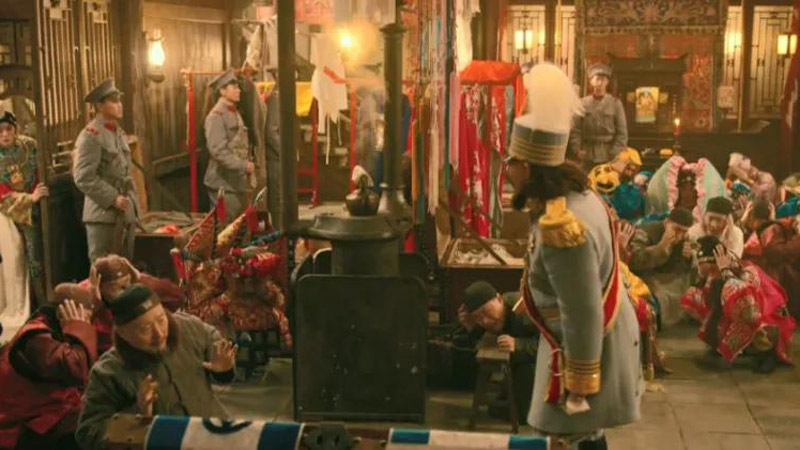
Facing oppression, The Theater offers a delicate and honest spectrum of human nature:
Feng Xiaotong, the proud male dan (a male actor playing female roles), shows unhidden disgust and anger at the abuse of art. He represents the dignified but powerless intellectual.
Hou Xiting and Manager Wu's initial strategy is all about flattering and compromising, just trying to survive the night. This is the practical choice most ordinary people make under heavy pressure. As the soul of the story, Hou's character echoes Wang Lifa from Lao She's Teahouse—a modern reflection of that classic figure. He starts as a compromiser driven by survival philosophy; his only rule is to stay alive.
Then there's Big Voice's wildly off-key performance, perfectly capturing the "profane" principle at the heart of this carnival—a blend of high art and lowbrow. He's a "holy fool," whose innocence and ignorance unintentionally become a form of resistance full of deconstruction. His "unrefined" art ironically fits the "unrefined" authority; his pure, unconscious absurdity exposes the emptiness of power.
By the end, two ultimate forms of resistance appear. First, Hou Xiting, on the edge of destruction, hears Jin Xiaotian's pure, original singing and seems to have an epiphany—he transcends fear of life and death and confirms art's intrinsic value.
Second is Jin Xiaotian's act itself—regardless of his personal morals, he stands as a true artist. Amidst shelling and the theater's collapse, he performs Farewell My Concubine exactly as it should be, unaltered. It's like declaring that even if the body is destroyed, the spirit of true art will live on forever.
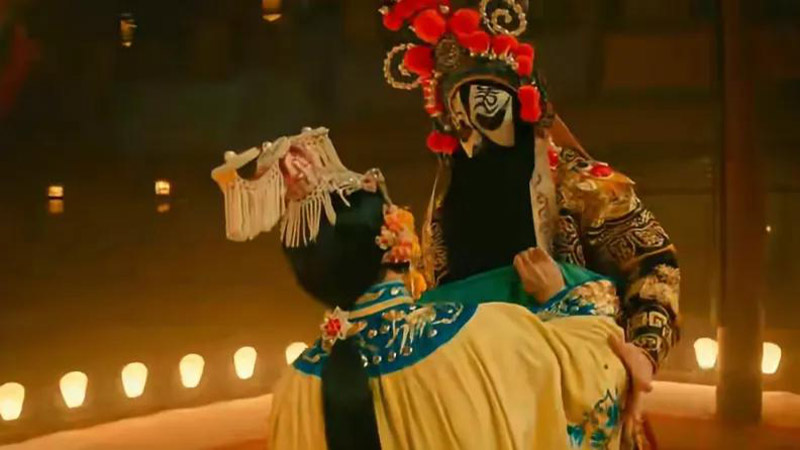
This movie tells the fate of a theater troupe but clearly hints at the long-standing historical anxiety of Chinese intellectuals and artists caught in the ever-changing political storms.
The film's moral compass is anchored by a figure never explicitly named—the legendary Tang dynasty musician Lei Haiqing. It's said that during the An Lushan Rebellion, Lei refused to play for the rebels and was executed. Hou Xiting's prayer before the ancestor's tablet is a direct dialogue with this spiritual legacy.
Dramatic Technique: A Brilliant Use of "Comedy of Errors"
 Dramatic Technique: A Brilliant Use of "Comedy of Errors"
Talking about the film's drama style—the script is a brilliant execution of a "comedy of errors" because the plot spins around a series of classic misunderstandings.
The key misunderstanding is Hong the general mistaking the steamed bun shop helper Big Voice for Jin Xiaotian. This mistake becomes the engine driving the entire story, triggering a chain reaction that forces the whole troupe into an absurd and hilarious cover-up performance.
But the "misunderstanding" in this story goes far beyond just a comedic trick—it carries a deeper, structural metaphor about how authoritarian power erodes and even destroys objective truth. In this backstage world overshadowed by power, truth and expertise no longer exist as standards on their own; they're defined and imposed by those in control.
The play first sets up a clear objective reality: Jin Xiaotian is the real star, Big Voice is just an amateur. Yet when the top authority, General Hong, enters this world, based only on a chance regional accent and a few shallow words, he singles out Big Voice as the star he wants to see. This "selection" isn't a simple mistake; it creates an entirely new "reality" that must be obeyed.
From that moment on, led by Hou Xiting and Manager Wu, the entire troupe must twist themselves inside out to turn this imposed lie into truth. They have to crown a "clown" as "king." This perfectly reveals the heart of authoritarian logic: power doesn't need to recognize the truth; it has the ability to redefine it.
Because the warlord controls the violence, his false understanding becomes everyone's guiding principle. So the play's comedic structure and tragic core are seamlessly fused here.
Now, about Chen Peisi's famous "comedy of status difference" theory. This film, as a culmination of Chen's artistic approach, perfectly embodies this idea. The theory says laughter arises from the gap (status, knowledge, expectations) perceived between characters or between characters and the audience.
First, the information gap: the audience and Hou Xiting know Big Voice is a fraud, but General Hong is completely unaware. This drives the whole plot.
Then the status gap: a humble steamed bun vendor is elevated to a star everyone watches. And the expectation gap: the audience expects a classic tragedy (Farewell My Concubine) but gets a frantic, clumsy farce instead.
Chen Peisi didn't use this principle just for isolated jokes; he built a snowballing comedy chaos where every attempt to resolve one "gap" only creates a bigger new one.
I really like the film's ending. As the true artist sings the original, mournful Farewell My Concubine on a crumbling stage, beneath him, a new flag of power rises to replace the old.
It's an open ending full of tension and tragic beauty. It admits art can't win political battles or stop physical collapse. But it firmly states political power is temporary—the flags on the fortress walls change—but art's integrity and dignity have a deeper, longer-lasting life.
In these cycles of violence and rapid decay, defending the truth and wholeness of cultural memory remains a meaningful form of resistance.