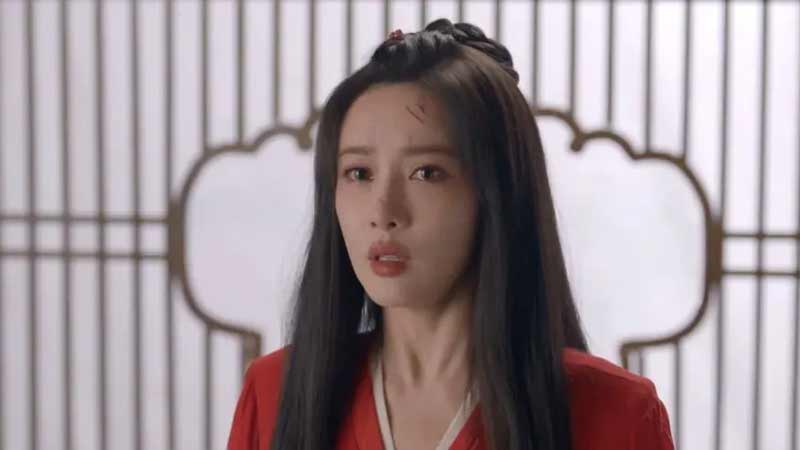
The return of Jin Yong's martial arts epics to television in 2025 was met with immense anticipation. Duel on Mount Hua (华山论剑), a series structured in four distinct units – promised a fresh exploration of the beloved Wuxia universe. Initial reactions, however, revealed a stark divide among viewers. The series became a talking point not just for its grand production, but for the contrasting quality between its opening chapter and the powerful resonance of its second act. It presented a complex picture of ambition, adaptation choices, and ultimately, the enduring power of Jin Yong's characters when given nuanced space to breathe.
Jiuyin Zhenjing
Focusing on Mei Chaofeng (梅超风) and her origins, the Nine Yin True Sutra (九阴真经) unit aimed to flesh out backstories only hinted at in Jin Yong's original The Legend of the Condor Heroes (射雕英雄传) or its classic 1983 adaptation. Mei Chaofeng, originally named Mei Ruohua (梅若华), is depicted from her tragic childhood, orphaned and mistreated, to her rescue by the formidable Huang Yaoshi (黄药师) and life on Peach Blossom Island. The intention to expand on her motivations, her complex bond with fellow disciple Chen Xuanfeng, and the dynamics leading to their betrayal was clear.
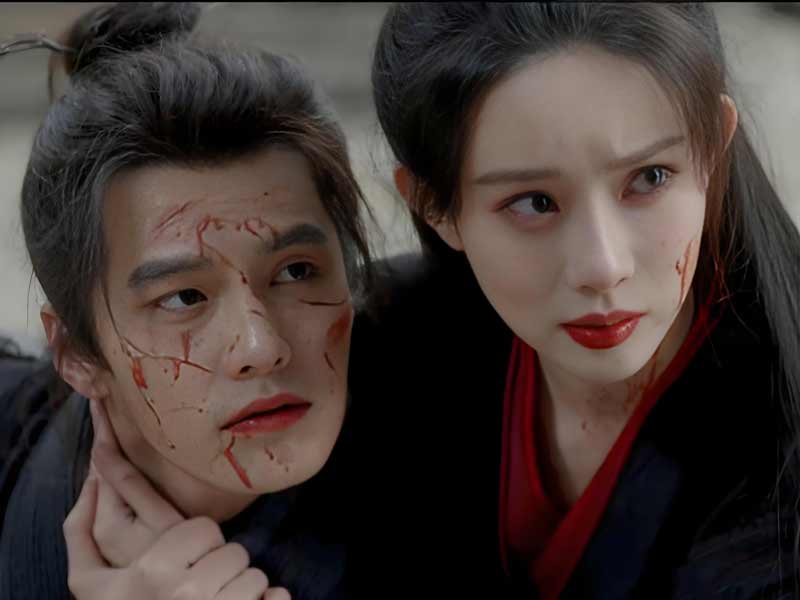
Yet, this expansion proved contentious. While the series avoided inventing entirely new elements like altering Mei Chaofeng's core history, the execution felt uneven. The narrative pacing struggled, often lingering excessively on internal conflicts that lacked the driving tension expected from a Wuxia saga. The exploration of Huang Yaoshi's wife – a character defined in the books by her brilliance and tragic fate – felt underdeveloped despite Chen Duling's (陈都灵) performance. Her portrayal emphasized fragility and stubbornness, highlighting the mutual, destructive obsession between her and Huang Yaoshi over the Nine Yin True Sutra, but failed to fully convey the captivating intellect that supposedly ensnared the aloof island master.
Similarly, Chen Xuanfeng's (陈玄风) transformation from a carefree, blue-clad disciple fond of his wine gourd into a man willing to forsake everything for Mei Chaofeng felt abrupt. The unit established their shared defiance and obsessive natures – Mei Chaofeng consumed by vengeance and resentment towards Huang Yaoshi, Chen Xuanfeng subsuming his identity into her desires – but the emotional groundwork for such drastic shifts sometimes felt more told than shown. The unit's ambition to fill narrative gaps was admirable, but its focus on internal turmoil came at the expense of the kinetic energy and clear narrative thrust that defines compelling martial arts storytelling. It set a foundation, but a shaky one.
Eastern Heretic and Western Venom
The series found its confident stride dramatically in the second unit, Eastern Heretic and Western Venom (东邪西毒). Here, the focus shifted to the legendary figures themselves: the detached, supremely talented Huang Yaoshi and his complex counterpart, Ouyang Feng (欧阳锋). Liberated from the burden of pure origin story, this segment masterfully explored the psychology of these titans. Huang Yaoshi's arrogance, his devastating grief over Feng Heng (冯衡), and the burden of his isolation were rendered with far greater nuance and emotional weight.
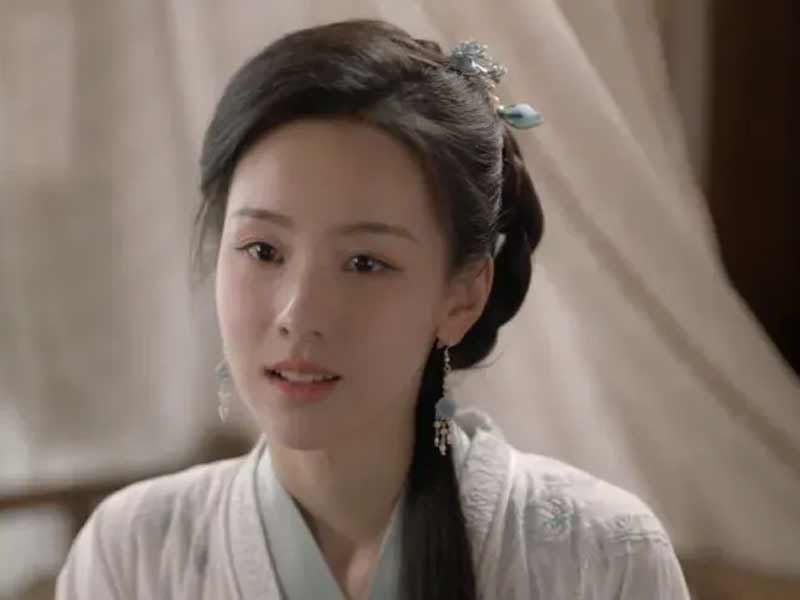
Ouyang Feng, often a more straightforward antagonist in previous adaptations, received layered treatment. His motivations, rivalries, and the dangerous obsession driving his quest for supremacy were explored with compelling depth. The dynamic between the two Heretics became the unit's core, a fascinating study in contrasting philosophies and immense power. Their confrontations, both verbal and martial, crackled with intensity, fueled by decades of implied history and mutual, grudging respect buried beneath fierce opposition.
The visual language also elevated significantly. Huang Yaoshi's iconic Bihai Chaosheng Qu (碧海潮生曲) was presented with stunning visual poetry, blending traditional martial arts choreography with tasteful, impactful special effects. This wasn't mere spectacle; it served as an extension of character, reflecting Huang Yaoshi's control, artistry, and inner turmoil. The fight sequences retained a satisfyingly classic Wuxia feel while feeling fresh and cinematic, demonstrating how innovation could honor the source material's spirit rather than overshadow it.
A Legacy Reforged in Ambition
Beyond the narrative units, Duel on Mount Hua consistently impressed with its production caliber. This was a series clearly backed by significant investment. The costume and set design were exceptional, avoiding the plastic artificiality often associated with period dramas. Locations like Kuizhou City and Jiangling Prefecture felt tangible and lived-in, built with meticulous detail that transported viewers authentically into the Jianghu world. The visual richness provided a crucial bedrock for the storytelling.
The divided reception to Duel on Mount Hua underscores a fundamental truth about adapting Jin Yong. His novels are inexhaustible troves, offering endless avenues for interpretation across generations. The Nine Yin True Sutra unit represented a bold, if flawed, attempt to explore the shadows and motivations behind a pivotal character like Mei Chaofeng. The Eastern Heretic and Western Venom unit succeeded by embracing the core appeal of Jin Yong's work: the exploration of legendary figures grappling with immense power, complex morality, and profound human emotions against the backdrop of a vividly realized martial world.
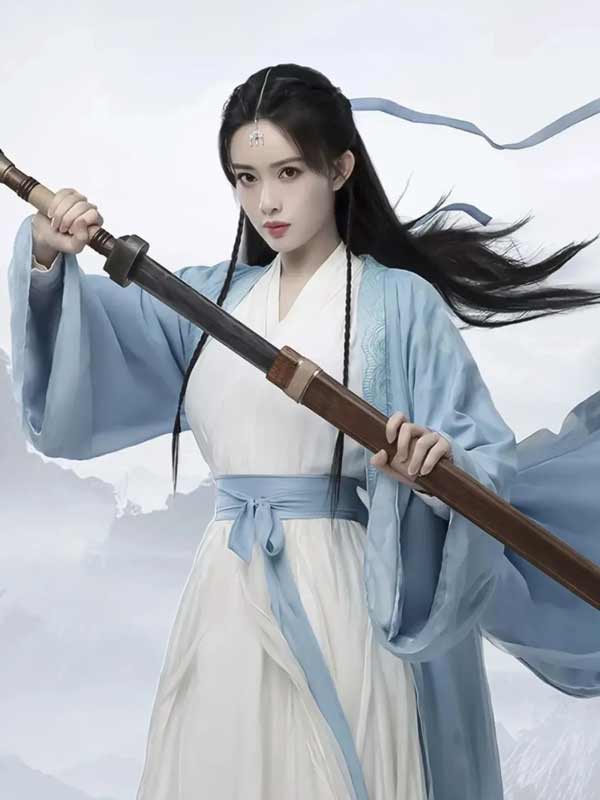
Duel on Mount Hua may not have achieved uniform excellence, but its ambition and the undeniable power of its second act reaffirm the enduring vitality of Jin Yong's universe. It demonstrated that respectful innovation, paired with deep character exploration and top-tier production values, can successfully bring these timeless tales to a new audience, even if the path isn't always perfectly smooth. The series stands as a testament to the fact that the Jianghu (江湖) still holds potent stories waiting to be told with fresh perspective.