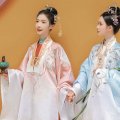
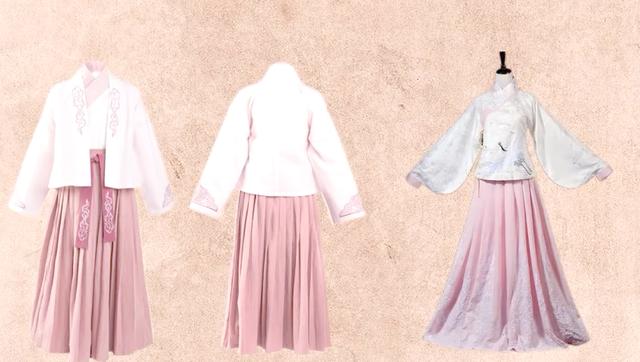
Hanfu represents the enduring attire system of the Han ethnic group, reflecting centuries of cultural practices and aesthetic values. This clothing is defined by precise elements like the right-crossing collar, broad sleeves, and hidden ties, distinguishing it from modern interpretations. It serves as a functional record of China's historical identity, blending philosophy with daily wear.
Early forms such as the Shenyi (深衣) from the Pre-Qin era laid the foundation, emphasizing unity in design. The Han period featured the Quju (曲裾) for formal events, while the Tang dynasty's Qixiong Ruqun (齐胸襦裙) expressed vibrancy and freedom. Song styles like the Beizi (褙子) favored understated elegance, and Ming innovations such as the Mamian Qun (马面裙) and Liling Aozi (立领袄子) highlighted technical mastery. Each shift mirrored societal values, creating a rich visual legacy.

1. The basic characteristics of Hanfu
Hanfu represents the traditional dress of the Han Chinese people, with a history that stretches back millennia. Its design principles are deeply rooted in cultural practices and aesthetic ideals, offering a unique perspective on garment construction. This clothing style emphasizes fluidity and grace, moving beyond mere fashion to embody a way of life. Each element of Hanfu serves a purpose, blending form and function in ways that have evolved over time. As we delve into its features, we uncover how these designs reflect broader societal values and daily life.
1.1 The Crossed Collar
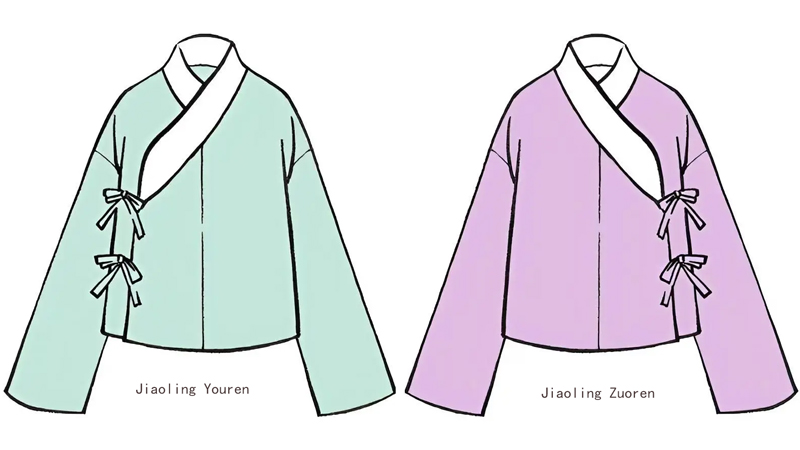
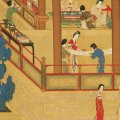
Jiaoling Youren (交领右衽) is a defining aspect of Hanfu, where the left lapel overlaps the right, secured with ties. This arrangement forms a distinct "Y" shape at the front, creating a balanced and harmonious look. It is not just a stylistic choice but a cultural marker that has been passed down through generations.
This right-over-left style was traditionally associated with the living, while the opposite was reserved for the deceased, highlighting its symbolic role in Han society. Over the centuries, variations like round collars from the Tang dynasty or stand-up collars from the Ming era emerged, showing adaptability without losing core identity. These changes illustrate how Hanfu evolved while maintaining its foundational principles.
Despite its prominence, the crossed collar is not the only option in Hanfu; it coexists with other styles that cater to different occasions and preferences. This diversity underscores the richness of Hanfu design, allowing for personal expression within a traditional framework. It reminds us that Hanfu is a living tradition, constantly reinterpreted yet rooted in history.

1.2 Wide Sleeves
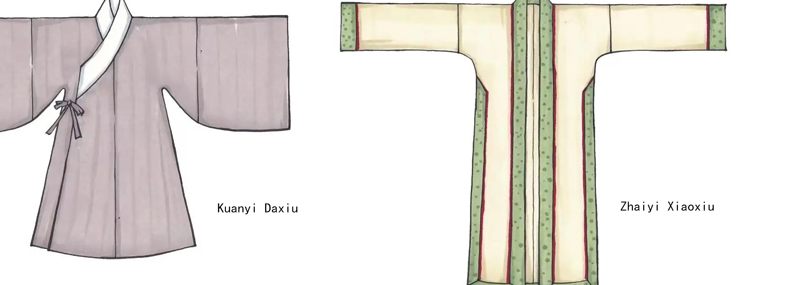
Kuanyi Daxiu (宽衣大袖) characterize many Hanfu garments, offering a stark contrast to form-fitting Western attire. These sleeves often extend beyond the arms, creating flowing lines that enhance the wearer's movements with a sense of ease and dignity. They contribute to the overall aesthetic of elegance and comfort.
While large sleeves are iconic, Hanfu also includes smaller, narrower sleeves for everyday wear, demonstrating a practical approach to different activities. Formal events might call for the grandeur of wide sleeves, whereas casual settings favor more restrained designs. This versatility ensures that Hanfu remains relevant across various contexts, from ceremonies to daily life.
The choice between wide and narrow sleeves reflects a balance between beauty and utility, allowing individuals to adapt their attire to their needs. Over time, this flexibility has helped Hanfu endure, appealing to modern enthusiasts who appreciate both its historical roots and functional aspects. It shows how traditional clothing can be both artistic and practical.
1.3 Ties and Closures
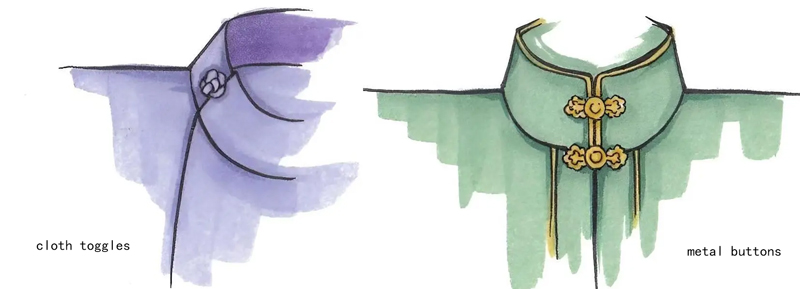
Xidai Yinkou (系带隐扣) are central to Hanfu's construction, often using fabric ties instead of visible buttons. These ties are typically placed under the arms, with inner and outer sets working together to envelop the body securely. This method emphasizes simplicity and elegance, avoiding bulky hardware.
Although other fasteners like cloth toggles or metal buttons appear in specific styles, such as Ming dynasty jackets, ties remain the most classic and widespread option. They allow for adjustable fits and a clean silhouette, enhancing the garment's organic flow. This approach prioritizes comfort and customization, making each piece unique to the wearer.
The use of ties highlights Hanfu's focus on minimalism and functionality, where every detail serves a purpose without unnecessary adornment. It is a testament to the ingenuity of traditional design, proving that effective closures need not compromise aesthetics. Today, this element continues to inspire contemporary interpretations of Hanfu, bridging past and present.

2. The structure of Hanfu
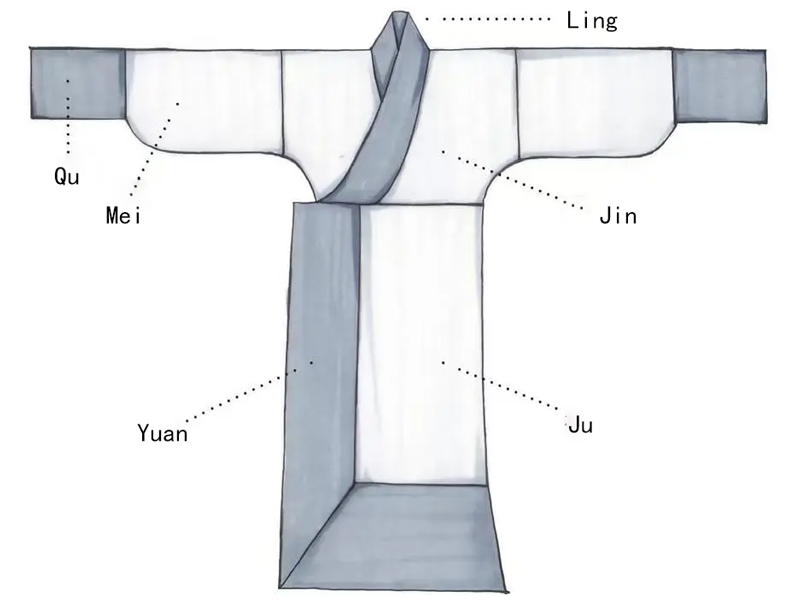
Hanfu has a long history and a variety of styles and styles, but regardless of how clothing styles change, the composition and structure of Hanfu remain unchanged. Hanfu consists of parts such as collar, collar, skirt, skirt, and edge.
2.1 Collar Styles
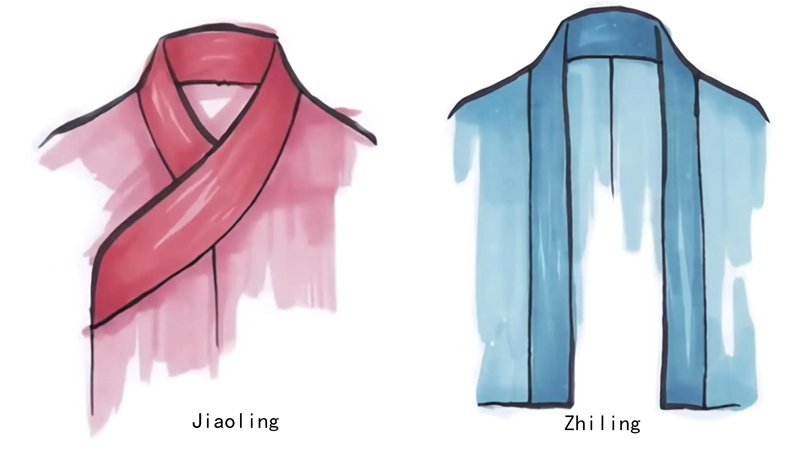
The collar, known as Ling, frames the neck and comes in multiple forms such as the Jiaoling (交领), Zhiling (直领), and Yuanling (圆领). Each type offers a distinct visual effect and functional role in the overall design of the outfit.
These collar variations often reflect specific occasions or social statuses, adding layers of meaning to the wearer's appearance without relying on elaborate decorations or accessories.
2.2 Sleeve Parts
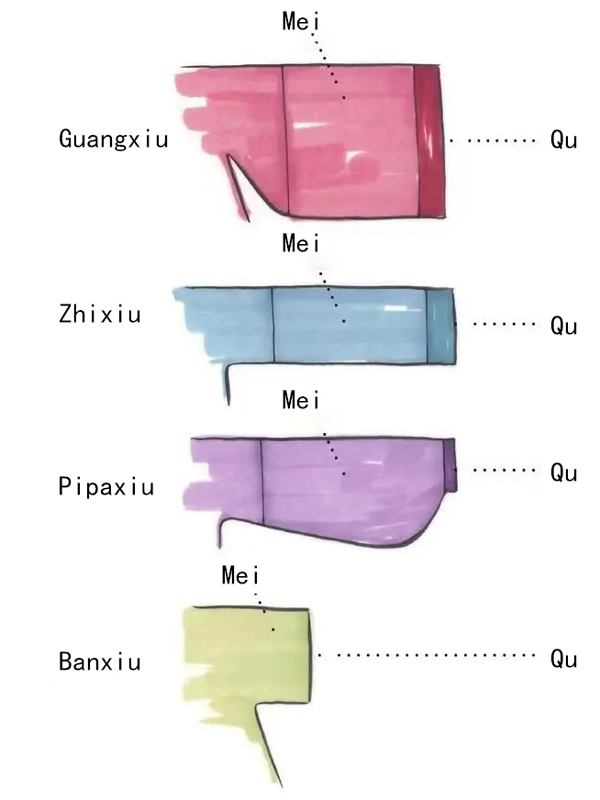
Sleeves are composed of the Mei (袂), which is the hanging portion, and the Qu (祛), the cuff area. Common styles include the Guangxiu (广袖) and Zhixiu (直袖), which define the sleeve's shape and length.
This structure allows for freedom of movement and adaptability, making the garment suitable for everything from daily activities to formal ceremonies while maintaining its flowing aesthetic.
2.3 Front Hem
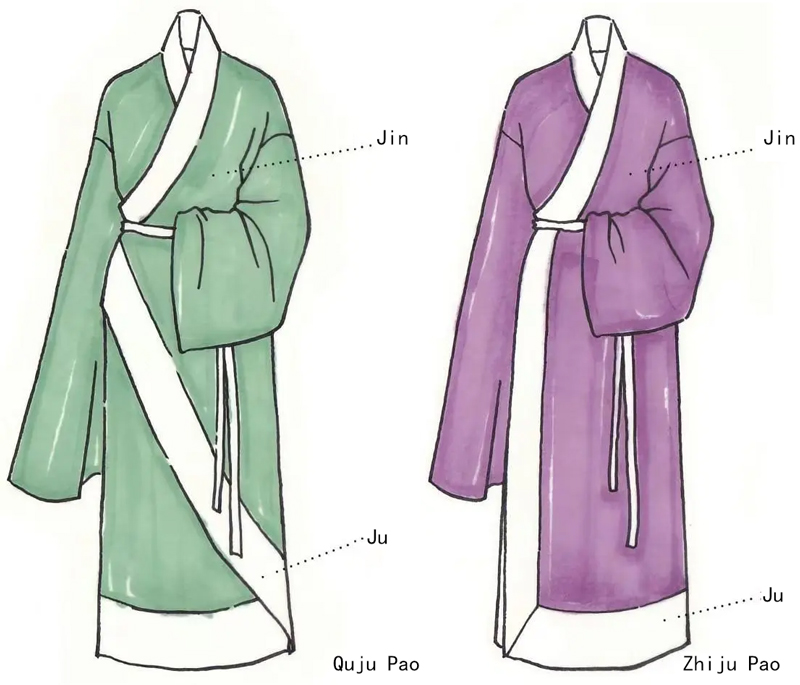
The front section, called Jin (襟), and the hem, referred to as Ju, are closely connected elements. The Jin covers the chest, while the Ju forms the lower edge, with options like the Quju influencing the drape.
Together, they create a balanced profile that enhances the garment's grace and ensures it moves fluidly with the body, showcasing a blend of practicality and artistry.
2.4 Edge Trims
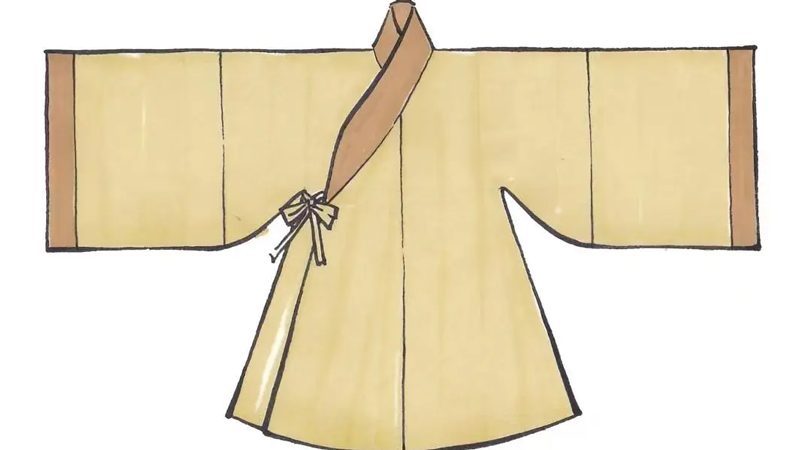
Edging, or Yuan (缘), is applied to borders such as the collar and sleeves, often using contrasting fabrics for decorative purposes. This detail highlights the contours of the garment and adds a touch of individuality.
Beyond aesthetics, the yuan reinforces seams for durability, allowing the clothing to withstand wear while offering opportunities for creative expression through color and texture choices.
3. The Form of Hanfu
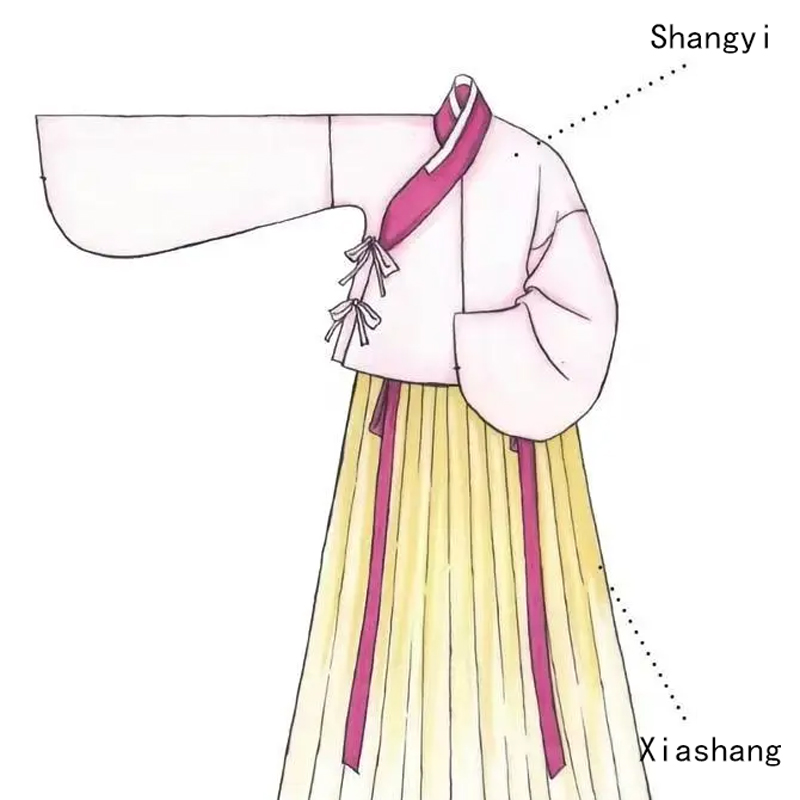
The Hanfu we see now can be divided into three categories according to clothing cutting standards: The Yishang (衣裳) system, the Shenyi system, and the Tongcai (通裁) system.
3.1 The Yishang System
The Yishang system is the most ancient form, characterized by its division into an upper top and a lower skirt. This separation allowed for flexibility and ease of movement, making it a versatile choice for daily wear. Its design principle is straightforward yet elegant, focusing on the harmony between the two pieces. Both men and women adopted this style, which remained prevalent for centuries. The top and bottom were cut and sewn independently, resulting in two distinct garments. This method laid the groundwork for all subsequent developments in Hanfu construction.
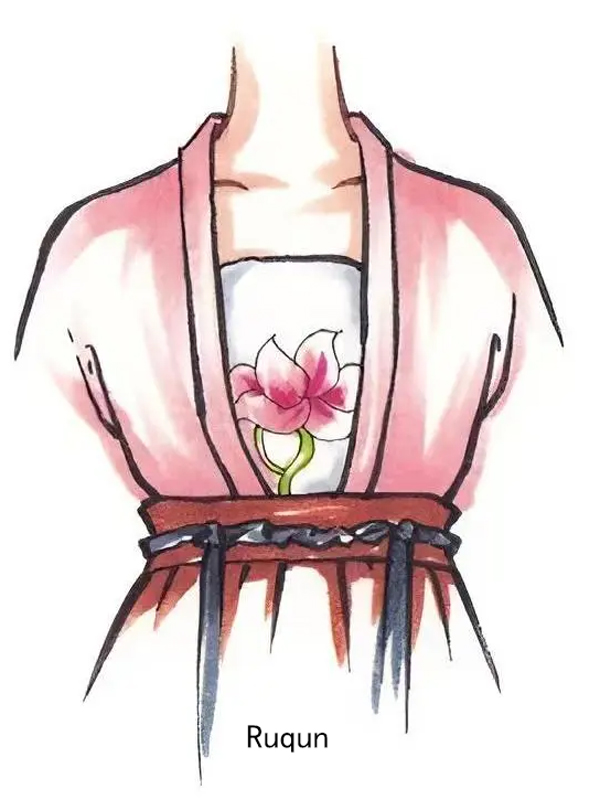
One prominent example is the Ruqun, a combination of a short jacket and a long skirt. The jacket is typically tucked into the skirt's waistband, creating a streamlined silhouette. Variations exist based on the jacket's collar style, such as crossed collars or symmetrical ones, and the skirt's waist position. Some skirts feature pleats, while others use panel construction for volume. This style often includes accessories like long scarves or decorative tassels to enhance its graceful appearance.
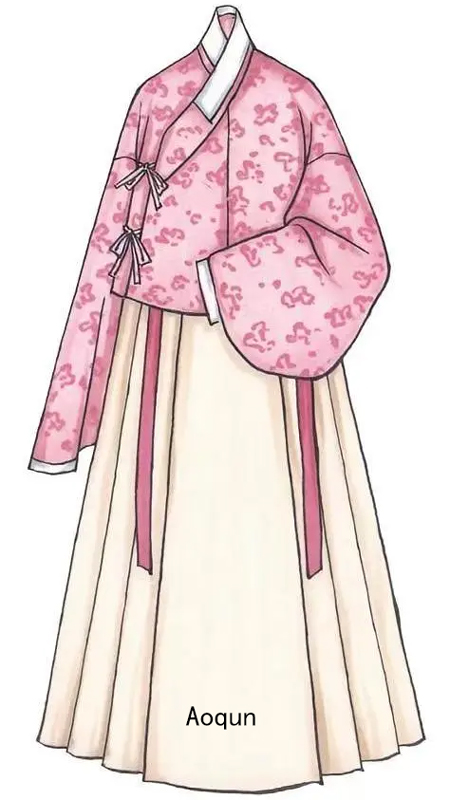
Another evolution is the Aoqun (袄裙), where a lined jacket is worn over the skirt, concealing the waistband. This style gained prominence during the Ming dynasty and is known for its practical warmth and layered look. Jackets can be short or long, and some feature a distinctive standing collar. The skirts paired with them, such as the Mamian Qun with its unique panel design, add structural beauty. This approach highlights how the Yishang system adapted to changing climates and fashion preferences.
3.2 The Shenyi System
The Shenyi system integrates the upper and lower sections into a single garment, sewn together at the waist. This design emphasizes modesty by fully covering the body, aligning with Confucian ideals of decorum. It resembles a modern dress or robe in its one-piece structure, often adorned with contrasting borders. The term "Shenyi" itself means "deep clothing," referring to how it envelops the wearer. This style symbolized unity and was used in formal contexts, reflecting its cultural importance.
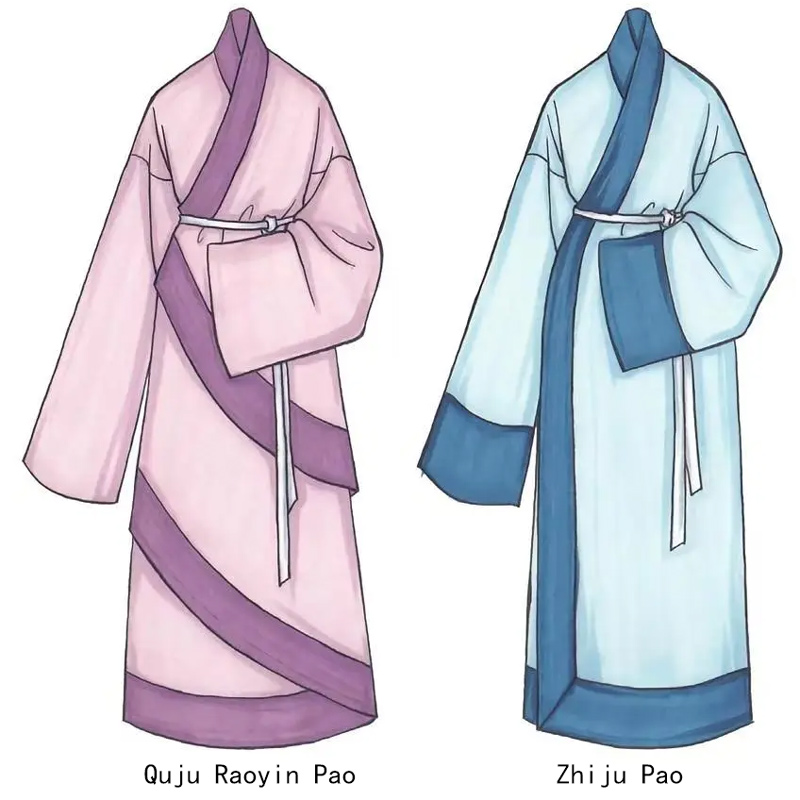
Early forms like the Quju Raoyin Pao (曲裾绕襟袍) involved wrapping the garment in a spiral manner to ensure coverage. It was practical for sitting on floors and provided security against exposure. Over time, as undergarments improved, the simpler Zhiju Pao (直裾袍) with straight panels became more common. This shift demonstrates how functionality drove stylistic changes, moving from complex wraps to straightforward designs that still maintained elegance.
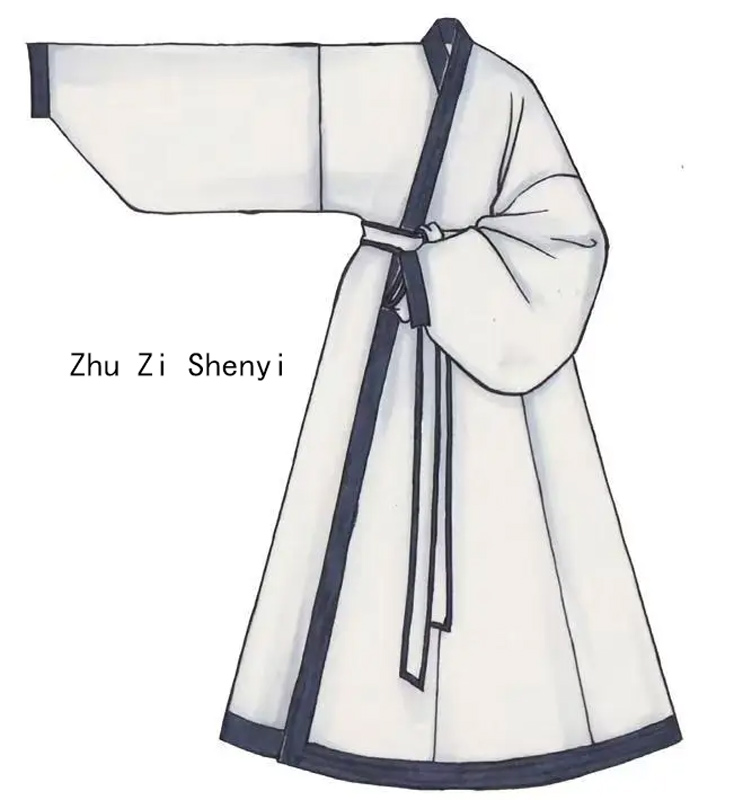
A notable subtype is the Zhu Zi Shenyi (朱子深衣), standardized by the scholar Zhu Xi (朱熹) based on classical texts. Every detail, from the sleeve width to the hem length, carried symbolic meaning related to ritual and morality. It was reserved for significant events like ceremonies and coming-of-age rituals. This garment exemplifies how clothing could embody philosophical principles, serving as a visual representation of ethical teachings in everyday life.
3.3 The Tongcai System
The Tongcai system involves cutting the entire garment from a single piece of cloth, without seams at the waist. This method prioritizes convenience and mobility, catering to an increasingly active society. It emerged as a practical alternative to more structured styles, allowing for greater freedom of movement. Garments from this category often feature slits or open designs to facilitate walking and other activities. They became staples in casual and official settings alike.
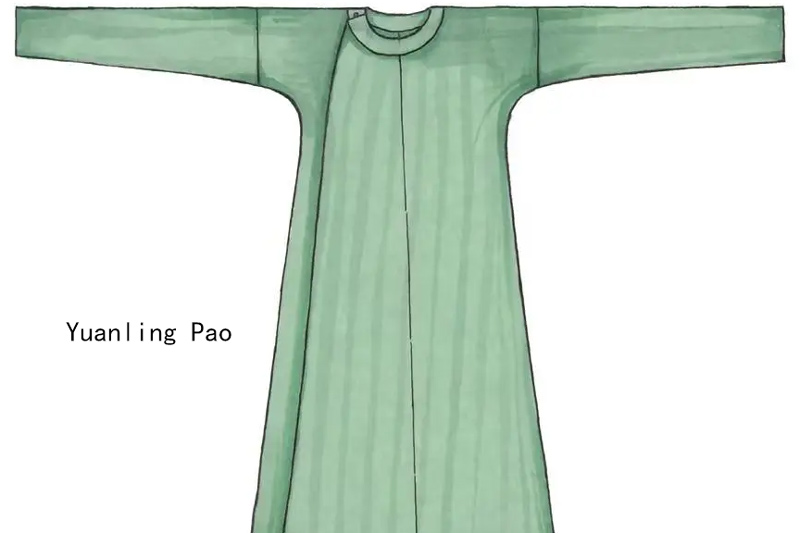
A classic example is the Yuanling Pao (圆领袍), a round-collared robe worn by both genders during the Tang dynasty. Its unbroken lines and simple construction made it ideal for various social occasions. This robe could be layered over other clothes or worn independently, showcasing its adaptability. Its popularity underscores a trend towards unified, efficient clothing that did not sacrifice aesthetic appeal.
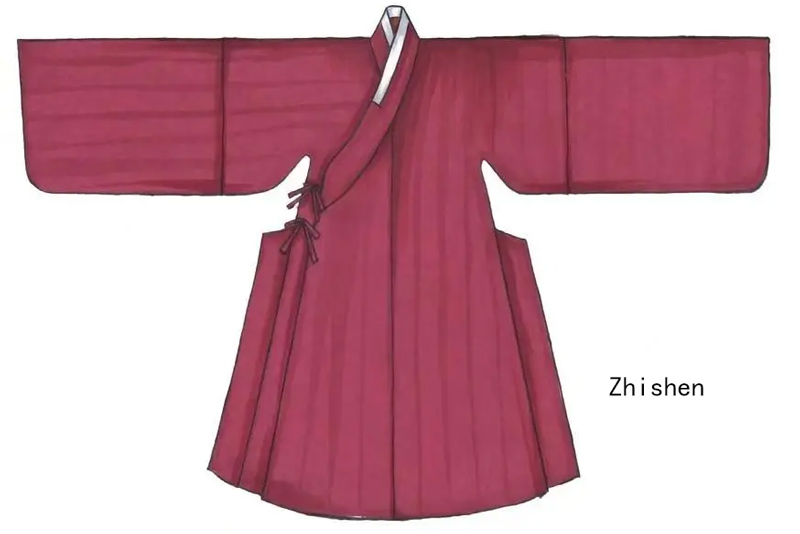
In later periods, styles like the Zhishen (直身) with its wide sleeves and side slits became iconic for men. Similar designs such as the Zhiduo (直裰) and Daopao (道袍) differed in minor details like the placement of inner or outer panels. These garments were worn by everyone from scholars to commoners, illustrating their widespread appeal. The Tongcai system's legacy lies in its balance of simplicity and style, meeting the demands of diverse lifestyles.
Final Words
Hanfu, the traditional clothing system of the Han Chinese, embodies millennia of cultural heritage and aesthetic principles. It is characterized by three core features: Jiaoling Youren, Kuanyi Daxiu, and the use of Xidai Yinkou for closure. Its structure is composed of distinct parts like Ling, Mei and Qu, and Ju. Historically, Hanfu evolved through dynasties, with early forms like the Shenyi and later styles such as the Tang dynasty's vibrant Qixiong Ruqun and the Ming dynasty's technical Mamian Qun. These changes reflected shifting societal values.
Today, Hanfu is categorized into three main cutting systems: the separated upper and lower garment Yishang system, the one-piece Shenyi system, and the seamless Tongcai system. More than just attire, Hanfu serves as a living record of Chinese philosophy, identity, and artistic legacy.