
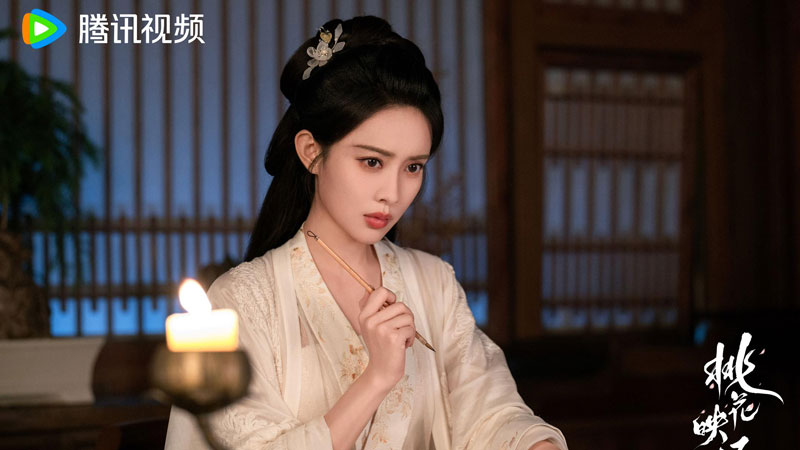
While the historical romance drama The Princess's Gambit (桃花映江山) was airing, all eyes were once again on its leading lady, Meng Ziyi. Affectionately called "Meng Jie" ( literally "Sister Meng") by her fans, she's become known as a "genuine, outspoken girl" whose refreshingly direct personality has helped her win over audiences. Now, role by role, she's establishing herself as a serious contender among the so-called "95 Flowers"—a term used in China to refer to leading actresses born after 1995.
In the series, Meng plays Jiang Taohua, a character designed as "a strategist behind a sweet appearance." This contrast alone brought a sense of novelty to viewers. But it wasn't just the setup—Meng's natural and smooth performance actively disrupted the usual expectations surrounding female leads in costume idol dramas, allowing the audience to see the growth she's achieved on her acting journey.
And this growth isn't just about refining how she plays a role—it's also reflected in how she's breaking out of her original fan circle. According to data from Detawen, after The Princess's Gambit premiered, the percentage of Meng Ziyi's viewers in the 31–50 age group rose significantly. That means her influence, once concentrated mainly among younger fans, is steadily expanding across a wider age range. The message is clear: her market potential is far from capped.
From the sharp, darkly charismatic Lei Chun in Heroes (说英雄谁是英雄), to the surprising and vivid Dou Zhao in Blossom (九重紫), and now to the emotionally rich and multidimensional Jiang Taohua, Meng has completed a "triple jump" in just three years. She's no longer just part of the 95 Flower cohort—she's at the front of the pack, with a clear sense of career direction and a growing business portfolio that prove she's picking up speed. And this road she's taken—marked by both daring reinvention and consistent refinement—is bringing much-needed energy into a hyper-competitive industry.
 The Anti-Trope Princess and a Fresh Take on Female Leads
 The Anti-Trope Princess and a Fresh Take on Female Leads
The Princess's Gambit had a whirlwind start: it was announced just 24 hours before it aired, yet within half an hour of going live, it broke the 20,000 mark in Tencent Video's internal heat index. The premiere peaked at 23,405, landing it at #2 on Tencent Video's 2025 annual premiere heat rankings. That kind of debut alone shows how much audience goodwill and market pull Meng Ziyi has accumulated over the years.
Behind that surge is Meng's spot-on interpretation of Jiang Taohua, a role that's rare in the world of costume idol dramas. Jiang isn't your typical damsel waiting to be saved—she's a tactician in her own right, a chess player rather than a chess piece. Through carefully calibrated performance choices, Meng Ziyi not only delivered the emotional depth the character required, but also made Jiang Taohua feel believable and moving. She managed to seamlessly blend the character's sweetness, toughness, tenderness, and sharpness—handling each emotional shift with accuracy depending on the moment.
Early in the story, Jiang Taohua appears to be a gentle, fallen princess forced into a political marriage. But her dynamic with the male lead isn't the usual "mutual infatuation" we've seen countless times. Instead, their arc is built on power tension and the "married first, love later" trope. Meng Ziyi uses emotionally layered performances—especially in several deeply resonant crying scenes—to draw the audience into the character's emotional world, making it feel real and affecting.
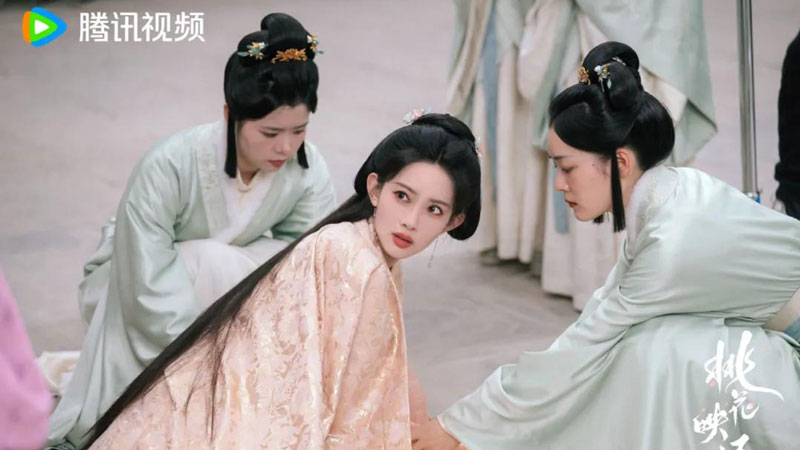
In one of the most heartbreaking scenes in The Princess's Gambit, Jiang Taohua is separated from her younger brother. Meng Ziyi's eyes brim with bloodshot veins, her restraint laced with barely contained anguish—conveying a sense of quiet despair so potent that viewers couldn't help but feel it in their bones. The tragedy of the moment didn't feel dramatized; it felt real. And it hurt.
On the surface, Jiang Taohua is a delicate "bird in a cage," but underneath, she never relinquishes control over her own fate. After being forced into a political marriage, she begins navigating power dynamics with calculated care—testing boundaries, playing the long game, and pushing back with increasing force. Eventually, she reclaims control over her life and evolves into a fully-fledged da nü zhu (大女主)—a "strong female lead" who charts her own course. Meng Ziyi's powerful performance gradually injected Jiang Taohua's boldness and intelligence into the audience's psyche. By the end, this fully fleshed-out strategist—both emotionally rich and thematically grounded—stood strong in viewers' minds.
One standout moment was Jiang Taohua's cliff-jumping scene. In it, Meng Ziyi delivered a masterclass in what Chinese fans often call "eye acting" (眼技). One second, her gaze was full of flirtatious deference; the next, it turned icy cold, and she hurled herself off the cliff. That sharp pivot from charm to steel—what fans call a bai qie hei (白切黑, meaning someone who seems sweet but harbors a calculating mind)—captured her character's deep tactical mind in a single glance.
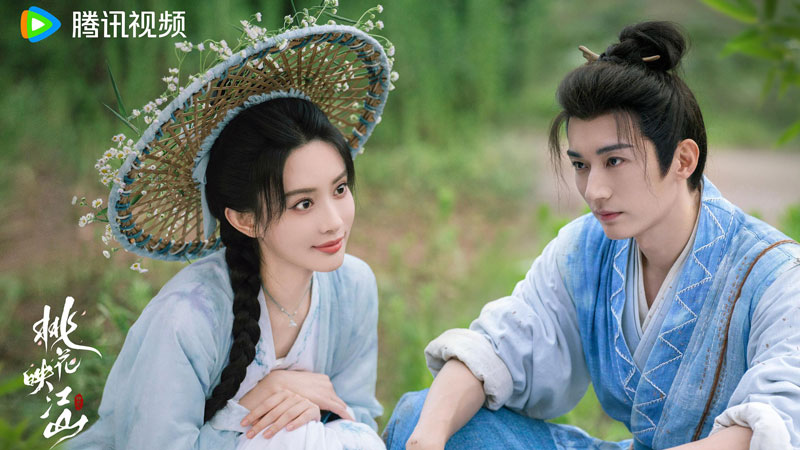
Bringing a role like Jiang Taohua to life is all about striking the right balance. She's "sweet" but not naive, "tough" but not cruel. Meng Ziyi's layered acting found that middle ground, revealing a woman who's soft yet unyielding. The result? A female lead who defies stereotypes. A princess who struggles, adapts, and grows. And an actress whose malleability and range are more apparent than ever. According to Detawen viewer analysis, audiences were deeply impacted by Jiang Taohua's emotional contradictions: her fragility paired with resilience, her clever maneuvering, her combination of beauty, suffering, and strength—all these elements made her unforgettable. Viewers ached for her and admired her in equal measure.
This successful portrayal stems from how thoroughly Meng Ziyi dissected and rebuilt the character. Also according to Detawen's database, audience commentary surrounding her performance in The Princess's Gambit repeatedly mentions: strong role fit, moving crying scenes, subtle and expressive eye acting, boundary-pushing, noticeable acting growth, and emotional layering. These aren't just generic compliments—they're proof of her deepening craft and qualitative leap forward as an actress.
Leveling Up the Craft
 Leveling Up the Craft
Whether it's Jiang Taohua in The Princess's Gambit or Dou Zhao in Blossom, Meng Ziyi has consistently gravitated toward a very specific archetype: the mei qiang can (美强惨)—beautiful, powerful, and tragic. These are women born into hardship but unbroken by it. And while that thread connects many of her recent roles, what stands out is how she avoids falling into formulaic patterns. Instead, she leans into the nuance—using small, deliberate choices to distinguish each character and, in doing so, carves out a unique signature within this increasingly crowded "strong female lead" space.
Looking back at her career trajectory, it's clear that Meng Ziyi's current momentum is no fluke. She's worked primarily in costume dramas and spent years in smaller supporting roles—what many might call a dormant period. But it was precisely that slow burn that laid the groundwork for her current breakout.
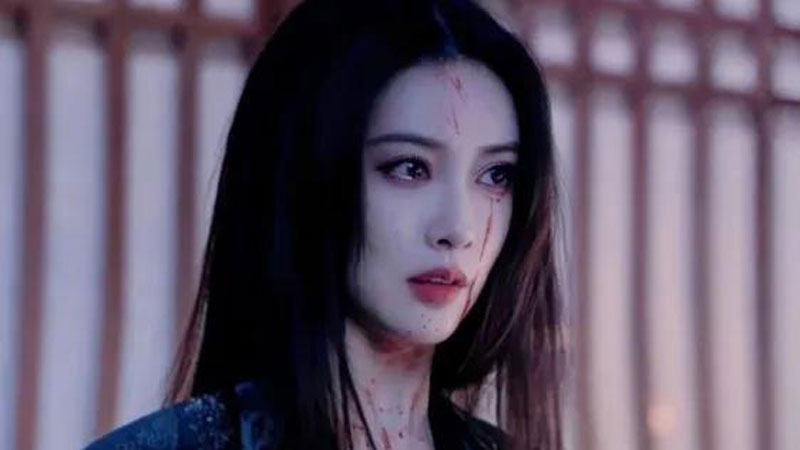
It's worth highlighting that as early as 2022, Meng Ziyi's potential for handling complex roles was already beginning to show. In Heroes, she played Lei Chun, a woman with a mysterious background and a fate marked by tragedy. After suffering the murder of her adoptive father and a broken engagement, Lei Chun undergoes a full transformation—turning to the darker side and rising to power in the martial world. The iconic moment during her wedding, where she breaks down in blood and tears, became one of the show's most unforgettable scenes. That raw emotional outburst struck a nerve with viewers, and her devastating beauty in that moment sparked widespread empathy. Meng's cool, striking appearance paired with her convincing portrayal of the character's emotional collapse earned her significant praise. Audiences began to see her ability to take on characters who unravel, or even tip into madness.
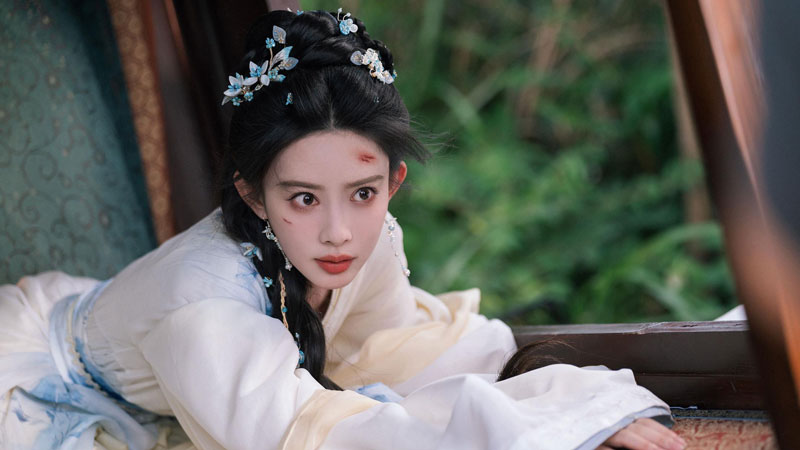
Over the past two years, she's continued building on this mei can qiang persona—layering her performances with emotional depth and complexity. Take, for example, her role as a general's daughter in The Story of Hua Liuli (花琉璃轶闻). On the surface, she's delicate and over-refined, but underneath, she's brave and righteous. Meng navigated this contrast with charm, balancing girlish awkwardness with a courageous rise to strength. Or consider Dou Zhao in Blossom (九重紫)—a woman who, despite the suffocating norms of ancient society, dares to rebel. Her performance in this role helped her break through the noise in the crowded world of period dramas and marked a leap forward in her career.
It's becoming increasingly clear that Meng Ziyi's path in acting has followed a visible growth curve. In her early years, her performances leaned more on natural instinct—relying on her looks and youthful energy to win over audiences. But with a steady build-up of works like Heroes, Blossom, and The Princess's Gambit, she's transitioned into a true character actor. Her ability to blend into each role and bring it fully to life has made her more and more convincing to audiences.
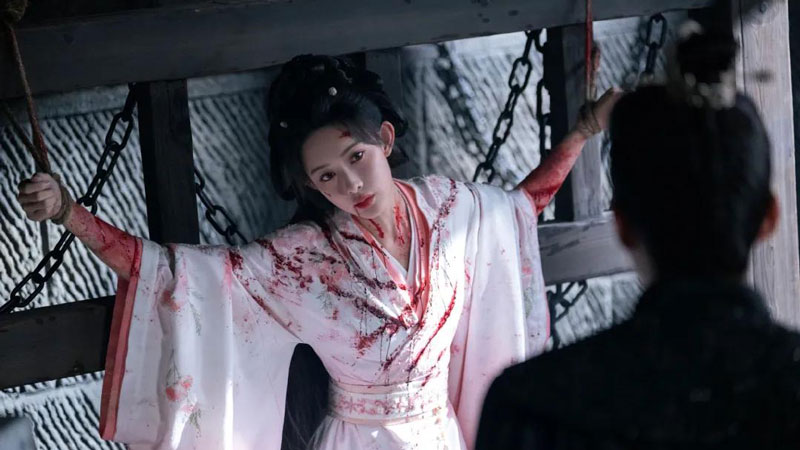
From simply "fitting" into familiar types to gradually breaking her own mold and stepping into genre innovation, Meng has chosen strong female leads whose personalities resonate with today's cultural values. She's constantly widening her dramatic range, honing her ability to handle layered roles, and slowly but surely carving out her own distinct niche among the post-95 generation of actresses. And from the looks of it, she's just getting started.
Gaining Speed with Steady Steps
 Gaining Speed with Steady Steps
Looking at Meng Ziyi's upcoming projects, it's clear her career strategy is built on both consolidation and expansion. She's staying grounded in period dramas, with upcoming titles that delve into political intrigue and mystery. These works—and her roles in them—show both depth and range. At the same time, she's pushing beyond her usual territory with a fantasy project like Sanxian Mi Hui (三线谜回), demonstrating her willingness to break boundaries and place no ceiling on her growth as a performer.
This approach—anchoring herself in period drama while branching out into other genres—keeps her recognizable in the market, while also leaving room for evolution.

When she first debuted, Meng faced her fair share of public scrutiny. But instead of pushing back or trying to reframe the narrative, she let her sincerity speak for her. On variety shows, she came across as genuine, down-to-earth, and refreshingly unfiltered. That authenticity gradually chipped away at public skepticism and built a strong foundation of goodwill.
What truly shifted public perception, though, wasn't variety shows or off-screen charm—it was the depth she's brought to her acting work. As one character after another came alive on screen, audiences were surprised to discover that the once-controversial "Meng Jie" wasn't just a pretty face. She had real acting chops. Through her roles, she's proven her professional strength—her respect for the craft, her willingness to dig deep into each character, and her steadfast dedication to acting. These behind-the-scenes efforts have slowly reshaped her public image, giving people a renewed sense of trust and admiration.
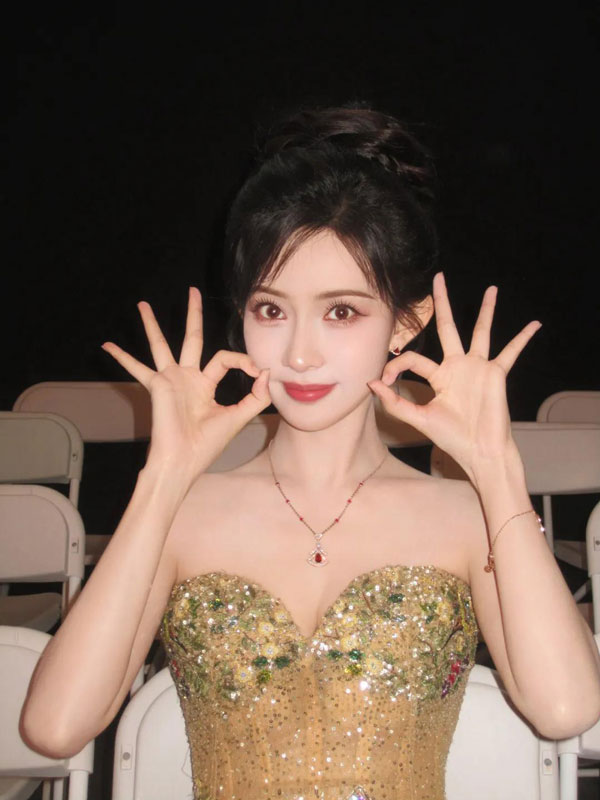
There's a meaningful contrast between the real, unfiltered version of Meng Ziyi we see on variety shows and the captivating characters she brings to life on screen. It reflects her clear-eyed approach to managing her career. She understands something fundamental: variety shows may showcase her true personality, but acting is about becoming someone else. And for an actor to have real longevity, they can't rely on short-term buzz. At the end of the day, it's the quality of the work—the characters and the stories—that creates staying power. Sure, audiences might check out a show because they like a particular celebrity. But they'll only stick around, and remember, if the characters stay with them. That's how an actor builds a lasting place in the industry.
Closing Thoughts
 Closing Thoughts
In The Princess's Gambit, Meng Ziyi's portrayal of Jiang Taohua marked a true breakthrough—and the industry noticed. In a field where trends change fast and competition is cutthroat, she's pulling off a quiet but confident overtake. Her expanding portfolio and clear sense of direction suggest that she's not only catching up—she's about to lead the pack.
From supporting roles to commanding the screen as a lead, Meng Ziyi is turning acting ability into her core competitive strength. Her upward momentum isn't fueled by hype but by a string of performances that speak for themselves.
This kind of intentional growth—measured, determined, and craft-focused—is taking her to new professional heights. And with each character, she's proving one thing above all: she's built for the long run.
