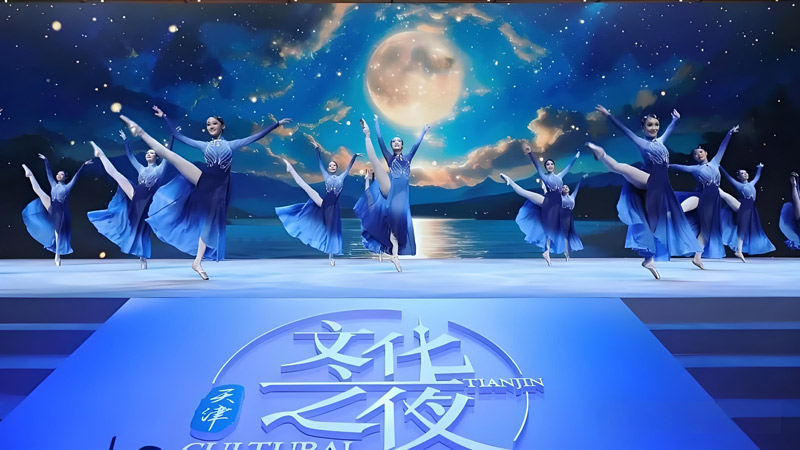
The warm June breeze carried a whisper of salt from the Bohai Sea as delegates stepped into a realm where time folded. Inside the Davos Cultural Night Pavilion, the vibrant pulse of global economics softened, replaced by the quiet authority of Chinese aesthetic philosophy. Here, under a ceiling washed in oceanic blues—a hue mirroring both Tianjin’s maritime soul and the infinite sky—an intricate dialogue unfolded. It wasn’t spoken in financial forecasts or policy debates, but through strokes of porcelain brushes, the geometry of steamed dough, and petals arranged with cosmological precision.
Tianjin, a city often eclipsed by its neighbors, emerged not just as a host, but as a curator of cultural gravity, proving tradition isn’t static; it’s a living conversation between centuries.
Culinary Brushstrokes
Tiny, flaky pastries shaped like blooming roses captivated British delegate Ramy Shelbaya. "A delicate sweetness, familiar yet entirely new," he marveled, holding a Xianghe Bobo shortbread. This centuries-old craft, passed down through generations, carried the warmth of home—both his own in England and the Tianjin kitchens where rose petals are folded into dough like secrets. Nearby, the air steamed with ambition.
Chef Dong Lei (东磊) of Weidingxuan deftly pleated translucent wrappers into floral pouches, revealing jewel-toned fillings: spiced beef and plump shrimp. "For our global guests," he explained, "we reimagined recipes—replacing scallions with milder shallots, amplifying broth." Each bite was architecture—crisp yet yielding, a testament to intangible cultural heritage thriving in modern appetites.
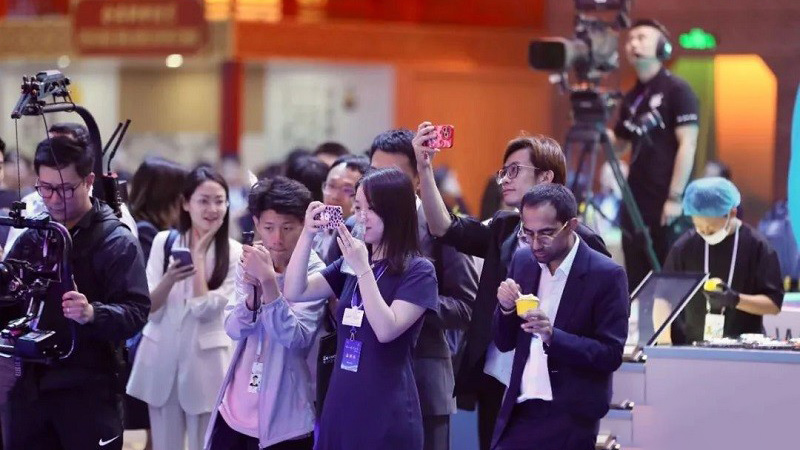
Across the hall, the 119-year-old Chen’s Porcelain studio transformed blank ceramic canvases into multilingual greetings. Delegates dipped brushes, writing "Hello" in Arabic, Hindi, Swahili—their well-wishes fired into permanence alongside cobalt peonies.
Gardens That Whisper Philosophy
Beyond the craft stalls, stillness reigned. A landscape emerged where miniature pines twisted towards imagined cliffs, lotus blooms floated above mossy stones, and a single bronze snail traversed a jade-green pebble path. This was Huan He Tong Zhou (寰荷同洲)—"Global Lotus Alliance"—a living diorama by floral artist Liu Dongmei’s team. "It embodies Song Dynasty minimalism," horticulturist Li Yuansong (李远嵩) noted, "where empty space holds as much meaning as form." The lotus, homonym for harmony (he), rose beside weathered scholar’s rocks, symbolizing resilience.
An elegant crested ibis crafted from wire and silk perched nearby—Tianjin’s emblem of ecological revival. Guests paused, phones forgotten. This wasn’t mere decoration; it was Zen philosophy rendered in root and stem. The deliberate asymmetry, the reverence for weathered textures, the tiny snail’s journey—all whispered universal truths about balance, patience, and coexistence.
Stage Alchemy
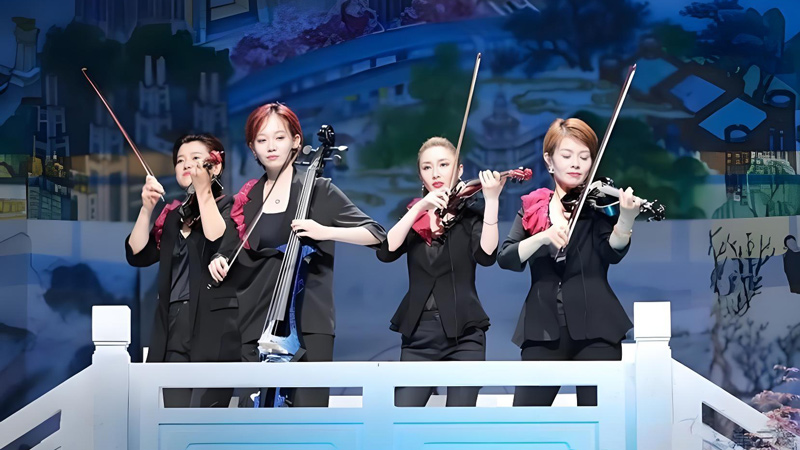
As dusk deepened, the pavilion transformed. Light dissolved boundaries between spectator and spectacle. Dancers materialized like ink strokes given life. In "Nine Rivers · Rising Wind," bodies spiraled, silk sleeves unfurling like tidal surges. Then, a shift: the melancholic pluck of a pipa fused with Astor Piazzolla’s tango in "Luminous Waves." Western strings and Eastern zithers dueled, then embraced.
American delegate Daniel Kang watched, transfixed: "The energy… it transcends language." The third act, "Tides Roar · Four Seas," defied physics. Han Dynasty court ladies floated with ethereal grace, only for acrobats to shatter the calm—human pyramids ascending, bodies tumbling in impossible arcs. Finally, "Prosperity · Dream Waters" erupted. Drummers pounded rhythms echoing temple ceremonies while contemporary dancers sliced the air with kinetic urgency. East and West weren’t juxtaposed; they became facets of the same shimmering gem.
The Uninterrupted Conversation
Singaporean Gigi Huang lingered near an unfinished porcelain plaque, tracing the grooves of freshly painted Arabic script. "We’re a young nation," she reflected. "Seeing continuity—crafts surviving centuries, aesthetics evolving yet rooted—it’s humbling." Her sentiment echoed through the pavilion. The children’s paintings composing the "TIANJIN" installation weren’t just colorful; they were futures being sketched onto tradition’s parchment.
Chef Dong’s adapted dumplings, Chen’s multilingual porcelain, the fusion on stage—all proved heritage isn’t preservation under glass. It’s adaptation, a resilient river finding new channels. As delegates departed, pockets held rose-petal pastries, porcelain bookmarks, and mental snapshots of cranes among lotuses. The Davos agenda spoke of AI frontiers and green transitions, but Tianjin offered a deeper manifesto: progress needs roots. Culture isn’t a performance; it’s oxygen.
That night, by the Bohai Sea, the world didn’t just witness Chinese tradition. It breathed it in, realizing the most compelling innovations often bloom from the oldest soils. Tianjin hadn’t concluded the conversation; it had simply gifted the world a richer vocabulary.