Article
搜索结果:
-
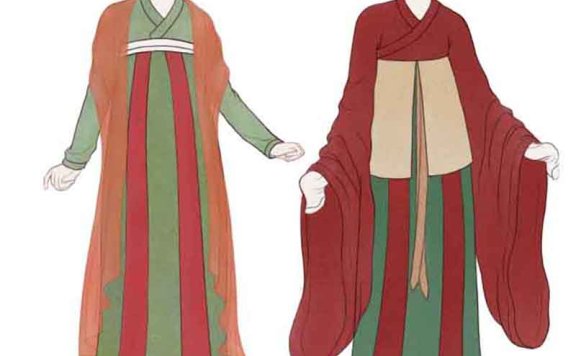
Draped in Dynasty: Tang Female Attire
In Tang Dynasty China, women’s fashion followed a consistent formula: a layered ensemble of shan (衫, a short top), ru (襦, a lined jacket), ku (袴, trousers or leggings), and qun (裙, skirts), often draped with a long, flowing pei (帔, a silk stole). But like modern trends, styles evolved—shifting from slim, fitted cuts in the early Tang to voluminous, relaxed silhouettes by the late Tang. This piece traces the evolution of women’s fashion across the Sui, Tang, and Five Dynasties. Each section opens with a vignette inspired by legendary figures—like the runaway courtesan Hongfu (红拂), the politically savvy Shangguan Wan’er (上官婉儿), or the tragic beauty Yang Yuhuan (杨玉环)—paired with reconstructions of their likely outfits. Drawing from archaeological finds, paintings, and sculptures, we’ve pieced together how these women might have dressed. But first, a primer on Tang textiles. The Fabric of Tang Fashion Silk fabrics were woven from intersecting threads: jing (经, warp, the lengthwise threads) and wei (纬, weft, the crosswise threads). Variations in these threads created intricate patterns. 1. Plain Weaves: Juan & Shi Juan (绢): A basic plain-weave silk, utilitarian and widely used. Shi (絁): Similar to juan, but with uneven weft threads, creating subtle horizontal stripes.… -

Traditional Chinese Hairstyles for Children
Historical Cdramas like 'Qing Ping Yue' and 'Da Feng Da Geng Ren' have showcased authentic children's hairstyles, moving away from the trend of simply shrinking adult styles. This shift highlights that ancient Chinese children, much like their modern counterparts, had their own distinctive looks tailored to their age. Previously, it was common to see ten-year-olds in period dramas styled as miniature adults—boys with tied-up hair and crowns, girls with elaborate buns and hairpins. However, this portrayal is historically inaccurate. In ancient China, adulthood was marked by ceremonies: the Ji Ji Li (及笄礼) for girls around age 15 and the Ruo Guan Li (弱冠礼) for boys around 20. Before these rites, hairstyle options were limited, with the most common being the 'Zong Jiao' (总角), or 'horned hair'. Zong Jiao: A Broad Term Zong Jiao is a broad term referring to the hairstyles of children aged 7 to 15. This period was poetically called the 'Zong Jiao Years,' and childhood friendships were termed 'Zong Jiao friendships.' The 'Jiao' refers to small topknots, specifically the hair tied on either side of a child's head, distinct from the loose 'Chui Tiao' (垂髫) of early childhood or the formal buns of adults. Narrow Definition of… -

Pearl Adornments in Song Dynasty Fashion
During the Song Dynasty, pearl embellishments were a widespread fashion trend, but contrary to popular belief, the number and placement of pearls did not signify social status or rank. While official attire for noblewomen and imperial consorts had strict regulations regarding patterns and motifs—such as the number of dragons or phoenixes on headdresses—pearl adornments were never subject to such hierarchical rules. Online claims suggesting that the quantity of pearls indicated one's rank are simply unfounded interpretations. Pearls were a universal fashion statement. Even the empress wouldn’t cover her entire face in pearls, as there were only a few suitable spots for application: between the eyebrows, from the corners of the eyes to the temples, and on the dimples. Though the number of pearls didn’t reflect social rank, using more pearls naturally hinted at a wealthier background. Affluent families didn’t just wear pearls on their faces or as jewelry; they also embellished collars, cuffs, carpets, and even furniture with pearls, turning them into a ubiquitous decorative element. One popular style was the 'Zhuluo' (珠络), where pearls were sewn along collars, hems, and seams to accentuate the wearer’s status. Princesses’ dowries included pearl-adorned formal gowns and long coats, as well as 'Pearl… -

South Korea Establishes Monthly Hanbok Day
South Korea has recently introduced a new initiative to promote its traditional attire, Hanbok, by designating the last Wednesday of every month as 'Hanbok Day.' This move has sparked discussions online, with some netizens humorously commenting, 'They're really in a hurry!' The initiative is part of a broader plan to revitalize traditional cultural industries, as outlined by the Ministry of Culture, Sports, and Tourism. Under this plan, public officials and employees of government agencies are encouraged to wear Hanbok on the designated day. Additionally, specific national holidays and commemorative days, such as Independence Movement Day and Hangul Day, will now have Hanbok as the recommended attire. To further promote Hanbok, museums, art galleries, and overseas cultural centers will adopt it as the uniform for their staff. The government has also established the third week of October as 'Hanbok Culture Week' to encourage wider participation. This initiative comes amid growing interest in traditional attire across East Asia, including discussions in China about establishing a 'Hanfu Day' to celebrate traditional Han Chinese clothing. While South Korea's efforts are comprehensive, covering official support, public participation, and cultural promotion, the debate continues on how best to preserve and promote traditional garments in modern society.… -
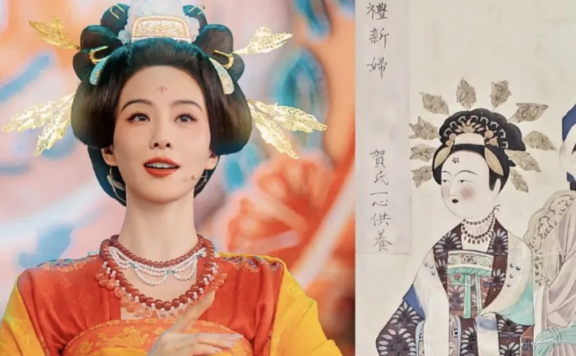
Why Do These Ancient Drama Wedding Crowns Look So Familiar
In the ancient costume drama 'The National Beauty and Fragrance,' these two grand wedding crowns have sparked much discussion, primarily due to their extravagance and intricate details. From a cultural relic perspective, they seem to reference certain prototypes, appearing quite authentic at first glance. However, upon closer inspection, something feels off. Why is that? Previously, we discussed the 'sky-high' crown of Princess Xianzhu, Li Chui. For those interested, you can refer to another article. Today, we’ll focus on the crown worn by Yang Zi’s character, He Weifang, during her wedding. It’s worth noting that the crowns in these dramas are becoming increasingly lavish. Interestingly, what’s referred to as a 'crown' here is more akin to a set of accessories in Tang Dynasty style. Let’s delve deeper. To start with a conclusion, this crown’s original prototype likely stems from the crown of Empress Xiao of the Sui Dynasty. Although it underwent some stylistic changes during the Sui and Tang Dynasties, it retained elements like hairpins (Chaidian) and side ornaments (Bobin) as markers of status. Regardless of these changes, the number of Bobin and floral decorations (Huashu or Huadian) was still determined by the rank of noblewomen or female officials. According to… -
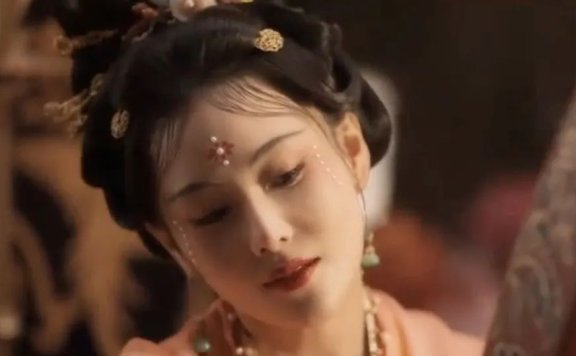
The Trend of Baby Hair Bangs in Historical Dramas
Recently, baby hair bangs have made a reappearance in historical dramas. While these bangs can help contour the face, they often seem out of place in classical settings. Historically, adult women in ancient China did not wear bangs, as they were considered a transitional hairstyle for children whose hair had not fully grown. Upon reaching adulthood, women would style their hair neatly using traditional hair products like "paohua shui" (刨花水), emphasizing elegance and sophistication. Although baby hair or air bangs may appear more natural compared to other fringe styles, they still disrupt the authenticity of classical aesthetics. This article focuses solely on the appropriateness of bangs in historical contexts, not on personal appearances. Retaining baby hair bangs can make a character look immature. For instance, actress Ju Jingyi (鞠婧祎) was often criticized for her unchanging baby hair bangs, but her recent updos have showcased a more mature and classical demeanor. In the drama "The Purple Hairpin," the inclusion of such bangs felt particularly jarring amidst otherwise historically accurate hairstyles. Conversely, in "The Riverside Scene at Qingming Festival," Zhang Xinyu's (张馨予) noblewoman look without bangs exuded grandeur. The no - bangs style cleverly utilized "yunbin" (云鬓), a classical hairstyle from the… -

Chen Duling's Phoenix Crown Sparks Debate on Ming vs Qing Styles
Recent photos of actress Chen Duling wearing an elaborate phoenix crown hairstyle have ignited online discussions about the differences between Ming and Qing dynasty headwear traditions. While many praised the aesthetic, others questioned whether the design leaned too heavily toward Qing influences. Key Distinctions Between Ming and Qing Phoenix Crowns: 1. Structure: Ming crowns typically featured full - coverage designs, whereas Qing crowns (especially post - mid - Qing) often showed partial coverage or hybrid styles like the flattened Dianzi (钿子) hairpieces. 2. Ornamentation Patterns: Ming crowns followed strict hierarchical rules with symbolic arrangements of dragons (gold wirework) and phoenixes (kingfisher feather inlays). Qing designs displayed more eclectic combinations of decorative elements. 3. Hanging Decorations: Ming pieces used pearl/malachite beaded 'tassels' (挑牌) on sides, while Qing versions developed dramatic front/side pearl curtains (珠帘) that eventually obscured the face in late - Qing fashion. 4. Cultural Accessibility: Ming crowns remained exclusive to noblewomen, but Qing versions became accessible to wealthy commoners, explaining why more Qing - era examples survive today. Only four intact Ming crowns exist, all housed in Beijing museums. Historical Context: The Qing Dianzi evolved from early 'head wrapping' styles, featuring decorative hairpin flowers on semi/fully - covered bases.… -

The Overlooked Official Roles of Women in Ming Dynasty
Many people's impressions of female officials in the Ming Dynasty may come from two TV dramas: 'Shang Shi' and 'The Imperial Doctress.' The former is a work by Yu Zheng, while the latter is directed by Li Guoli. The influence of these dramas is undeniable, shaping public perception. Some might ask: Did female officials really dress so lavishly, adorned with gold and silver? Let’s explore what these officials actually looked like. The Palace Official System Emperor Hongwu, when establishing the palace official system, referred to previous dynasties' practices and set up six departments and one supervisory office: Shanggong (尚宫), Shangyi (尚仪), Shangfu (尚服), Shangshi (尚食), Shangqin (尚寝), and Shanggong (尚功), along with the Gongzheng Si (宫正司). The duties of female officials were broadly divided into routine palace responsibilities and ceremonial roles in royal events. The system was perfected during the Hongwu era, becoming the standard for later generations. Attire Inheritance From the Tang to the Ming Dynasty, the attire of female officials was largely inherited. According to historical records like 'Ming Shilu' and 'Da Ming Ji Li,' they typically wore black gauze hats (some resembling Tang - style headwear), narrow - sleeved round - collared robes, leather belts at the… -

The Debate Over Ming Dynasty Dragon Robes in Historical Dramas
In the recent TV series "The Purple Hairpin," actor Ye Zuxin's portrayal of a crown prince has sparked discussions among viewers, particularly regarding the authenticity of his costume. A key point of contention is why a crown prince would wear a robe adorned with five - clawed dragons. To clarify, the gunlongpao (衮龙袍), a round - collared robe featuring circular dragon motifs, was a common attire for Ming Dynasty emperors, crown princes, and imperial relatives. This garment, paired with the yishanguan (翼善冠) hat, was worn during various court activities, lectures, and ceremonies. Contrary to popular belief, the five - clawed dragon design was not exclusive to the emperor but was shared among the imperial family, with variations in the number of dragon motifs. The misconception that only the emperor could wear five - clawed dragons stems from Qing Dynasty dress codes, not Ming traditions. Over time, the gunlongpao evolved, incorporating more elaborate designs for formal occasions, such as the addition of twelve symbolic patterns during the reign of Emperor Yingzong. These patterns, representing elements like the sun, moon, and stars, were reserved for grand ceremonies, making the robes more ornate than everyday wear. The series, while attempting to recreate Ming… -
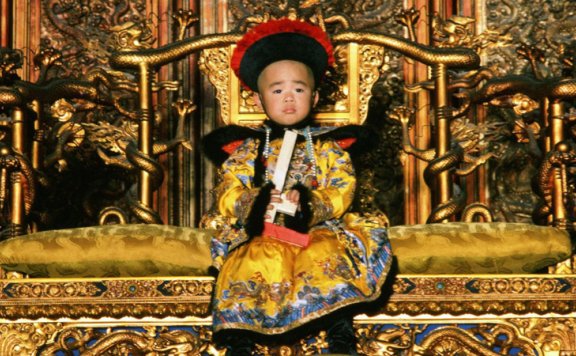
From Forbidden City to Screen: Qing Dynasty Sagas Reimagined
In 1644, as the Ming Dynasty's fading glory shattered beneath peasant uprisings and Manchu cavalry, a steppe chieftain's descendant named Nurhaci's dream materialized. His descendants crossed the Great Wall, founding the Qing Dynasty (1644–1912), a realm where Manchurian martial vigor entwined with Confucian statecraft to forge China's final imperial colossus. Spanning nearly three centuries, this era fused conquest and cosmopolitanism, its legacy echoing through jade-adorned palaces and blood-soaked battlefields alike. The Qing is framed by its zenith under Kangxi and Qianlong, and its unraveling in the 19th century's opium-hazed twilight. From the Treaty of Nerchinsk to the Boxer Rebellion's flames, the dynasty oscillated between global engagement and xenophobic isolation. Beneath the Forbidden City's gilded roofs, empresses plotted behind silk curtains, Han literati navigated Manchu rule, and eunuchs wielded shadows as currency. Yet beyond the palace walls, a multicultural tapestry thrived—Jesuit astronomers mapped stars, Mongol khans swore fealty, and Cantonese merchants traded tea for silver. Let us enter a world where dragon robes conceal daggers, and every courtyard murmurs with ambition. Follow the Kangxi Emperor, a boy-king who tamed regents and rebels to become Asia's longest-reigning monarch. Ride with the feared Eight Banners across Tibetan plateaus, and walk the Guangzhou docks… -
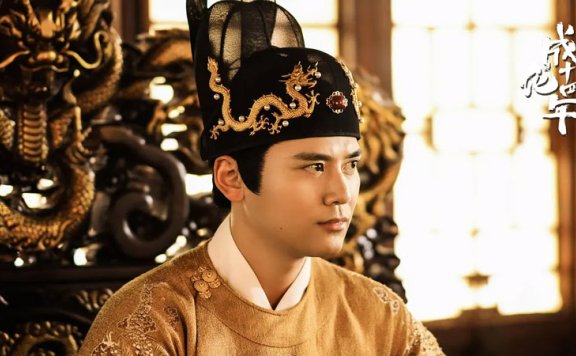
7 Must Watch Ming Dynasty Dramas
The Ming Dynasty (1368–1644) stands as one of China's most transformative and culturally vibrant eras, bridging medieval traditions with early modern innovations. Founded by Zhu Yuanzhang, a peasant-turned-emperor who overthrew the Mongol-led Yuan Dynasty, the Ming restored Han Chinese rule and established a centralized bureaucracy that shaped governance for centuries. Its name, meaning "brilliant splendor," reflects both its aspirations and contradictions: a period of monumental achievements in art, technology, and global trade, yet also marked by political intrigue, social upheaval, and eventual collapse. Ming-era dramas often explore themes of loyalty, ambition, and resilience. The dynasty's complexity—its blend of intellectual enlightenment and authoritarian control—offers fertile ground for narratives about power's corrupting influence and the human cost of progress. Whether depicting palace conspiracies, military strategists outwitting invaders, or merchants navigating Silk Road rivalries, these stories resonate with universal questions about leadership and morality. Ming Dynasty in 1566 大明王朝1566 Set during the twilight years of Emperor Jiajing's reign (1521–1567), Ming Dynasty in 1566 is widely regarded as a masterpiece of historical drama for its unflinching portrayal of political decay and moral ambiguity in late Ming governance. The series centers on the interplay between three power factions: the corrupt Grand Secretariat led by Yan… -

Best 6 Han Dynasty Historical Dramas List
In 202 BCE, as the ashes of the Qin Dynasty settled, a former peasant-turned-warlord named Liu Bang seized power, founding the Han Dynasty (202 BCE–220 CE). This four-century reign became the cornerstone of Chinese civilization, blending Qin's centralization with Confucian humanism to create an enduring blueprint for empire. Han is divided into the Western Han and Eastern Han periods. The Yellow Turban Rebellion ignited chaos by the 2nd century CE (the late Eastern Han), fracturing the empire into the warring Three Kingdoms era the late Eastern Han. Under the Han, China expanded into a multicultural superpower: Emperor Wu's cavalry crushed the Xiongnu nomads, Zhang Qian's Silk Road missions bridged Asia with Rome, and scholars like Sima Qian wove history into timeless literature. Yet the Han's brilliance was shadowed by intrigue—palace conspiracies, regent dictatorships, and the rise of eunuch factions that corroded the court. Let us step into sweeping historical dramas where ambition and idealism collide. Witness the rise of Liu Bang, the "Emperor of the Commoners," as he transforms from a drunken village chief to a visionary ruler. Feel the thunder of hooves as General Wei Qing smashes through Mongol hordes, and trace the quiet revolution of Confucian scholars who… -
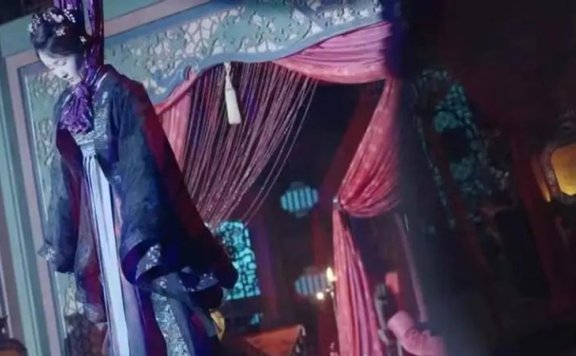
A New Gothic Thriller: Chronicles of the Morning Snow
Period dramas have leveled up lately. Gone are the days of cheap-looking costumes and flimsy sets—today's productions are all about immersive details. But Chronicles of the Morning Snow (朝雪录) isn't just another pretty historical show. It's a spine-chilling dive into "Chinese Gothic" horror, blending eerie crime scenes, razor-sharp storytelling, and a slow-burn romance. Trust me, this iQiyi exclusive is the dark horse of 2025—and here's why it's worth the hype. A Plot That Grips Like a Nightmare Adapted from the hit novel The Imperial Coroner's Justice, the series opens with Qin Wan (Li Land, 李兰迪), a timid noblewoman in the Qin household. Bullied and overlooked, she's the last person you'd expect to dissect corpses. But after her father's sudden death—a man who quietly solved crimes through forensic science—Qin Wan undergoes a radical transformation. Overnight, she becomes a sharp-witted investigator, using her father's techniques to speak for the dead. Her first case? The infamous Headless Bride Murders, where a noblewoman's decapitated body is found draped in a blood-red wedding gown. The crime scene—a dimly lit ancestral hall with incense smoke curling around severed jade bracelets—sets the tone for the show's unflinching style. This isn't sanitized crime-solving; it's visceral, haunting, and steeped… -

Song Zu'er's Supernatural Love Story That's Already Breaking Records
Get ready to binge Wuyou Du (无忧渡, No Worries Crossing), the hottest Chinese fantasy drama of 2024. Starring Ren Jialun (One and Only) and Song Zu'er (Nirvana in Fire), this series blends ghostly mysteries, forbidden romance, and Chinese-style horror into a wild ride that's part Supernatural, part In the Mood for Love. And guess what? It just dropped all episodes on iQiyi. Set in a world where humans and demons coexist, the show follows Xuan Ye (Ren Jialun), a half-demon exorcist cursed by his bloodline, and Ban Xia (Song Zu'er), a wealthy heiress who can see spirits. When Ban Xia exposes her sister-in-law as a demon, she's thrust into a shadowy war between clans—and stuck teaming up with the brooding Xuan Ye to survive. Why This Isn't Your Grandma's Ghost Story Forget jump scares and creaky doors. Wuyou Du leans into eerie Chinese folklore with five standalone cases. Here's a taste: "The Bride's Shadow": A newlywed's shadow moves on its own, leading to a demonic ritual involving paper frogs and a killer who… collects throats. "The Ageless Pear": Women eat magical pears to regain youth—but end up as desiccated corpses. The twist? The pear tree feeds on their regrets. "The… -
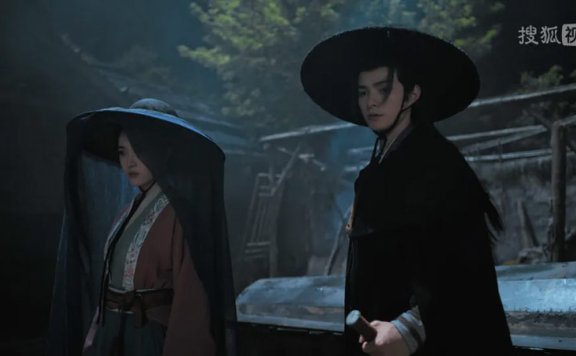
China's Fantasy Drama Finally Gets It Right
If you've ever dipped your toes into Chinese fantasy dramas, you probably know the struggle: they often feel like a mixed bag. And yet, we keep watching. The pull of traditional Chinese fantasy is strong—even after 100 disappointments, we'll still click on the 101st one hoping for something special. To everyone who's been holding out for a miracle: it's here. Busi Yi: Strange Tales (不思异:志怪) is a low-budget web drama with no big stars, no trending hashtags, and no marketing push. But somehow, it nails what so many high-budget dramas miss—style, substance, and that elusive "right vibe" for Chinese supernatural stories. The Aesthetic We've Been Waiting For Set in a mysterious town plagued by spirits and demons, Busi Yi: Strange Tales follows a monster-hunting squad led by Wu Jin, a former general who gains powers from the Moon Tribe. Alongside him are Yu Hui, the son of an old friend; Shui Yao, a rival-turned-ally; Li Yan, a quiet scholar; and Song Zhiru, a savvy innkeeper. Each episode pits them against strange beings—some malicious, some misunderstood—all while their own backstories start to unravel. What stands out first isn't the plot—it's the atmosphere. This show understands that fantasy isn't just about magic;… -

Move Over, Heroic Tropes: The Wuxia Comedy That's Actually Funny
Let's face it: Most martial arts dramas take themselves way too seriously. Flowing robes, brooding heroes, and speeches about honor get old fast. But Xia Ke Xing Bu Tong (侠客行不通, lit. Heroism Doesn't Work) , a raucous new comedy streaming on Tencent Video, flips the script. Starring standup comic Xu Zhisheng (徐志胜) as a bumbling "anti-hero," this show isn't just poking fun at wuxia clichés. It's skewering modern bureaucracy, workplace politics, and the absurdity of trying to be noble in a world that rewards schemers. And guess what? It's hilarious. The Villain Is the Hero Meet Gou Lingfeng (Xu Zhisheng), a rich kid with a heart of gold… and a face only a mother could love. After his nanny is killed by a demonic cult, he vows to become a hero. But here's the catch: His "master", a doddering old man who crashes into his mansion one night, accidentally trains him in forbidden dark arts (mo gong 魔功). Fast-forward 18 years. Gou descends the mountain, ready to save the world… only to learn that heroism now requires a government license. To legally fight evil, he must pass exams held by the Martial Heroes Alliance (武林侠会), a corrupt guild more interested… -

The Large-Sleeved Hanfu Shirt in Tang Dynasty
The Large-sleeved shirt, known as "Da Xiu Shan" in Chinese, was a prominent aristocratic attire during the mid to late Tang Dynasty. This garment is often associated with the famous painting "Court Ladies Wearing Flowered Headdresses" by Zhou Fang, which vividly depicts noblewomen adorned in ankle-length skirts paired with sheer, large-sleeved gauze shirts that delicately cover their shoulders and arms. The artist's realistic portrayal not only captures the transparency of Tang fabrics but also the softness of the women's skin. This style persisted until the late Ming Dynasty, often paired with a ceremonial cape, and was alternatively called "Da Xiu" or "Da Shan." During the High Tang period, the influence of Hu (nomadic) clothing waned, and women's fashion gradually embraced wider sleeves. By the mid to late Tang era, sleeves often exceeded four feet in width. The attire typically included a wide-sleeved cross-collared shirt, long skirt, and a draped shawl, reserved for significant occasions like court appearances, ceremonies, and weddings. Adorned with golden hairpins and floral decorations, it was also referred to as "Floral Hairpin Large-Sleeved Shirt." Zhou Fang's painting, now housed in the Liaoning Provincial Museum, illustrates noblewomen leisurely strolling through gardens, picking flowers, and playing with butterflies. Their… -

The Traditional Chest Wrap Dress in Historical Dramas
The traditional chest wrap dress, once a staple in early historical dramas and photo studios, has become increasingly rare in contemporary films and TV shows. Why is this the case? Let's start with the conclusion. Many people refer to it as the "Hezi dress." Today, there are numerous choices when it comes to clothing styles and patterns, so there's no need to obsess over controversial designs like the Hezi dress. Absence of Physical Evidence First, there is no physical evidence to confirm the exact style of the Hezi dress. Its existence is only hinted at in literature, particularly through mentions of its key component, the "Hezi." Second, the most famous depiction of the "Hezi dress" is in Zhou Fang's painting "Court Ladies Wearing Flowered Headdresses," which is believed to date back to the Five Dynasties period. The term "Hezi dress" is a modern invention, as it does not appear in historical records. Although "The Complete Collection of Chinese Textiles and Costumes" mentions the long wrap dress worn by women in the painting, paired with a thin gauze robe, it does not refer to it as the "Hezi dress." Historical Origins of Hezi The Hezi dress was once a popular representation… -

Why Chinese Zhaiyi Appears in Korean Dramas
In the Korean drama 'Won Kyung,' Queen Won Kyung is seen wearing a full set of Zhaiyi (翟衣), along with a Yanju crown (燕居冠) adorned with Bobin (博鬓), which is typically reserved for empresses or crown princesses. Observant viewers might find this attire familiar. In recent years, Zhaiyi has frequently appeared in Chinese historical dramas set in the Song and Ming dynasties, largely because well - preserved portraits of empresses from these periods provide ample reference material. The 'Zhai' in Zhaiyi refers to the Zhai pattern (翟纹), which features the Chinese pheasant (红腹锦鸡), a bird native to China with vividly colored feathers described as 'red with five hues.' The pattern consists of twelve pairs of pheasants arranged in rows, interspersed with small floral motifs called 'Xiaolunhua' (小轮花) in the Ming dynasty. The headdress also follows a strict hierarchy: the phoenix crown (凤冠) with Bobin is the highest rank, paired with Zhaiyi, while the Yanju crown (with Bobin) is worn with a yellow Dasha (大衫) and Xiapei (霞帔). Noblewomen's Zhai crowns are paired with red Dasha and matching Xiapei. Why does Zhaiyi appear in Korean dramas? The 'Goryeo History' records that Empress Xiaoci of the Ming dynasty once bestowed Zhaiyi upon… -
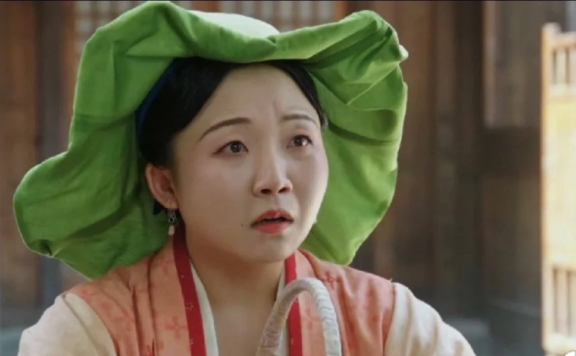
The Lotus Leaf Hats in Cdrama
If you think lotus leaf hats are a modern trend, our ancestors would surely laugh at you: "You kids are so outdated and unfashionable!" This iconic headwear dates back much earlier than you might imagine, with roots tracing to the Northern and Southern Dynasties. Historical records like "The History of the Northern Dynasties" mention bearers wearing them in summer, while "Tales of the Hidden World" from the Liu Song Dynasty recounts a sorcerer tricking a governor into wearing a magical lotus hat that later revealed its true form, astonishing everyone. The most vivid depiction appears in Ming Dynasty painter Qiu Ying's "Assembly of the Immortals," showcasing an immortal wearing an identical lotus leaf hat. Nature has always been the muse for innovation. Later adaptations led to rounded hats with varying materials—felt caps from wool, blended silk - wool Diexiao hats, and pure silk variants. The key difference lay in "dyed silk replacing wool," as noted in historical texts. This accessory became a cinematic staple too, like Yang Fangbing's portrayal of Yang Guifei, whose hat dripped with pearl strands resembling dewdrops on lotus leaves. Among the Yi ethnic group in Sichuan's high - altitude Meigu County, married women wear similar hats…