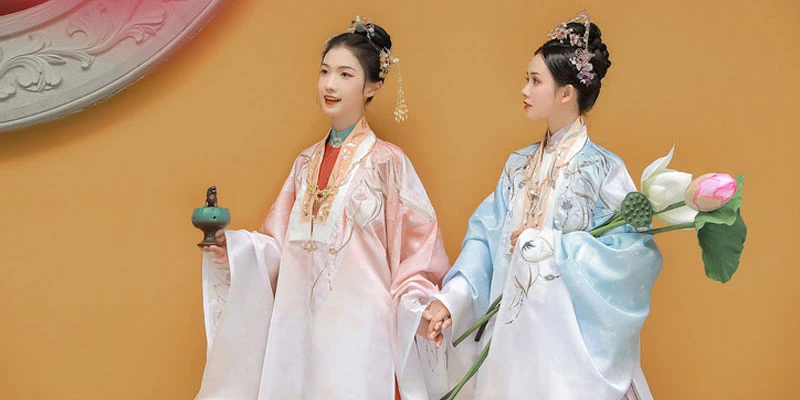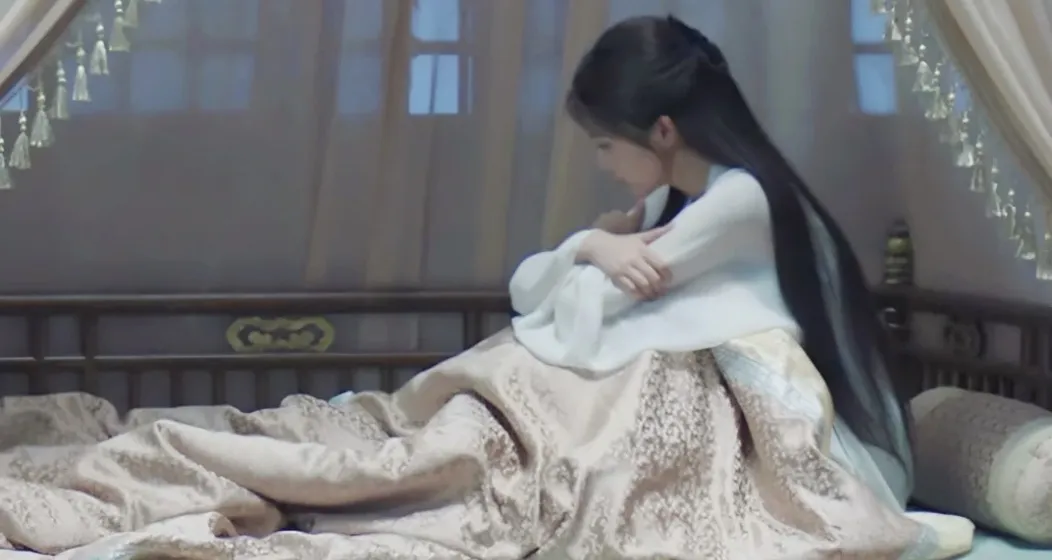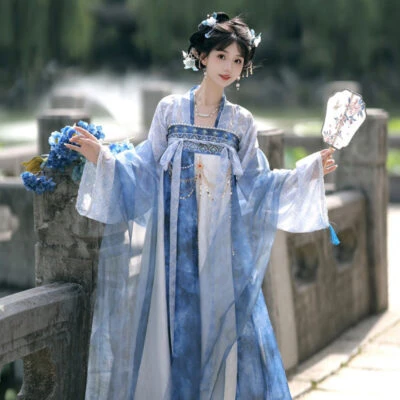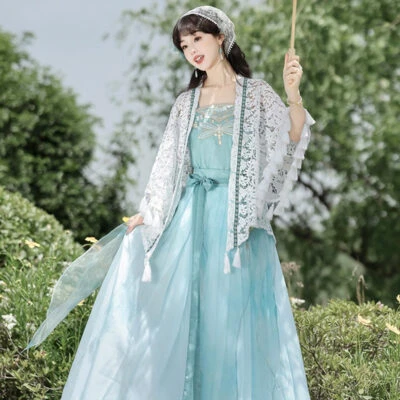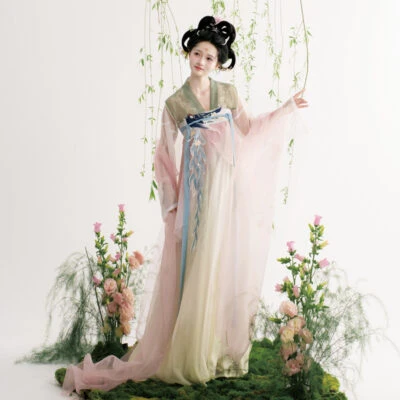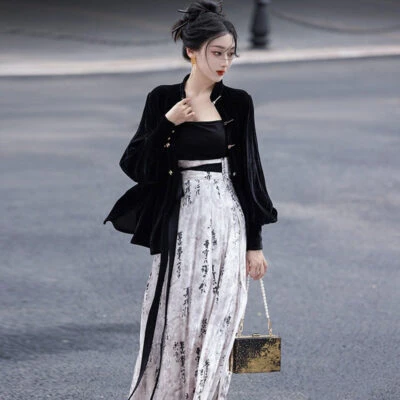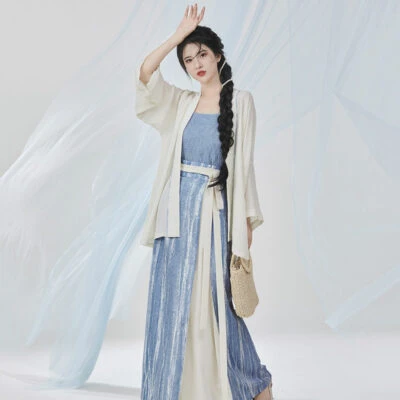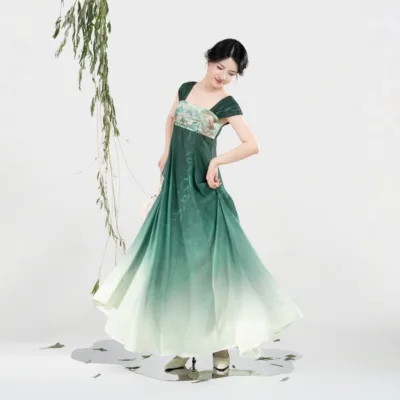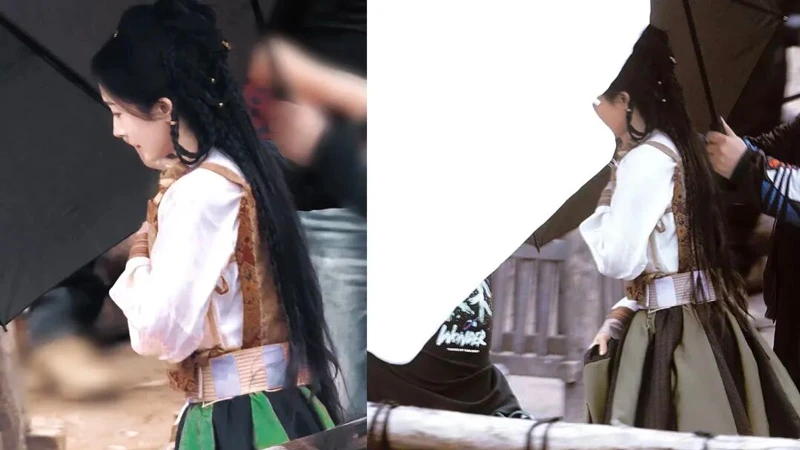
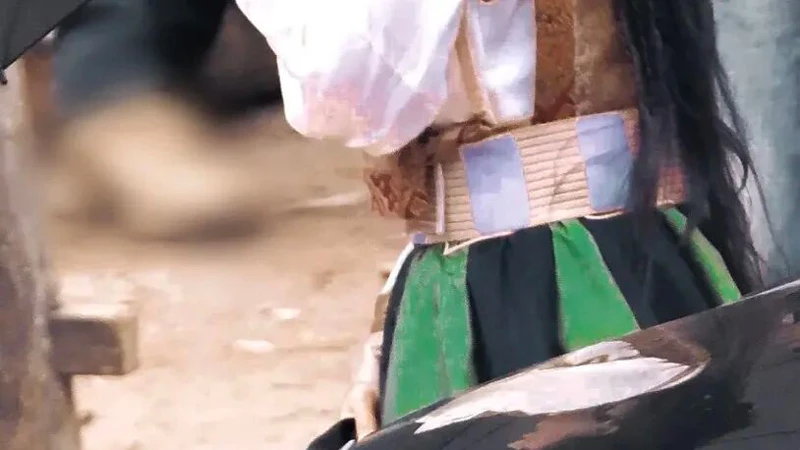
In a recent costume drama, Jiangshan Datong (江山大同), actress Yang Mi (杨幂) wears a striking dress that has internet users debating: is this a modern runway piece accidentally filmed on an ancient set? Her outfit pairs a sleeveless jacket called Liang Dang (裲裆) with a skirt in a shade that resembles melon rind—a soft green striped pattern. This isn’t sci-fi or time travel. It’s a faithful recreation of Wei-Jin (魏晋) period fashion, specifically from the 3rd to 5th centuries. And yet, it looks effortlessly contemporary. The so-called “melon rind skirt” turns out to be a masterclass in visual illusion, craftsmanship, and comfort—proving that ancient Chinese tailors had already solved problems that modern designers are still patching up. So what exactly is this garment, and why does it challenge everything we think we know about the history of style?
A Skirt That’s Not Torn, But Tailored
Despite its name, the Po Qun (破裙) is not a torn or ragged skirt. “Po” here means “segmented” or “pieced.” Tailors would cut narrow fabric panels—sometimes ten or more—and sew them vertically side by side to form a single long skirt. Each panel is a “Po,” so a ten-Po skirt means ten strips of cloth stitched together. This structure dates back to the Han-Jin (汉晋) period, with excavated examples from the Bi Jia Tan (毕家滩) Flower Sea Tomb in Gansu province. That find showed that Po Qun could be pleated or left smooth, offering surprising flexibility.
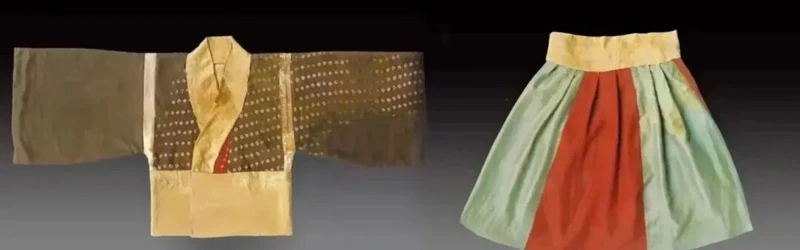
Why go through all that trouble? Because vertical seams create an elongating effect. The eye follows the lines from waist to hem, making the wearer appear taller and leaner. Modern fashion brands rediscovered this trick decades ago, calling it “optical illusion dressing.” But ancient Chinese weavers knew it instinctively. They also understood that a pieced skirt moves better with the body than a single wide sheet of fabric. It drapes, swirls, and settles without bunching up—practical for walking, working, or dancing in a courtyard.
The color choices were equally intentional. Stripes could be tonal (same color family) or contrasting. The contrasting version was called Jian Se Qun (间色裙), literally “alternating-color skirt.” Early Tang dynasty murals show combinations like red-white, black-white, blue-white, and even red-blue. These weren’t printed patterns. Each stripe came from a differently colored fabric panel, hand-stitched to its neighbor. That meant no two skirts were exactly alike—a far cry from mass-produced digital prints.
Straps, Suspenders, and Surprising Parallels
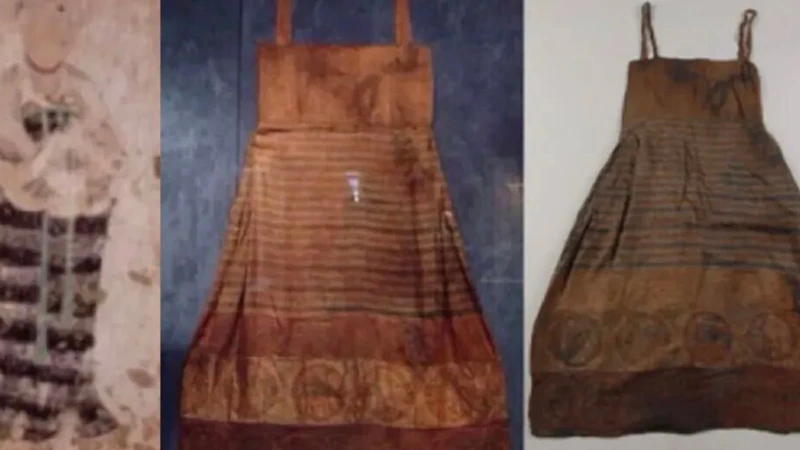
By the Northern Qi (齐) dynasty, around the mid-6th century, an even more intriguing variation appeared: the strapped striped skirt. A pottery figurine from the Lou Rui (娄睿) tomb in Shanxi shows a woman wearing a skirt with two shoulder straps sewn directly onto the waistband. This design kept the skirt from slipping down, even if she stepped on the hem—a real hazard with floor-length garments. The straps worked for both high-waist (just under the chest) and natural-waist styles. It’s essentially a sundress or pinafore dress, a silhouette that became a 1990s staple and is now back on catwalks.
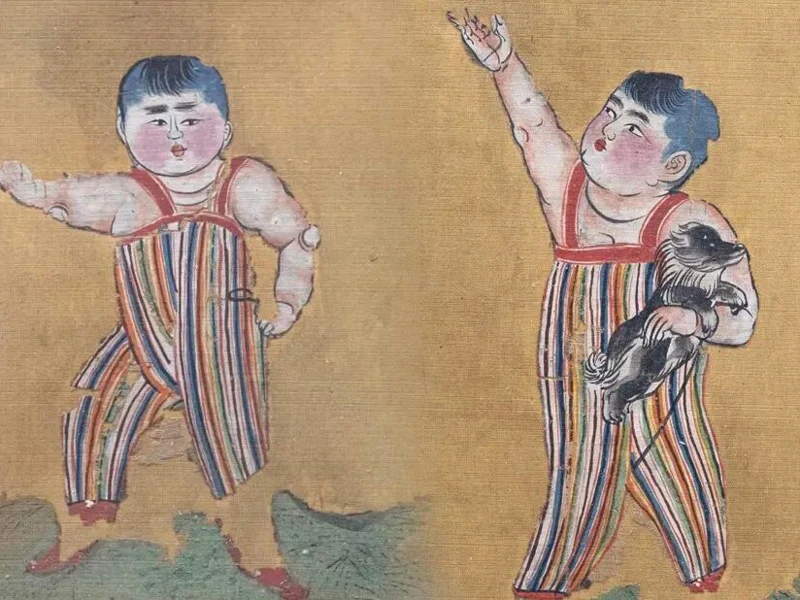
And then there are the striped trousers with suspenders. No full specimen has survived, but artistic evidence from the Tang period shows figures wearing what look like jumpsuit-like bottoms—vertical stripes running down each leg, held up by straps over the shoulders. While the exact construction remains unknown, the visual similarity to modern overalls or cargo pants is uncanny. These weren’t hidden under robes; they were outerwear, proudly displayed. The message is clear: ancient wardrobes were far more diverse and playful than we often assume.
Not every stripe was vertical, either. Horizontal striped skirts existed, though they were mostly printed, not pieced. A fragment from Astana cemetery in Turpan shows a woven or printed horizontal stripe pattern with clear Central Asian influences—a reminder that the Silk Road brought not only goods but also textile ideas. The Tang court absorbed these motifs and made them its own. What emerges is not a single “ancient Chinese style” but a fluid, evolving conversation between regions, classes, and centuries.
Why Ancient Fashion Still Outruns Modern Copies
The striped Po Qun disappeared from everyday wear after the Song dynasty, but its principles never really died. Today, fast fashion brands “rediscover” vertical stripes every few years, selling them as innovative slimming hacks. Yet the original was more sophisticated: it used actual seams to create structure, not just printed lines. That seams allowed for mixing textures—silk with hemp, coarse with fine—adding tactile depth that a photograph cannot capture. You can’t replicate that with a digital printer.
What’s more, the ancient approach was inherently sustainable. A Po Qun could be made from leftover narrow strips of precious fabric, wasting almost nothing. When a panel wore out, you replaced just that strip instead of discarding the whole skirt. That’s circular fashion—a term that sounds cutting-edge today but was common sense a thousand years ago. The striped skirt wasn’t just beautiful; it was economical, repairable, and adaptable to any body shape because the number of panels could be adjusted.
So when we see Yang Mi walking through a reconstructed Wei-Jin courtyard in her “melon rind” skirt, it’s not nostalgia that makes us pause. It’s recognition. We recognize a solution we thought we had invented. We recognize a confidence in pattern and color that doesn’t need trendy labels. And we recognize that the ancient world wasn’t waiting for us to teach it how to dress. If anything, the opposite might be true. Would you trade your little black dress for a ten-Po striped skirt from the 4th century? After seeing the evidence, the answer isn’t as obvious as you might think.