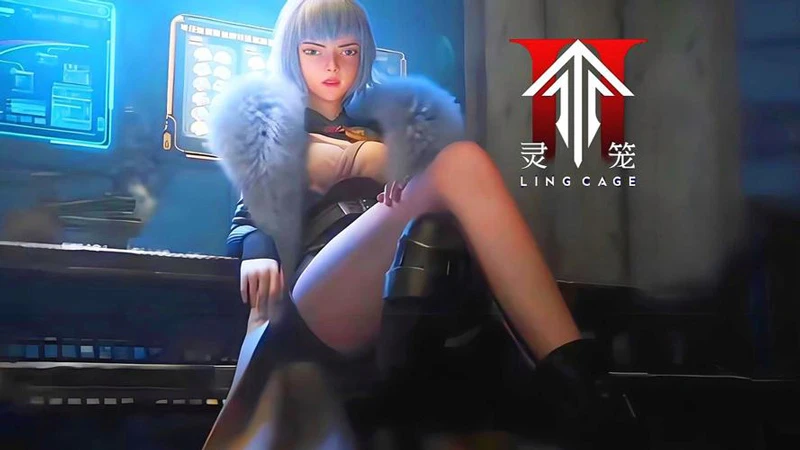
Ling Cage (灵笼), a Chinese 3D animated series, has done what few dared to dream. It earned a competition slot at Annecy International Animation Film Festival, the so-called “Oscar of animation”. The first two seasons alone pulled in over 1 billion views and 11 million followers on Bilibili, while holding a rock-solid Douban (豆瓣) score of 8.9. Now, a feature film and a third season are racing toward 2026. The story will leave the ruined ground behind and shoot into space. This is not a sequel—it is a rebirth.
Staggering Stats
Numbers do not lie. Ling Cage has accumulated more than 1 billion total views across its run. Its follower count on Bilibili alone exceeds 11 million, making it a flagship title for the platform’s domestic animation push. On Douban, over 100,000 users have rated it, and it still sits at 8.9. Overseas, on IMDb, it holds a 9.5—a record for any Chinese animated work. These figures are not just big; they are unprecedented for a hard sci-fi original IP from China.
What makes these stats more impressive is the context. Ling Cage started as a niche original property, not an adaptation of a popular novel or comic. It built its audience from scratch. Each episode drop caused Bilibili’s servers to strain under the traffic. Fans analyzed frame by frame, hunting for clues about the Mana ecology (玛娜) and the true purpose of the floating city Lighthouse. That level of engagement turned view counts into a cultural wave.
Behind these numbers stands Yihua Kaitian (艺画开天), the studio that refused to cut corners. It spent years designing every She Ji Shou (噬极兽) creature, every rusted ruin. The budget for season three’s single episode has exceeded ten million yuan. Such dedication explains why the show’s Douban score never dipped below 8.9 across two seasons. Numbers, after all, are just echoes of hard work.
Global Breakthrough
In 2026, Ling Cage: Season 2 became the first Chinese sci-fi animation to enter the main competition of Annecy’s TV series section. This is not a side event. Annecy’s main competition is the highest peak for animated storytelling worldwide. For years, international juries viewed Chinese 3D animation as technically skilled but emotionally shallow. Ling Cage shattered that stereotype. It showed them a world of moral gray zones, where survival forces humans to abandon their own kind.
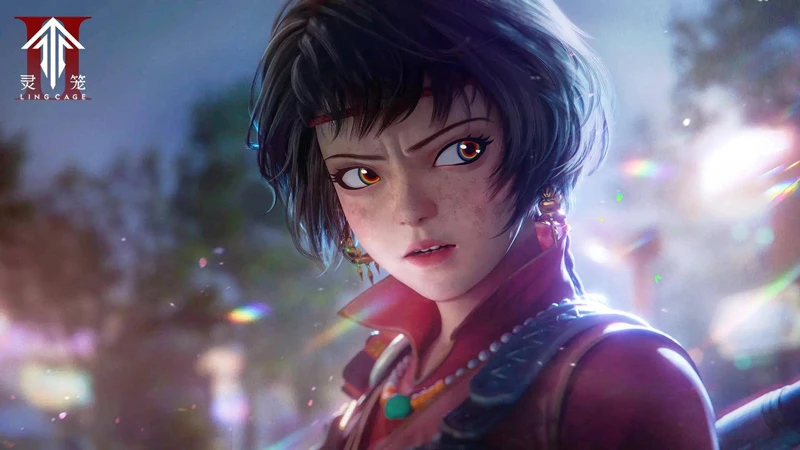
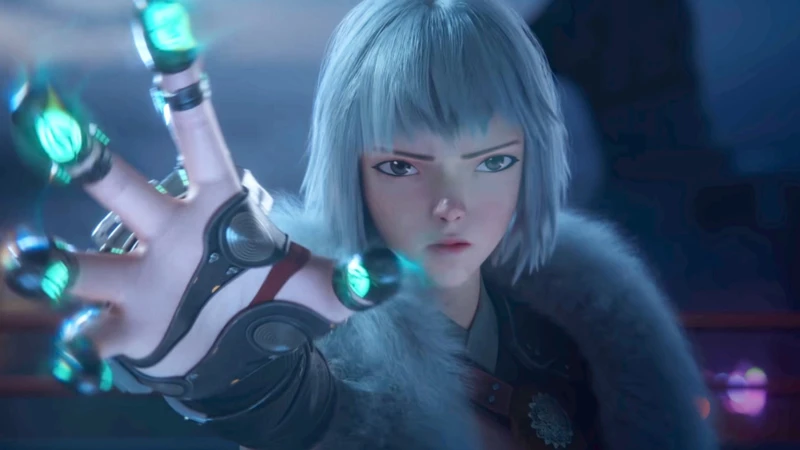
The festival recognition did not come from luck. It came from a script that asks brutal questions: Should a mother sacrifice her child for the species? Can hope exist without lies? The character of Mark—a strong but conflicted warrior—carries these questions on his shoulders. His counterpart Bai Yuekui (白月魁) hides a past tied to the world’s collapse. The Annecy jury praised how the show balances large-scale action with intimate human failure. That balance is rare in any country’s animation.
Winning a place at Annecy also opened doors for other Chinese sci-fi projects. It proved that a domestic IP, without a Hollywood budget or Japanese studio support, can stand on the same stage. The Ling Cage team did not just represent itself; it carried the hopes of an entire industry. After the nomination, international distributors who had previously ignored Chinese sci-fi began making calls. The ground has shifted.
Dual Engines Ahead
While the festival buzz was still fresh, the official announcement dropped: a feature film and season three are moving forward in parallel. This is not a typical “one after the other” plan. The studio confirmed that two separate teams work on each project, so neither steals resources from the other. Fans who feared a long wait can breathe. Season three is already in its final production sprint, targeting a 2026 release. It will abandon the ground wasteland entirely and open a new interstellar chapter.
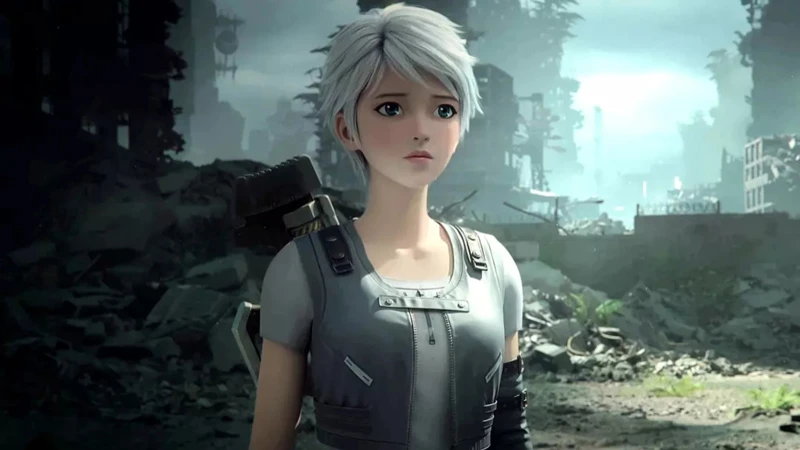
What will the new chapter reveal? The Mana ecology’s true origin. Bai Yuekui’s forgotten memories. The ultimate fate of human civilization. Season one and two planted dozens of mysteries. Now, the show promises to pay them off. To achieve this, the studio invested 325 million yuan into technology. It partnered with the Institute of Automation at the Chinese Academy of Sciences to apply light-tracing 2.0. A consultant group of aerospace engineers and biologists now reviews every scientific detail. Single-episode costs have exceeded ten million yuan.
The feature film takes a different but equally ambitious path. It will be produced at IMAX-grade standards, enhancing the signature wasteland aesthetic with even larger battles against the She Ji Shou. The plot may fill in the old world’s truth before the disaster, or it might dive deeper into Mark and Bai Yuekui’s backstories. Either way, it promises a cinematic experience distinct from the series. Within days of the announcement, the film won the “Most Anticipated Animated Movie of the Year” award. The market has already voted.