
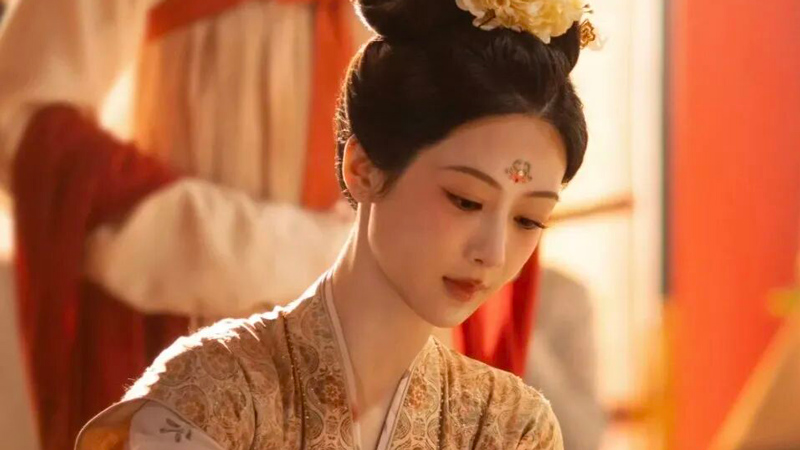
Can a 1,300-Year-Old "Peach Blossom Makeup" Still Make You the Center of Attention This Spring? Forget the predictable rosy glow. The most captivating beauty trend this season isn’t born from a modern marketing campaign, but unearthed from the lavish courts of the Tang Dynasty. It’s a look that speaks of prosperity, cultural openness, and a bold, unapologetic femininity.
More than just paint on a face, the "Peach Blossom Makeup" was a statement of an era where women, draped in silks and crowned with towering coiffures, celebrated their presence with artistry. This guide won’t just show you how to replicate a historical look; it will reveal how to channel its confident, radiant spirit using techniques both ancient and wonderfully simple. Prepare to step out of winter’s shadow and into a legacy of beauty that feels as fresh as the first bloom of spring.
The Golden Age of Glamour
To understand the allure of this look, we must first visit the bustling streets of Chang’an (长安), the capital of the Tang Dynasty. This was a period of unprecedented prosperity and international exchange, a melting pot where ideas and aesthetics from Persia, India, and Central Asia flowed freely. This openness profoundly influenced the ideals of beauty. Unlike the reserved elegance of previous dynasties, the Tang celebrated boldness.
Women adorned themselves with plump, rounded figures symbolizing health and wealth, their hair styled into intricate, sky-high structures held by golden pins. They draped themselves in sheer, flowing shawls that moved like clouds. It was an era that gave women permission to take up space, to be seen, and to use their appearance as a canvas for self-expression, making it the perfect historical backdrop for a look as vibrant as the Peach Blossom.
Defining the Bloom
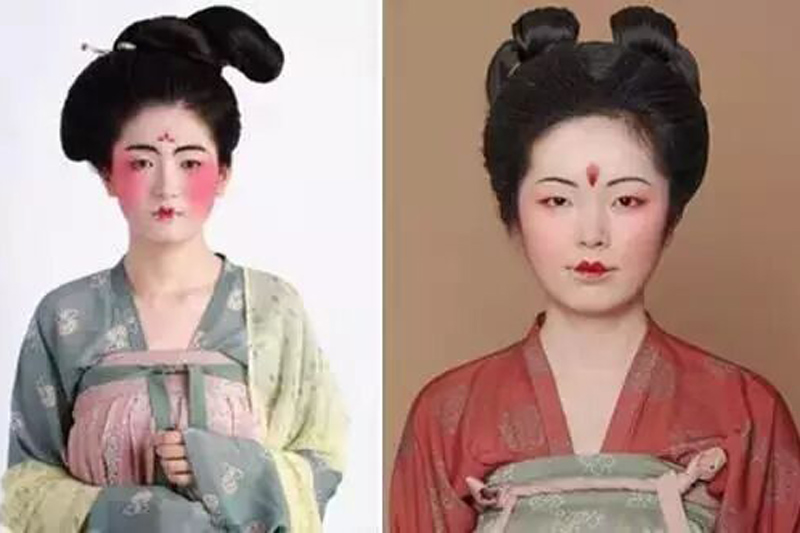
The term "Peach Blossom Makeup" was one of three distinct styles, differentiated solely by the intensity of the rouge. According to the ancient text Zhuang Tai Ji (妆台记), the technique began with a powdered base. Then, rouge was mixed in the palm and applied to the cheeks. If it was thick and rich, it was called "Drunken Blush." If it was lighter, evoking the soft pink of a peach petal, it earned its poetic name. A third variation, "Rosy Cloud," was the subtlest, with a thin layer of color delicately veiled by a dusting of finishing powder. This nuance shows that even within a single trend, there was room for personal interpretation—from the dramatic to the demure.
The Seven-Step Symphony
A poet of the era, Yuan Zhen (元稹), captured the intricate ritual in his verses, describing a process that was nothing short of a ceremonial art. The full traditional method involved seven meticulous steps: first, a foundation of lead powder for a porcelain base; then, the application of rouge; next, the painting of moth-like eyebrows; followed by yellow forehead stains or decorative Hua Dian (花钿) appliqués; then, dimples painted on the cheeks; next, a red smear at the temples known as "slanting red"; and finally, the staining of the lips.
While this historical sequence is fascinating, its complexity could deter the modern enthusiast. Fortunately, the core principles of luminosity and strategic color placement have been distilled into a far more accessible routine, proving that ancient wisdom can indeed meet contemporary convenience.
The Modern Four-Step Ritual
This simplified version captures the essence of the Tang aesthetic using just four steps: base, brows, blush, and lips. It mirrors the ease of a modern minimalist routine, yet the result is strikingly transformative.
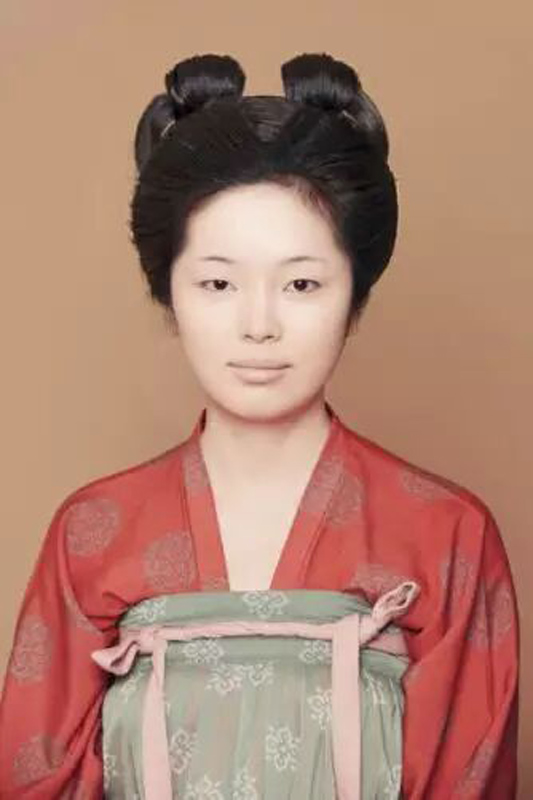
Begin with the base, but focus on achieving a translucent, lit-from-within glow. Mix a pearlescent primer with your foundation and use the warmth of your fingers to press it into the skin—this "stippling" method ensures a seamless, second-skin finish.
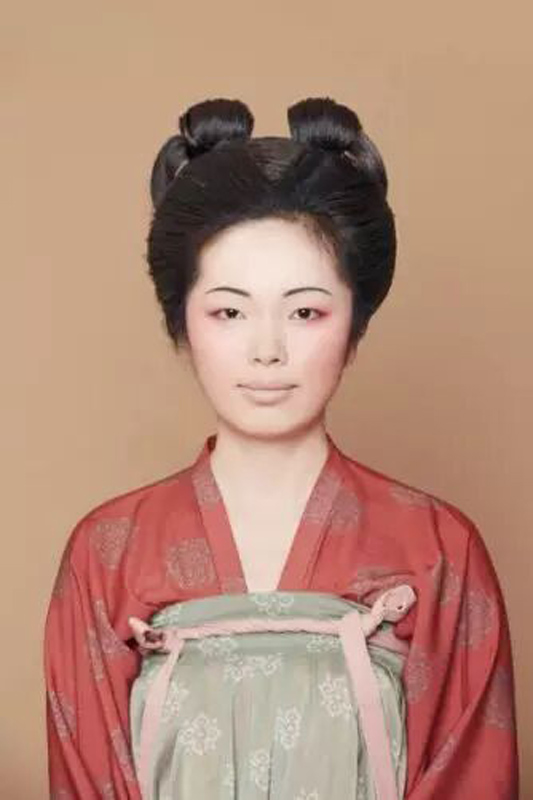
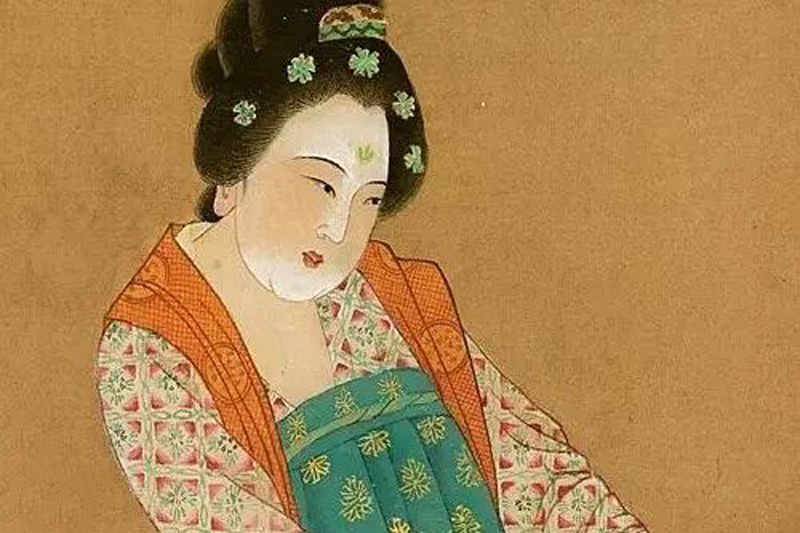
Next, the brows. In the Tang court, brows were paramount. For this look, recreate the "Crescent Moon" brow, a slender, curved shape that softens the face. You can see this style depicted on the court ladies in Yan Liben’s (阎立本) famous scroll, Emperor Taizong Receiving the Tibetan Envoy.
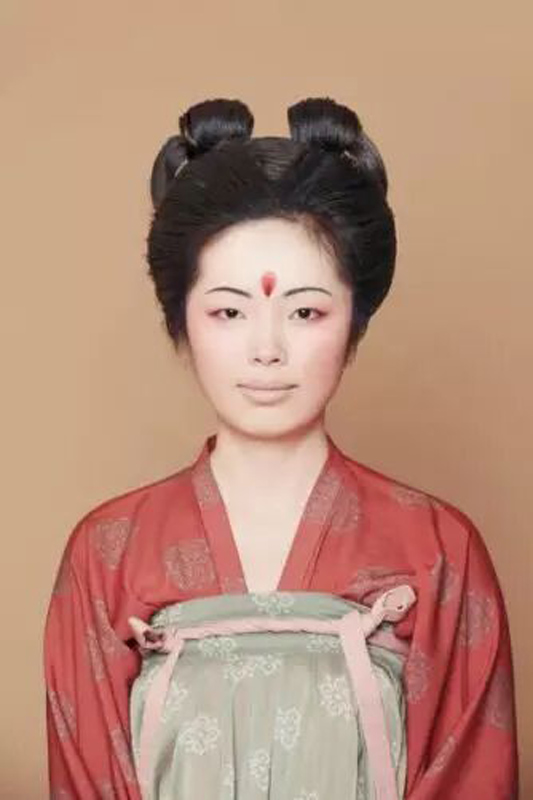
Now, for the heart of the look: the blush. Use a pure, true peach tone and apply it generously. Start just below the lower lash line and sweep it upwards and outwards towards the temples. The area should be large—it’s this expansive placement that creates the lifted, radiant effect.
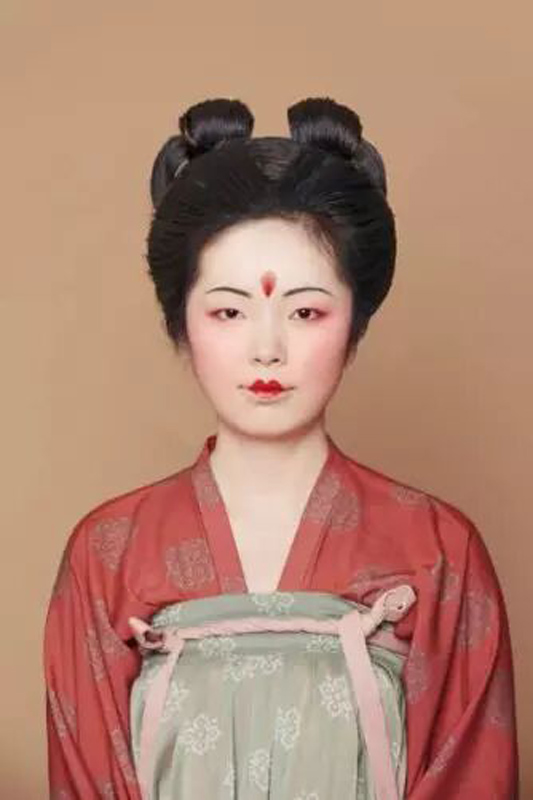
Finally, for the lips, a key departure from modern habits. After your foundation, powder the lips to neutralize their natural color. Then, with a peach or soft red, paint a new lip shape that is slightly smaller than your natural lip line, creating the illusion of a delicate "cherry mouth." This technique, once a standard of beauty, creates a focal point that is both refined and historically resonant.
For a modern touch, you can add false lashes for emphasis or skip the forehead Hua Dian, though a small decorative sticker can be a playful nod to tradition. The result isn’t a costume, but a conversation—a modern woman speaking the timeless language of confidence and beauty.
