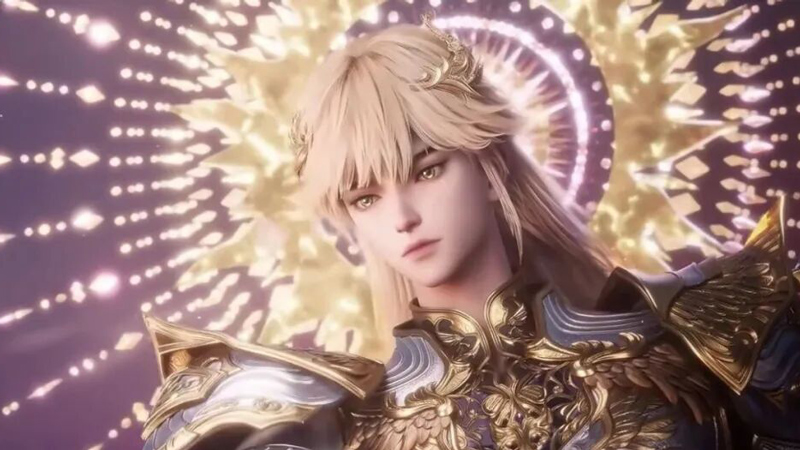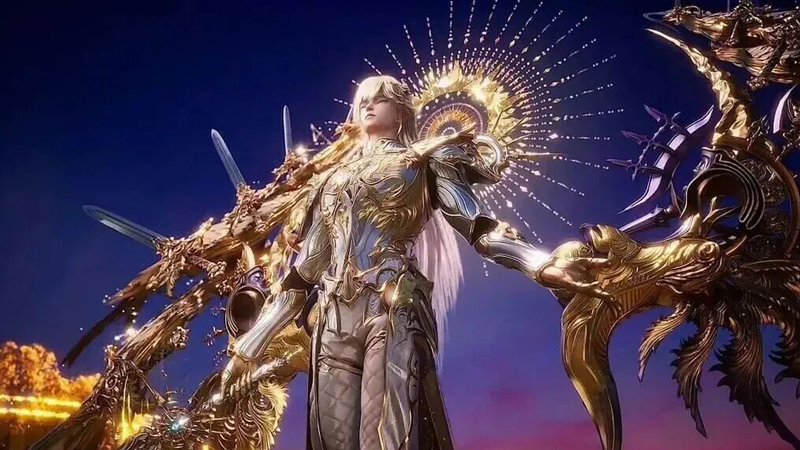
In the vast cosmology of Throne of Seal (神印王座), the path to divinity is a narrow, unforgiving road. For the knight Long Haochen (龙皓晨), the final test—igniting five divine sparks—was meant to be his apotheosis. Yet, at the precipice of godhood, a cataclysmic force intervened. This is not merely a story of a hero claiming a preordained throne. It is a tale of shattering destiny, where failure becomes the only true path to power and a man, denied a god's seat, is forced to build his own.
The Divine Interruption
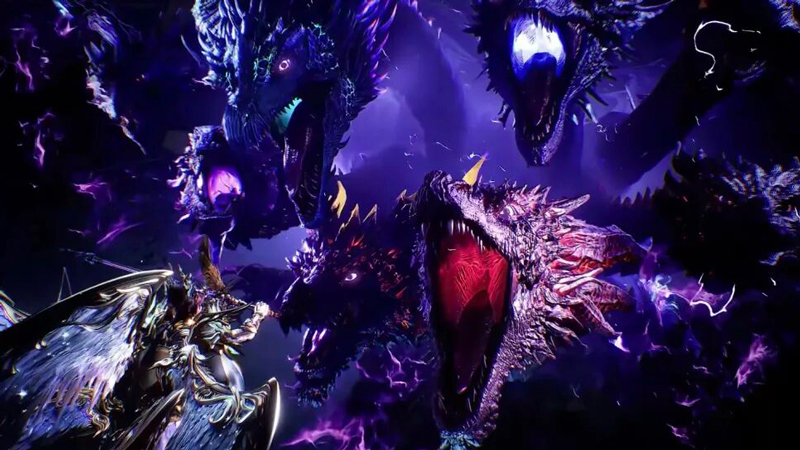
As Long Haochen reached for the fifth and final spark within the new world’s gateway, the atmosphere shattered. Tianqian (天谴), the God of Heaven’s Punishment, descended. His purpose was absolute: to seize the nascent divinity for himself. Long Haochen understood the stakes. Tianqian’s return meant the world’s utter annihilation. A battle of impossible scale erupted. Despite his immense power, enhanced by the combined might of four goddesses from the Divine Hall, Long Haochen was outmatched.
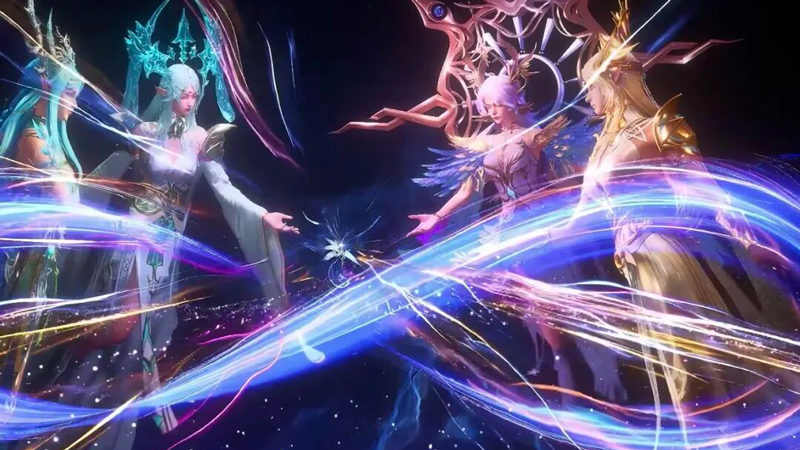
The truth was far more dire. Tianqian, born as the twin to the Creator God, was a being of a higher order, his original form fragmented and sealed across the land. The nascent godhood Long Haochen cultivated was the key to mending that broken form and breaking the ancient seals. This was not a simple trial but a cosmic trap. The power gap was fundamental, a chasm no amount of borrowed divine energy could bridge. The four goddesses’ strength, poured into the young knight, simply evaporated against Tianqian’s overwhelming presence.
Faced with certain defeat and a terrifying future, Long Haochen made a choice no god foresaw. If he could not possess the spark, neither would the destroyer. With a act of ultimate defiance, he extinguished the divine flame himself. The ceremony collapsed. The path to inherited divinity closed forever. In that silent, sparkless void, Long Haochen had lost everything—and, paradoxically, found his only true chance.
A Companion’s Sacrifice
Before that desperate act, another ally entered the fray. Haoyue (皓月), Long Haochen’s formidable multi-headed companion, surged forward with terrifying might. Yet this intervention was its gravest mistake. Tianqian was the power source for Haoyue’s ninth, yet-unawakened head. Their connection was not of alliance but of origin and domination. Tianqian effortlessly suppressed Haoyue, twisting their bond into a weapon and forcing the beast to turn against its master.
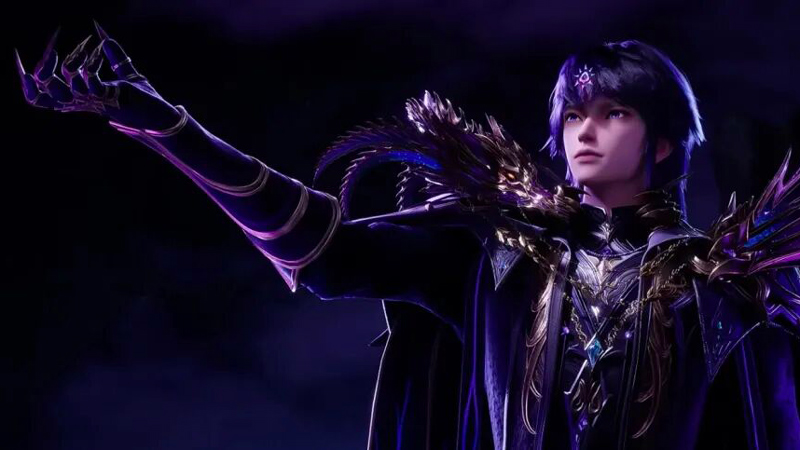
Long Haochen, aware of their linked origins from the Creator God’s lore, did not fight his friend. Instead, he expended his remaining energy not in attack, but in protection. He shielded Haoyue from the full brunt of Tianqian’s corrosive control, preventing total annihilation. This moment of protection amidst betrayal highlighted his core nature not as a claimant to power, but as a guardian. It cemented the rationale for his next, staggering decision.
The extinguishing of the spark was, therefore, a dual salvation. It halted Tianqian’s immediate triumph and freed Haoyue from his dominion. As the gathered gods mourned the lost potential, Long Haochen, kneeling in the ashes of his destiny, asked a question that echoed through the Divine Hall: “How was the world’s *first* spark born?” The query was heresy and hope combined, shifting the paradigm from inheritance to origin.
Forging a New Dawn
Exiled from the prewritten scripture of godhood, Long Haochen embarked on a quest of unprecedented scale. His goal was not to find another existing spark, but to trace creation itself back to its source. He sought the primordial origin of divine fire. Millennia passed. The determined young knight’s form weathered into that of a weathered, relentless seeker. He traversed forgotten ruins and silent stars, his hope a faint but unyielding ember against the dark.
His perseverance was finally rewarded. He discovered not a relic, but a genesis—the primal embryo of cosmic light. Igniting it required not a ritual, but an act of will that mirrored the Creator’s own. From this, he did not inherit a title; he forged a new one. Long Haochen became the God of Light and Hope, a deity born from resolve, not rite. His ascension was marked by a magnificent transformation.
His new divine raiment was a spectacle of radiant power. Gleaming golden armor, vast wings of light, and a mighty knight’s sword announced his new stature. The design held personal significance: one wing shimmered with strands of brilliant purple, a visual echo of his deep bond with Sheng Cai’er (圣采儿). Though some celestial onlookers might have pondered the styling of his hair, it was a trivial note against the grandeur of his achievement. He stood reborn, a self-made god ready to protect his world with a power uniquely, authentically his own.