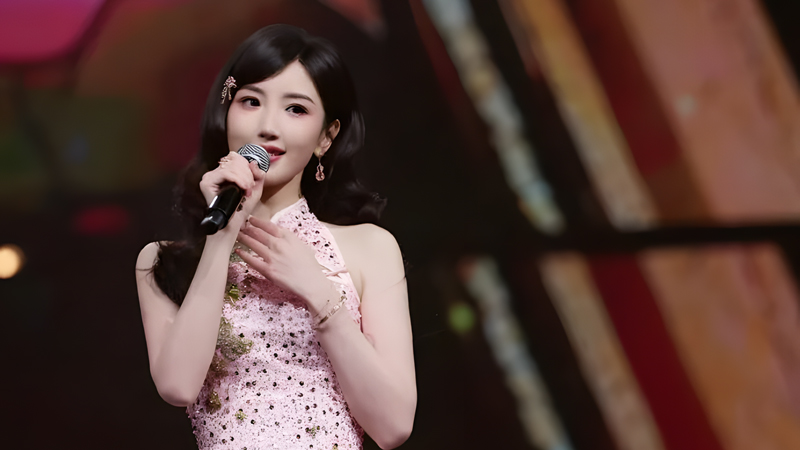
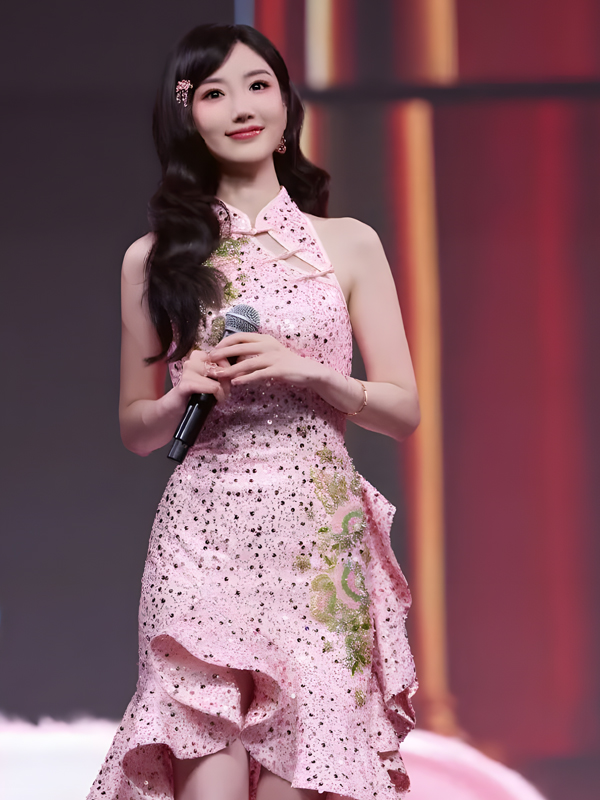
At a recent event, actor Mao Xiaotong (毛晓彤) did not simply walk onto the stage; she arrived as a statement. Her outfit, a blush-pink cheongsam meticulously embroidered with shimmering crystals, instantly captured the spotlight and the imagination of the audience. This was not a costume from a period drama, but a bold, contemporary statement declaring the vibrant future of Chinese aesthetic heritage. It perfectly encapsulated the "Sweet-Spicy" trend—a style that blends the demure elegance of tradition with the confident flair of modern fashion. In one look, she demonstrated how historical garments can converse with the present, offering a template that is both respectful of the past and thrillingly new.
Deconstructing the Dream
The genius of the gown lies in its detailed dialogue between old and new. The foundational language of the cheongsam is present and correct: the elegant mandarin collar, the classic side fastening, and the body-skimming silhouette that celebrates feminine form. The fabric itself is a masterstroke. The soft pink hue evokes youthful sweetness, while the myriad of hand-sewn crystals transforms it into a celestial map, catching light with every movement. A subtle flash of gold-and-green embroidery at the side adds a regal touch, a nod to intricate traditional craftsmanship.
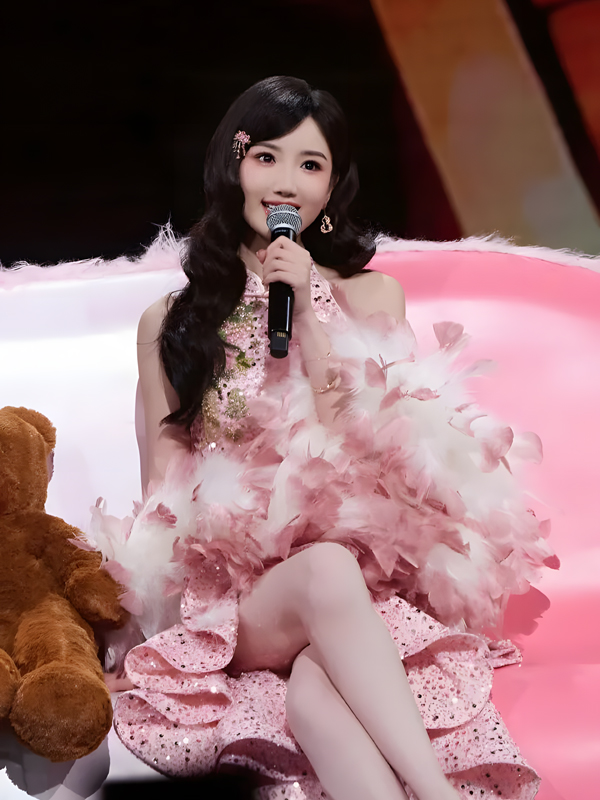
Yet, the conversation truly sparks with its modern interventions. The daring off-shoulder cut liberates the neckline from tradition, introducing a sense of openness and contemporary confidence. The hemline tells its own story, where structured history meets playful modernity through cascading, irregular ruffles. This detail adds motion and a soft, almost ethereal quality, breaking the formal symmetry typically associated with the cheongsam. The length is thoughtfully calibrated—respectful yet decidedly current.
Mao’s styling choices completed the narrative. Soft, flowing waves replaced a severe updo, and delicate diamond hair accessories echoed the dress’s sparkle. Her overall demeanor—poised, smiling, radiant—channeled the essence of a modern-day "beloved daughter" from an affluent family: cherished, graceful, and utterly self-assured. Every element conspired to create a look that was cohesive, intentional, and deeply impactful.
More Than a Dress: A Cultural Moment
The public reaction was swift and enthusiastic. Fans flooded social media, calling her a "modern-day portrait of elegant sweetness" and praising the perfect balance of vitality and sophistication. Fashion commentators were quick to label the look a "textbook example" of the burgeoning New Chinese Style, a trend resonating powerfully with younger generations who seek identity in their cultural roots without sacrificing global fashion sensibilities. Some even hailed it as a seminal case study in successful sartorial reinvention.
This moment is part of a larger cultural awakening. The rise of "Guochao (国潮)" or "China Chic," has spurred designers to re-examine traditional motifs, textiles, and silhouettes. The cheongsam itself has a history of evolution, from its loose origins in the late Qing Dynasty to the form-fitting Qipao of 1930s Shanghai. Mao Xiaotong’s choice is a conscious participation in this ongoing story—a way to honor lineage while asserting a contemporary identity.
While many celebrities have experimented with modernized Chinese attire, few have achieved the seamless, natural fusion that Mao displayed. Her transformation from a ingenue to a style icon mirrors the garment’s own journey: both have retained their core charm while fearlessly embracing new possibilities. This look transcends mere fashion; it is a wearable philosophy about carrying one’s heritage forward with pride and panache.
The New Language of Elegance
Ultimately, Mao Xiaotong’s pink diamond cheongsam is more than a stunning red-carpet moment. It is a compelling argument for the relevance and adaptability of cultural symbols. It proves that tradition need not be stiff nor nostalgia-bound; it can be sweet, spicy, playful, and profoundly elegant all at once. The look speaks to a generation confidently crafting its own aesthetic language, one where a crystal’s sparkle on silk can illuminate a path from the past directly into the future.
This sartorial success story signals a shift in how Chinese fashion is perceived globally—no longer as exotic costume, but as a dynamic and sophisticated contributor to the world’s style lexicon. It challenges designers and wearers alike to engage with history not through replication, but through reinvention. The goal is not to wear a museum piece, but to wear a living, breathing piece of culture that moves with the times.
As the lights dimmed on the event, the image of that glittering pink silhouette remained. It served as a powerful reminder that the most memorable fashion statements are those that tell a story—of where we come from, who we are now, and the beautiful, sparkling potential of what we can become. Mao Xiaotong, in that single outfit, wore all three.