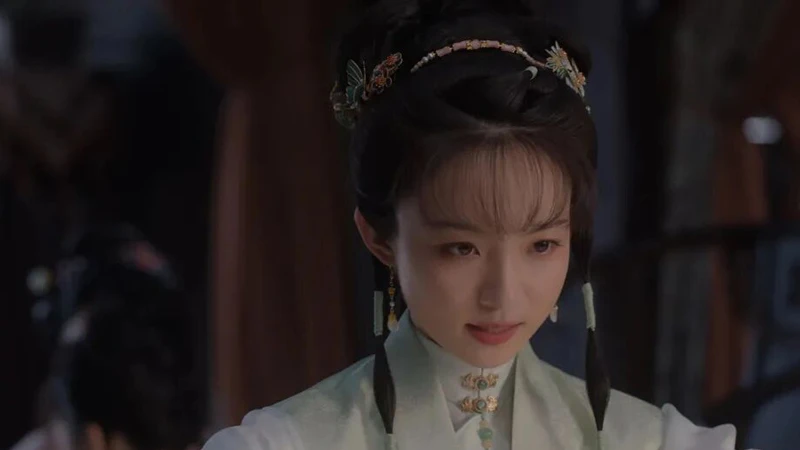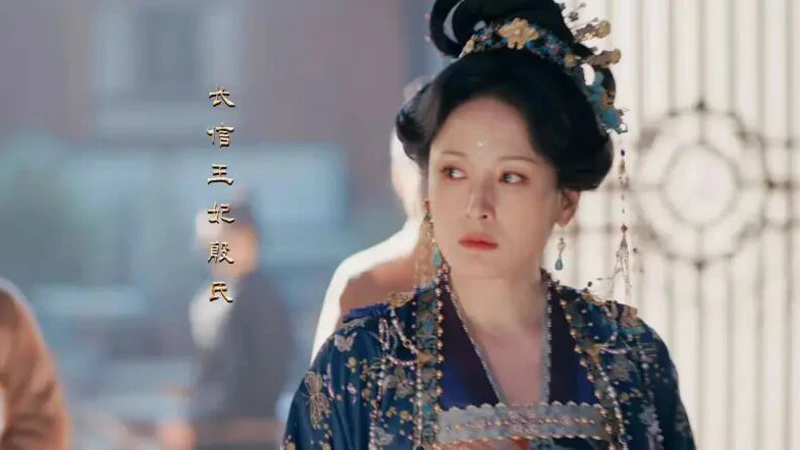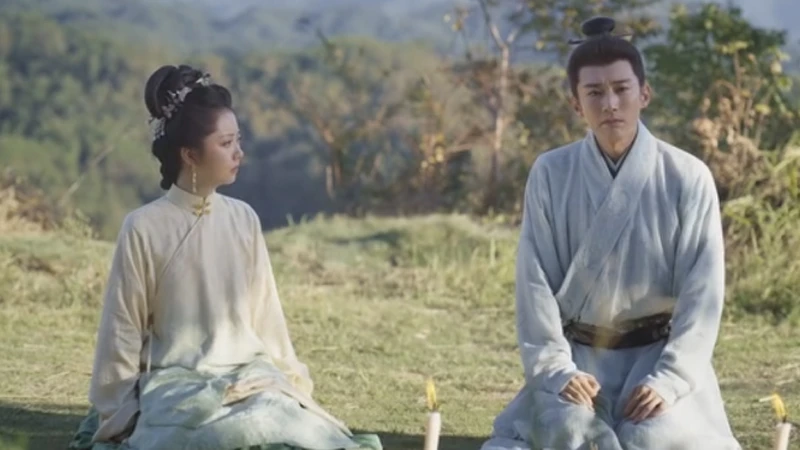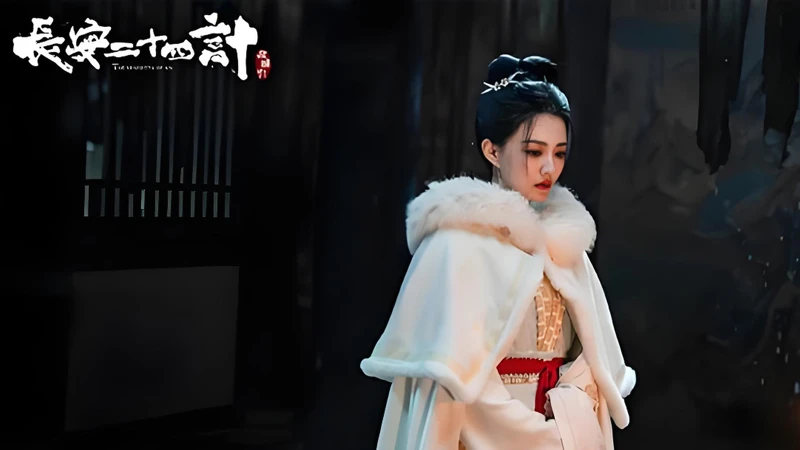
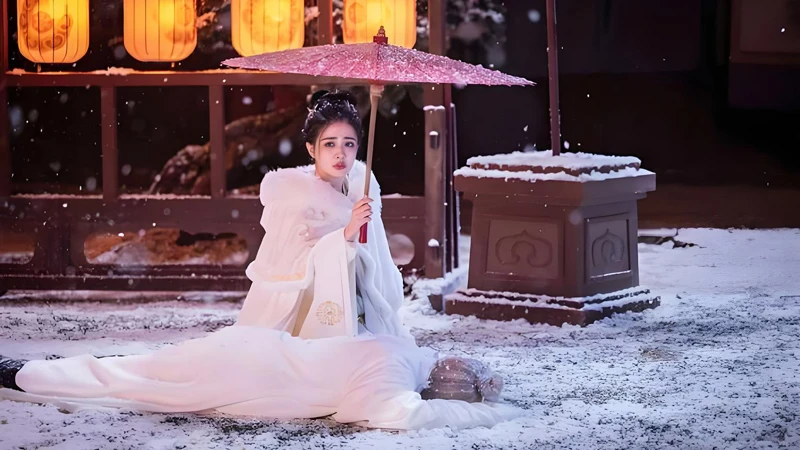
In a haunting climax beneath a rainy sky, a blade meant for a traitor pierces instead the heart of an innocent. This is the devastating moment Xie Huai’an’s (谢淮安) fifteen-year quest for vengeance collapses, revealing itself as the ultimate trap. His sister, Bai Wan (白莞), falls before him, a victim of his own hand and a design more cunning than he ever imagined.
The man he sought to destroy, Yan Fengshan (言凤山), watches from the shadows—not as the architect of this tragedy, but as another piece on a larger, darker board. This pivotal scene from the drama The Vendetta of An (长安二十四计) shatters the simple narrative of revenge, pulling viewers into a complex labyrinth where every motive is suspect and every ally a potential enemy.
The Puppet Master
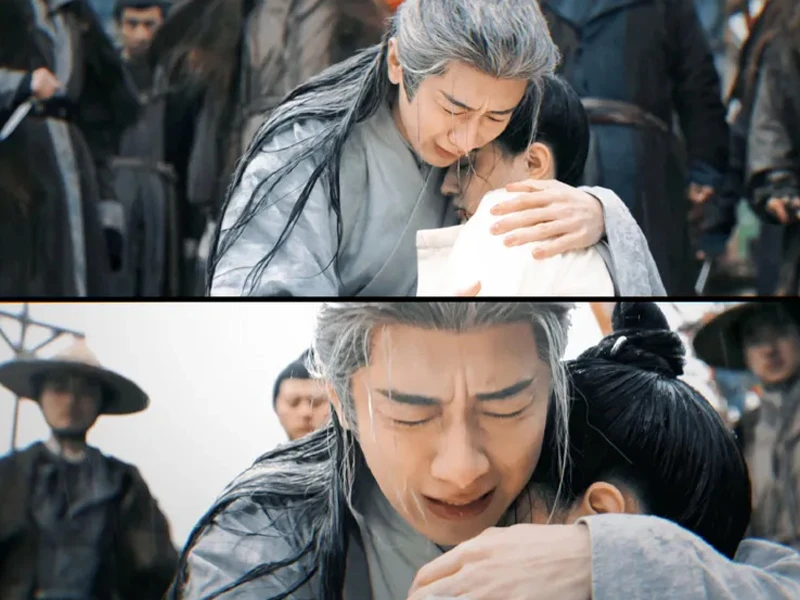
Xie Huai’an believed his path was clear: find Yan Fengshan and make him pay for the annihilation of his family. Each step, from gathering allies to eliminating Yan’s associates like Pu Nichuan (蒲逆川) and the figure known only as Qingyi (青衣), felt like righteous progress. He moved with the certainty of a man wronged, dismantling his enemy’s power piece by piece. His white hair, a symbol of the years consumed by this mission, marked him as a figure of singular purpose in the bustling capital of Chang’an.
Unseen, however, was the string guiding his movements. The true architect was Wu Zhongheng (吴仲衡), a seemingly feeble old prisoner held in the Yulong Ridge jail. For twenty-five years, he had woven a web of conspiracy across the empire. Xie Huai’an’s burning hatred was not an obstacle to his plans; it was the essential component. Every enemy Xie removed was a rival to Wu’s own authority. The revenge was a tool, meticulously sharpened and aimed by another.
The tragedy at Chenjiagu (陈家谷) Pass years before was the genesis. There, Yan Fengshan witnessed horrors that broke his spirit, leaving him vulnerable to Wu Zhongheng’s poisonous lies about betrayal and a massive invading force. The massacre of the Xie family was not an end, but a deliberate beginning. Sparing the two children guaranteed a future avenger, a perfect weapon to be unleashed at the right moment. Xie Huai’an’s entire life became a calculated move in someone else’s game.
A Foundation of Sand
The killing of Bai Wan was the cruelest twist, a masterstroke of psychological manipulation. It transformed Xie Huai’an’s grief into an uncontrollable fury, perfectly directed at Yan Fengshan. This event was no accident; it was a designed catalyst. The “enemy” he struck was a disguise, forcing him to confront the horrifying possibility that his rage was making him a monster. His moral compass, already bent by years of obsession, began to spin wildly.

The final blow came not from a sword, but from words. As the nobleman Liu Ziyan lay dying, his last cry—”You should not bear the name Liu!”—shattered Xie Huai’an’s world. The family he sought to avenge was not his own. The blood feud that defined him was based on a fundamental falsehood. He had been fighting for an identity that was never real, his vengeance a performance written by Wu Zhongheng. Each layer of truth he peeled away was more corrosive than the last.
This revelation reframed everything. His actions were not those of a wronged hero, but of a manipulated pawn. The people he had killed, the alliances he had broken, all served a foreign spy’s plot to destabilize the heart of the empire. His personal war was, in fact, a act of national betrayal he never intended. The weight of this truth was more crushing than any physical defeat.
An Empty Throne
The climax in the granary presented a stark choice. With Wu Zhongheng’s true plot revealed and an external threat looming, the two lifelong enemies, Xie Huai’an and Yan Fengshan, found a grim common ground. Yan’s roar of “The nation is not for sale!” cut through the personal hatred. In that moment, the private vendetta was swallowed by a desperate, shared duty to protect something larger than themselves. They turned together against the common manipulator.
This unity was Wu Zhongheng’s fatal miscalculation. He understood greed, fear, and hatred perfectly. He could orchestrate those emotions to make men dance. What he failed to account for was the stubborn flicker of loyalty and collective honor that could emerge in a true crisis. His pawns broke their programmed roles, and the master of the board suddenly found himself cornered by his own pieces. His intricate game collapsed from within.
In the end, Xie Huai’an achieves a form of victory. He survives. He even ascends to the position of Chancellor in a rebuilt Chang’an. Yet, sitting atop the city walls, his white hair blowing in the wind, he embodies only a profound emptiness. He has lost his family, his purpose, and the very narrative of his life. Yan Fengshan is dead, Wu Zhongheng’s scheme is foiled, but there are no winners. The Vendetta of An ultimately asks a unsettling question: if our deepest passions and defining grudges can be implanted and orchestrated by others, how much of our own story do we truly own?