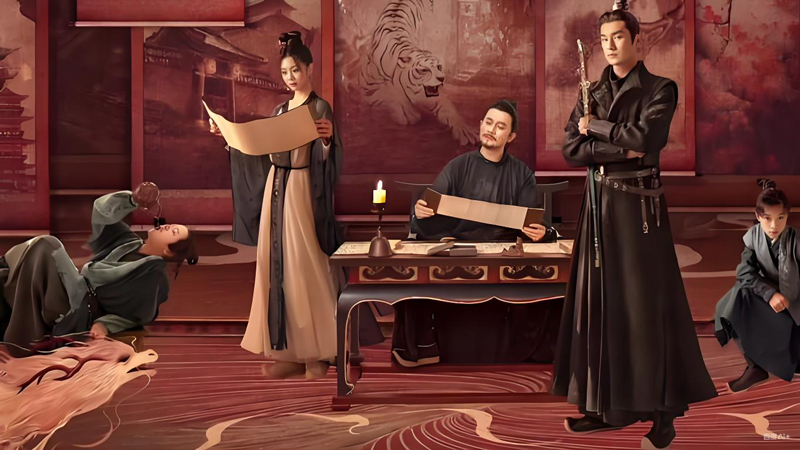
The third season of Strange Tales of Tang Dynasty Ⅲ: Chang'an (唐朝诡事录之长安) has arrived, and its return feels less like a simple premiere and more like a cultural event. Against a landscape where franchise fatigue is common, this series demonstrates how to evolve without losing its core identity. From its very first moments, the new installment,re-establishes its grip on the audience with a confidence that is both rare and exhilarating.
A Narrative That Captures Imagination
The plot wastes no time, immediately pulling viewers back into its meticulously constructed world of mystery and imperial intrigue. The storytelling is taut, with each of the initial eight episodes layering clues and character motivations that interlock with precision. It is this narrative craftsmanship, the ability to balance complex plotting with human drama, that forms the foundation of its success. The audience is not merely watching; they are actively piecing together the puzzle alongside the investigators.
The Currency of Connection
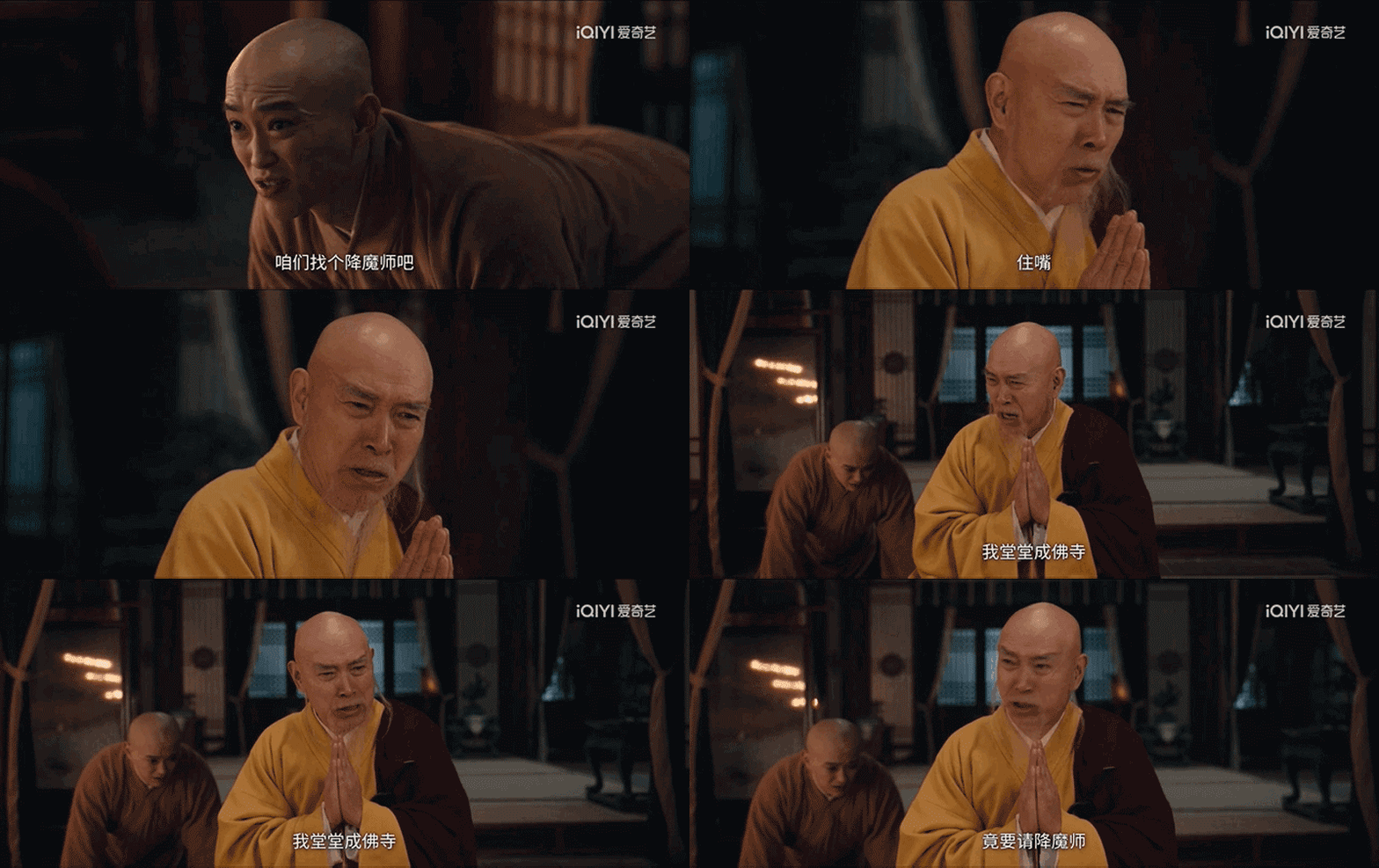
Beyond the screen, the show has cultivated a uniquely vibrant community. Fans, who call themselves "Guyou" (诡友), engage with the content through a shared language of inside jokes and playful speculation. When characters like the three constables from Chang'an County appear, they are instantly christened with humorous nicknames by the barrage of bullet comments. A particular monk, Guangxiao Fashi (广笑法师), finds himself perpetually cast as the prime suspect in the court of public opinion, his image playfully tarnished by an endless stream of fan theories. This interactive dynamic has become a social currency, binding the community together and extending the show's influence far beyond typical entertainment boundaries.

1. Golden Peach & Tang Court Intrigues
Strange Tales of Tang Dynasty Ⅲ: Chang'an returns with a fresh season that delves into the shadowy corners of ancient China's most illustrious era. This series masterfully combines historical settings with elements of the supernatural, creating a gripping narrative that appeals to a broad audience. The story resumes with Lu Lingfeng (卢凌风) arriving back in the capital under orders, a strategic move that bridges past events and new developments. This approach allows both new viewers and dedicated fans to quickly grasp the context, setting the stage for the intricate mysteries to come. The first case, involving a mysterious golden peach, immediately draws viewers into a world where nothing is as it seems, blending courtly intrigue with mythical legends in a way that feels both familiar and innovative.
Golden Peach
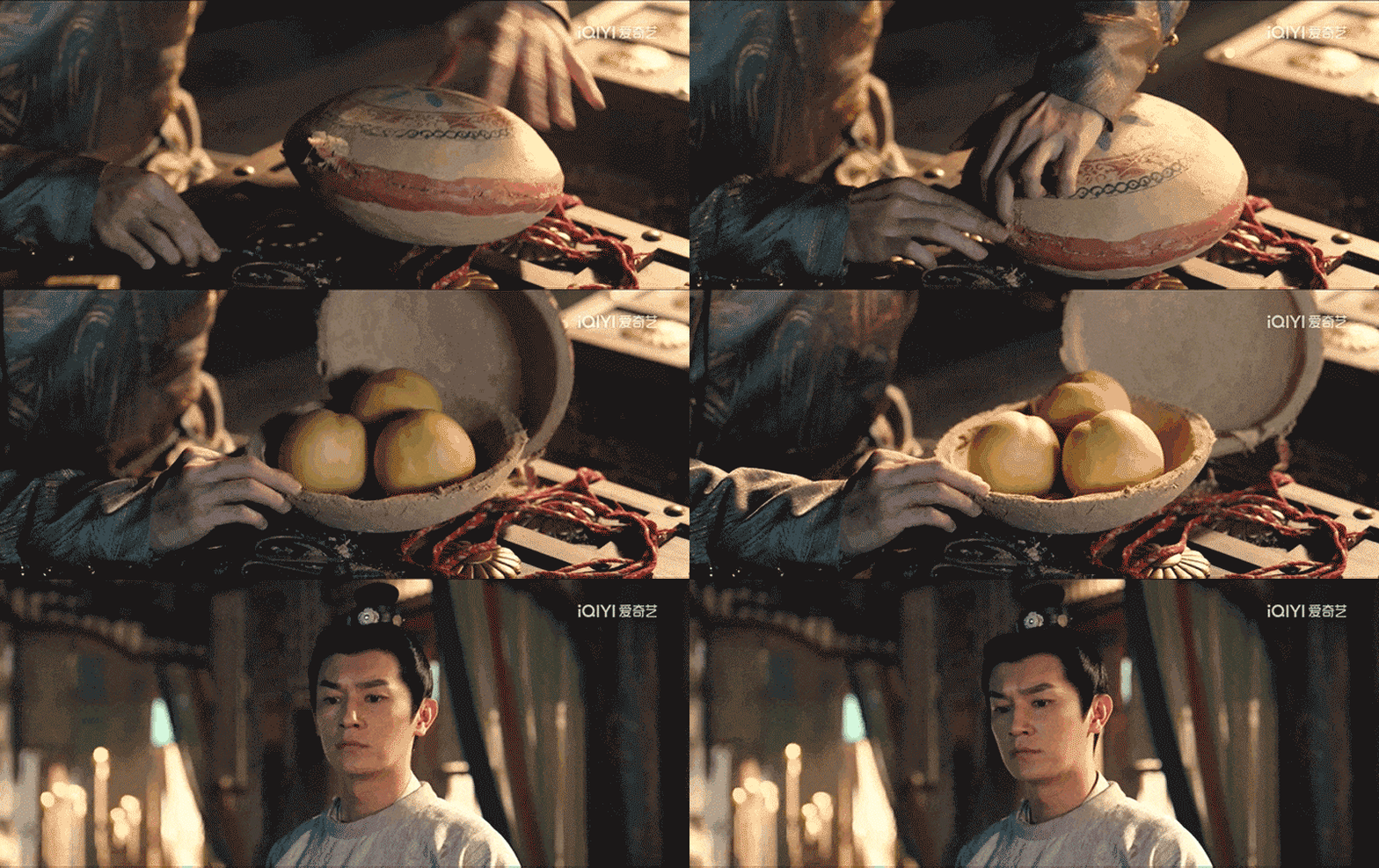
The case of the Golden Peach from Kang Country begins with a series of bizarre attacks. Those who consume the fruit are targeted by a legendary creature known as the Wu Yan Niao (乌焰鸟), a bird said to inhabit the boundaries between yin and yang. Lu Lingfeng, who was escorting the peach, finds himself at the center of the investigation. With assistance from Su Wuming (苏无名), an expert in ancient texts, they identify the bird and uncover clues that point to a deeper conspiracy. During a confrontation, Lu Lingfeng spots an impostor bird with the face of Liu Shiqi (刘十七), a post station worker believed to be dead, adding a layer of mystery to the already complex case.

Further inquiry reveals that Liu Shiqi's head was sold to a shadowy figure called Bai Bian Langjun (百变郎君), and his face was purchased for three gold coins. This twist suggests that the attacks are not solely supernatural but involve human manipulation and identity theft. The investigation leads the team through Chang'an's underworld, where they encounter a network of deception that connects to past events. Each clue unravels part of the puzzle, showing how the surface mystery masks a more calculated scheme designed to exploit fears and superstitions for hidden gains.
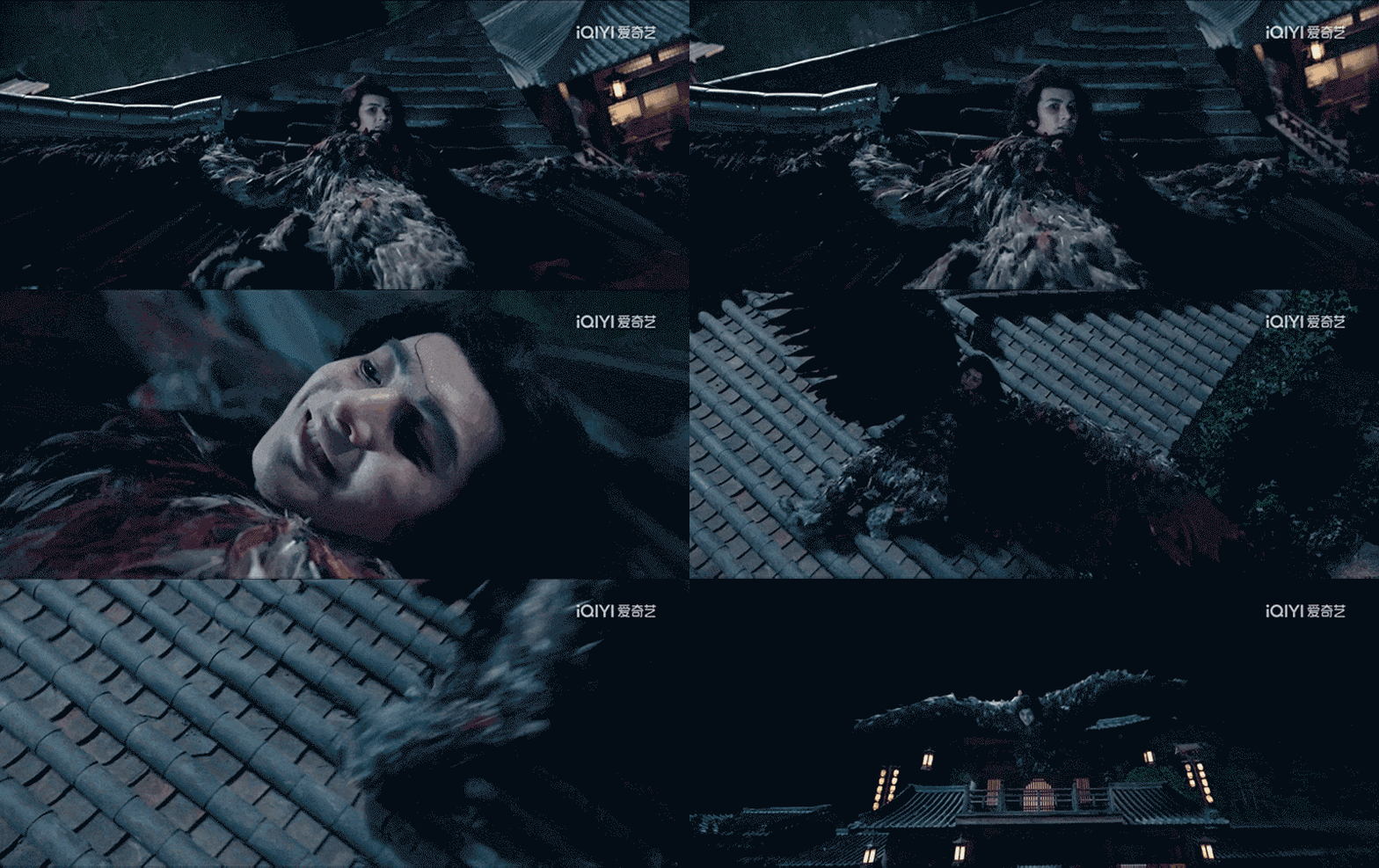
As the team pieces together the evidence, they realize the case is not just about the bird attacks but about how past injustices resurface in new forms. The involvement of Liu Shiqi's likeness hints at unresolved conflicts from previous seasons, creating a sense of continuity that enriches the narrative. This aspect of the story emphasizes the theme of redemption and the long shadows cast by history, making the resolution feel earned and meaningful. The case concludes with a dramatic reveal that ties up loose ends while leaving room for future developments, showcasing the series' ability to balance closure with anticipation.
Hidden Schemes
Beneath the surface of the Golden Peach case lies a web of political manipulation centered on the imperial court. Amoro Prince Liena (阿摩罗王子列那), who endured harsh treatment under Wei Shuren (韦庶人), initially trained the Wu Yan Niao for revenge. After returning to Chang'an and discovering Wei Shuren was dead, he abandons his plan, but his desire for justice is exploited by General Li Feng (李凤) and his son-in-law Wu Wenbin (武文斌). These conspirators use the bird attacks to sow discord among the royal family, targeting the crown prince and eldest princess to further their own ambitions for power.
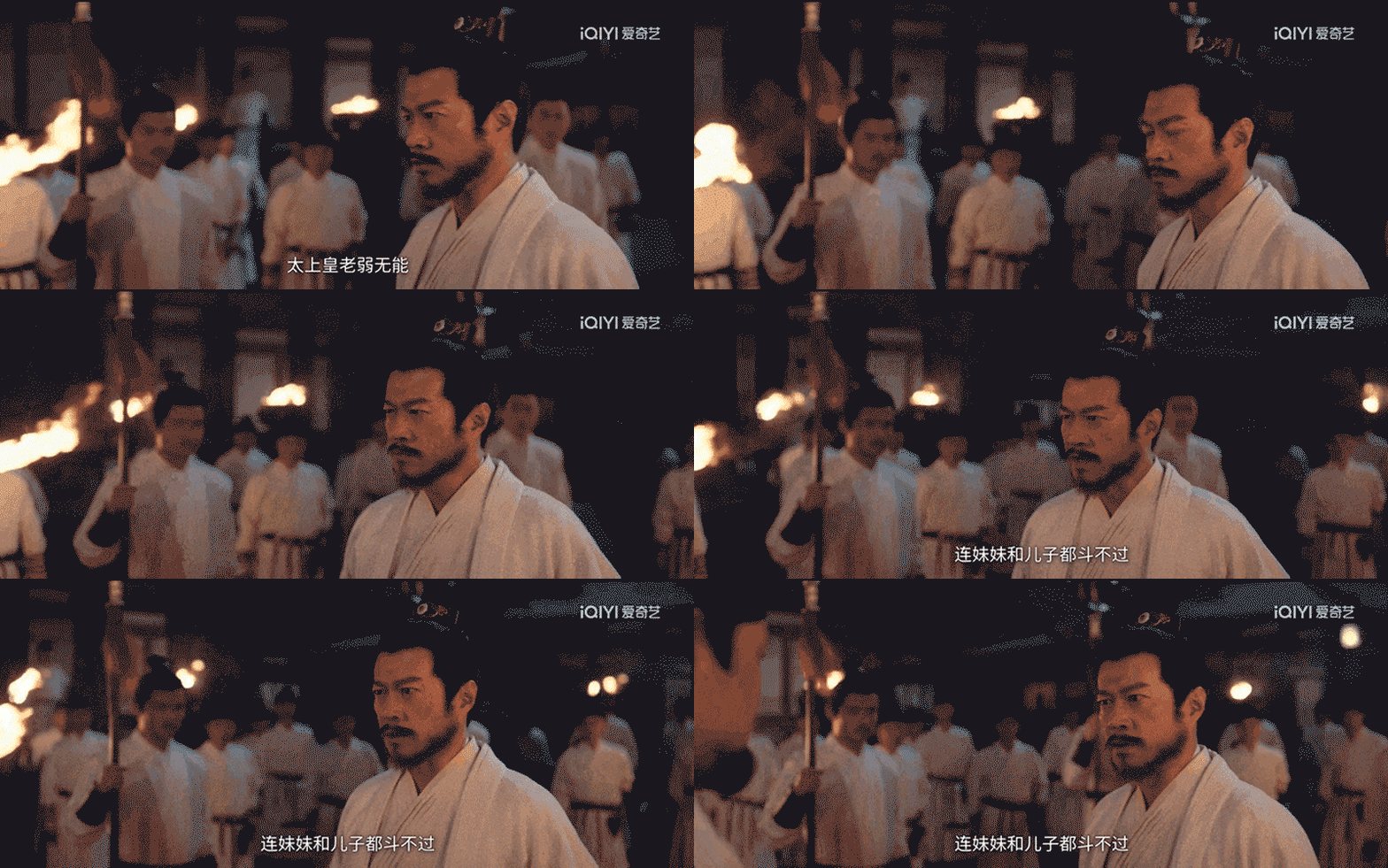
General Li Feng and Wu Wenbin pretend to support the retired emperor while secretly plotting to seize control. By manipulating Liena's motives, they orchestrate events that cause mistrust and conflict within the court, hoping the retired emperor will benefit from the chaos. This subplot highlights how personal vendettas can be twisted into tools for political gain, revealing the darker side of authority where loyalty is often a facade. The hidden schemes demonstrate that the true danger comes not from external threats but from internal greed and ambition.
The exposure of these plots leads to a climax that underscores the fragility of power dynamics in the Tang Dynasty. While the immediate conspirators are unmasked, the aftermath leaves the court grappling with deeper issues of corruption and trust. This resolution reinforces the idea that solving a mystery is only the first step; addressing the underlying causes requires ongoing vigilance. The case serves as a cautionary tale about the consequences of unchecked desire, leaving characters and viewers alike to reflect on the cost of power.
Narrative Craft
This season of the series is noted for its efficient storytelling, condensing complex plots into a few episodes without losing depth. For example, the Golden Peach case, which might span over a dozen episodes in other shows, is wrapped up in just six installments here. This pacing keeps the narrative tight and engaging, ensuring that each scene advances the plot or develops characters. Viewers appreciate how the series avoids filler content, delivering a streamlined experience that maintains suspense from start to finish.
The blend of supernatural elements with historical drama creates a unique tone that sets the series apart. Myths like the Wu Yan Niao are woven into the fabric of Tang Dynasty life, making the fantastical feel grounded in cultural context. This approach not only entertains but also educates audiences about Chinese folklore, adding layers of meaning to the mysteries. The seamless integration of these elements allows the show to explore themes of belief, reality, and the unknown in a way that feels authentic and imaginative.
Character interactions drive the story forward, with figures like Lu Lingfeng and Su Wuming providing a balance of action and intellect. Their partnerships and conflicts reveal human emotions and moral dilemmas that resonate with viewers. The series excels in making even secondary characters memorable, ensuring that every role contributes to the overall narrative. This focus on character development, combined with the rich historical setting, results in a viewing experience that is both immersive and emotionally satisfying, keeping audiences eager for more.

2. Tang’s Guardians of Justice
The lanterns of Yongzhou (雍州) cast long shadows tonight. In the quiet hum of the ancient city, a different kind of official patrols the streets. He carries no heavy sword on his back, only a scroll of petitions and a resolve as firm as tempered steel. This is the new guard, a collective of sharp minds and steadfast hearts who have learned that the most intricate puzzles are not made of locked doors and hidden passages, but of human desires and regrets. They are a familiar group, yet changed by time and trial, their bonds reforged in the fires of past adventures. Their return signals not merely another case to be solved, but a deeper journey into the soul of an era, where every mystery unraveled reveals a thread in the vibrant tapestry of the Great Tang dynasty.
Evolving Bonds
Lu Lingfeng stands as a testament to this change. The once impulsive young man has been carved into a figure of stoic authority, the newly appointed Judicial Commander of Yongzhou. His temper, once a spark to dry tinder, is now a banked fire, controlled and deliberate. In a recent encounter, he demonstrated a newfound political deftness, feigning reverence at a rival's memorial to covertly examine the body and uncover the truth hidden beneath the ceremony. The old Lu would have challenged directly; the new one understands the power of subtlety.
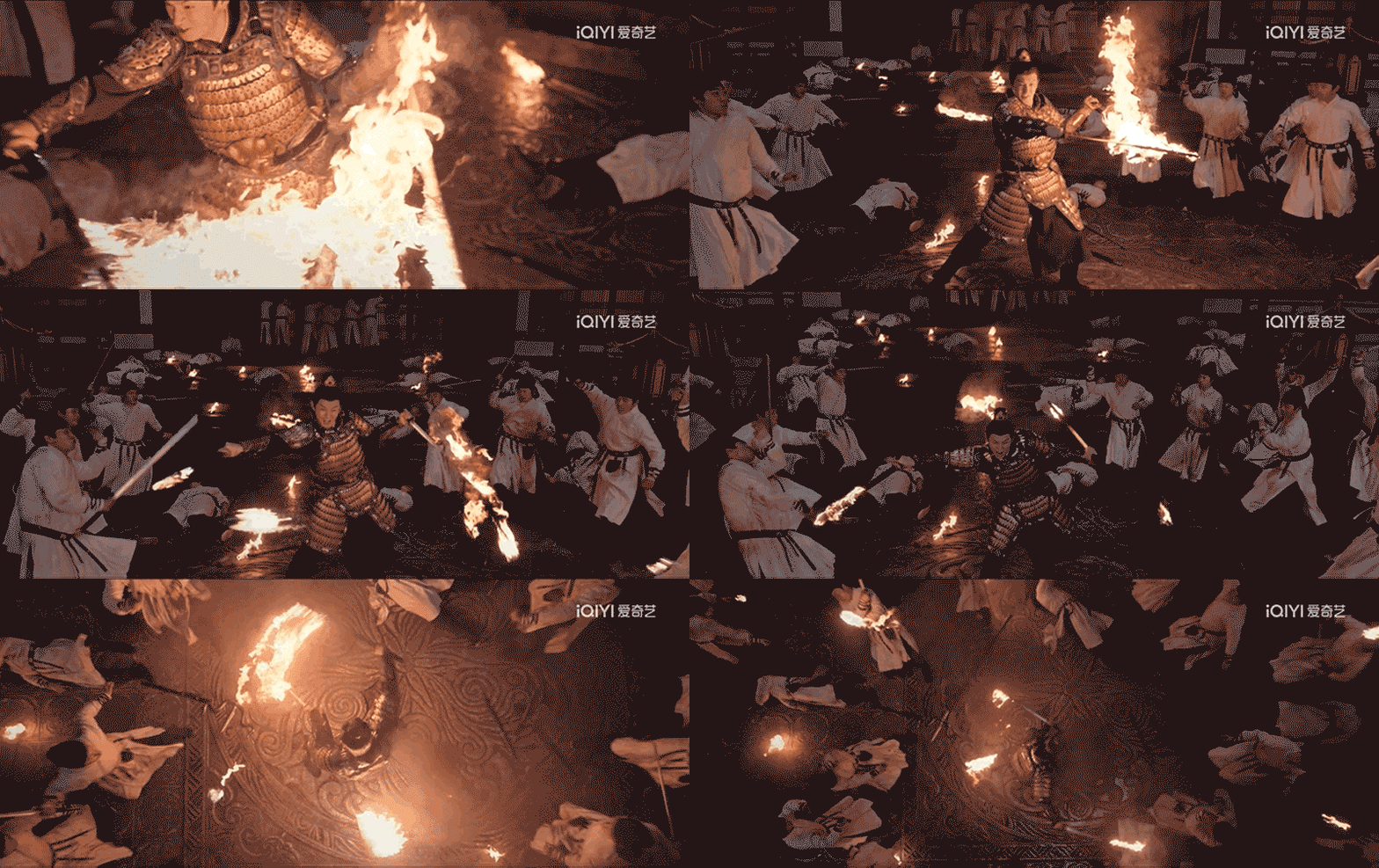
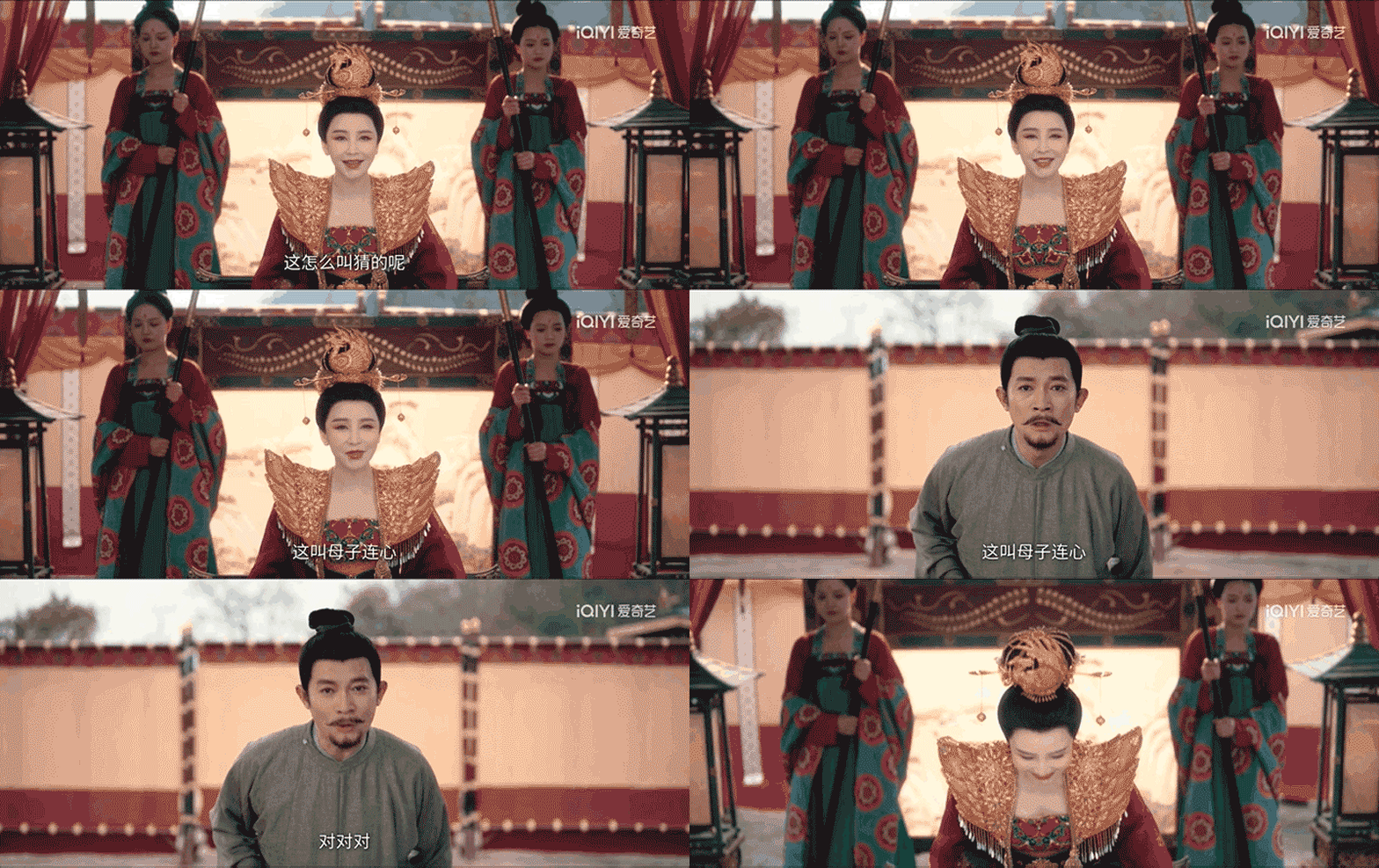
His commitment to justice, however, remains absolute. He has instituted a system of mobile offices, taking the halls of power directly to the city's districts. No matter is too small for his attention, believing that the strength of the empire is built upon the security of its most humble citizen. Yet, the core of his character persists. A certain inherited stubbornness, a trait famously shared by his mother, the Princess, creates a dynamic that is both fractious and deeply loyal. Their interactions are a battle of wills, where filial duty and personal principle clash, often with exasperating and heartfelt results.
Alongside him, Su Wuming remains the master of words, a man who wields language as his primary weapon. As a low-ranking official with modest means, his influence lies in his silver tongue and brilliant mind. He can charm a smile onto the face of the most powerful noble and, in the same day, strategically provoke the emperor himself to achieve a greater good. His role is that of the strategist, the man who moves unseen through the corridors of power, ensuring that the scales of justice, once balanced, are not unfairly tipped by political winds.
Shared Resolve
The team around them has grown in both skill and purpose. Pei Xijun (裴喜君), with her photographic memory and talent for replication, remains their invaluable archivist. Fei Jishi (费鸡师), the group's gourmand, continues to prove that his keen observational skills, often exercised during his culinary pursuits, can turn the tide of an investigation. They are joined by Yingtao (樱桃), formerly an independent operator, now a sworn agent of the Yongzhou government, and the young Xue Huan (薛环), who has matured into a capable officer. Together, they form a complete unit.
This is not a mere collection of individuals but a singular entity, a machine where each cog, no matter how small, is essential to its function. Their trust is implicit, their methods honed by shared experience. When they convene, the air crackles with a unique energy—a blend of focused intellect and unshakeable camaraderie. They are a microcosm of the dynasty they serve: diverse in talent, unified in purpose, and fiercely protective of the peace they have sworn to uphold.
Their strength lies in this very unity. They operate on a foundation of mutual respect and a shared understanding that their work transcends personal glory. It is a silent pact, renewed with every case they take on, to be the guardians of the weak and the voice for those who have been silenced. This collective spirit allows them to face threats that would overwhelm any one of them alone, transforming individual capability into an formidable force for justice.
Humanity in Justice
The show’s brilliance extends beyond the core team, painting compelling portraits in the periphery. Consider the heartbreaking case of the brothers Liu Shijiu (刘十九) and Liu Shiba (刘十八). One, starving himself in a prison cell, consumed by despair; the other, presenting a facade of cold indifference. It was Su Wuming who shattered this grim tableau, his stern rebuke not an accusation, but a plea for life itself. The moment Liu Shiba broke down, repeating through tears that one must live on to truly live, was a profound lesson in hope wrested from the jaws of defeat.
This theme of redemption finds a powerful echo in the return of a familiar face. When the visage of Liu Shiqi transformed, revealing the soul of Crown Prince Amoluo (阿摩罗), it was as if a character had been granted a second chance in a parallel world. The team's farewell to the Prince was not a scene of triumph, but one of profound warmth and reconciliation. It underscored a central tenet of their philosophy: the law is absolute, but its application must be tempered with humanity. Allowing a repentant, fundamentally good person to walk free was a resolution that celebrated the possibility of change.
This nuanced approach to morality is what truly defines their world. It is a space where justice is not blind, but clear-eyed and compassionate. The law provides the structure, but it is human understanding that fills it with meaning. By choosing to see the person behind the crime and the potential for good behind the error, the team embodies a higher form of order. They protect the spirit of the law, not just its letter, ensuring that their victories leave behind not only safety, but also a measure of healing.
Expanding World
The narrative landscape grows richer with each returning face. The eccentric monk Guangxiao (广笑), the poet Leng Ji (冷籍), and the three famed constables of Chang'an all make their reappearances. These are not mere cameos for nostalgic appeal. They are narrative keystones, their pasts and personalities intricately woven into the fabric of new mysteries. Their presence deepens the lore, turning standalone cases into chapters of a grander saga.
This careful interweaving of old and new creates a sense of a living, breathing world. The past is never truly past; it echoes in the present, informing current events and challenging the protagonists in unexpected ways. The return of these characters assures the audience that actions have consequences and relationships evolve, building a continuity that is both rewarding and intellectually satisfying. The world feels persistent and expansive, a stage large enough for countless stories to unfold.
This cohesive vision is the foundation of what can be called the Tang Dynasty Tales universe. It is a world defined by its meticulous internal logic and its richly drawn inhabitants. Every solved case adds a layer, every returning character strengthens the web. For the audience, this creates a deeply immersive experience, offering the joy of recognition alongside the thrill of discovery. It is a world that promises not only to present puzzles but to explore the very heart of a magnificent, bygone era through the people who lived in it.

3. Tang's Golden Age Reimagined
Television series have a unique power to revive historical periods, and one production delves deeply into the Tang Dynasty's vibrant capital. This show, titled Tang Gui (唐诡), shifts from earlier formats by centering entirely on Chang'an, blending poetic elements with suspenseful narratives. Through meticulous attention to detail, it reconstructs the city's atmosphere, offering viewers a window into ninth-century China. The effort to portray daily life authentically helps audiences connect with an era known for its cultural flourishing and complex social dynamics.
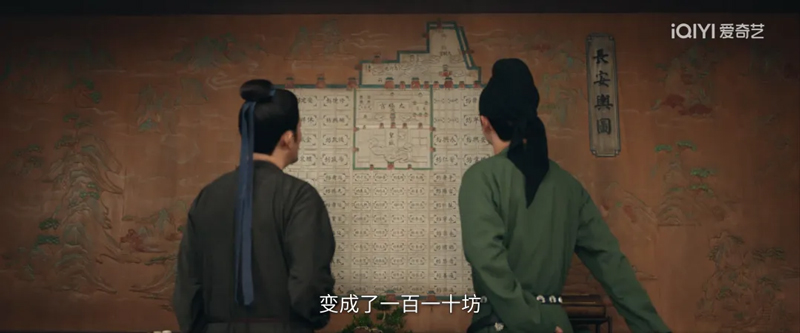
Urban Layout
Historical accounts note that Chang'an was organized into 110 wards, a design reflecting philosophical and administrative principles. In its early stages, the city had four wards symbolizing seasons and nine aligned with classical rites, totaling 108. Under Tang Gaozong (唐高宗), this number grew to 110, emphasizing the city's expansion. The series uses Location shooting to recreate these districts, showing crowded markets and residential zones where diverse activities unfolded. This approach provides a tangible sense of the urban environment, highlighting how space influenced social interaction.
Viewers can observe the bustling lanes where merchants sold goods, artisans practiced trades, and residents engaged in leisure. The production's commitment to accuracy extends to architectural styles and street layouts, drawn from historical records. By presenting these details, the show not only educates but also immerses people in the rhythm of Tang life. It transforms abstract historical data into a lively, relatable setting that enhances the storytelling.
Food Customs
Culinary elements in Tang Gui include references to imports like the golden peach from the Kang Kingdom (康国), situated in present-day Uzbekistan. This fruit, noted in The Golden Peaches of Samarkand (撒马尔罕的金桃:唐代舶来品研究) by Edward H. Schafer, was a luxury item transported via Silk Road routes, representing Tang's trade connections. Its depiction in the series underscores the era's economic networks and cultural exchanges, adding depth to the narrative.
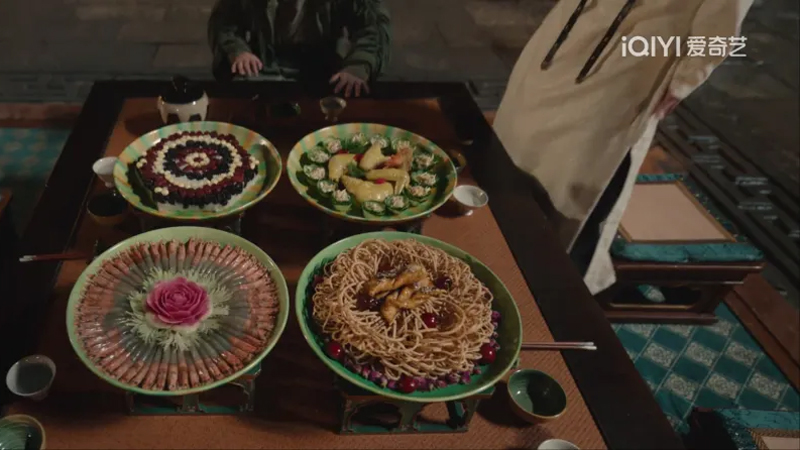
In specific episodes, characters prepare and savor dishes such as Jusheng Nu (巨胜奴) and Guangming Xia Zhi (光明虾炙), which originate from Tang culinary records like the Shao Wei Yan Shi Dan (烧尾宴食单). These meals are portrayed with attention to period techniques and ingredients, sparking curiosity about historical gastronomy. The inclusion of such details enriches the viewer's experience, illustrating how food served as a bridge between daily life and artistic expression in Tang society.
Viewer Reactions
Audience responses to Tang Gui have fueled discussions on Tang history, with people analyzing everything from clothing styles to architectural accuracy. Online platforms buzz with debates and shared discoveries, leading to a resurgence of interest in the dynasty's artifacts and stories. This engagement shows how media can stimulate public curiosity, moving beyond passive viewing to active learning and dialogue.
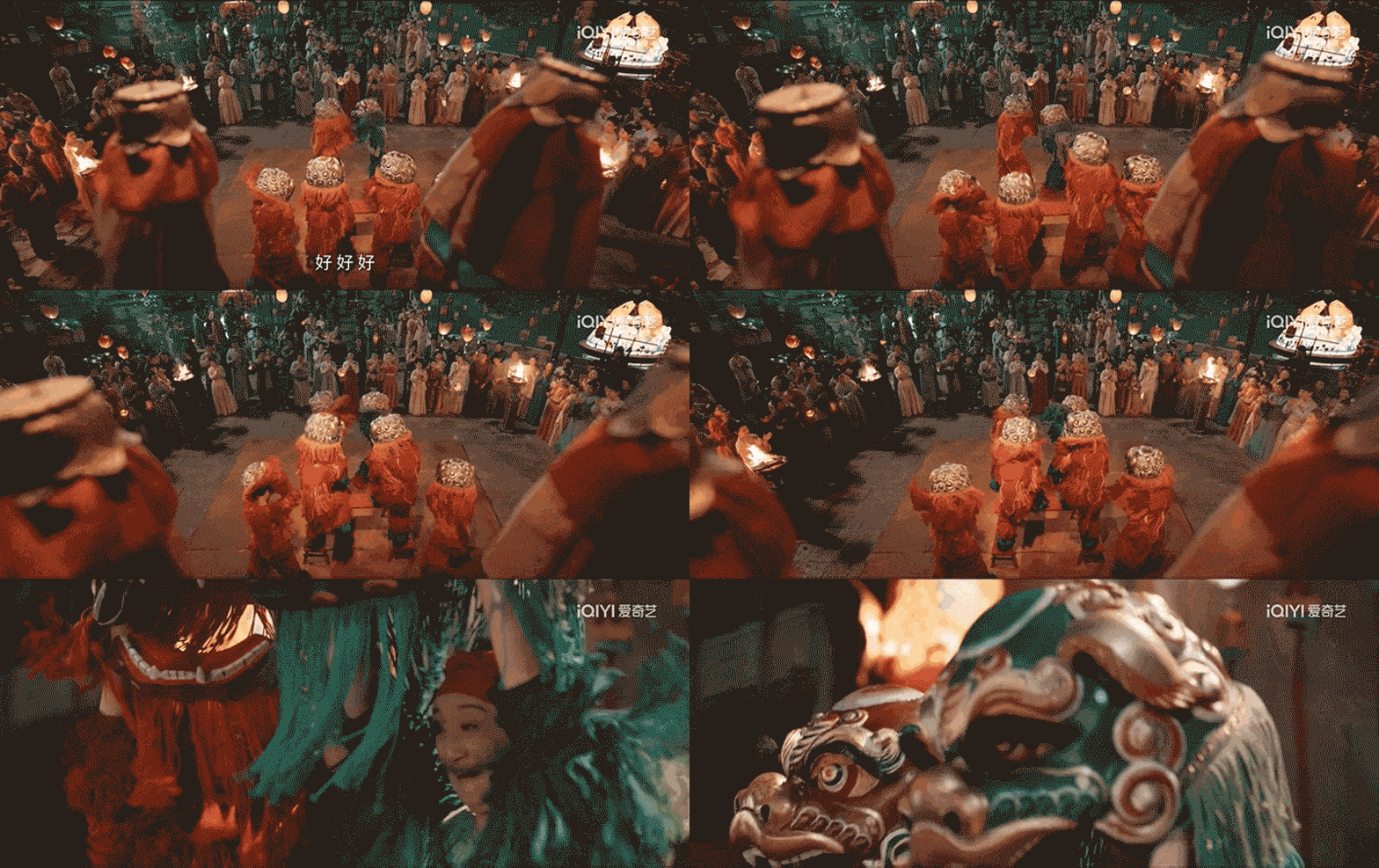
The series' integration of historical facets—from city planning to culinary arts—creates an immersive world that captivates modern crowds. It encourages exploration of Tang culture through museums, books, and travel, demonstrating how storytelling can make ancient history feel immediate and relevant. This connection between past and present fosters a renewed appreciation for the era's innovations and daily realities.

4. The Steady Ascent of Tang Gui Series
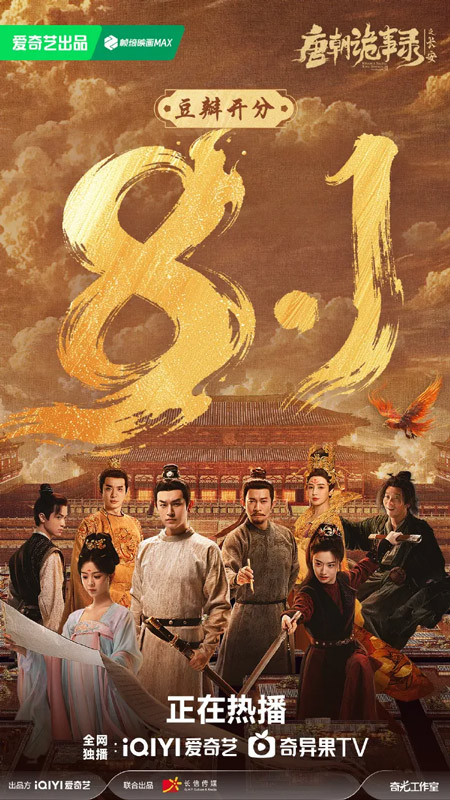
In a crowded entertainment landscape, Tang Gui Series (唐诡系列) distinguishes itself through reliable quality. Its Douban (豆瓣) ratings—8.0, 8.6, and 8.1 across installments—reflect a steadfast focus on substance over hype. By crafting intelligent plots and avoiding hollow distractions, it cultivates genuine audience loyalty and discussion.
What began as a refined historical mystery has gently permeated wider circles, sparking fresh interest in Tang dynasty narratives. This progression stems from thoughtful execution and a clear vision, demonstrating how original storytelling can resonate deeply without relying on exaggerated effects or familiar tropes.