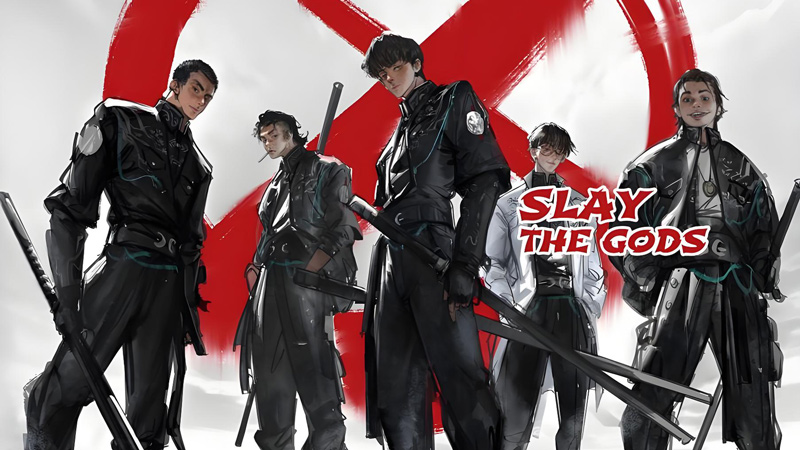
Imagine a reality where deities are imprisoned in psychiatric facilities, while humanity navigates a landscape teeming with supernatural threats. This is the foundation of Slay the Gods (斩神之凡尘神域), an animation that has swiftly captured audience attention. In the nation of Daxia (大夏), eerie phenomena are routine, and a magician known as Merlin (梅林) becomes central to the chaos. They alternate between male and female forms, speaking in disjointed phrases about a vocal yellow cube submerged in the ocean, hinting at deeper cosmic secrets.
Derived from the web novel Deicide Learning in a Psychiatric Hospital (我在精神病院学斩神), the series has achieved remarkable ratings, with a 9.6 score from over 3.16 million users and an 8.4 on Douban that keeps rising. Its third episode generated 1.21 million comments in a day, reflecting intense viewer engagement. Fans applaud its precision, noting that every scene feels essential, and even the closing sequences are crafted to hold interest.
This urban fantasy breaks from traditional genres by merging modern settings with divine conflicts, offering a distinct alternative to common cultivation narratives. It has rejuvenated its source material, driving searches past older web novels and resonating with younger demographics. The animation signifies a shift in Chinese cartoon storytelling, prioritizing intricate plots and character depth over familiar tropes, and inviting viewers into a world where divinity and insanity collide.

Using Gods as Card Pools
In a world draped in the mundane, a boy stands on a rooftop, his small frame outlined against a city's glow. His name is Lin Qiye (林七夜). Without warning, the sky splits open. It is not a storm that approaches, but a being of immense light and power, a Seraph whose gaze alone carries the weight of eons. In that single, shattering moment, as his eyes meet those of the angel Micheal, the boy's sight is stolen from him. His world plunges into darkness, and his new home becomes a psychiatric ward. Yet, within this forced isolation, another reality blooms—a sprawling, impossible asylum where the inmates are not people, but gods.
Power in the Ruins
The catastrophe that reshaped the world is known as the Fog, a mysterious phenomenon that engulfed the globe but halted miraculously at the borders of Daxia. While other nations fell, life within Daxia maintains a fragile, ordinary rhythm. But this peace is a thin veneer. By night, a different world awakens, one where supernatural entities clash in the shadows. A select few humans awaken to extraordinary abilities known as Forbidden Ruins. These individuals become guardians, the Night Watch, tasked with protecting humanity from the threats that lurk in the dark.
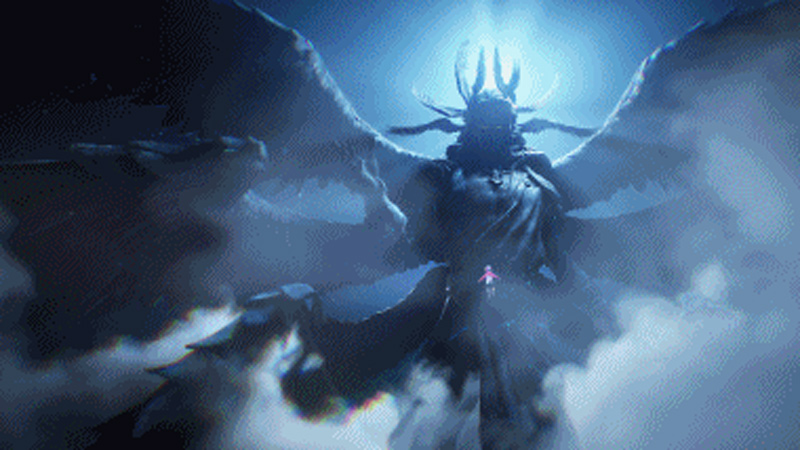
Lin Qiye is one such individual, but his case is unique. He did not merely awaken a common ability; he manifested an "Mortal Divine Domain," a power classified as ultra-high risk. This mark makes him a vessel, a chosen agent for a divine will. In this hidden war, becoming a deity's proxy is both a tremendous burden and the only path to survival. He is thrust into a conflict he never sought, his destiny irrevocably tied to the celestial powers that now vie for influence.
The nature of power itself is a central theme. The Forbidden Ruins are not simple superpowers; they are deeply personal manifestations, often tied to one's psyche and latent potential. For Lin Qiye, his blindness in the real world is the price for his sight in another. His power isolates him, yet it is also the key to understanding the new reality he inhabits. The line between blessing and curse is blurred from the very beginning.
The Asylum and the Gacha
Where others might see madness, Lin Qiye finds his greatest asset. Within his mind exists the "Deity Psychiatric Ward," a metaphysical hospital for dysfunctional gods. This ward functions on a principle familiar to many: the gacha system. Each secured room represents a potential draw from a celestial roster. His task is not to command these deities, but to heal their fractured minds, to act as a therapist to the divine.
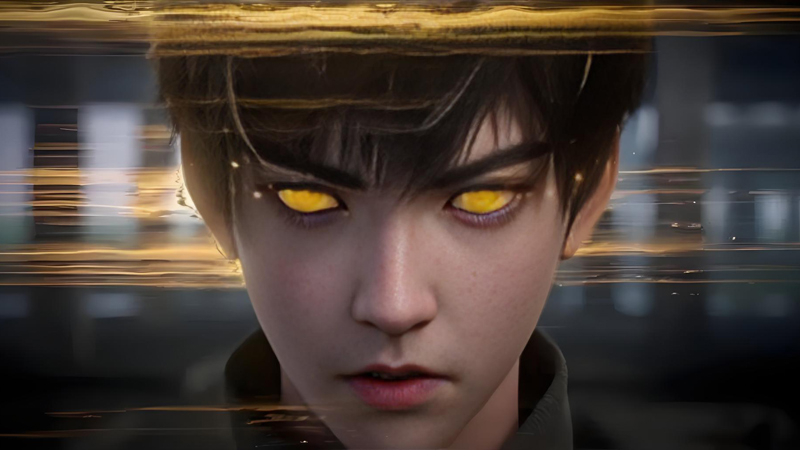
The process is his path to growth. By interacting with these divine inmates and progressing in their treatment—reaching milestones of 1%, 50%, and 100% recovery—the system grants him rewards. He earns a chance to "draw" a skill, inheriting a fragment of that deity's power. It is a direct, visual representation of progression, turning abstract cultivation into a tangible, almost game-like interface. His strength is built one therapeutic session, one divine skill, at a time.
His first major breakthrough is momentous. He draws the Nyx, who, in her unstable state, sees him as her son. This bond grants him unparalleled freedom and power within the domain of night. Later, he will even find a mentor in the legendary magician Merlin. Unlike players in a game who rely on luck or payment, Lin Qiye's currency is achievement; his draws are earned through his deeds and his growing understanding of the cosmic forces at play.
A Boy's Resolve
Despite the grand scale of the conflict and the god-like powers he accumulates, the heart of the narrative remains with the boy. Lin Qiye is not an all-powerful hero from the start. He is a victim of circumstance, suddenly blinded and institutionalized, forced to navigate a reality he barely comprehends. His journey is one of adaptation, of learning to wield incredible power while coping with profound personal loss and isolation.
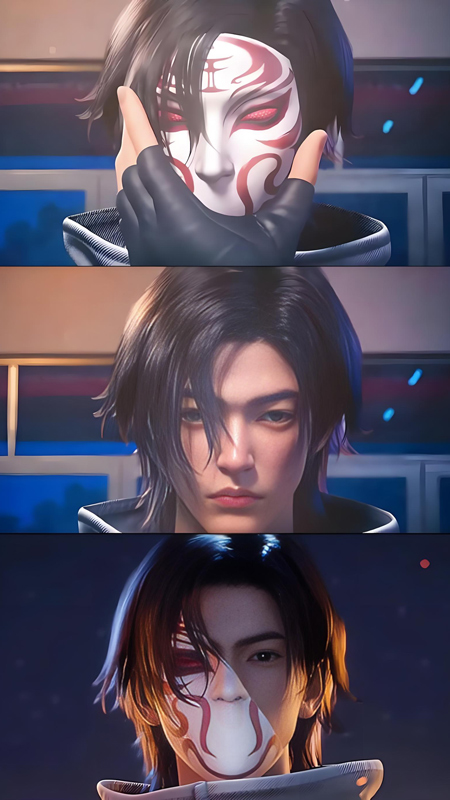
His motivation is not initially to save the world, but to understand his own place within it. The Deity Psychiatric Ward is more than a power-up mechanism; it is his refuge, his school, and his battlefield. His relationships with the gods, particularly the maternal bond he forms with Nyx, provide the emotional core that grounds the fantastical elements of the story. His humanity is his anchor.
The story presents a compelling duality. In the real world, he is a blind boy in a psychiatric ward, a figure of pity or fear. In the spiritual world, he is a warden, a healer, and a warrior. This contrast defines his character. His growth is measured not just by the skills he acquires, but by his evolving perspective, his resilience, and his unwavering will to protect the fragile normalcy he once knew, even if he can no longer see it.

Animated Alchemy
A new animated series, Slay the Gods, is redefining expectations for action-centric storytelling. It moves beyond straightforward battles, treating each confrontation as a unique sensory event. The show constructs its identity not through lengthy exposition, but through a constantly evolving visual and auditory language. Every episode functions as a self-contained experience, promising a fresh perspective on how motion and emotion can intertwine.
Acid Aesthetics
The visual foundation of the series is a distinctive acid aesthetic. This style, with its origins in psychedelic culture, employs vivid neon color palettes and dynamic geometric patterns. It creates a disorienting yet captivating environment that feels both retro and futuristic. This is not a passive backdrop but an active component of the narrative, shaping the mood and intensity of each scene.
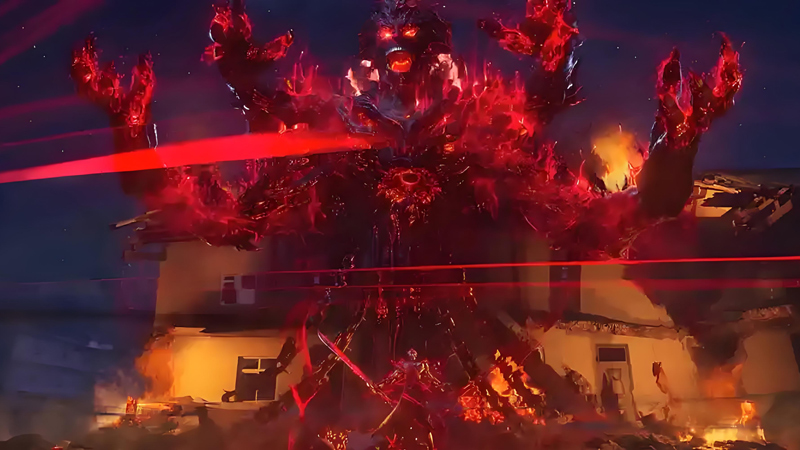
This approach transforms motion into a central character. During high-speed combat sequences, the camera sweeps across vast cityscapes, and the acidic colors become vibrant anchors in the chaos. They streak and blur, mirroring the characters' movements. A brilliant flash from a spear tip or the trailing light from a character's boots against a cyberpunk skyline are not mere details; they are essential rhythmic elements in the visual symphony.
The aesthetic is fluid, adapting to the nature of the powers on display. It ensures that the world itself feels alive and reactive. This commitment to a bold, consistent visual philosophy elevates the action from simple spectacle to a form of kinetic art, making every frame a deliberate and engaging composition.
Choreographed Unreality
The combat sequences are where the show's creativity truly ignites. Each encounter is designed around the specific logic of a character's abilities, resulting in wildly different tactical landscapes. In one early confrontation, a fighter without supernatural powers faces an entity that manipulates space, causing familiar alleyways to distort into crushing vertical labyrinths. The threat is conveyed through this environmental shift, creating immense psychological pressure.
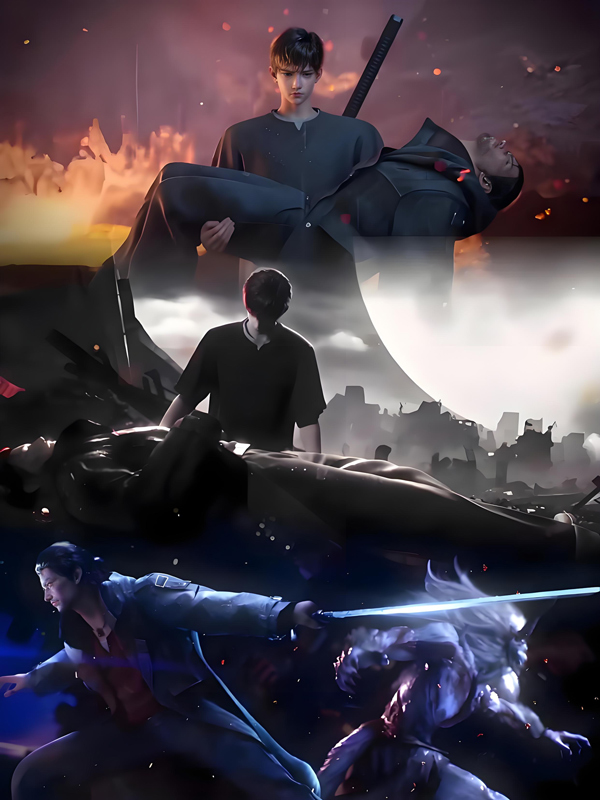
Another battle employs a layered, almost predatory structure. It unfolds like a chain of ambushes, where one powerful combatant is suddenly subdued by another with a more dominant ability. This "mantis stalking the cicada" approach builds tension through sudden shifts in power dynamics, keeping the audience guessing about the true hierarchy of strength.
The portrayal of ultimate power is particularly inventive. A character known as Nike demonstrates her capability not with a blinding explosion, but by narrating from a storybook. She speaks a constellation into existence above her enemies, the stars descending upon them with serene, devastating force. This moment blends fairy-tale whimsy with cosmic threat, proving that the most potent attacks can be the most beautifully surreal.
Emotional Echoes
The series understands that impact lingers in the quiet moments after the chaos. Its most innovative storytelling technique may be its use of variable ending credits. Each episode concludes with a different song, carefully selected to serve as an emotional postscript to the events just witnessed. This practice transforms the credits from a mere formalities into a narrative tool.
One episode, honoring a sacrifice made by a mortal captain, ends with a solemn and ancient-sounding ballad. The music provides a space for reflection, allowing the weight of his choice to settle with the audience. In stark contrast, a subsequent episode features a boastful rap track, perfectly capturing the rebellious and unapologetic attitude of a different character after a victorious display.
This musical flexibility even extends to breaking the fourth wall. At a pivotal point where the protagonist loses his powers, the ending sequence simulates a manual "mute" button. This clever, self-aware trick directly involves the viewer in the character's sudden sensory deprivation. It is a confident gesture, a final creative flourish that underscores the show's deep belief in its audience's ability to appreciate these nuanced, emotional cues.

Soldiers Return Home
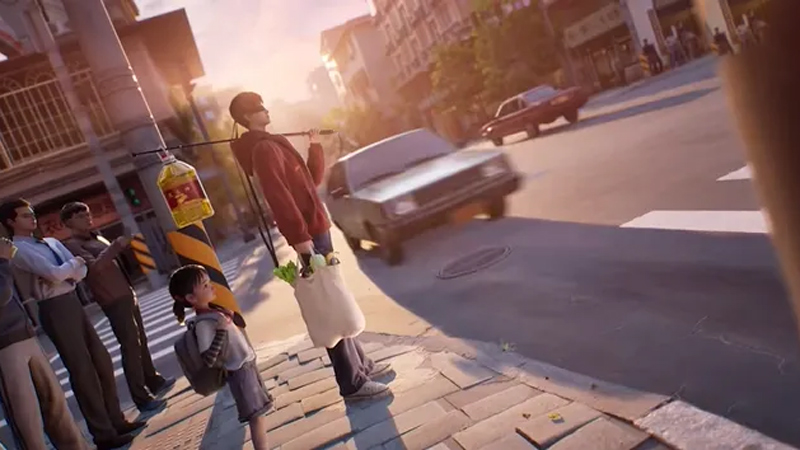
He walked across the zebra crossing not as a legendary figure, but as a nephew carrying a bucket of peanut oil for his aunt. This was Lin Qiye's introduction, a moment so ordinary it felt revolutionary. In a landscape saturated with gods and monsters, the animation Slay the Gods grounds itself in the weight of a simple grocery errand. Its protagonist is not driven by a desire to conquer the world, but by a need to protect the small, fragile world he calls home. The story suggests that true strength is not found in grand destiny, but in the quiet spaces between battles, in the connections forged over a boiled egg or a concerned phone call. It is within this delicate balance of the epic and the everyday that the series finds its powerful emotional core.
The Weight of Peanut Oil
The city of Cangnan (沧南) is not merely a backdrop; it is a character. Its streets are alive with the sounds of different dialects, and its shop signs tell stories of their own. Neighbors know Lin Qiye's business, creating a tapestry of community where everyone is intertwined. This environment establishes what is truly at stake. When the mentor figure, Zhao Kongcheng (赵空城), first attempts to recruit him into the Shouyeren (守夜人), the Guardians, their conversations happen in cinemas and on bus tops, far from grand halls. The refusal is not born of cowardice, but of a deeply personal understanding of loss. For a boy who has known trauma, large concepts like duty ring hollow. His world is small, defined by the light in a window awaiting his return.
Zhao Kongcheng's persistence takes a subtle, human form. After failing to persuade the young man, he offers a wad of cash to help the struggling family. Lin Qiye, proud and self-reliant, refuses. The scene seems to end with Zhao's departure. But in a quiet follow-up shot, we see he has secretly tucked the money into the family's shoe cabinet. This single act, devoid of speeches or spectacle, speaks volumes. It is not a transaction, but an act of genuine care. This small gesture of compassion does more to dismantle Lin Qiye's walls than any grand promise of power ever could.
This meticulously built realism makes the emotional climax of their relationship so devastating. The coat of arms, or emblem, that Zhao leaves behind becomes far more than a symbol of an organization. It transforms into a key—not just to unlocking Lin Qiye's latent abilities, but to unlocking his capacity to care for something beyond his immediate doorstep. It is a tangible piece of a sacrifice made for others, a weight that the young man can no longer ignore.
Invisible Battlefields
The narrative draws a powerful parallel through a clever detail. During one of Zhao's recruitment attempts, the cinema is showing Tunnel Warfare (地道战), a classic film about unseen resistance. This is a direct reflection of the Guardians' own war. Their battles are fought in the shadows, away from public acclaim. Figures like Zhao Kongcheng, who possess no extraordinary powers or "golden fingers," are the true, unsung deities of this story. They stand on the front lines with nothing but their own mortality, holding back the encroaching darkness for a world that remains blissfully unaware.

This theme crystallizes in a later episode. Lin Qiye, now in training, pushes his body to its limits during a frantic run. Yet, he lacks a deeper purpose, a driving force beyond mere survival. It is only when he reaches a cliff's edge and beholds Cangnan bathed in the light of dawn that he finally understands Zhao's conviction. The sight of the waking city—with its morning routines, its bustling markets, its countless ordinary lives—reveals what they are fighting for. The preservation of this mundane peace, this "daily life in the apocalypse," becomes a burden heavier than any physical challenge.
A Soldier's Homecoming
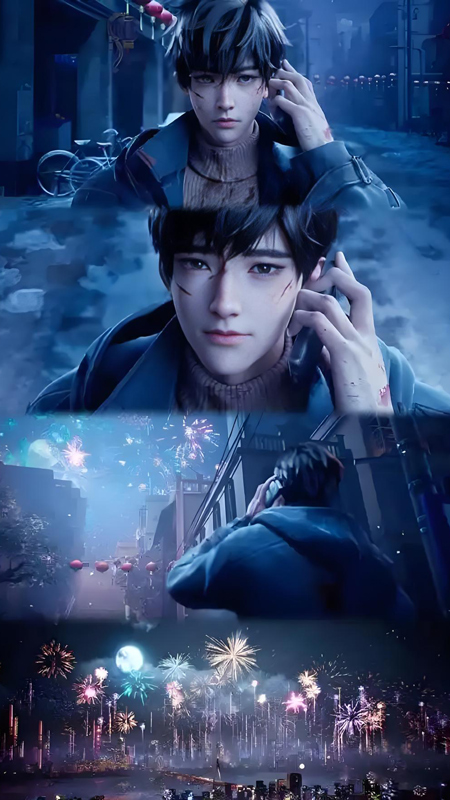
The first season's conclusion, aptly named Soldiers Return Home (战士归乡), masterfully subverts expectations. The finale is not a cataclysmic clash showcasing the protagonist's god-like power. Instead, it unfolds during a gentle, quiet snowfall. As the New Year's bells chime, every Guardian, wherever they are, stands their post in simultaneous, scattered battles. They fight not for a decisive victory that day, but for the right to hear those bells, to usher in a new year for the people they protect.

Lin Qiye's own climax is equally personal. He achieves his "graduation" not by slaying a supreme deity, but by using his bare hands to defend his family. His reward is not a crown, but the sight of celebratory fireworks blooming in the sky above his home. This is his homecoming, the completion of his arc from an isolated individual to a connected protector. He has finally filled the void of his inner "regret" with the concrete act of "guardianship."
This focus on emotional resolution over pure spectacle signals a meaningful shift. It demonstrates that beneath high-concept premises and advanced animation technology, the most potent force remains a story that honors its characters' humanity. The series taps into that tightly-wound bundle of public sentiment, which is the universal yearning to protect one's own, and achieves a resonance that lingers long after the screen fades to black. The story continues, with whispers of a live-action adaptation and the shadow of the Daxia Jian Sheng (大夏剑圣), the Great Xia Sword Saint, looming.

Summary
Slay the Gods is a hit Chinese animation set in Daxia, where supernatural threats loom. The story follows Lin Qiye, a blind youth institutionalized after a divine encounter. He awakens a unique power: a mental psychiatric ward where he must "heal" imprisoned gods.
By treating them, he earns fragments of their abilities through a gacha-like system. The series is praised for its intricate plot, innovative acid-aesthetic action, and deep emotional core. It explores themes of guardianship and sacrifice, focusing on protecting ordinary life amidst epic conflicts, which has resonated strongly with audiences and signaled a shift in fantasy storytelling.