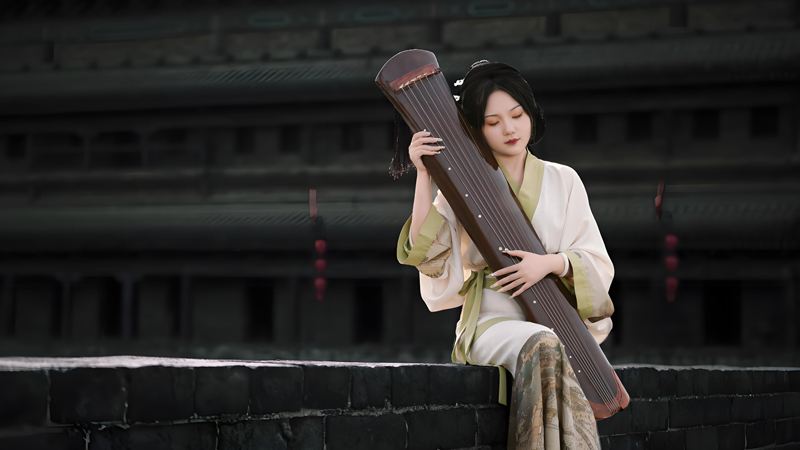
Hanfu is more than fabric; it is China's history draped on the human form. These garments, evolving across millennia, offer a silent narrative of shifting aesthetics, social values, and profound cultural identity. From the foundational rituals of the Qin-Han era to the cosmopolitan flair of the Tang and the introspective elegance of the Song, each dynasty imprinted its spirit on sleeves, collars, and flowing skirts. This journey reveals how Hanfu served as both a mirror and a maker of its time, its threads weaving a continuous story of civilization.
Qin-Han Foundations
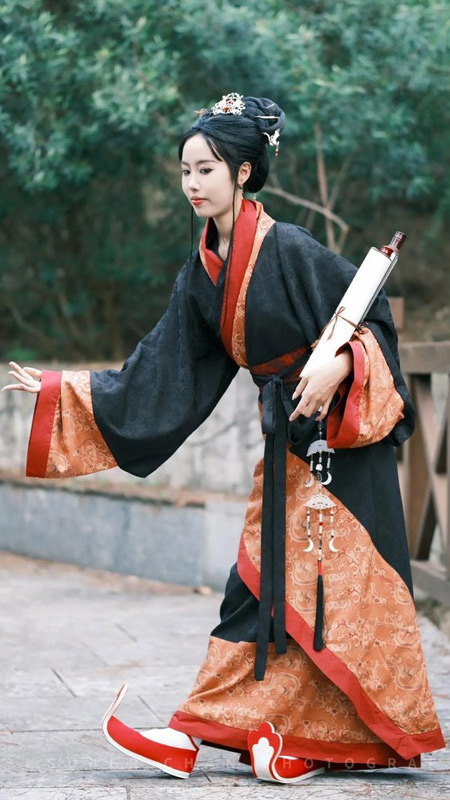
The unification under Qin and Han established Hanfu's core grammar. Garments became instruments of order and ritual. The defining principle was "upper garment, lower skirt", combined with the distinct right-over-left collar closure. This structure conveyed dignity and a connection to cosmic principles. Colors held deep meaning: profound black for heaven, vibrant vermillion for earth. Predominant fabrics were sturdy hemp and coveted silk, often adorned with symbolic patterns like swirling clouds and thunder motifs, reflecting reverence for nature's power.
The Quju Shenyi (曲裾深衣) stood paramount. It's wrapped, overlapping panels circled the body multiple times, flaring dramatically at the hem. This complex construction signified formality and status, worn by both men and women, distinguished by subtle ornamentation. Simpler living fostered practicality. The Zhiju (直裾), characterized by straight, vertical front panels, gained prominence in the Later Han. Its cleaner lines offered ease of movement, transitioning Hanfu towards greater everyday utility while retaining inherent solemnity. The silhouette remained imposing, emphasizing verticality and a sense of contained power.
This era solidified Hanfu's role beyond mere clothing. It was integral to social hierarchy and ceremonial practice. The emphasis on structured silhouettes, symbolic colors, and prescribed forms reflected the dynasties' drive for standardization and their cosmological worldview. Hanfu became a visible manifestation of order and propriety, setting a template future generations would reinterpret.
Tang Dynasty Flourish
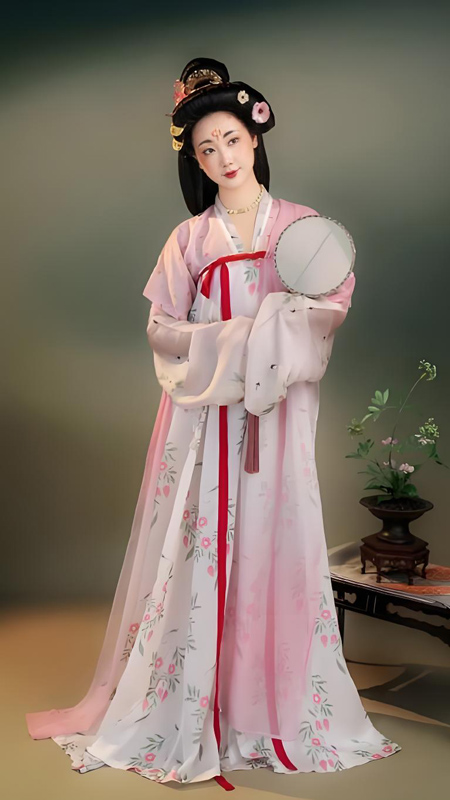
The Tang Dynasty ushered in an era of unprecedented openness. Hanfu mirrored this vibrancy, embracing bold colors, luxurious fabrics, and diverse influences. Silhouettes relaxed, reflecting comfort and confidence. Women's fashion centered on the Ruqun: a short, often square-necked blouse paired with a high-waisted, voluminous long skirt. Wide sleeves and flowing sashes accentuated movement. Embracing ideals of fullness, the ample cut flattered rounded figures. Silk dominated, shimmering in brilliant hues: peony pinks, sunflower yellows, emerald greens, all achievable through advanced dyeing and novel techniques like resist printing and gold thread weaving.
Men and women adopted the Yuanlingpao (圆领袍), a rounded-collar robe derived from Central Asian styles but thoroughly Sinicized. Its relaxed fit, wide sleeves, and functional waist tie suited scholars, officials, and warriors alike, symbolizing Tang's pragmatic cosmopolitanism. Patterns exploded with diversity. Alongside traditional flora and fauna, motifs like Persian-inspired pearl roundels and scrolling vines flourished, tangible evidence of cultural exchange along the Silk Road. Hanfu became a canvas displaying Tang's wealth, artistic confidence, and global connections.
This period celebrated exuberance and individuality within the Hanfu tradition. The focus shifted from strict ritual formality towards personal expression and aesthetic delight. Luxurious materials, daring color combinations, and the integration of foreign elements created a dynamic, unmistakably Tang style. Garments flowed with the energy of an empire at its zenith, unafraid to absorb and reinterpret.
Song Refined Restraint
The Song Dynasty fostered a scholarly ethos, profoundly shaping its aesthetic. Hanfu shed Tang's flamboyance, embracing understated elegance, refined proportions, and intellectual subtlety. Colors softened into quiet pastels: pale jade greens, dusty lavenders, misty blues. While silk remained for the elite, practical hemp and newly prevalent cotton gained favor for daily wear, reflecting a shift towards modesty and comfort. Patterns mirrored scholarly pursuits, favoring restrained depictions of plum blossoms, orchids, bamboo, and chrysanthemums – emblems of resilience and virtue.
The Beizi (褙子) epitomized Song restraint. This versatile over-garment featured a straight collar opening down the front, fell to the knees, and had side slits for ease. Unadorned and typically in muted solids, it was layered over other garments worn by men and women, offering a clean, architectural line. Women's Ruqun evolved significantly.
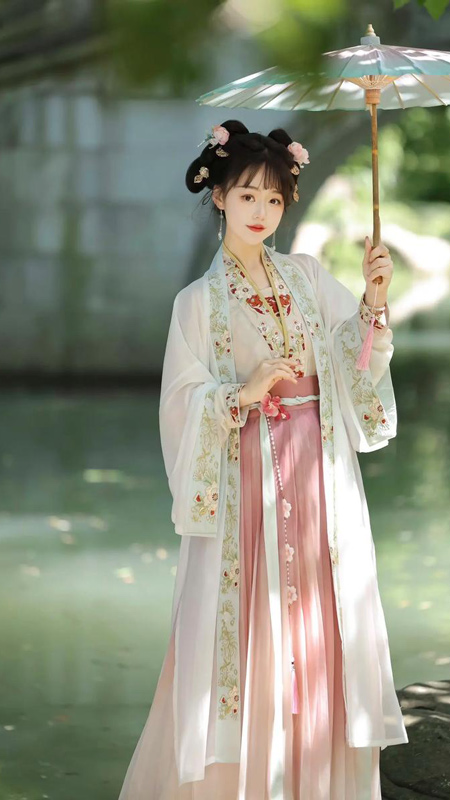
Song Hanfu prioritized harmony and mindful simplicity. The focus was on the quality of cut, the drape of fabric, and the subtle interplay of layered garments rather than overt decoration. This reflected the dynasty's inward focus, valuing introspection, scholarly refinement, and a cultivated appreciation for the understated beauty found in natural forms and quiet elegance. The garments spoke of restraint and cultivated taste.
The resurgence of Hanfu today is a dialogue across centuries. When modern wearers don Qin-Han-inspired robes, Tang-style Ruqun, or Song Beizi, they reconnect threads severed by time. It is a tangible reclaiming of identity, a celebration of aesthetics that endured dynastic shifts, and a living testament to the enduring power of cultural expression woven into every stitch and fold. These garments continue to tell their ancient story, now on a global stage.