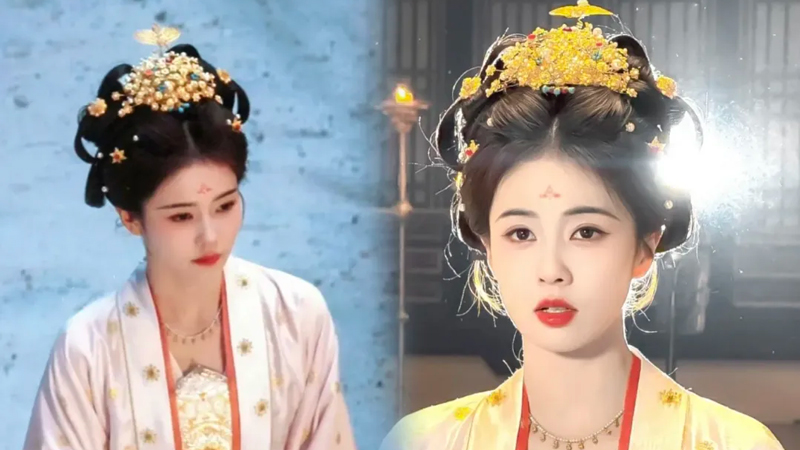
In the bustling world of historical dramas, a tiny golden insect has taken flight from ancient tombs to modern screens. The appearance of a distinctive moth-shaped hairpin in the popular series Unveil: Jadewind (唐宫奇案) , worn by actress Bai Lu (白鹿) as her character Li Peiyi (李佩仪), sparked instant recognition among viewers. "I’ve seen that in a museum!" exclaimed countless fans, pinpointing its origin to a real artifact excavated decades ago. This exquisite piece, known as the Nao'e (闹蛾) hairpin, transcends its role as a costume prop. It represents a breathtaking fusion of Tang Dynasty artistry, cultural symbolism, and a poignant human story, connecting audiences across centuries through its delicate, shimmering wings. Its journey from an elite child’s grave to a television phenomenon reveals the enduring power of historical craftsmanship and the timeless desire to adorn oneself with meaning.
Artisan's Legacy
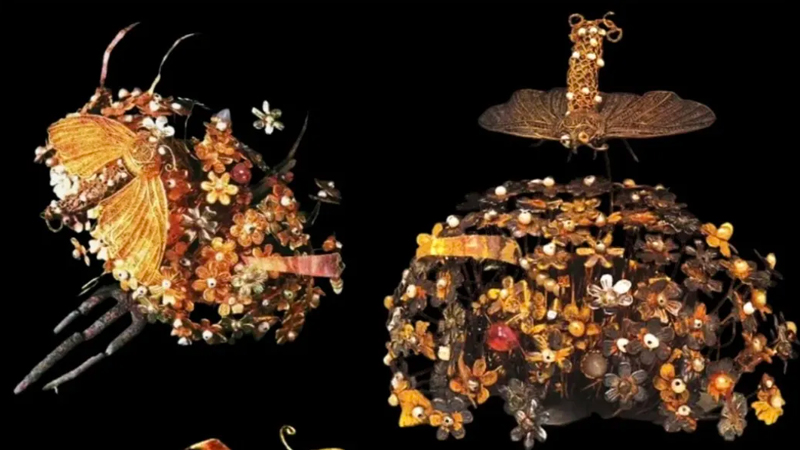
Unearthed in 1957 from the tomb of Li Jingxun (李静训) in Xi'an, Shaanxi Province, this Nao'e hairpin now resides in the National Museum of China. Classified as a Buyao (步摇), a type of hairpin designed to tremble gracefully with movement, it exemplifies the pinnacle of Sui Dynasty goldsmithing. Renowned scholar Shen Congwen (沈从文) identified similar pieces in his work Research on Ancient Chinese Clothing and Ornaments (中国古代服饰研究), calling them "bustling moth and flower head ornaments."
The hairpin's construction reveals astonishing complexity. Master craftsmen employed hammering, wire drawing, weaving, engraving, and inlay techniques. Its structure divides into three distinct parts: the moth itself, a flowering tree motif, and the pin base. The central moth figure dominates, crafted using intricate filigree. Its hollow body, formed from a pearl-encrusted gold wire mesh, likely once held fragrant substances. Tiny pearls served as eyes, while fine gold wires formed delicate antennae, capturing the insect's form with remarkable realism.
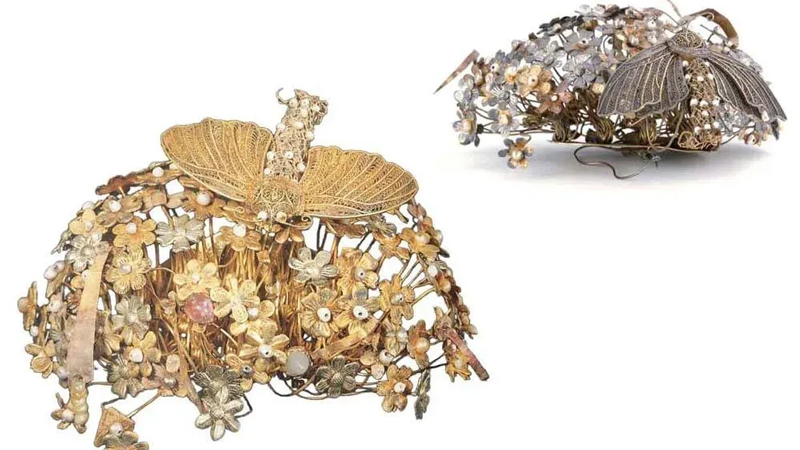
Beneath the moth rests the equally elaborate base. Three pin stems provide anchorage. Above them, a circular gold plate curls upwards, forming a lotus-leaf-shaped platform. From this platform rise two coiled rings supporting a miniature golden tree. Delicate wire branches sprout six-petal gold blossoms and triangular leaves. Pearls nestle within the flower centers, while gemstone buds and elongated gold pieces shaped like Ruyi (如意, "as-you-wish") clouds add further layers of opulence. Every component showcases meticulous artistry, transforming precious metals and gems into a miniature ecosystem of natural beauty.
Moth's Secret
Why choose a moth? Far from modern negative connotations, this insect held auspicious meaning in ancient China. Historical records, particularly from the Song Dynasty, frequently mention "Nao'e'er" (闹蛾儿, "bustling moth trinkets"). Song customs often preserved Tang traditions, and these moth ornaments became signature accessories for young women during the Lantern Festival. Poems by figures like Fan Chengda (范成大) and Wang Fuzhi (王夫之) document their popularity.
The Lantern Festival connection is key. Chen Weisong’s (陈维崧) lyric describes "Northern Song bustling moths flying in the streets," linking the ornament directly to the vibrant celebrations. The imagery is potent: just as real moths flutter towards lantern flames during the festival, women wore shimmering golden moths, embodying the joyful "bustling" atmosphere of reunion and festivity under the full moon. The trembling motion of the Buyao mimicked the moth's fluttering flight amidst the lantern-lit night.
Beyond festivity, the moth carried profound symbolic weight. Its association with prolific egg-laying made it a powerful emblem for fertility and the blessing of abundant offspring. Gifting a moth hairpin to an expectant mother expressed hopes for a safe birth and many children. Presenting one to a young girl invoked protection and wishes for her future lineage to flourish continuously. The ornament thus transitioned seamlessly from festive joy to a cherished token of generational continuity and familial hopes.
Child of Splendor
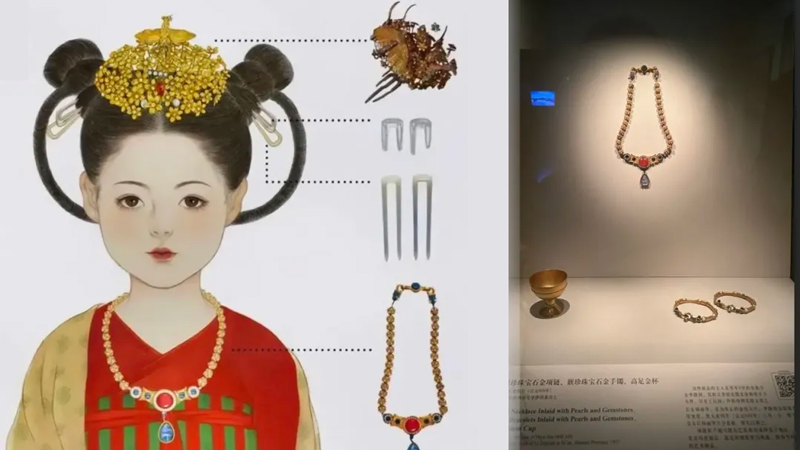
The Nao'e hairpin belonged to a child of extraordinary privilege and heartbreaking tragedy. Li Jingxun, buried with this treasure, was just nine years old when she died. Her lineage was impeccable: great-granddaughter of Emperor Wen of Sui and Empress Dugu, granddaughter of Yang Lihua (杨丽华), Empress Dowager of Northern Zhou. Dubbed the "Li Child" (李小孩), her epitaph describes a girl nurtured in the deepest chambers of the palace, cherished and taught the virtues of gentleness and obedience. Her tomb, discovered undisturbed, contained riches reflecting her status.
Alongside the moth hairpin, archaeologists found an exceptionally crafted gold necklace inlaid with carnelian and lapis lazuli, considered one of the most exquisite ancient necklaces ever discovered. These items, placed with her, symbolized the opulent life she briefly experienced and the deep affection of her family, particularly her grandmother Yang Lihua, who likely commissioned these precious gifts. Modern reconstructions often depict her with twin coiled buns, imagining how the golden moth might have trembled in her hair.
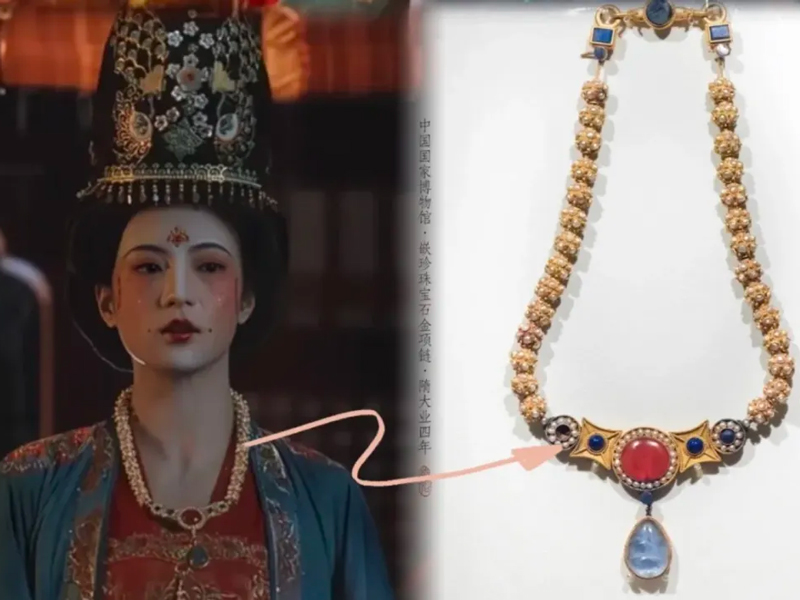
Her treasures, meant to accompany her into eternity, instead became windows into her world. While Li Jingxun never had the chance to wear her Nao'e during a Lantern Festival revelry, to dance amidst the lanterns like other girls, her hairpin now carries her story across centuries. Its appearance in Unveil: Jadewind completes a circle of sorts. The golden moth, crafted for a princess who never grew up, finally found its spotlight, fluttering from the quiet museum case onto the vibrant screen, captivating modern eyes just as it was meant to adorn a cherished child in a long-lost palace.