
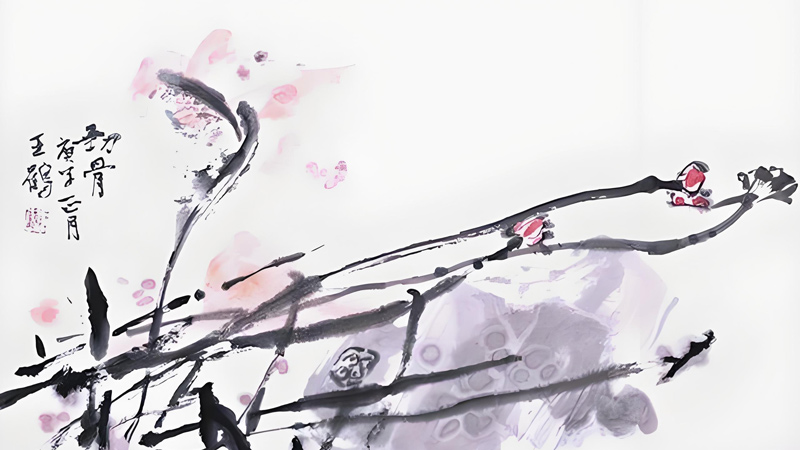
Every artist faces the same dilemma: what to include and what to exclude. This choice defines a work's power. In Chinese painting, this deliberate selection—known as "qu she" (取舍)—isn't just technique; it's philosophy. It transforms clutter into clarity and noise into meaning. Master painters wield omission like a brushstroke, understanding that absence speaks louder than crowded details. The empty space isn't vacant—it's charged with intention. Let's explore how less becomes profoundly more.
Silence Speaks Volumes
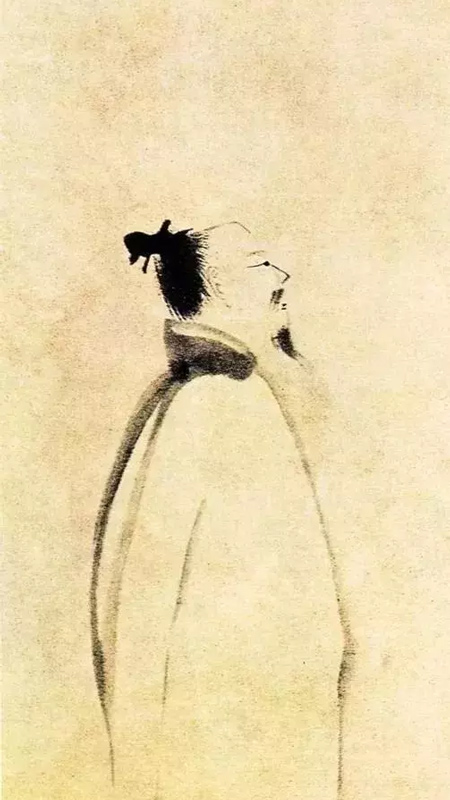
Liang Kai's (梁楷) The Portrait of the Poet Bai Ge (太白行吟图) strips everything nonessential. No background. No context. Just the poet mid-stride, sleeves flowing. This radical minimalism forces viewers to confront Li Bai's essence—his defiant spirit and untethered imagination . Adding mountains or taverns would dilute the focus. The void becomes the very air he breathes, the boundless space where his verses take flight. Here, omission isn't loss; it's amplification.
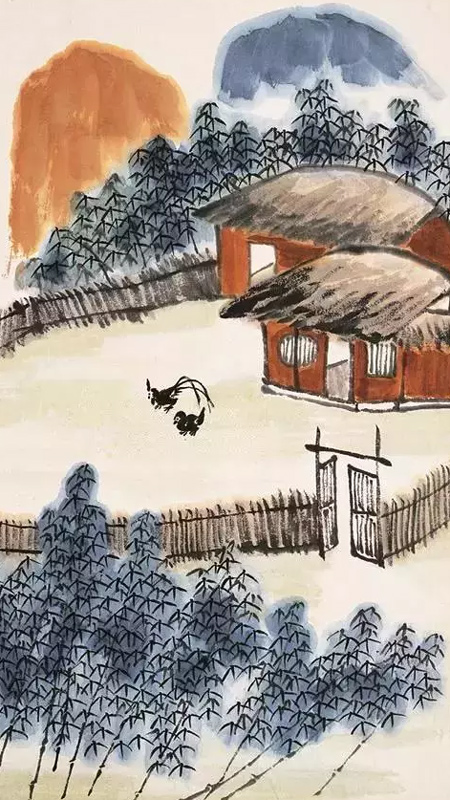
Similarly, Qi Baishi’s (齐白石) Shan Ju Cui Zhu Tu (山居翠竹图) presents a puzzle: a house titled "Mountain Dwelling" with no dwellers in sight. Instead, two chickens scratch near a bamboo grove . Removing people wasn't negligence—it was genius. Their absence invites us into the scene. We hear imagined rustles, feel the stillness. Had figures appeared, the magic evaporates. Emptiness becomes the resident.
These masters teach us: what you remove determines what remains visible. A single brushstroke gains weight when unburdened by competition. Strategic absence creates resonance, allowing viewers to co-create the narrative within purposeful silence.
Blank Space as Statement
White paper is never passive in Chinese art. Unpainted areas are compositional elements—active participants shaping meaning. A river implied by its missing banks. Mountains suggested through mist-laced emptiness . This "hiding within openness" invites interpretation. The viewer’s imagination completes what the artist deliberately withheld.
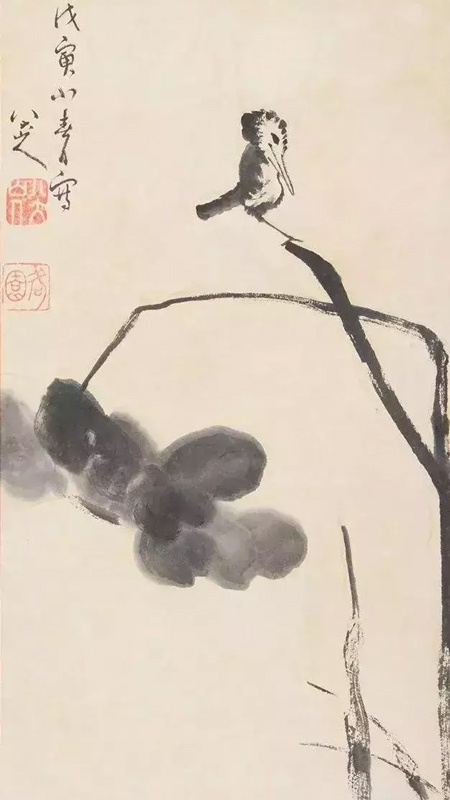
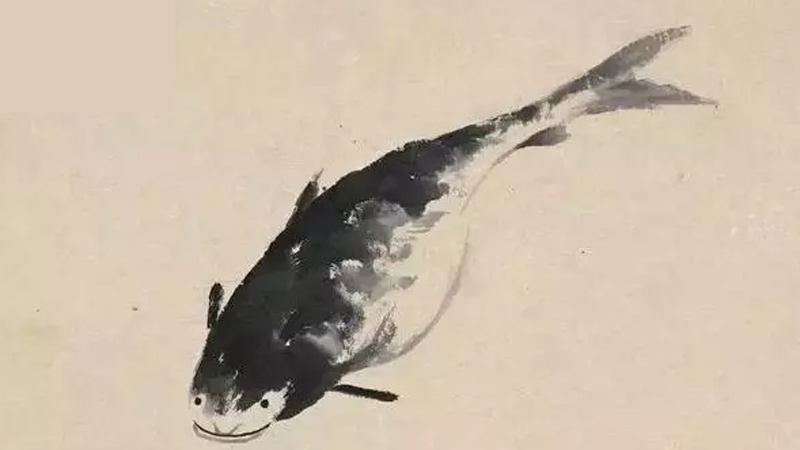
Seventeenth-century painter Bada Shanren (八大山人) mastered this language. His sparse compositions—a lone fish, a single blossom—float in undefined expanses . These voids aren’t unfinished; they’re environments. The emptiness hums with potential life, weather, depth. It’s a visual haiku where unsaid elements resonate loudest.
As Qing dynasty calligrapher Deng Shiru (邓石如) noted: "In painting’s sparse places, horses could gallop; in dense spots, wind can’t pass. Treat white as black, and wonder emerges" . The blank space balances, breathes, and speaks. It’s the silence between musical notes—essential to the melody.
Knowing What to Release
Selecting what stays demands ruthless honesty. Does this rock deepen the mountain’s spirit? Does that bird enhance the season’s mood? If not, discard it. Great composition lies not in accumulation but in distillation . Every added element must justify its presence.
Consider a modern dilemma: depicting a bustling market. A novice might crowd stalls, people, animals onto the silk. A master might paint one vendor’s weathered hands arranging persimmons, leaving the chaos implied . The specific reveals the universal; the fragment suggests the whole. Economy of elements creates intensity.
This discipline extends beyond technique. The painter doesn’t force; they allow. They cultivate sensitivity to what truly serves the vision, trusting that relinquishing control often yields greater power.
The Courage to Omit
True mastery in Chinese painting—and perhaps in life—hinges on "she de" (舍得): the willingness to relinquish. Holding less creates space for meaning to expand. A cluttered canvas, like a cluttered existence, stifles essence .
Liang Kai and Qi Baishi didn’t just paint subjects; they curated presence through absence. Their bold omissions invite us into collaboration, transforming viewers into active participants. The unsaid resonates longer than the obvious.
Next time you create—whether art, writing, or daily choices—ask: what can I remove to amplify what matters? Sometimes, the bravest stroke is the one you don’t make. In that restraint lies depth, and in that emptiness, everything speaks.
