If you find yourself in a village in Fujian or Guangdong during the Lunar New Year and see a vibrant, thunderous procession of dancing figures, towering deities, and ecstatic crowds, you’ve witnessed Youshen (游神). Often translated as ‘god procession,’ this is not a historical reenactment or a performance for tourists. Youshen is a profound tradition that embodies local faith and community spirit, where deities literally emerge from their temples to walk among their people.
The Heart of the Parade: Ritual and Community
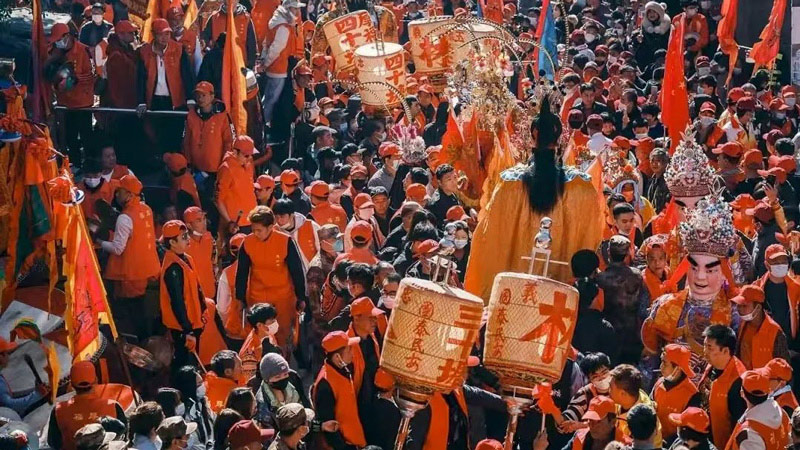
At its core, Youshen is an act of reciprocal care. It’s based on a simple, powerful idea: the gods protect the people, so the people must honor the gods. This isn’t a somber, quiet ceremony. It’s a joyous, cacophonous celebration that blurs the line between the divine and the mortal.
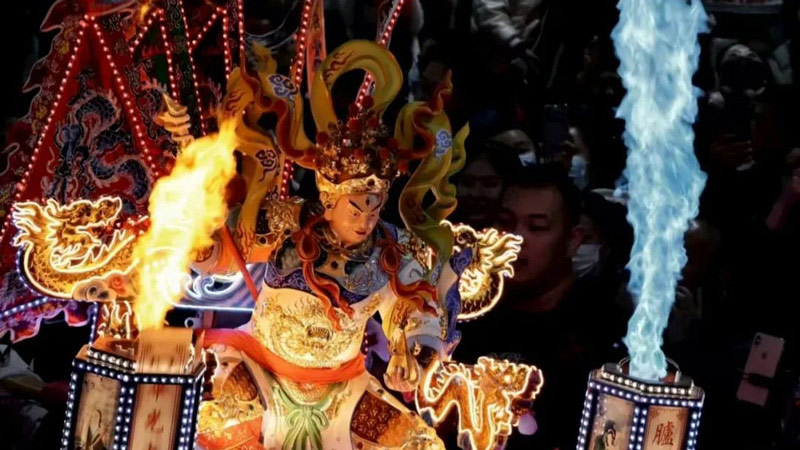
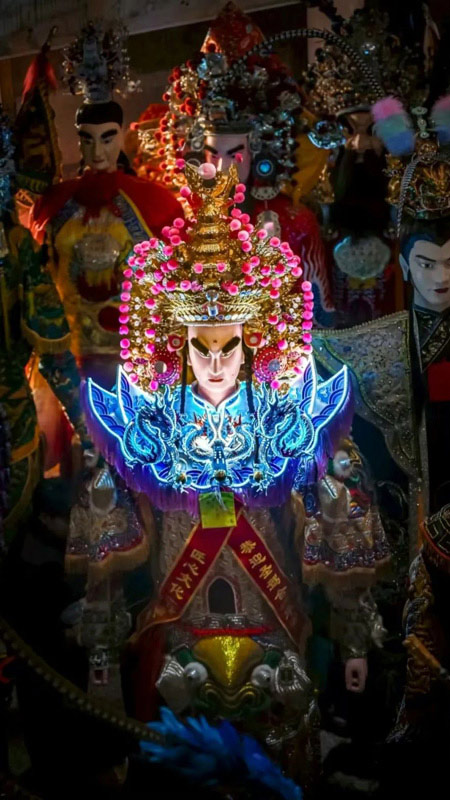
The process begins when statues of deities are carefully taken from their altars and placed atop ornate, decorated palanquins. These aren’t just any gods; they are deeply local figures. Alongside more widely recognized deities like the Great Emperor Huaguang (华光) or the Goddess Chen Jinggu (陈景谷), villages often have their patron gods and their fascinating entourages—figures like the playful ‘Child Brother’ or the imposing, tall generals known as ‘Elder Seventh’ and ‘Elder Eighth’.
The procession itself is a mobile street party. The heavy palanquins are carried by teams of young people who often seem to be guided by a divine force, swaying and dancing with a weight that appears supernaturally light. The air crackles with the sound of firecrackers, meant to scare away evil spirits. The beat of gongs and drums provides a rhythmic heartbeat for the event, while dragon and lion dances weave through the crowds, symbolizing positive luck and prosperity. For onlookers, it’s a moment of pure blessing. Pushing forward to touch the palanquin or simply standing in the path of the gods is believed to bring a year of positive fortune, health, and safety.
Ancient Fears to Modern "Boy Groups"
To understand why this tradition is so powerful here, you have to look at the land. Fujian, with its mountains and long coastline, has historically been vulnerable to typhoons, floods, and epidemics. This environment fostered a practical folk theology: people created a pantheon of divine protectors to guard against very real and specific dangers. This belief system merged with the ancient Minyue (闽越) culture’s spiritual practices, creating a rich foundation for traditions like Youshen.
This process has resulted in an astonishing diversity of local gods—statistics suggest there are over a thousand different deities across Fujian. In recent years, one particular group from this divine crowd has captured the internet’s imagination: the so-called "Fujian Prince Gang".
These are often younger, handsome deity figures, portrayed by carefully chosen individuals during the processions. With their noble features and dignified aura, they have become social media sensations, with countless videos and memes celebrating their divine "visuals." This modern fascination is a fascinating twist on an old tradition, introducing Youshen to a global audience and framing it in a relatable, albeit unexpected, way. It shows how the tradition is not static but evolving, finding new relevance with a younger generation.
More Than a Spectacle: The Cycle of Blessing
The procession is the main event, but the ritual continues long after the last drumbeat fades. The conclusion of Youshen is often a massive communal feast, a "whole banquet" where everyone shares in the celebration. The food is a key part of the blessing.
After being offered to the gods, the sacrificial items are distributed. Some are shared freely among the villagers so everyone can "receive the blessing". The remainder, believed to be extra-charged with divine favor, is often auctioned off to the highest bidder in a lively event called "bidding for divine blessing". This act completes a cycle: the community honors the gods, the gods bestow their favor, and that favor is then practically reinvested back into the community, often funding the temple and next year’s festivities.
Youshen is ultimately a powerful expression of collective identity. It’s where faith, culture, and community become one. It’s a loud, beautiful, and deeply heartfelt promise between people and their gods, renewed every year with every step through the village streets.