
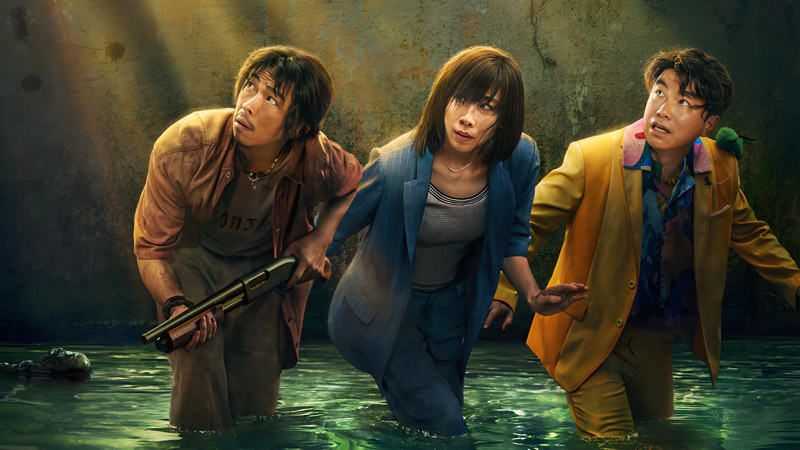
A Cool Fish 2 (无名之辈:否极泰来) transcends its predecessor, delivering a genre-bending thriller-comedy set against Thailand's chaotic backdrop. Director Rao Xiaozhi (饶晓志) reunites the original cast for an entirely new story of survival, deception, and unexpected heroism.
This sequel abandons the first film’s grounded realism for a high-stakes, darkly comedic romp through Thailand’s underworld. When a tourist couple (played by Zhang Yu and Ren Suxi) is caught in a violent terrorist attack, absurdity and brutality collide. The film’s audacious tonal shifts—from graphic violence to slapstick humor—culminate in a revelation that redefines everything. Pan Binlong’s (潘斌龙) transformative performance anchors the chaos, embodying a flawed everyman whose journey from cowardice to courage becomes the film’s pulsing heart.
Horror Opening
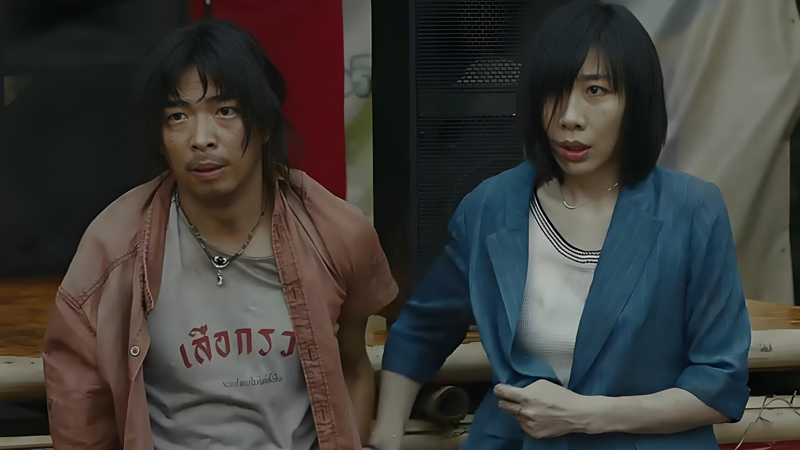
The film opens with visceral terror: masked gunmen storm a Thai street market, executing bystanders in cold blood. Yet protagonists Chen Sanjin (Pan Binlong) and his girlfriend (Ren Suxi) receive baffling leniency. Chen even kicks a captor but escapes immediate execution—an inconsistency that gnaws at viewers. Why spare these two? The answer lies in a later twist that reframes the violence as orchestrated theater.
As the couple flees through neon-drenched alleys, logic unravels. Terrorists spot Chen escaping but withhold gunfire. He later returns to captivity voluntarily, defying self-preservation instincts. These gaps intentionally unsettle, priming audiences for the film’s mid-act bombshell: the "attack" is an elaborate criminal scheme disguised as extremism. The revelation pivots the tone from grim thriller to madcap satire.
Survival now demands participation in a staged "reality." Chen navigates absurd tasks—smuggling contraband fruit, dodging cartoonish villains—amid chaotic set pieces. The shift embraces meta-humor: reality-TV graphics flash during fights, and a "Save the Princess" video game motif underscores the artificiality. Rao Xiaozhi weaponizes absurdity to critique performative violence.
Coward to Crusader
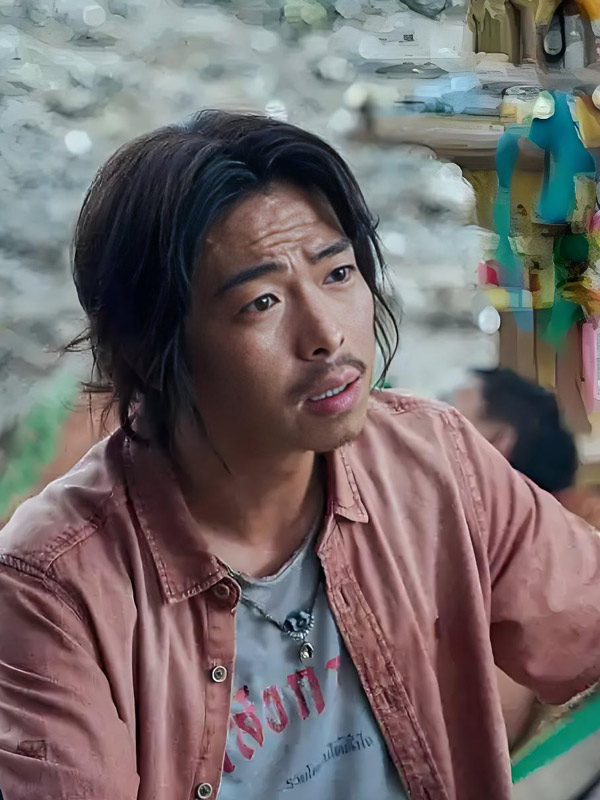
Chen Sanjin (陈三金) begins as a contemptible figure: greedy, selfish, and paralyzed by fear. When a trafficked woman begs for help, he averts his eyes. Confronted with a pistol, he urinates in terror. His sole redeeming trait is loyalty to his girlfriend, whom he refuses to abandon despite opportunities to flee alone. This flicker of humanity anchors his arc.
The character’s evolution peaks during a moral crisis. Offered freedom in exchange for his girlfriend’s life, Chen instead bargains with stolen gold—a choice exposing his conflicted core. Later, witnessing her near-death, his suppressed rage erupts. Unarmed, he charges her assailant, igniting the film’s most cathartic sequence. Pan Binlong masterfully layers cowardice, desperation, and fury into a singular, flawed hero.
Chen’s final stand delivers visceral payoff. Cornered in a bunker, he detonates explosives and fires point-blank at the crime lord who tormented him. The brutality, while stylized , symbolizes his shed passivity. Rao Xiaozhi argues that courage isn’t innate but forged in trauma—a theme mirrored in Thailand’s gritty backdrop of markets and backroom deals.
Behind the Mirage
The film’s technical audacity elevates its chaos. Practical explosions rip through concrete walls, while CGI enhances comedic moments (like a villain’s "video game" health bar). Pan Binlong’s prosthetics—mimicking Huang Bo’s features—become a running gag, blurring actor and allusion. His performance, oscillating between slapstick and pathos, grounds the spectacle.
Critics may question plot holes: Why take a close-range bullet without visible injury? How do characters survive fiery blasts unscathed? Yet these exaggerations serve the film’s core metaphor: life as a manipulated game. The "Thailand bunker" set , where the conspiracy unfolds, embodies this duality—a space both prison and stage.
Rao Xiaozhi’s true triumph is balancing satire with sincerity. The climax sees Chen’s girlfriend rejecting ill-gotten riches, choosing moral clarity over survival. Her speech comparing their ordeal to "a blood orange’s bitter skin hiding sweetness" crystallizes the film’s thesis: even in darkness, humanity persists.
Final Thoughts
A Cool Fish 2 defies sequel conventions. Its jarring genre fusion—terrorism meets dark comedy—challenges viewers, while Pan Binlong’s metamorphosis from laughingstock to avenger delivers emotional resonance. If the first film celebrated underdogs, this chapter interrogates how adversity sculpts them. Flaws in logic? Perhaps. But in Thailand’s lawless playground, where blood oranges glow like lanterns and explosions paint the sky, reality is merely a suggestion—and redemption is always explosive.