

In the period drama The Story of Minglan, there's a line about "loosening the hair buns and letting the hair fall, imitating the styles of courtesans". Is leaving two strands of bangs by the temples really a style of the demimonde? Is there really such a saying? Then, have most period dramas nowadays fallen into this trap?
Let's start with the conclusion. Many of us now call a similar hairstyle the "catfish whiskers". In fact, it also has a prototype. For example, during the Han and Jin dynasties, especially after the Eastern Han, there were two strands of hanging hair called "chuí tiáo" (垂髫). You can see this in themes like paintings of immortals in the Wei and Jin dynasties and the hairstyles of ancient children.
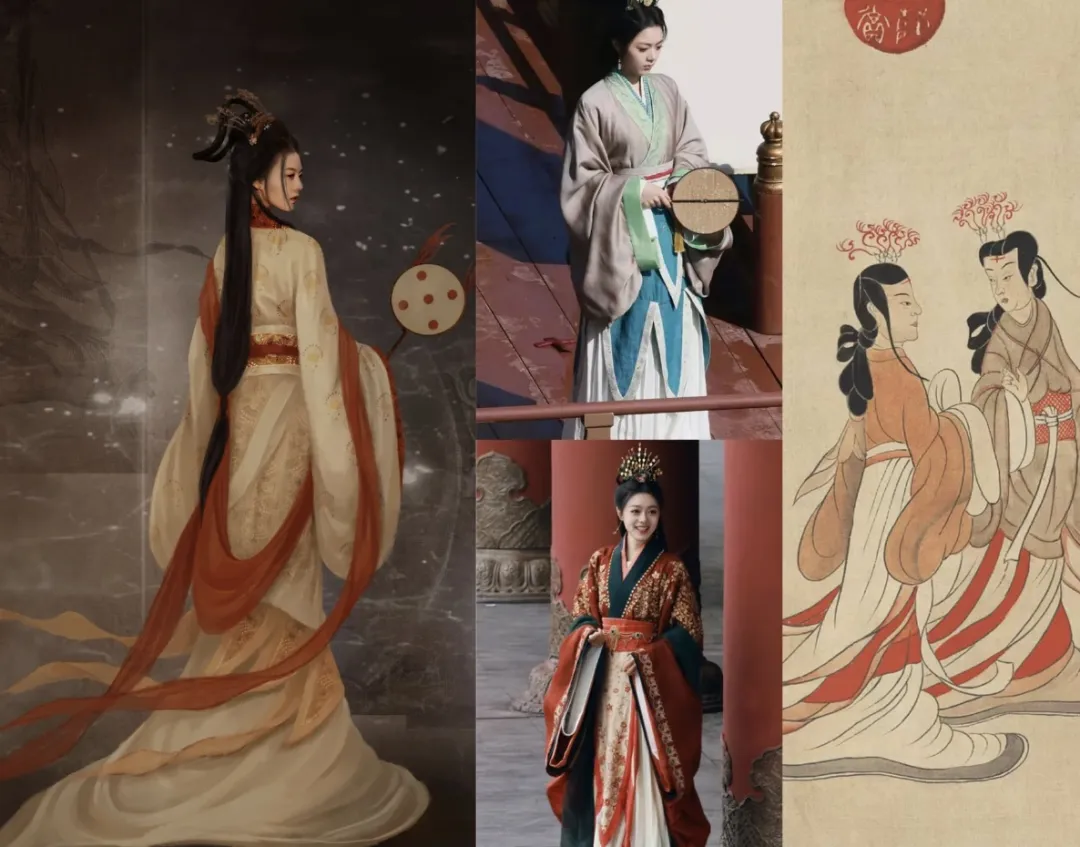
Strictly speaking, this kind of chuí tiáo is not bangs, but neatly arranged strands of hair falling from the hair bun, forming a decorative structure. However, the period when this hairstyle with hanging strands on both sides was popular was relatively short, mainly during the Wei and Jin dynasties, the so - called era of "Wei and Jin elegance".
It's still different from the "catfish whiskers" we see in today's cdramas. Even though later generations praised the elegance of the Wei and Jin dynasties, it was the kind of "charming and unrestrained" elegance, not the kind associated with a disheveled and vulgar look. People at that time regarded neatness and grandeur as beauty. The "catfish whiskers" popular in today's TV dramas, with two loose strands, are overly loose. They are designed to deliberately create a messy beauty in the hairstyle, either being too loose or too rigid. It's really appropriate to call them the "style of courtesans".
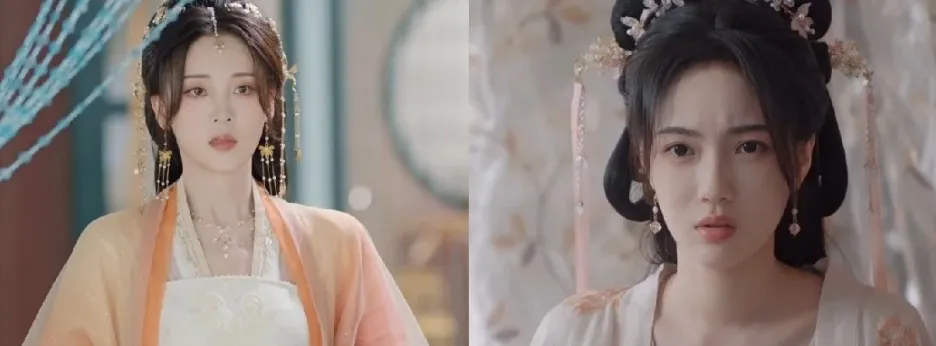
Putting aside TV dramas set in the Wei and Jin dynasties, this hairstyle brings a rather unruly and informal look into various general settings, especially for characters like young ladies from prominent families or royal nobles. Having two strands or tufts of hair left on the hair bun can be considered quite "improper".
After all, in the traditional Confucian concept, wearing one's hair loose is equivalent to being a barbarian. Strictly speaking, wearing one's hair loose here also includes having unkempt hair or leaving hair unarranged. In childhood, kids have an awkward stage with their hair growth. So, once their hair is long enough to be tied up, it should be tied. That's why we see that ancient children's hairstyles are full of little hair buns. Since their hair is too short, they can only be tied in separate areas. On one hand, it shows the fun of children's hairstyles, and on the other hand, it also takes into account the etiquette of not wearing hair loose.
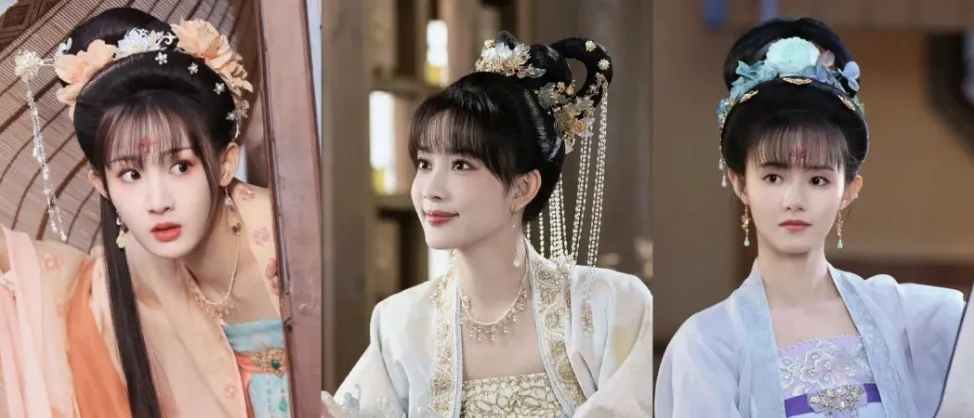
After adulthood, people are required to coil their hair and keep it tidy. Men use hats to tie up their hair, and women use hairpins to arrange their hair. For both men and women, tidy hair reflects a kind of etiquette. In terms of etiquette, headgear is even more important than clothing. So, in grand ceremonies, women of high status are required to wear phoenix crowns or pheasant crowns, and there are different matching rules for different materials and social classes.
Therefore, the "style of courtesans" mentioned in The Story of Minglan, which has even evolved into hairstyles like "straight bangs" and "air bangs", has actually subtly permeated various period dramas influenced by modern styling aesthetics. "Courtesan places" also refer to those less - formal singing and entertainment venues. The reason we can accept these hairstyles in period dramas from a modern perspective is that we've already accepted the existence of bangs, and bangs can fill in some deficiencies in facial styling. But subjectively, most people still admit that: no bangs = a classic and grand image.
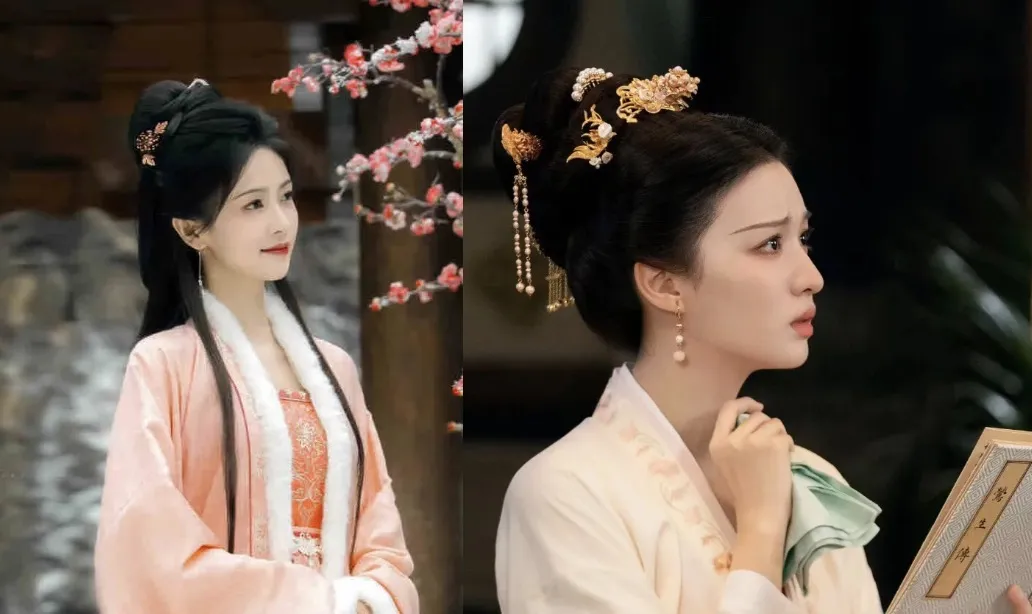
It's not necessary to be completely "retro". However, in many subtle concepts, we should also educate the next generation. Let more people know how modern aesthetics have developed and why more and more period dramas imitate current trends instead of respecting the historical image of "young ladies from prominent families". Some TV dramas are pursuing a positive concept of styling, which makes more people admire the beauty of traditional hairstyles. At least in terms of understanding classical culture, we should respect and understand the image and etiquette requirements of that time. In modern aesthetic scenarios, it's okay to add our own opinions and innovations.
