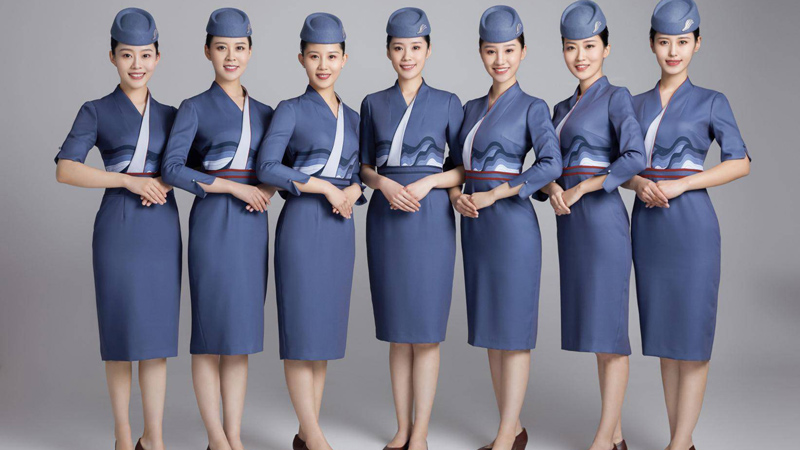
Shandong Airlines recently unveiled new flight attendant uniforms, proudly describing them as a fusion where Hanfu’s signature "Jiaoling Youren" (cross-collar, right closure) meets modern tailoring. The Daiqing (岱青) blue skirts, inspired by the airline's brand color and featuring accordion pleats, aimed for an ethereal elegance. While some applauded the incorporation of traditional elements, others raised eyebrows, comparing the design to monastic robes.
This unexpected reaction highlights a deeper tension between cultural aspiration and practical execution. At the heart of the debate lies a question: does this uniform genuinely honor Hanfu heritage, or is it merely a superficial nod?
Design Debates Aloft
The core claim revolves around the "Jiaoling Youren" structure. This defining feature of Hanfu involves overlapping front panels forming a distinctive "Y" shape, fastened on the wearer's right side. Historically, this design served practical purposes like protecting the abdomen and facilitating ease of movement within the garment's voluminous sleeves. Crucially, the overlapping panels create the collar shape, not the other way around – it's the structure that defines the form.
Shandong Airlines' interpretation, however, appears largely cosmetic. While the neckline mimics the "Jiaoling" silhouette, it's executed as a zippered dress, completely bypassing the fundamental overlapping panel and closure system intrinsic to "Jiaoling Youren". The traditional ties and functional overlap are absent, reducing the element to a decorative neckline rather than embodying the structural essence. This disconnect is visually evident in images circulating online , where the design seems awkwardly grafted onto a modern uniform base.
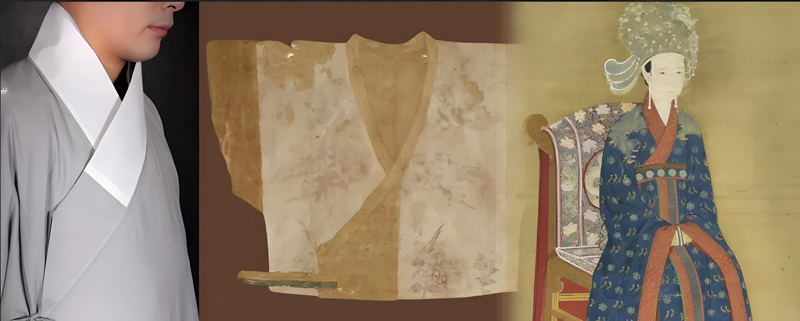
Contrast this with China Southern Airlines' past uniform iterations, which incorporated a reversed collar resembling "Zuoren" (left closure). A simple flip would align it with "Youren", and crucially, their design maintained the overlapping front panels. This demonstrates that integrating the authentic structure alongside modern tailoring is feasible. The choice for a purely decorative approach by Shandong Airlines feels like a missed opportunity for deeper cultural resonance.
Beyond Aesthetic Quarrels
While the structural fidelity sparked discussion, the most vocal criticism centered on color. Shandong Airlines' deep Daiqing blue, a core brand identity, proved problematic when applied extensively to the uniform's silhouette. The shade, particularly in solid blocks, bears an uncanny resemblance to the "Haiqing" (海青) robes worn by Buddhist monastics in popular media depictions.
This association wasn't lost on the public. Online comments flooded in: "Shandong Airlines' new uniform induces ascetic serenity," joked one user. "Embrace your inner monk!" declared another, dubbing it the "Emei Sect Airlines." Even the poetic name chosen for the collection, "Qing Weile" (Unfaded Green), was playfully twisted to "Qing Weile" (Unfinished Love), prompting quips about unresolved attachments hindering monastic detachment.
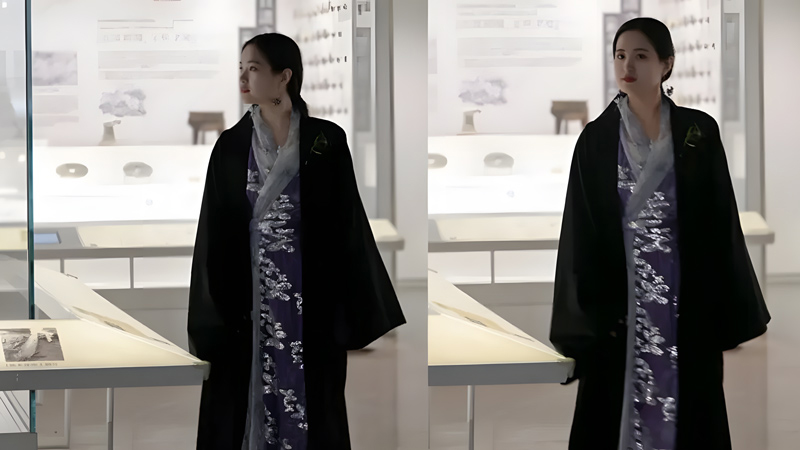
The "Haiqing" itself, historically a wide-sleeved robe adopted by monastics, derives its name from the majestic Haidongqing falcon, symbolizing the garment's broad, soaring sleeves. Ming Dynasty texts like Zheng Mingxuan's (郑明选) "Bi Yan" (秕言) document this origin. While Haiqing robes come in various hues like grey-black or brownish-yellow (often for senior monastics), the deep blue variant is most visually ingrained in the public consciousness. This isn't the first time Shandong Airlines' color palette has faced such comparisons; their longstanding brand blue consistently risks appearing overly somber and aging in uniform application. A lesson might be taken from Hainan Airlines' approach, which incorporates blue but uses cleaner color blocking and patterns, avoiding the dense, monolithic effect .
Cultural Crossroads
Shandong Airlines' initiative to weave traditional Hanfu elements into contemporary workwear is commendable. Promoting cultural heritage through high-visibility roles like flight attendants holds significant potential. However, this incident underscores a critical point: successful cultural integration demands more than aesthetic borrowing.
Understanding the underlying principles – the why behind the "Jiaoling Youren" structure, the cultural connotations of specific colors and silhouettes – is paramount. A designer familiar with Hanfu fundamentals would grasp that the collar is a result of the overlapping closure system, not merely a neckline shape. They would recognize the potent symbolism attached to certain hues and how block color application can trigger unintended associations.
Meaningful cultural promotion moves beyond surface-level "form" to engage with the "spirit" and logic of the tradition. It requires thoughtful adaptation that respects core structural or symbolic elements while ensuring functionality and contemporary appeal. Simply pasting a traditional-looking collar onto a standard uniform, especially when paired with a problematic color scheme, risks appearing tokenistic or, worse, inadvertently humorous.
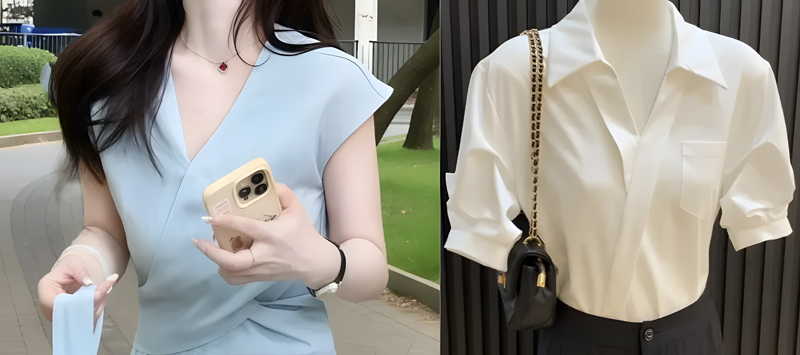
The goal should be garments where tradition is seamlessly woven into the fabric of modern design, creating something both functionally sound and culturally authentic, not a costume element bolted on. As someone who has designed Jiaoling-style robes adapted for daily wear, retaining key structural elements while modernizing fit and fabric, I can attest to the wearability and comfort possible when the core concept is understood and respected.
Shandong Airlines' "Qing Weile" uniform serves as a fascinating case study. It highlights the public's growing appreciation for cultural elements but also their discerning eye for authenticity. It reminds designers that cultural fusion is a nuanced art, demanding deep respect and understanding, not just visual mimicry. While the execution this time sparked debate, the airline's stated intent to celebrate tradition remains valid. Perhaps the next iteration will soar higher, truly marrying the grace of Hanfu with the sleek professionalism of modern aviation. What do you think of this sky-high fashion statement?