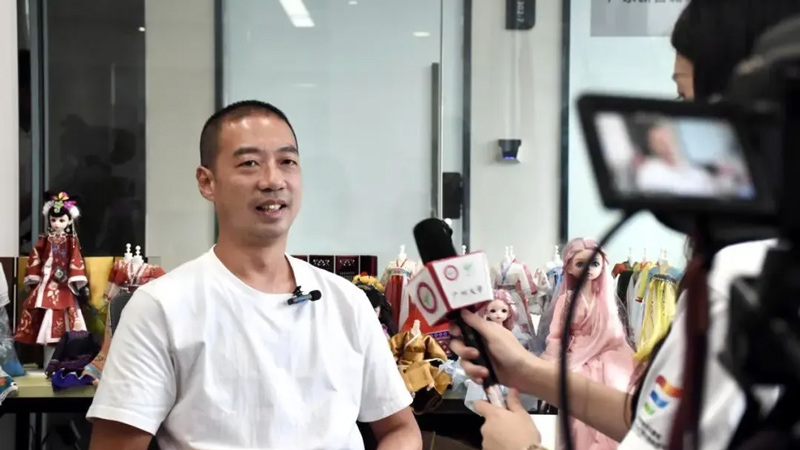
The vibrant wave of Guochao continues to surge, transforming cultural landscapes in cities and scenic spots nationwide. From bustling Hanfu rental studios and chic neo-Chinese tea houses to popular cultural merchandise, this trend blends heritage with contemporary expression. At its heart are young entrepreneurs like Li Boheng (李柏亨), founder of the "Guochao Dolls" project and inheritor of the "Needlework Handmade Clothing Craftsmanship" intangible cultural heritage.
Based in Guangzhou's Nansha District, Li masterfully fuses traditional techniques with modern design, creating exquisite miniature silk garments for dolls that captivate a new generation. His journey is one of cultural dedication, entrepreneurial spirit, and a deep commitment to preserving precious craftsmanship within the dynamic environment of the Greater Bay Area.
Raised in Hong Kong and holding an MBA from Canada's Royal Roads University, Li Boheng's path took an unexpected turn in 2021. Attracted by Nansha District's robust support policies specifically designed for young entrepreneurs from Macao, he decided to plant his cultural venture there.
Recognizing Nansha's rich resources, Li focused on cultural industries. With introductions from the district government and youth innovation centers, he forged a crucial partnership with a local enterprise deeply connected to Nansha's own intangible cultural heritage: Xiangyunsha (香云纱) dyeing and finishing. This collaboration, centered at the Xiangyunsha (Intangible Cultural Heritage) Cultural Park, led to the creation of a unique line of Hanfu dolls adorned in the prized, sun-baked silk, marking the birth of his signature "Guochao Dolls".
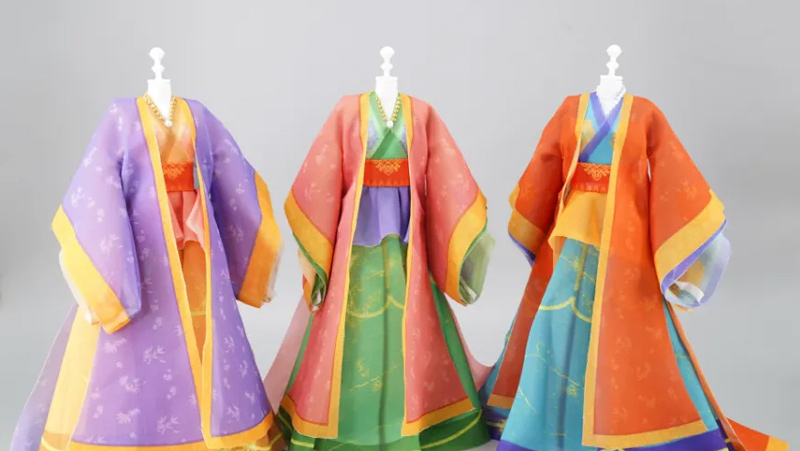
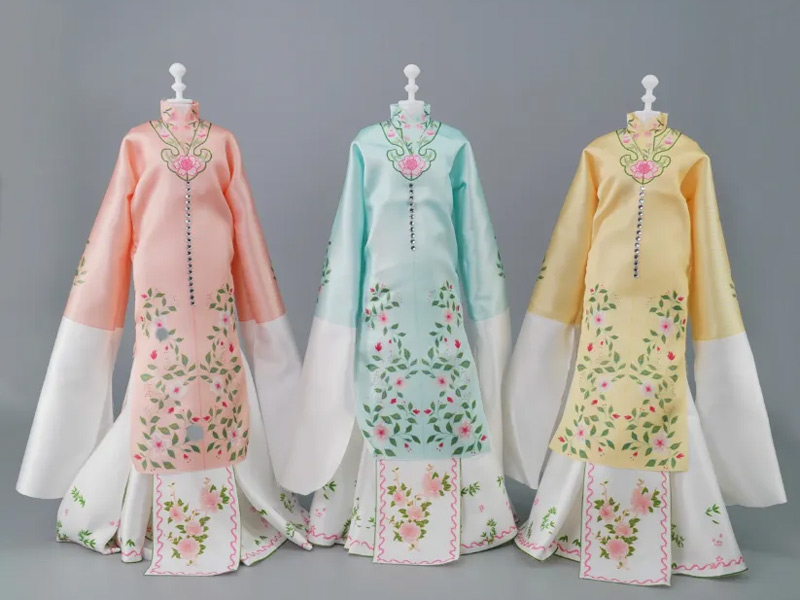
Li and his team anchor their creations firmly in Chinese tradition. They skillfully incorporate diverse cultural elements, meticulously employing traditional needlework techniques. Using simple tools – needles, thread, scissors, pens, rulers, and textiles – they have designed over two to three hundred distinct doll costumes. Beyond the dolls themselves, Li developed the "Guochao Dolls Needlework Handmade Clothing DIY Course" to share the craft.
His dedication was formally recognized in 2023 when Li was officially named the inheritor of the "Needlework Handmade Clothing Craftsmanship" project in Nansha District's fifth batch of intangible cultural heritage listings. His company now serves as the official protection unit for this heritage and holds the title of "Intangible Cultural Heritage Inheritance Base," centered around their original "Princess Decheng" IP.
Silk That Defies Machines
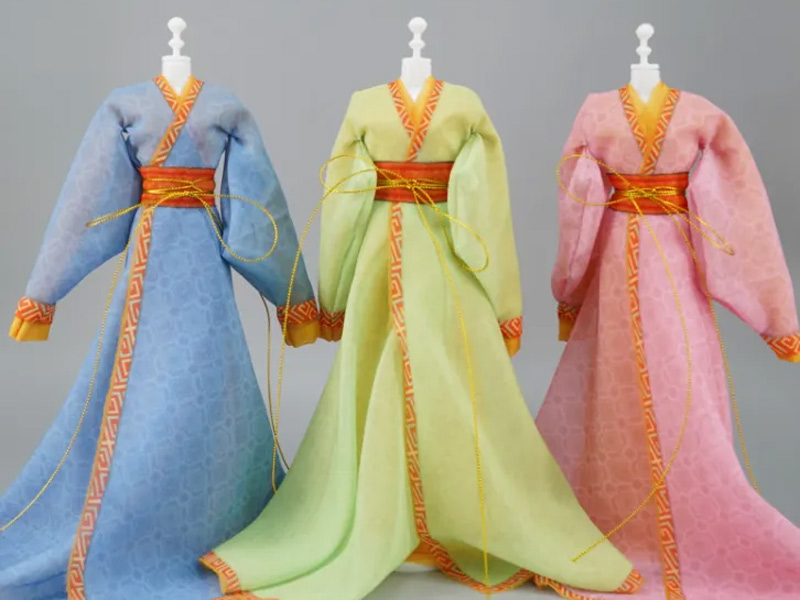
In an era dominated by automated garment production, preserving meticulous handcrafted needlework faces significant challenges. For Li Boheng, this craft is deeply personal, rooted in childhood memories of helping his grandmother and mother, who were factory seamstresses, with piecework at home. "I couldn't bear to see this skill fade away," Li explains. Years of practice honed his proficiency, allowing him to infuse traditional designs with his own creative vision. The resulting doll costumes, featuring elegant high-waisted skirts and flowing sleeves, showcase the profound beauty of Chinese attire, offering a culturally rich counterpoint to mass-produced Western dolls like Barbie.
As the designated inheritor, Li feels a profound responsibility to safeguard this "memory" of handmade clothing. He views his delicate "Guochao Dolls" as vessels carrying cultural warmth in an increasingly mechanized world. To ensure its survival, Li consciously simplifies stitching methods and innovates designs, making the craft more approachable. "We constantly innovate to encourage more young people to learn this intangible heritage skill," he states, "so they can gain a deeper appreciation for the allure of traditional Chinese culture."
Dolls Carrying Lingnan Memories
Confronting the pressures of mass production, Li strategically emphasizes superior materials to distinguish his brand. A cornerstone of this strategy is Xiangyunsha, the unique, plant-dyed silk from the Pearl River Delta region, itself an intangible cultural heritage with over a thousand years of history. Originating with the Tanka boat-dwelling communities who used natural dye to strengthen fishing nets, the process evolved into a distinctive fabric dyeing technique.
Li proudly highlights one of his signature creations: a doll depicting a straw-hatted fisherwoman. "The Tanka people are representative of Nansha's history," Li notes. "Like Hong Kong, Nansha relied heavily on fishing in the 20th century. Today, traditional Tanka attire is rarely seen. We created this doll specifically so children can learn about the clothing worn by Nansha's early fishing communities."
In the future, Li Boheng carries a strong sense of mission. He observes that much of contemporary clothing manufacturing caters to Western styles due to prevalent OEM practices. "We need to create our own new styles," he asserts, "clothing suitable for both daily life and formal occasions – clothing rooted in our culture." He sees Nansha as an ideal launchpad, benefiting immensely from its post-Nansha Plan environment and supportive "Ten Measures for Youth Innovation."
"Nansha offers an exceptional platform for us, young people from Hong Kong and Macao," Li reflects. He appreciates Guangzhou's deep cultural roots contrasting with Hong Kong's economic dynamism, seeing Nansha, at the heart of the Greater Bay Area, as the perfect synthesis. "To truly discover opportunities," he advises fellow Hong Kong and Macao youth, "come to the mainland. Don't just visit for a couple of days; stay for months. Only by experiencing life here can you understand what you should pursue."
Li Boheng remains steadfast, his needle and thread diligently weaving tradition into the future, aiming to take the unique charm of Chinese costume culture from the Greater Bay Area to the wider world.