
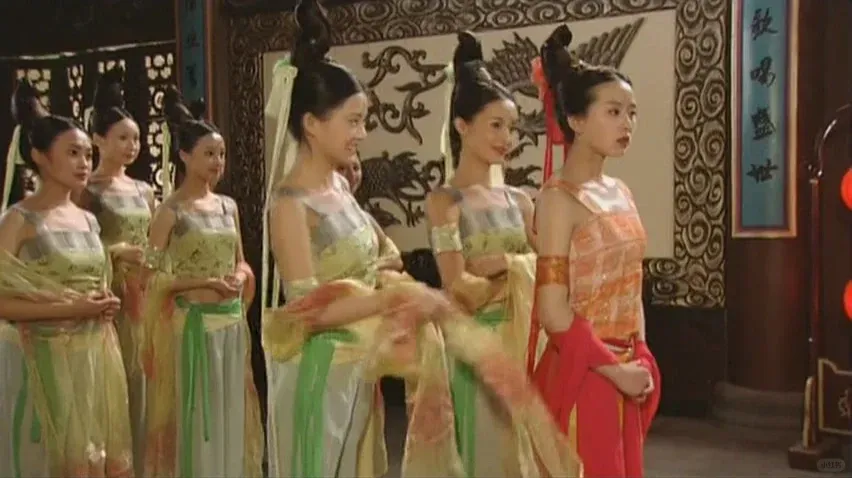
Liu Shishi's Strappy Bustier Is So Special. Netizens say they haven't seen such a style in costume dramas since then. In the costume drama Strange Women in Liao Zhai (聊斋奇女子), when Liu Shishi, playing Xin Shisiniang (辛十四娘), danced, she wore a very special "wide - strapped underwear". Were ancient undergarments really so "modern"? And what were they called?
Let's start with the conclusion. There were numerous forms of ancient undergarments. Some people simply called them "Moxiong" (抹胸). In a broad sense, it was a "general term" for ancient undergarments. As the name implies, it was clothing that covered the chest. There were one - piece Moxiong styles, strappy styles, and even cross - strappy styles. The styles were truly diverse. The Moxiong in Hanfu encompasses various undergarment categories. As more people used this term, it became a "generalized term". The names also differed in different periods, and some were even named according to the tombs where they were unearthed. Although in some excavation reports, Moxiong was directly marked, each period had its own mainstream characteristic undergarments.
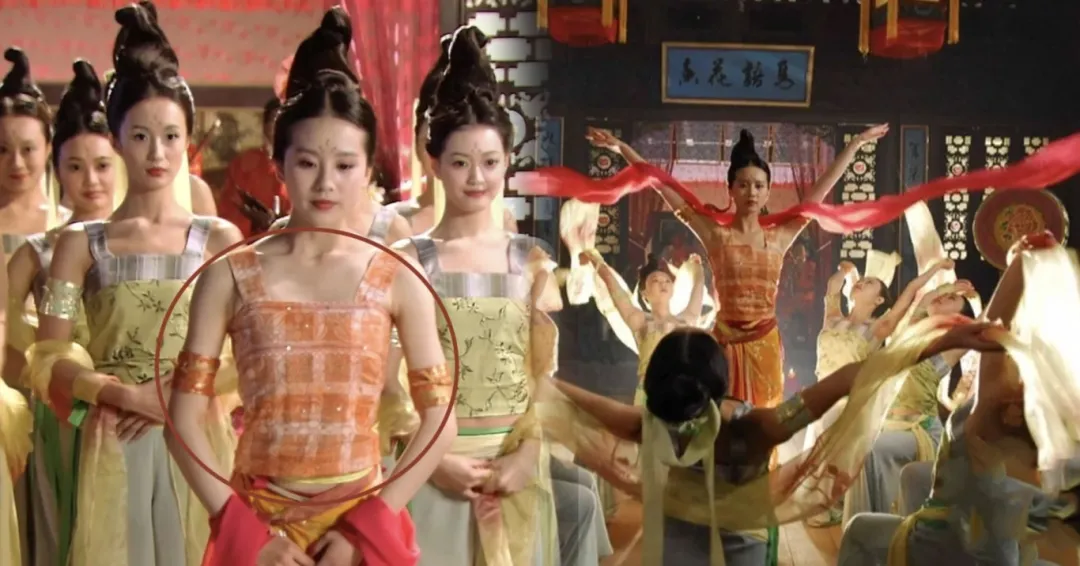
Moxiong Styles
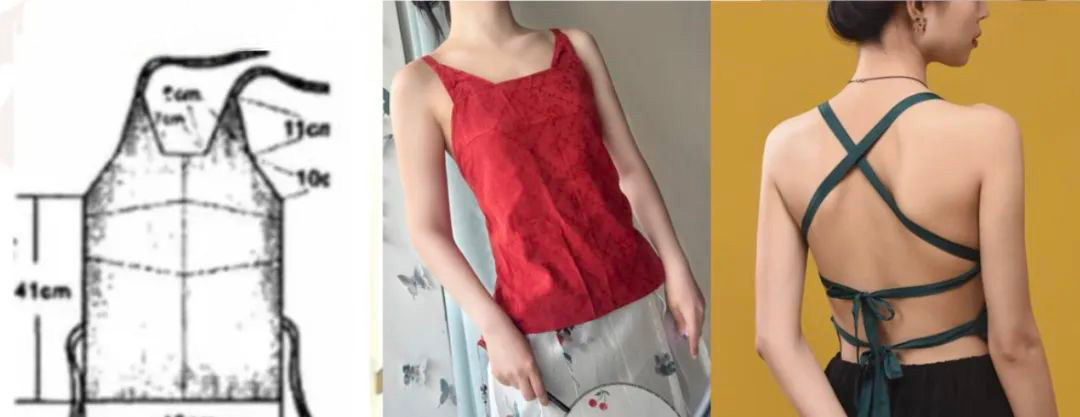
Currently, we know that the "mo" in Modu (肚兜), Mofu (抹腹), and Moe (抹额) is pronounced "mò". In this phrase, its original meaning is "to cover". Generally, we think of Moxiong as being strapless, that is, one - piece. As the name suggests, it is a piece of cloth wrapped around and fixed with ties, divided into those with or without pleats in the middle (no physical evidence), triangular pleats (darts), or cross - shaped pleats. In the Yuan and Ming dynasties, buttons were also used for restraint. However, from the current real - world situation, the non - pleated style is not very suitable for a snug fit.
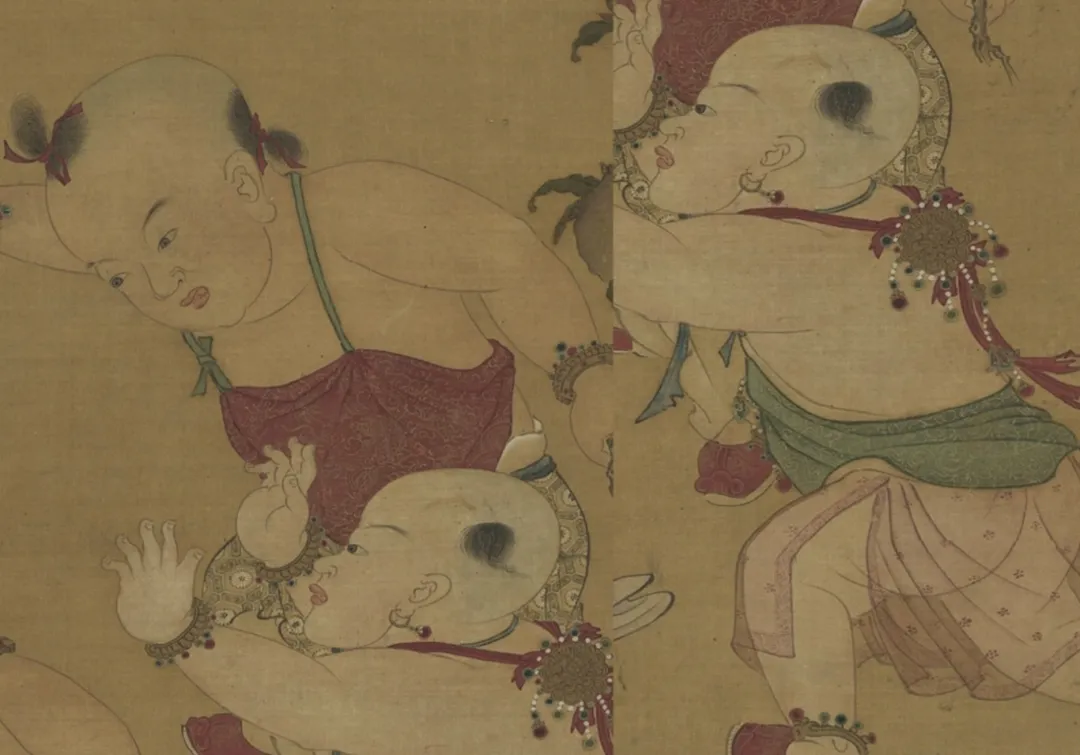
Strappy Triangular Undergarments
There is also a strappy triangular undergarment. Some scholars have proposed that this trapezoidal undergarment might be similar to the Baofu (抱腹) in the Han and Jin dynasties, and later it was classified as "Doudou" (兜肚). Both men and women could wear it. Children also wore this kind of Doudou. From works such as Song - dynasty children's paintings, we can see that it was a piece of cloth, wider at the top and narrower at the bottom, tied at the back, and was a back - less style. Its main purpose was to protect the stomach from the cold.
Liangdang and Other Styles
For example, in the Han and Jin dynasties, there was a special strappy undergarment called "Liangdang" (裲裆). "The Liangdang has two hearts sharing one lining, and the Pafu has eight folds on both sides." Its style was a bit like what we call a vest today. It was composed of two square pieces of cloth connected by shoulder straps, which was very close to our modern strappy undergarments. Initially, it was worn by men, but during the Wei, Jin, and Southern and Northern dynasties, it was also worn by fashionable women. Both men and women could wear it, and men could even wear it outside. The Moxiong unearthed from the tomb of Huang Sheng (黄昇) in the Southern Song Dynasty had two "cat ears". The back straps formed a strappy style, which could be cross - tied. It was almost a back - less style, but this kind of Moxiong was generally not worn outside and was mostly used as an inner layer. In the Yuan and Ming dynasties, the strapless one - piece Moxiong coexisted with the (strappy) vest - style "Zhuyao" (主腰). The vest could be worn front - to - front or cross - front, showing its flexibility. The strappy Moxiong was tied with metal or cloth buttons. Some people also referred to the undergarments of the Ming Dynasty as "Zhuyao" instead of "Moxiong", which was just a different way of speaking.
After learning about so many, do you think a single strappy undergarment cannot encompass all the styles of Chinese undergarments? Indeed, over thousands of years of development, we have had different fashionable styles. As long as we learn more, we can understand that ancient undergarments were definitely not just a simple piece of cloth. Exploring these ancient undergarment styles offers us a unique window into the history and culture of our ancestors, and it's truly fascinating to see how fashion has evolved over time.
